Nepali Culture: A Visitor's Guide to Customs and Traditions
An overview of Nepali culture for visitors: religion, languages, festivals, food, dress and etiquette, with links to deeper guides on each tradition.
A land of 142 communities, where guests are still treated as gods.
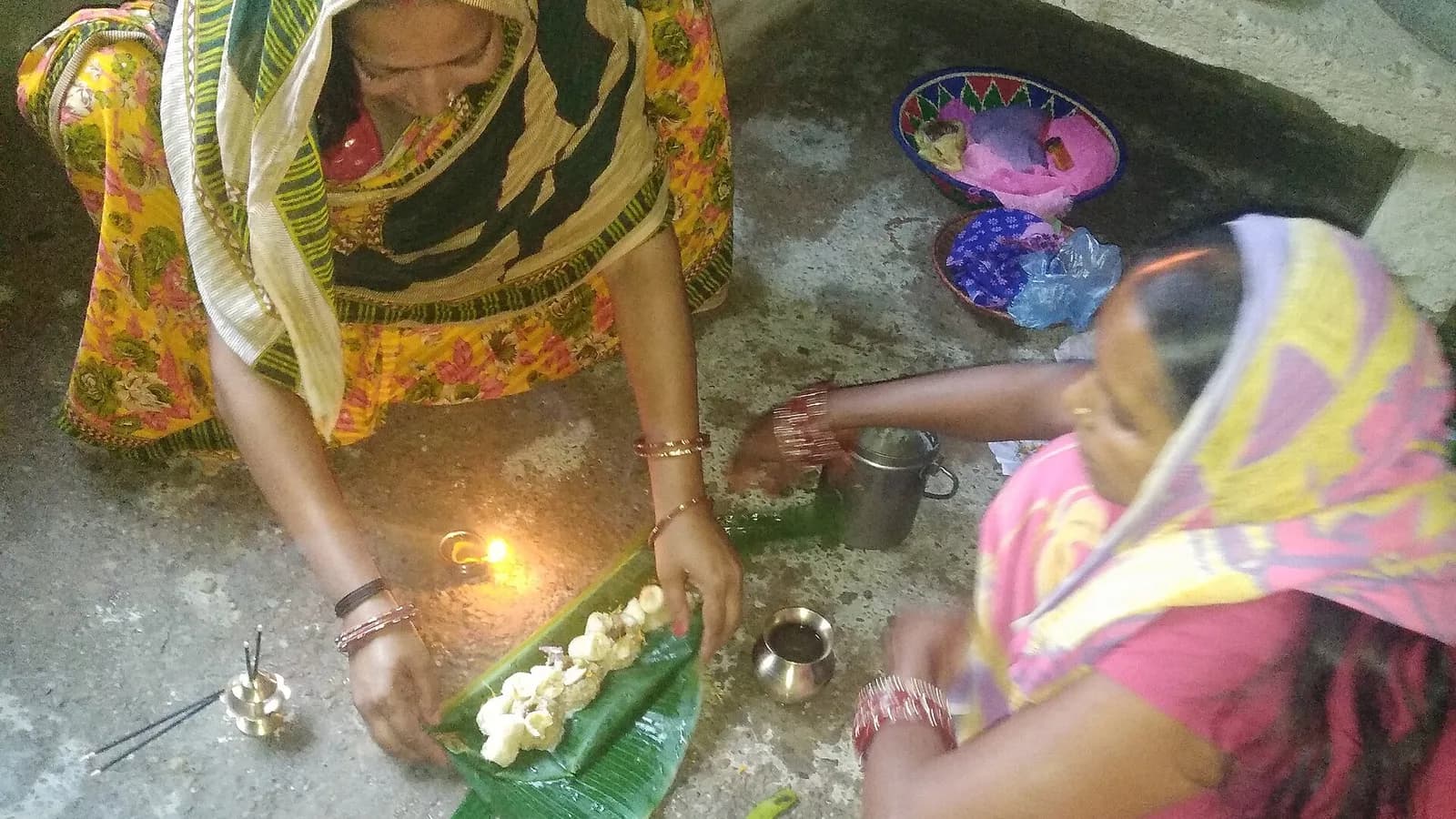
Few countries pack as much cultural variety into so small a space as Nepal. In a territory you could drive across in a day or two, you pass from Hindu temple towns to Tibetan-Buddhist mountain valleys, from the Newar courtyards of Kathmandu to the Tharu villages of the Terai. Nepali culture is the sum of 142 caste and ethnic groups speaking 124 mother tongues, bound together by shared festivals, deep hospitality and a layering of Hindu and Buddhist faith. This guide is a visitor's overview, with links to deeper articles on each tradition.
Key takeaways
- Nepal is extraordinarily diverse: the 2021 census records 142 caste and ethnic groups and 124 mother tongues.
- Hinduism and Buddhism intertwine here, often within the same family, temple or festival.
- Festivals structure the year, with Dashain and Tihar the largest.
- Hospitality is central; guests are traditionally honored almost as deities.
- Etiquette matters: greet with namaste, dress modestly, use your right hand, and respect temples and shrines.
- This is a hub guide, with links to detailed posts on food, festivals, religion, language and more.
A land of many peoples
Nepal's defining cultural fact is its diversity. The 2021 National Population and Housing Census counts 142 caste and ethnic groups, from the Chhetri and Bahun of the hills (the two largest groups) to Magars, Tharus, Tamangs, Newars, Gurungs, Rais, Limbus and Sherpas, among many more. Each brings its own language, dress, music and customs. Our guides to Nepal's population and the languages of Nepal unpack this mosaic, and Nepali names shows how a single surname can reveal a person's community.
This diversity is not a backdrop; it is the culture. A festival in a Newar courtyard, a wedding in a Gurung village and a harvest rite in the Terai can look almost nothing alike, yet all are unmistakably Nepali.
Religion: where Hindu and Buddhist meet
Nepal is, above all, a land where Hinduism and Buddhism coexist and blend. According to the 2021 census, roughly four in five Nepalis are Hindu, with Buddhism the second-largest tradition, followed by Islam, the indigenous Kirat religion and Christianity. Since 2006 Nepal has been a secular state, but faith remains woven through daily life. Our Nepal religion guide covers the full picture, and Buddhism in Nepal digs into the country's role as the birthplace of the Buddha.
The blending is real and visible. The same shrine may be honored by Hindus and Buddhists alike, and many Nepalis move easily between traditions. You see it at the great stupa of Boudhanath, at the Hindu temple complex of Pashupatinath, and at the hilltop shrine of Swayambhunath, where Buddhist and Hindu elements share the same sacred ground. Strings of prayer flags flutter over Hindu and Buddhist homes alike.
Language and script
Nepali, written in the Devanagari script, is the official language and the lingua franca that ties the country's communities together, spoken as a mother tongue by a little under half the population. Alongside it, the 2021 census recorded 124 mother tongues, including Maithili, Bhojpuri, Tharu, Tamang, Newar (Nepal Bhasa) and many more. For travelers, a handful of words opens doors; see our Nepali phrases for trekkers, the basics of Nepali honorifics, and how Nepali compares with its neighbor in Nepali vs Hindi.
Festivals: the rhythm of the year
If you want to understand Nepali culture quickly, arrive during a festival. The calendar is dense with them, most rooted in Hindu and Buddhist tradition, and they are when culture spills into the streets.
The big two
- Dashain, the longest and most important festival, falls in autumn and centers on family, blessings and the victory of good over evil; our Dashain tourist guide explains what to expect.
- Tihar, the festival of lights a couple of weeks later, honors animals, the goddess Lakshmi and the bond between siblings; see our Tihar guide.
Through the year
Nepal's festival calendar runs deep beyond the big two:
| Festival | What it celebrates | |----------|--------------------| | Holi | The spring festival of colors | | Teej | A women's festival of fasting and song | | Indra Jatra | Kathmandu's great street festival, with the Kumari | | Buddha Jayanti | The birth of the Buddha | | Gai Jatra | A Newar festival remembering the dead | | Maha Shivaratri | The great night of Shiva at Pashupatinath |
Many festivals feature the Kumari, Kathmandu's living goddess, a young girl venerated as a deity, one of the most striking expressions of the valley's blended traditions.
Food and feasting
Food is culture you can taste. The national meal is dal bhat, rice with lentil soup and sides, eaten twice a day across the country and elevated to an art by the Thakali of Mustang. Beyond it lies a whole world: the steamed dumplings called momos, the festive rice rings of sel roti, the fermented greens of gundruk, and the distinctive Newari cuisine of the Kathmandu Valley. For an overview, see what to eat in Nepal, and to learn hands-on, a Kathmandu cooking class.
Eating itself follows custom: meals are traditionally taken with the right hand, food once tasted is considered jutho (ritually impure to share), and a guest is always offered the best.
Dress, crafts and the arts
Traditional dress includes the daura suruwal and topi cap for men and the gunyu cholo or sari for women, though every ethnic group has its own attire, most visible during festivals and ceremonies. Nepal's craft traditions are equally rich: the sacred scroll paintings called thangka, handmade lokta paper, fine pashmina, and the singing bowls associated with meditation. The famed khukuri knife is both a tool and a national symbol. Much of this artistry is on display in the Valley's UNESCO-listed durbar squares; see our guides to Patan, Bhaktapur and Nepal's UNESCO sites.
Music and dance run through it all. Each community has its own songs and instruments, from the madal drum that anchors Nepali folk music to the masked dances of the Newar festivals and the seasonal work-songs of the hills. During Dashain and Tihar you will hear deusi and bhailo singing groups going house to house, and at any celebration, dancing is less a performance than an invitation; if you are pulled in, the polite response is to join.
Hospitality: the guest as god
Travelers consistently name Nepali hospitality as what stays with them. The cultural ideal treats a guest as someone to be honored, almost as a deity, and in practice this means being welcomed with warmth, offered tea or food, and looked after with genuine care. Staying in a homestay or trekking through teahouse villages is the clearest way to experience it.
Etiquette for visitors
Respecting local custom is simple and goes a long way. The essentials:
- Greet with namaste, palms together with a slight bow, rather than a handshake.
- Dress modestly, especially at temples and in villages; cover shoulders and knees.
- Remove your shoes before entering homes and many shrines.
- Use your right hand for giving, receiving and eating; the left is considered unclean.
- Walk clockwise around stupas, temples and prayer wheels.
- Ask before photographing people, ceremonies and the interiors of shrines.
- Avoid touching people's heads or pointing your feet at people or altars.
Our temple etiquette guide goes deeper, and the is Nepal safe? overview covers practical concerns.
How Nepal differs from its neighbors
Nepali culture shares roots with India, in Hinduism, Sanskrit and many festivals, and with Tibet, in Himalayan Buddhism, but it is firmly its own. It has its own languages, its own ethnic groups, and the unique status of being the birthplace of the Buddha at Lumbini, as well as the home of Everest and the Himalaya. For comparisons, see Nepal vs India and Nepal vs Tibet.
Where to go from here
This guide is a doorway. To go deeper into the threads of Nepali culture, follow the links above, or start with these:
- Faith and philosophy: Nepal religion, Buddhism in Nepal
- Festivals: Dashain, Tihar, Indra Jatra
- Food: dal bhat, Newari food, Thakali
- People and language: Nepali names, languages of Nepal
Nepal rewards the curious traveler. Arrive with an open mind, a soft namaste and a willingness to follow your hosts' lead, and the country's culture will open up to you in ways no guidebook can fully capture.
Sources
Frequently asked questions
- What is Nepali culture known for?
- Nepali culture is known for its blend of Hindu and Buddhist traditions, its many festivals, warm hospitality toward guests, rich food and crafts, and extraordinary ethnic diversity, with 142 caste and ethnic groups recorded in the 2021 census living across mountains, hills and plains.
- What religion is most common in Nepal?
- Hinduism is the largest religion, followed by around four in five Nepalis according to the 2021 census, with Buddhism the second largest. Islam, the indigenous Kirat religion and Christianity are also present, and Nepal has been a secular state since 2006.
- How many languages are spoken in Nepal?
- The 2021 census recorded 124 mother tongues across the country. Nepali, written in Devanagari script, is the official language and lingua franca, spoken as a first language by a little under half the population.
- What is the most important festival in Nepal?
- Dashain is the longest and most important festival, falling in autumn, followed closely by Tihar, the festival of lights. Many other festivals, including Holi, Teej, Indra Jatra and Buddha Jayanti, fill the calendar through the year.
- How should tourists behave to respect Nepali culture?
- Greet people with namaste, dress modestly especially at temples, remove shoes before entering homes and shrines, use the right hand for giving and eating, ask before photographing people, and walk clockwise around stupas. A little courtesy is warmly received.
- What is the traditional dress of Nepal?
- The daura suruwal with a topi cap is the traditional dress for men and the gunyu cholo or sari for women, though styles vary by ethnic group. Many Nepalis wear traditional clothing for festivals and ceremonies and modern dress day to day.
- Why are guests treated so well in Nepal?
- Nepali hospitality is rooted in the idea that a guest is to be honored almost as a deity. Visitors are often welcomed warmly, offered food and tea, and treated with great courtesy, which is one of the things travelers remember most.
- Is Nepali culture the same as Indian culture?
- They share roots in Hinduism, Sanskrit and many festivals, and influence each other, but Nepal has its own languages, ethnic groups, Himalayan Buddhist traditions and distinct customs that make its culture clearly its own.
Related posts
Nepali Music: Genres, Instruments and Artists Explained
A clear guide to Nepali music: folk and dohori, adhunik geet, filmi, pop, rock and rap, the instruments behind them, and the artists worth knowing.
Read postIconic Nepali Songs: Classics Every Visitor Should Know
A short guide to iconic Nepali songs, from the folk anthem Resham Firiri to Narayan Gopal classics and modern hits worth adding to your playlist.
Read postSel Roti — Nepal's Festive Rice Doughnut Explained
What sel roti is, why it appears at Tihar and Dashain, how the fermented rice batter is fried into golden rings, and how to make it. A traveler's guide.
Read post