Nepal vs Tibet: Which Himalayan Trip to Choose
Nepal vs Tibet compared on cost, permits, trekking, altitude and culture — an even-handed guide to which side of the Himalaya suits your trip.
Nepal you can improvise; Tibet you must script in advance — permits, guide, route and hotels all locked in before you ever arrive.
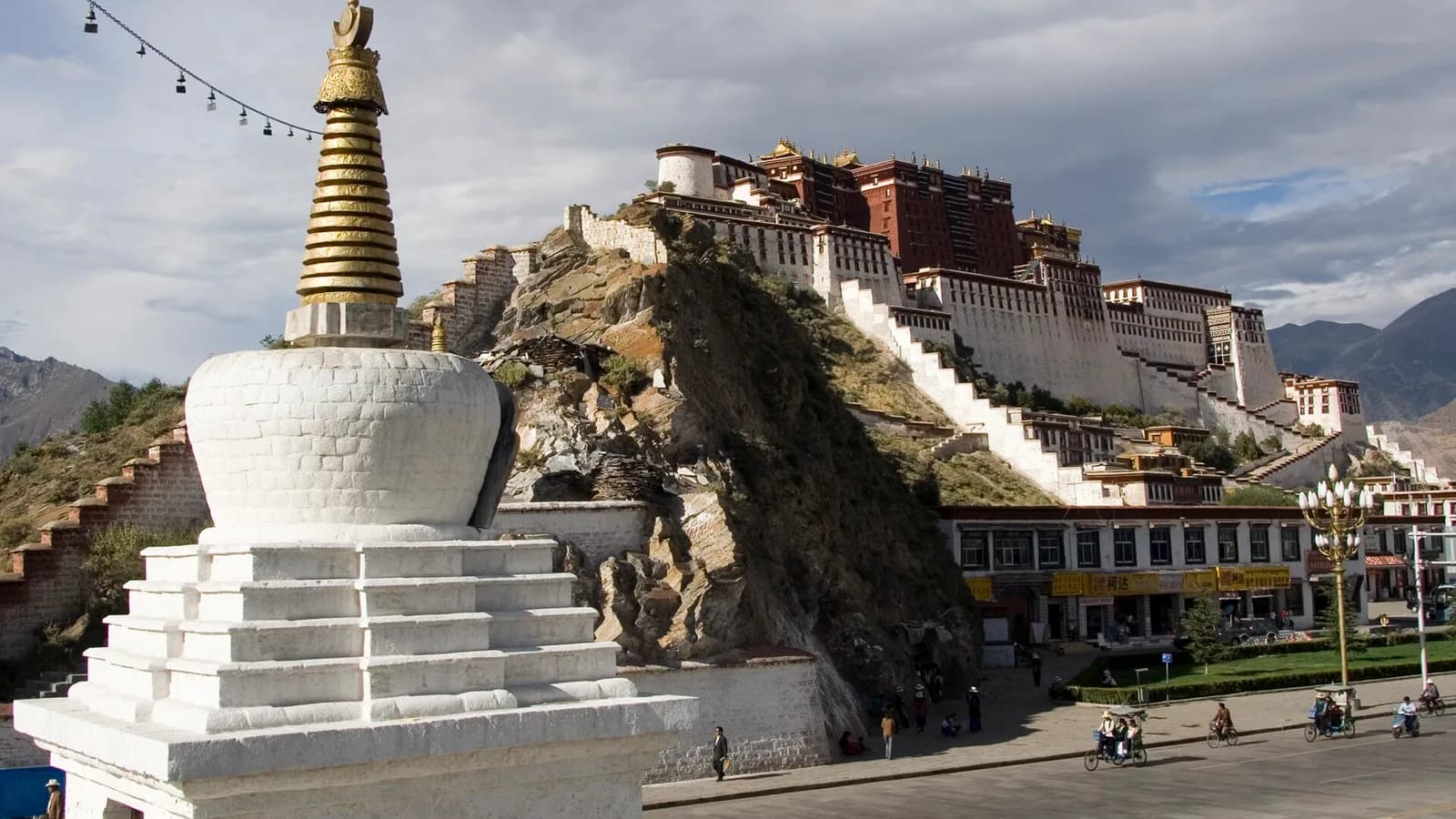
If you are deciding between Nepal vs Tibet, you are choosing between two faces of the same mountain range — and two completely different sets of rules for visiting. Nepal is open and improvised: a visa on arrival, independent trekking, and a backpacker-to-comfort spectrum of budgets. Tibet is closed and scripted: every foreign visitor must travel on an organised, guided tour with permits, a fixed route, and pre-booked hotels arranged before arrival.
Both deliver the Himalaya at its most spectacular, and both are deeply Buddhist cultures. But the practical experience — what you can do, how much it costs, and how much freedom you have — is worlds apart. This guide compares them evenly on cost, access and permits, trekking, altitude, and culture. Permit rules and fees change, especially for Tibet, so treat the specifics here as a starting point and confirm the latest with a licensed operator before you commit.
Key takeaways
- Freedom is the core difference. Nepal allows fully independent travel with a visa on arrival; Tibet requires a guided tour, a Tibet Travel Permit, and a fixed itinerary (as of June 2026).
- Tibet is permit-heavy. Foreigners need a Chinese visa plus a Tibet Travel Permit, an Aliens' Travel Permit for areas like Everest Base Camp, and a military permit for places like Mount Kailash.
- Cost favours Nepal's flexibility. Tibet's mandatory private guide, driver and vehicle set a higher floor; Nepal scales from very cheap to comfortable.
- Altitude hits harder in Tibet at first. Lhasa is ~3,656 m versus Kathmandu's ~1,400 m — flying in is a big jump.
- Nepal is the trekker's country; Tibet is more about plateau touring, monasteries and epic drives.
The 30-second decision
Choose Nepal if you want freedom, hands-on trekking, a flexible budget, and the ability to land and figure it out as you go. It suits independent travellers, trekkers of all levels, and anyone who dislikes rigid itineraries.
Choose Tibet if your priority is the high plateau itself — Lhasa's monasteries, the vast Tibetan landscape, and bucket-list sites like Everest's north side or Mount Kailash — and you are comfortable travelling on a guided, permitted, pre-planned tour. It suits travellers who want a curated cultural-and-landscape journey rather than a do-it-yourself trek.
Access and permits: open vs scripted
This is the defining contrast between the two.
Nepal could hardly be easier to enter. Most nationalities receive a visa on arrival at Kathmandu airport and land borders, paid in cash, at US$30 (15 days), US$50 (30 days), or US$125 (90 days) as of 2026. You can then travel anywhere open to tourists, independently, and change your plans daily. Full details are in our Nepal visa on arrival guide.
Tibet is the opposite. As of June 2026, independent travel by foreigners is not permitted in the Tibet Autonomous Region. To go, you must:
- Hold a Chinese visa (or qualifying entry), then obtain a Tibet Travel Permit — which you cannot apply for yourself; it must be arranged by a licensed agency.
- Book an organised tour with a guide, and on most routes a private vehicle and driver, following a fixed itinerary with pre-booked hotels.
- Obtain additional permits for specific areas: an Aliens' Travel Permit for places like Shigatse and Everest Base Camp, and a military permit for restricted zones such as Mount Kailash and border regions.
Permit processing takes time (commonly a couple of weeks or more), so Tibet has to be planned well ahead. The bottom line: Nepal rewards spontaneity; Tibet demands a locked-in plan.
Access compared
| Factor | Nepal | Tibet | |---|---|---| | Visa | On arrival, US$30 / 50 / 125 | Chinese visa in advance + Tibet permits | | Independent travel | Yes | No — guided tour required | | Permits | Simple trekking permits | Tibet Travel Permit + ATP + military permit | | Itinerary | Fully flexible | Fixed, pre-approved | | Lead time | Minimal | Plan weeks ahead |
Getting to Tibet from Nepal
Many travellers reach Tibet via Kathmandu, and the logistics are worth understanding. From Kathmandu you can fly direct to Lhasa (multiple airlines operate the route across the week) or travel overland via the Rasuwagadhi–Gyirong border. Either way, entering Tibet from Nepal requires a China Group Visa, issued by the Chinese Embassy in Kathmandu rather than your home country — and a group visa typically requires the travellers to enter, tour, and exit together on the same itinerary. Plan to arrive in Kathmandu several days before your tour starts so the agency can arrange the paperwork. This is one reason a combined Nepal-then-Tibet trip is common: you are in Kathmandu anyway for the visa.
Cost
Nepal has an enormous price range. You control it: dorm beds and dal bhat at the bottom, comfortable hotels and organised treks at the top. There is no mandatory guide for general travel, and on the ground costs are among the lowest in Asia.
Tibet sets a higher floor because the model is mandatory. You are paying for a private guide, driver, and vehicle, pre-booked hotels, and the permit arrangements — all bundled into the organised tour you are required to book. Even a budget-minded Tibet trip can't dip to backpacker levels the way Nepal can, simply because the guided-tour structure is non-negotiable. For trekkers comparing the two regions, our Everest Base Camp trek cost guide shows what the Nepal side runs; the Tibet (north) side of Everest is reached only on a permitted tour, which changes the maths entirely.
If budget and flexibility matter most, Nepal wins. If the Tibetan plateau is the specific thing you want, the tour cost is simply the price of entry.
Trekking and landscape
Both sit in the Himalaya, but the on-the-ground experience differs sharply.
Nepal is the world's trekking capital. Its teahouse trekking network means you can walk for days or weeks with a bed and hot meal every night, on well-marked trails, with routes for every level — from gentle valley walks to the high passes of the Everest and Annapurna regions. You can trek with a porter, a guide, or (on some routes) more independently. See our Everest Base Camp permits guide for how Nepal's straightforward permit system works.
Tibet is less about classic trekking and more about high-plateau touring: Lhasa's monasteries, sweeping drives across the roof of the world, sacred lakes, and the north face of Everest from the Tibetan side. Trekking does exist — the Kailash kora (circuit) is a famous pilgrimage walk — but it is permit-heavy, guided, and logistically complex, with thin infrastructure compared to Nepal's lodge networks. The Tibetan landscape is uniquely vast and stark; what you trade for that grandeur is the easy, improvised trekking that Nepal makes effortless.
Trekking and terrain compared
| Factor | Nepal | Tibet | |---|---|---| | Trekking style | Teahouse, marked trails, all levels | Permit-heavy, guided, sparse lodges | | Independence | High | Low — guide required | | Signature draws | EBC, Annapurna, Langtang | Lhasa, plateau drives, Everest north, Kailash | | Landscape | Green valleys to high peaks | Vast high-altitude plateau | | Best for | Hands-on trekkers | Plateau and pilgrimage touring |
Altitude: a real planning factor
Altitude deserves its own section, because Tibet starts high.
Lhasa sits at roughly 3,656 metres — already an elevation where mild altitude symptoms are common on arrival. Kathmandu, by contrast, is only about 1,400 metres, so visitors there rarely feel altitude at all. The catch is the transition: flying from Kathmandu straight to Lhasa is a jump of more than 3,000 metres in one go, which raises the risk of acute mountain sickness. Guides routinely advise spending a couple of acclimatisation days in Lhasa before going higher, and an overland approach (with its more gradual ascent) is gentler on the body than flying in.
In Nepal, altitude is something you build into gradually as you trek upward, and most itineraries are designed around acclimatisation. Our altitude sickness trekking guide covers the symptoms and prevention that apply on either side of the border — the physiology is the same; only the starting point differs.
Culture: two Buddhist worlds
Both destinations are extraordinary, in different registers.
Tibet is the heartland of Tibetan Buddhism. Lhasa's Potala Palace, the Jokhang Temple, and great monasteries like Drepung and Sera are among the most significant religious sites in Asia, and pilgrim culture is woven through daily life. Experiencing it on a guided tour is, for many, deeply moving — though it is also a tightly managed encounter.
Nepal offers a more open and varied cultural canvas. It blends Tibetan Buddhism — most visibly around the great Boudhanath stupa and in the Sherpa highlands — with Newar Buddhism and Hinduism across the Kathmandu Valley. Our Buddhism in Nepal guide traces those threads. The difference in feel: Tibet immerses you in one profound tradition under careful supervision; Nepal lets you wander freely through several overlapping ones.
When to visit
The seasons broadly align. For both, late spring through autumn is the sweet spot. Tibet is generally best from May to early October, when the plateau weather is most stable and roads are reliably open; winter is cold and many services scale back. Nepal's prime windows are autumn (late September to November) and spring (March to May), with autumn offering the clearest mountain views after the monsoon. For a fuller breakdown by activity, see our best time to visit Nepal guide. If you plan to combine the two, aim for the overlap in spring or autumn.
Which should you choose?
Pick Nepal if you want freedom, hands-on teahouse trekking, a budget you control, easy on-arrival access, and the ability to improvise. It is the right call for most independent travellers and trekkers.
Pick Tibet if the high plateau and Tibetan Buddhist heartland are specifically what you came for, and you are happy to travel on a guided, permitted, pre-arranged tour to get there.
For many travellers the practical path is Nepal first — cheaper, more flexible, and the natural base for a Himalayan trip — with Tibet added on when you want the plateau and are ready to handle the permits and the guided-tour model. If you are planning the Nepal portion, our two-week Nepal itinerary is a solid starting frame. Match the destination to the kind of trip you want: open and improvised, or grand and scripted.
Sources
- China Highlights — Tibet Travel Permit Guide 2026: https://www.chinahighlights.com/tibet/visa-document.htm
- Experience Tibet — Do you need a permit or visa for Tibet (2026): https://experiencetibet.org/blog/do-you-need-a-permit-or-visa-to-travel-to-tibet-complete-guide-for-foreign-travelers-2026/
- The Land of Snows — Tibet Travel Regulations: https://www.thelandofsnows.com/tibet-travel-regulations/
- TibetTourism.com — China Group Visa from Kathmandu: https://www.tibettourism.com/group-visa-to-tibet-from-kathmandu.html
- TibetTravel.org — Lhasa altitude: https://www.tibettravel.org/tibet-travel-guide/lhasa-altitude.html
- Nepal Department of Immigration — Tourist Visa: https://www.immigration.gov.np/en/page/tourist-visa
Frequently asked questions
- Can I travel independently in Tibet?
- No. As of June 2026, foreign visitors cannot travel independently in the Tibet Autonomous Region. You must book an organised tour through a licensed agency, travel with a guide on a fixed itinerary, and obtain a Tibet Travel Permit in advance. Nepal, by contrast, allows fully independent travel with a visa on arrival.
- Do I need a permit for Tibet?
- Yes, several. Beyond a Chinese visa, foreigners need a Tibet Travel Permit to enter the region, plus an Aliens' Travel Permit for areas like Shigatse and Everest Base Camp, and a military permit for restricted zones such as Mount Kailash. All are arranged by your tour agency, not by you directly.
- Is Tibet more expensive than Nepal?
- Generally yes. Tibet's mandatory guided-tour model, with a private guide, driver and vehicle, costs more than independent travel in Nepal. Nepal lets you choose anything from a backpacker budget to a comfort trip, while Tibet's floor is set by the organised tour you are required to book.
- How do I get to Tibet from Nepal?
- From Kathmandu you can fly direct to Lhasa or travel overland via the Rasuwagadhi–Gyirong border. Either way you need a China Group Visa issued by the Chinese Embassy in Kathmandu, plus your Tibet permits. The group visa typically requires the travellers to enter, tour and exit Tibet together as a group.
- Is altitude a bigger problem in Tibet than Nepal?
- Often yes at the start. Lhasa sits around 3,656 metres, while Kathmandu is only about 1,400 metres. Flying straight from Kathmandu to Lhasa is a jump of over 3,000 metres, which raises altitude-sickness risk, so a couple of acclimatisation days in Lhasa are strongly advised.
- Which is better for trekking, Nepal or Tibet?
- Nepal is far better for classic trekking, with teahouse lodges, marked trails and routes for every level. Tibet is more about high-plateau touring, monasteries and dramatic drives, with trekking that is permit-heavy, guided and logistically complex. For a hands-on trekking holiday, choose Nepal.
- Which has better Buddhist culture?
- Both are profound. Tibet is the heartland of Tibetan Buddhism, with Lhasa's Potala Palace, Jokhang Temple and great monasteries. Nepal blends Tibetan Buddhism (around Boudhanath and the Sherpa highlands) with Newar Buddhism and Hinduism, in a more open and easily accessible setting.
- When is the best time to visit Tibet and Nepal?
- For both, late spring through autumn (roughly April to October) offers the most reliable weather, with Tibet best from May to early October. Nepal's prime trekking windows are autumn (late September to November) and spring (March to May). Winter is cold and many Tibet services scale back.
Related posts
Nepal vs Bhutan: Which Himalayan Country to Visit
Nepal vs Bhutan compared on cost, visas, trekking, and culture — an even-handed guide to which Himalayan country fits your trip and budget.
Read postNepal vs Peru Trekking: An Honest Comparison
Nepal vs Peru trekking compared on altitude, permits, cost, comfort and crowds — an even-handed guide to choosing the Himalaya or the Andes for your trek.
Read postAnnapurna Trek Package: How to Choose One in 2026
A practical guide to picking an Annapurna trek package in 2026 — durations, what is included and excluded, permits, the guide rule, and how to compare quotes.
Read post