Buddhist Prayer Flags: Meaning, Colours & Buying Guide
What Buddhist prayer flags mean — the five colours, the wind horse, how to hang and dispose of them respectfully, and how to buy authentic flags in Nepal.
They are not prayers sent up to a god. They are blessings the wind unpicks thread by thread and scatters over everyone it touches — which is why a faded flag is doing its job, not failing at it.
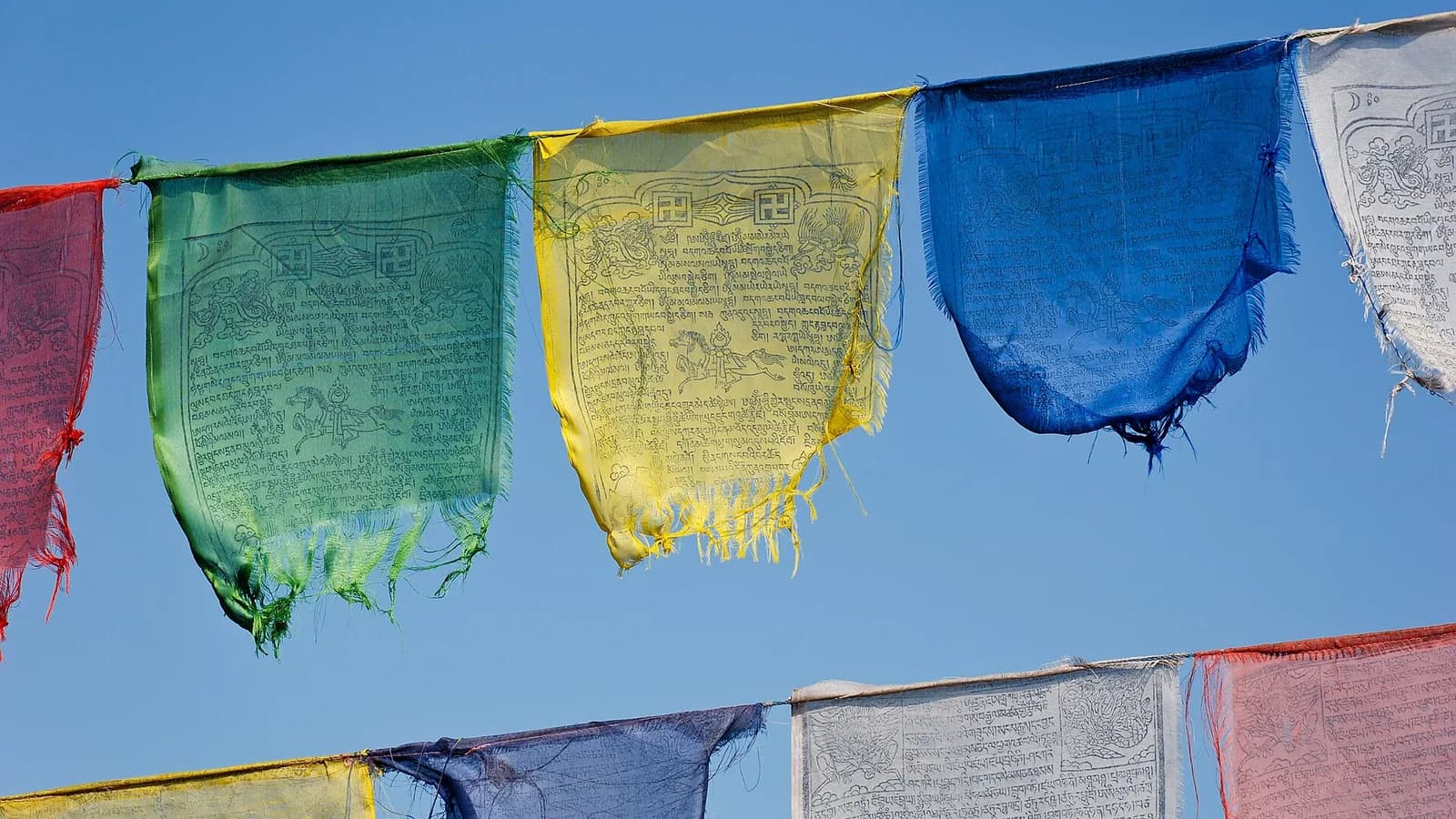
Buddhist prayer flags are among the first images that come to mind when you picture the Himalaya: strings of weathered colour snapping in the wind over a mountain pass, a monastery roof, a stupa. They are also one of the easiest and cheapest souvenirs to carry home from Nepal — and one of the most misunderstood. They do not send prayers up to a god, the colours are not random, and a sun-bleached flag is succeeding, not wearing out. This guide covers what the flags mean, how to hang and retire them respectfully, and how to buy an authentic set rather than a plastic one.
It goes deeper than the prayer-flag note in our what to buy in Nepal guide, for travellers who want to understand the thing they are buying.
Key takeaways
- The five colours always run blue, white, red, green, yellow — sky, air, fire, water, earth — and the order matters.
- The central figure is the lungta, or wind horse, carrying the three jewels of Buddha, dharma and sangha.
- Flags do not carry prayers to a deity; the wind scatters blessings outward to all beings.
- Hang them high and clean, never touching the ground; burn or bury old ones rather than binning them.
- Buy cotton, block-printed flags, not glossy polyester — better for tradition and for the environment.
What prayer flags actually are
A prayer flag is a rectangle of coloured cloth block-printed with mantras, prayers and auspicious symbols. They come in two forms. Lung ta (Tibetan for "wind horse") are the familiar horizontal strings, strung on a diagonal line between two high points. Darchog are the tall vertical flags mounted on a single pole, the kind you see planted by a monastery or a home. Both do the same work: they let the wind do the praying.
And that is the key idea most visitors get wrong. The tradition holds that as the wind passes over the printed mantras, it lifts their goodwill and compassion and carries it out across the world to every being it reaches. The flags are not a letter to heaven; they are a way of radiating benefit outward, continuously, for as long as the cloth holds together. Hanging them is closer to an act of generosity than a request for a favour.
The five colours and what they mean
A proper set always uses five colours, and they always appear in the same sequence, read left to right:
| Colour | Element | |---|---| | Blue | Sky and space | | White | Air and wind | | Red | Fire | | Green | Water | | Yellow | Earth |
A long string simply repeats this cycle of five. Together the colours represent the five elements and the balance of nature; hanging them in the correct order, and not rearranging or separating them, is part of treating the flags properly. If you buy a set and the colours have been muddled, you can reorder them — gently, and without letting them touch the floor.
The wind horse and the four dignities
Look closely at a single flag and you will usually find a horse at the centre. This is the lungta, the wind horse, and on its back it carries three flaming jewels — the cornerstones of the tradition, representing the Buddha, the dharma (his teachings) and the sangha (the community of practitioners). The horse itself is a symbol of speed and of the transformation of bad fortune into good. The word lungta doubles as a term for one's personal fortune or life-energy, which is why raising new flags is associated with lifting your luck.
Around the wind horse, in the four corners of many flags, sit the four dignities — four powerful animals standing for qualities a practitioner cultivates on the path:
- Garuda — fearlessness
- Dragon — gentle power
- Snow lion — clear, fearless awareness
- Tiger — confidence
Between and around these images run printed mantras, most famously Om Mani Padme Hum, the mantra of compassion you will hear murmured everywhere around the great stupas. To feel where these flags belong in living practice, walk the kora at Boudhanath — our Boudhanath visitor guide explains the ritual, and our buddhism in Nepal overview sets the wider scene.
How to hang prayer flags respectfully
You do not have to be Buddhist to hang prayer flags, but a little care honours the tradition they come from.
- Hang them high and clean. A balcony, a rooftop, between two trees, along a ridge or a porch — anywhere open, elevated and respectful, where the wind can reach them freely.
- Keep the colours in order. Blue, white, red, green, yellow; don't separate or rearrange the sequence.
- Never let them touch the ground. This holds while you are putting them up, taking them down or writing on them. If a flag does drop, the gentle custom is to touch it to your forehead with a mantra in mind — intention matters more than a perfect record.
- Choose a good moment. A bright, breezy morning is considered the most auspicious time to raise new flags, hung with the wish that all beings everywhere find happiness.
Faded flags are not litter and not a failure. The fading is the point.
When and how to replace and dispose of them
Because the flags are meant to give their blessings to the wind, they are designed to weather. The slow bleaching and fraying of the cloth is read as a visible teaching on impermanence — the blessings dispersing into the world, the old giving way to the new. So you renew them rather than preserve them.
- Replacing. Tibetans traditionally put up fresh flags around Losar, the Tibetan New Year, often alongside the old set so that old and new hang together as a reminder of the cycle of renewal. Any time of year is acceptable; once a year is a common rhythm.
- Disposing. The traditional method is to burn worn-out flags, so the smoke carries the last of their blessings upward — again, not letting them touch the ground as they go. If you cannot burn them, bury them in a clean, out-of-the-way place.
- What not to do. Don't throw prayer flags in the household rubbish. And there is an important modern catch here: synthetic flags give off toxic smoke when burned, which is one good reason to buy cotton in the first place.
Buying authentic prayer flags in Nepal
A set of flags is one of the cheapest, lightest and most giftable souvenirs in the country — but quality varies a lot, and the material matters more than it first appears.
Cotton over polyester
Traditional flags were always cotton or silk. Much of what fills the tourist market now is polyester: it is glossier and cheaper, but it fades fast, takes decades to break down, and releases toxic gases when burned — which directly conflicts with the custom of burning worn flags. Cotton is the better buy for both tradition and the planet, biodegrading cleanly when its time is done. Be aware that genuinely 100-percent-cotton cloth has become harder to source in the region in recent years, so some "cotton" flags are a high-cotton blend; aim for the highest cotton content you can find, ideally block-printed with water-based ink on natural-fibre cord.
This is not a fringe concern. In December 2021, environmentalists led by Ang Dolma Sherpa of Utpala Crafts famously re-dressed Boudhanath Stupa in biodegradable cotton flags in place of the usual synthetic ones — a pointed reminder that even sacred objects carry an environmental footprint, and that the material you choose genuinely matters.
What to look for, and where
- Printing. Traditional flags are block-printed from hand-carved wooden blocks; look for crisp, cleanly inked mantras rather than smeared or blurry images.
- Where to buy. The market around Boudhanath Stupa is the classic place, full of ritual goods; Thamel and Patan also have plenty of choice, and several Kathmandu studios still print flags by hand. Combine flag-shopping with our Patan (Lalitpur) guide.
- Fair trade and price. Sets are inexpensive — among the easiest souvenirs to buy in quantity for gifts. Choosing fair-trade or cooperative makers means more of that small price reaches the artisans. In the bargaining markets a little Nepali helps; see our Nepali numbers and bargaining guide.
For the full shopping picture — which markets, which fair-trade co-ops, and what else is worth packing — see our what to buy in Nepal guide.
The bottom line
Prayer flags are a small, beautiful, deeply meaningful thing to bring home — provided you understand them. Remember that the wind scatters their blessings outward to all beings, not up to a god; that the colours run blue, white, red, green, yellow for a reason; and that a faded flag is doing exactly what it was made to do. Hang them high and clean, retire them by fire or earth rather than the bin, and buy cotton over polyester so that the custom of burning them stays kind to the air. Do that, and a few dollars of cloth becomes a genuine piece of Himalayan practice fluttering over your own home. Base yourself near the Boudhanath and Thamel markets with our where to stay in Kathmandu guide.
Sources
- Prayer flag — Wikipedia
- The meaning of windhorse prayer flags — Tibetan Nuns Project
- How to hang and dispose of prayer flags respectfully — Tibetan Nuns Project
- Nepal's biggest stupa turns to biodegradable prayer flags — France 24 (Dec 2021)
- Replacing plastic prayers with biodegradable blessings in the Himalayas — SAPIENS
Frequently asked questions
- What do the five colours of prayer flags mean?
- The five colours stand for the five elements and always run in the same order, left to right: blue for sky and space, white for air and wind, red for fire, green for water, and yellow for earth. A complete string repeats this sequence. Keeping the colours in order is part of hanging them correctly.
- What is the horse in the middle of a prayer flag?
- It is the lungta, or wind horse, carrying three flaming jewels on its back that represent the Buddha, the dharma (his teachings) and the sangha (the community). The horse stands for speed and for turning bad fortune into good. In the four corners are often a garuda, dragon, snow lion and tiger — the four dignities.
- Do prayer flags carry prayers to the gods?
- That is the common misconception. Tibetan tradition holds that the wind, brushing across the printed mantras, carries goodwill and compassion outward to all beings — it is not a message sent up to a deity. Hanging them is an act of generosity toward the world, not a request.
- How do you hang prayer flags correctly?
- Hang them high in a clean, open place where the wind can reach them — across a balcony, between trees, along a ridge. Keep the five colours in their proper order and never let the flags touch the ground. Mornings on a bright, breezy day are considered the most auspicious time to put them up.
- How do you dispose of old prayer flags?
- Traditionally you burn them, so the smoke carries the last of their blessings upward, taking care not to let them touch the ground. If burning is not possible — or the flags are synthetic, which gives off toxic smoke — bury them in a clean, out-of-the-way spot instead. Never put prayer flags in the household rubbish.
- Should I replace prayer flags when they fade?
- Yes. Fading is meant to happen — it is a visible reminder of impermanence as the blessings disperse into the world. Tibetans often hang fresh flags alongside or in place of old ones, classically around Losar, the Tibetan New Year, though any time is acceptable. Many people renew them once a year.
- Are cotton or polyester prayer flags better to buy?
- Cotton, for both tradition and the environment. Real flags were always cotton or silk; cheap polyester fades fast and releases toxic gases when burned, which clashes with the custom of burning worn flags. Look for 100 percent cotton, block-printed with water-based ink on natural-fibre cord — though be aware truly pure-cotton cloth has become harder to source.
- Where can I buy authentic prayer flags in Nepal?
- The market around Boudhanath Stupa is the classic place, along with Thamel and Patan, and several Kathmandu studios still block-print flags by hand. Choose cotton over glossy polyester, check that the mantras are cleanly printed, and consider fair-trade makers — a set is one of the cheapest and most packable souvenirs you can bring home.
Related posts
Bargaining in Nepal: A Tourist's Practical Guide
How bargaining in Nepal really works — where to haggle, where prices are fixed, fair-price expectations, and how to negotiate without overpaying.
Read postBest Things to Buy in Nepal: A Smart Shopper's Guide
The best things to buy in Nepal and how to buy them well — fair-trade artisans, value-for-luggage picks, a shopping-day plan, and tips that respect makers.
Read postBuy Khukuri Nepal: Where to Shop for a Real One
Where to buy a khukuri in Nepal — Thamel shops, the eastern forging towns, ethical sourcing, and how to shop without getting a cast fake.
Read post