Gundruk and Dhido — Nepal's Fermented Greens and Porridge
What gundruk (fermented leafy greens) and dhido are, how they are made and eaten, their health benefits, and why this hill-country pair is a national dish.
Sour, smoky, and deeply Nepali — gundruk dhido tastes like the hills it comes from.
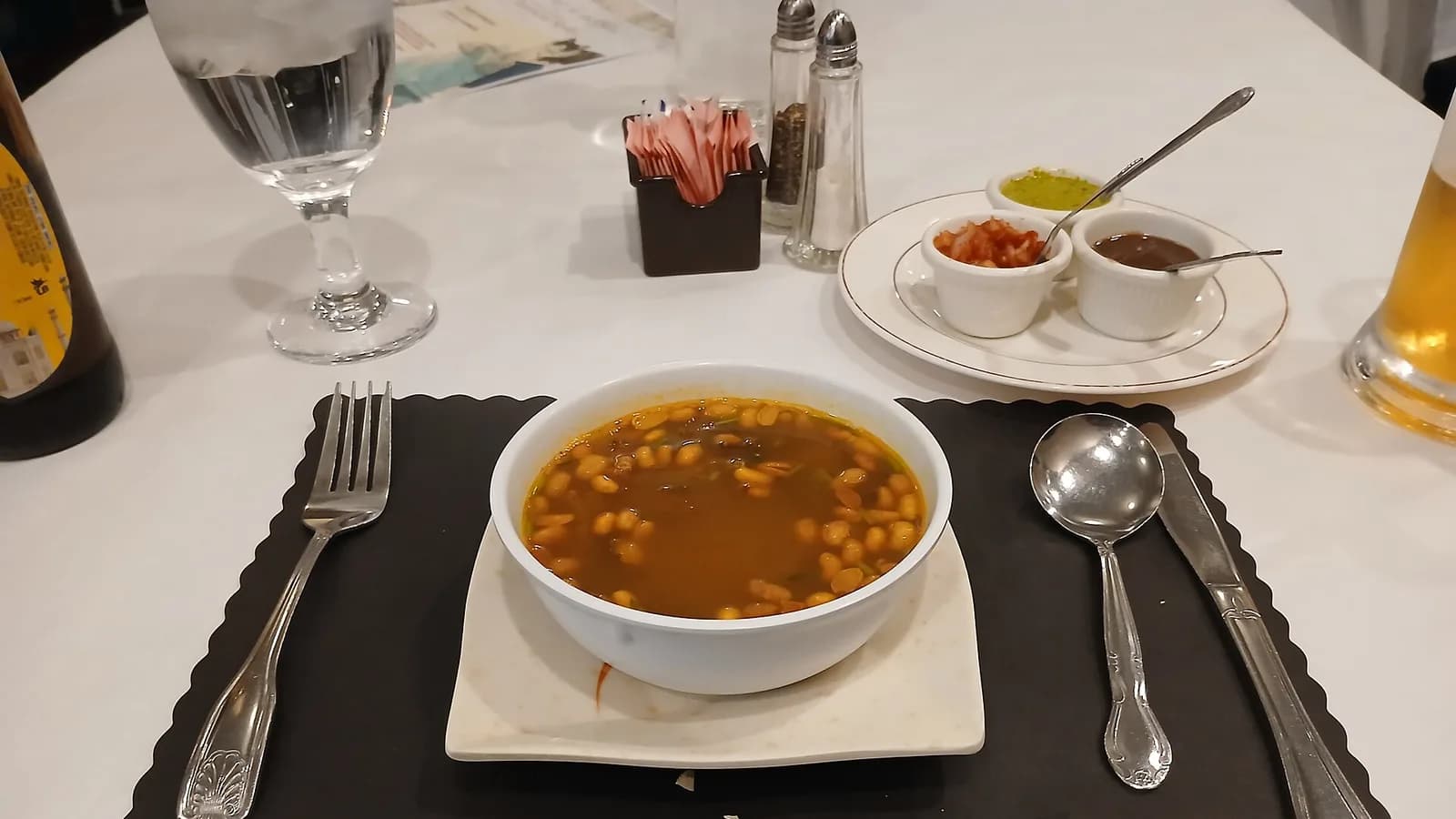
Beyond the rice plates and dumplings that fill most travelers' first days in Nepal lies an older, earthier food culture — and two dishes sit at its heart: gundruk and dhido. Gundruk is fermented leafy greens, sour and pungent and packed with gut-friendly bacteria. Dhido is a thick, smooth porridge of buckwheat or millet flour eaten by hand. Together they make up a meal so woven into the life of Nepal's middle hills that it is often called a national dish in its own right.
This guide explains what gundruk and dhido actually are, how they are made and eaten, the genuine nutrition behind them, and where curious travelers can try this distinctly Nepali pairing.
Key takeaways
- Gundruk is fermented, sun-dried leafy greens — usually mustard, radish, or cauliflower leaves — with a tangy, sour flavor and a long shelf life.
- It is made by natural lactic-acid fermentation, the same process behind sauerkraut and kimchi, and is rich in beneficial bacteria.
- Dhido is a thick porridge of buckwheat, millet, or corn flour stirred into boiling water, eaten by hand and naturally gluten-free.
- Together, gundruk and dhido are a classic hill-country meal and a widely cited national dish of Nepal.
- Both are nutritious: gundruk adds fiber, vitamins, and probiotics, while dhido provides slow-burning energy from whole grains.
- They are most common in village kitchens, but traditional restaurants serve them too.
What is gundruk?
Gundruk is one of Nepal's most distinctive foods: leafy greens that have been wilted, fermented, and dried into a tangy, storable ingredient. The greens are typically the leaves of mustard, radish, or cauliflower — the kind of seasonal surplus a hill farm produces all at once. Rather than let them spoil, families have for generations turned them into gundruk, preserving the harvest for the lean winter months.
The flavor is sour, savory, and pungent, with a fermented sharpness a bit like a more rustic, earthier sauerkraut. On its own, dried gundruk is intense; cooked into a dish with tomato, garlic, and chili, it mellows into something deeply comforting. It is rarely eaten raw and dry — instead it becomes the base of a soup or a salad (more on those below).
Importantly, gundruk is a non-salted fermented food. Unlike many pickles, it relies purely on the natural fermentation of the greens rather than a heavy salt brine, which gives it its particular character.
How gundruk is made
The traditional process is simple but takes patience, and in villages it is often a community activity done in large batches:
- Wilt the greens. Fresh mustard, radish, or cauliflower leaves are shredded and left to wilt in the sun for a day or so.
- Pack tightly. The wilted leaves are pressed firmly into a container — traditionally an earthen pot or a vessel lined to keep air out — so the fermentation happens with little oxygen.
- Ferment. Kept warm, the packed greens ferment for about a week as naturally present bacteria get to work.
- Dry. The fermented greens are then spread out and sun-dried until brittle, after which they keep for months.
Behind that humble routine is some genuinely interesting microbiology. Studies of gundruk fermentation have identified lactic-acid bacteria — including Lactobacillus plantarum and Pediococcus pentosaceus as dominant species — as the engines of the process. These microbes convert sugars in the leaves into lactic acid, which is what produces the sour taste and steadily lowers the pH. That growing acidity not only flavors the food but also crowds out spoilage and pathogenic microbes, which is how fermentation preserves the greens so effectively without refrigeration. (See the research links in the Sources below.)
What is dhido?
If gundruk is the tangy side dish, dhido is often the main event it accompanies. Dhido — also spelled dhindo — is a thick, smooth porridge made by stirring flour into boiling water until it pulls together into a stiff, dough-like mass. The traditional flours are buckwheat (phapar) and millet (kodo), though corn and wheat are common too.
The technique is the whole dish. Water and flour are combined at roughly a three-to-one ratio, with the flour added gradually to boiling water and stirred vigorously with a wooden or narrow spatula to keep it lump-free until it thickens and pulls away from the sides of the pot. There is no rising, no baking, and almost no seasoning in the dhido itself — all the flavor comes from what you dip it into.
Dhido carries a lot of history. Before rice became widespread, it was the everyday staple across much of Nepal's hills and mountains, especially in highland communities where millet and buckwheat thrive but rice will not grow. For a long time it was even seen as a humbler, lower-status food compared with rice — a perception that has reversed in recent years as people have come to appreciate the nutritional value of Nepal's indigenous grains, and dhido now appears proudly on restaurant menus.
How gundruk and dhido are eaten
The two come together in the iconic gundruk dhido meal. Here is how it works on the plate:
- Gundruk ko jhol (gundruk soup) is the most common way to serve the greens. Soaked gundruk is sauteed with onion, garlic, chili, tomato, and turmeric, then simmered into a thin, tangy, aromatic soup. A bowl of it over rice — or alongside dhido — is pure hill-country comfort food.
- Gundruk sadeko is a punchy salad: the rehydrated greens tossed with chili, onion, tomato, mustard oil, and spices into a zingy, sour relish.
- Dhido is eaten with the right hand. You pinch off a small, bite-sized piece, dip or roll it in the gundruk soup, curry, lentils, or a meat stew, and swallow it — traditionally without much chewing.
One practical rule matters: dhido must be eaten steaming hot, straight after it is cooked, because it firms up and becomes harder to manage as it cools. It is filling, sticky, and meant to be shared, often served with gundruk, vegetable curry, pickle, and sometimes meat. The combination of tangy fermented greens against the mild, hearty porridge is exactly what makes the meal so satisfying.
For the broader context of how Nepalis eat by hand and mix their plates, our dal bhat guide explains the same right-hand, dip-and-combine approach used across the cuisine.
Are gundruk and dhido healthy?
For the most part, this is genuinely nutritious, whole-food eating — which is a big reason both dishes have enjoyed a revival.
Gundruk brings two things to the table. First, as a fermented food it is a source of beneficial lactic-acid bacteria that support a healthy gut, the same broad benefit associated with foods like yogurt, kimchi, and sauerkraut. Second, the greens themselves contribute fiber along with vitamins and minerals, including vitamin C, iron, and calcium. The fermentation also gives gundruk its characteristic acidity, so it is naturally quite tart.
Dhido is valued as a source of slow-burning energy from whole grains. Made from buckwheat or millet, it is naturally gluten-free (when those flours are used), high in fiber, and free of the oil that fried foods carry, since it is simply grain and water. Millet and buckwheat are hardy, nutrient-dense crops, which is part of why Nepal's indigenous grains have been re-evaluated so positively in recent years.
A sensible caveat: exact nutrition depends on the greens, the grain, and how a particular cook prepares the meal, so treat any single figure with caution. The broad picture — fermented greens for gut health and micronutrients, whole-grain porridge for steady energy — is reliable and well supported.
Where to try gundruk and dhido in Nepal
Gundruk and dhido live first and foremost in village and home kitchens, and the most authentic versions are eaten in the hills, often in farming communities where the combination is everyday food. If you stay in a homestay in Nepal, there is a good chance you will be served some.
That said, you do not have to trek to a remote village to try it. Many traditional and Nepali-cuisine restaurants in Kathmandu and Pokhara now serve a dhido set — dhido with gundruk, vegetable curry, lentils, and pickle — as a proud showcase of indigenous food. Look for restaurants that specialize in ethnic or organic Nepali cuisine, and ask for dhido, gundruk ko jhol, or gundruk sadeko by name. Our best restaurants in Kathmandu guide is a good starting point, and the Newari food guide covers more of the valley's traditional plates.
A few tips for first-timers:
- Start with gundruk soup rather than the dry greens — it is the gentlest introduction.
- Eat the dhido hot and do not be shy about using your hand; it is the intended way.
- Expect sourness from the gundruk; it is meant to be tangy, not mild.
For the words to order and compliment your meal, see ordering food in Nepali and how to say delicious in Nepali — telling the cook mitho chha over a bowl of homemade gundruk will earn you a warm smile.
Why this pairing matters
It would be easy to overlook gundruk and dhido on a short trip, surrounded as you are by momos and dal bhat. But this pair tells you something the more famous dishes do not: it is the taste of Nepal before rice and roads reached every valley, the food that highland communities built from buckwheat, millet, and whatever greens the season gave them. That it has gone from "poor person's food" to a celebrated national dish — appearing on smart restaurant menus and being prized for its nutrition — is a small, satisfying story about a country re-valuing its own roots.
Seek it out, eat the dhido with your fingers while it is hot, chase it with sour gundruk, and you will have tasted one of the most genuinely Nepali meals there is.
Sources
- Dhindo — Wikipedia
- National Food of Nepal: Gundruk and Dhido — Everything in Nepal
- Gundruk: Process of Making, Nutritive Value and Significance — The Science Notes
- Kinetics and Modeling of Growth and Lactic Acid Production in Gundruk — PMC / NCBI
- What Is Gundruk, and How Is It Used in Nepali Cuisine? — Chef Reader
- Traditional Nepali Dhido Recipe by Chef Ram Bahadur Budhathoki — Outlook Traveller
Frequently asked questions
- What is gundruk?
- Gundruk is a traditional Nepali food made from leafy greens such as mustard, radish, or cauliflower leaves that are wilted, packed tightly, fermented for about a week, then sun-dried. The result is a tangy, sour, dried green that is cooked into soups and salads and is rich in beneficial lactic-acid bacteria.
- What is dhido?
- Dhido, also spelled dhindo, is a thick porridge made by stirring buckwheat, millet, or corn flour into boiling water until it forms a stiff, smooth mass. It is eaten by hand in small dipped balls, is naturally gluten-free, and was historically a staple grain dish in Nepal's hills before rice became widespread.
- Why are gundruk and dhido called a national dish?
- The pairing of gundruk and dhido represents the older, indigenous food culture of Nepal's middle hills and is eaten across many communities. Because it is so emblematic of traditional rural Nepali eating, gundruk dhido is widely described as a national dish alongside dal bhat.
- What does gundruk taste like?
- Gundruk is sour, tangy, and savory with a distinctive fermented aroma, a bit like a sharper, earthier version of sauerkraut. The sourness comes from natural lactic-acid fermentation, and the flavor mellows and deepens when it is cooked into a soup with tomato, garlic, and chili.
- Is gundruk healthy?
- Gundruk is widely considered nutritious. It is a fermented food rich in beneficial lactic-acid bacteria that support gut health, and it provides fiber along with vitamins and minerals such as vitamin C, iron, and calcium. As with any fermented food, it is also fairly high in natural acidity.
- Is dhido gluten free?
- Traditional dhido made from buckwheat or millet flour is naturally gluten-free, which is one reason it is valued today. Recipes vary, however, and some versions use wheat or mixed flours, so anyone avoiding gluten should confirm exactly which flour was used.
- How do you eat dhido?
- Dhido is eaten with the right hand by pinching off a small bite-sized piece, dipping or rolling it in soup, curry, or gundruk, and swallowing it without much chewing. It must be eaten steaming hot, right after cooking, because it firms up and becomes harder to eat once it cools.
- Can tourists try gundruk and dhido in Nepal?
- Yes. While they are most common in village and home kitchens, many traditional and Nepali restaurants in Kathmandu, Pokhara, and the hills serve a dhido set with gundruk, vegetables, and curry. It is a rewarding meal to seek out if you want to taste the older, hill-country side of Nepali food.
Related posts
Dal Bhat — Nepal's National Meal Explained for Travelers
What dal bhat is, what's on the plate, why trekkers live on it, and how to order Nepal's national meal like a local. A practical traveler's guide.
Read postDhido — Nepal's Hill-Country Porridge, Explained
What dhido is, the millet and buckwheat it is made from, how to eat the dhido thali by hand, and why this gluten-free Nepali staple is back in style.
Read postIs Nepali Food Spicy? A Traveler's Honest Guide
Is Nepali food spicy? Mostly no — the dal is mild, the heat hides in the pickle. Here is what to expect and how to order milder food in Nepal.
Read post