Boudhanath Stupa — Visitor Guide to Kathmandu's Tibetan Buddhist Heart
The largest stupa in Asia, the spiritual center of Tibetan Buddhism in exile, and one of Kathmandu's most accessible cultural experiences.
Walk Boudha clockwise once. Walk it clockwise twice. Walk it clockwise three times. You'll understand.
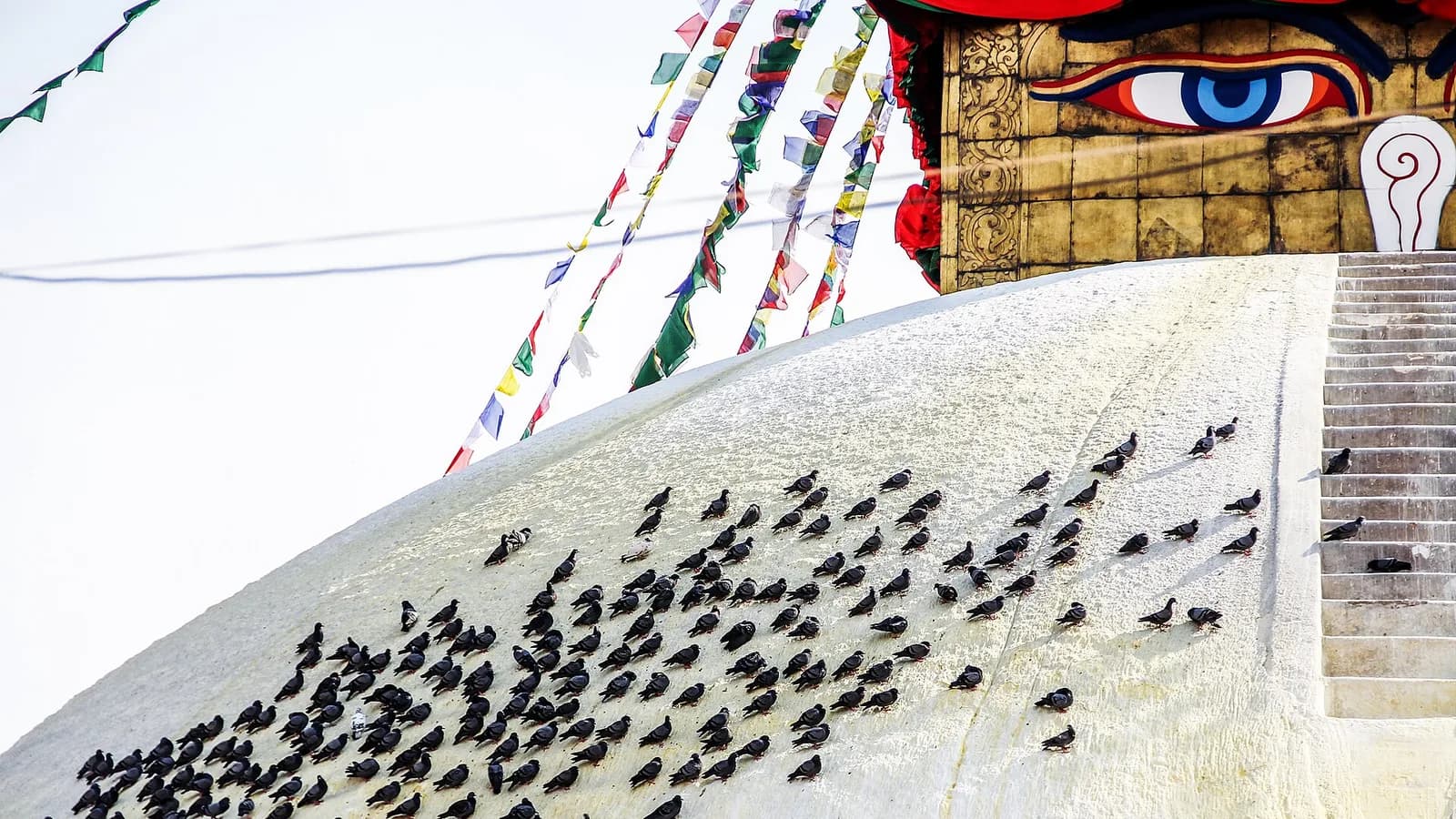
Boudhanath (often shortened to "Boudha") is a 36-meter-tall stupa in northeast Kathmandu — the largest stupa in Asia and one of the most sacred Buddhist sites outside Tibet. It's also home to one of the largest concentrations of Tibetan exiles outside of India, with dozens of monasteries (gompas) clustered around it.
For visitors, Boudhanath is the most accessible deep-cultural experience in Kathmandu. The activity at the stupa — monks circumambulating, butter lamps lit, prayer wheels spinning — happens continuously, day and night.
What it is
A stupa is a Buddhist monument — a structure containing relics or sacred items, used as a meditation focal point. The Boudhanath stupa was built (most scholars believe) in the 5th century CE on the trade route that connected Tibet to India. When Tibetan refugees fled Chinese occupation in the late 1950s, Boudhanath became the spiritual center of the diaspora.
The structure has four levels:
- A massive white dome representing the universe
- A square tower with the Buddha's eyes painted on each side (the famous image you'll see in every Nepal tourism photo)
- A tiered spire above representing the path to enlightenment
- A gold parasol at the top
The Buddha eyes are the iconic image. The third "eye" on the forehead represents wisdom; the "nose" (which looks like a question mark) is the Sanskrit number 1, symbolizing unity.
The basic visit
Entry fee for foreigners: NPR 400 (~$3). Paid at the main entrance. Free for Nepalis and Tibetans.
Hours: technically open 24/7 (Buddhists circumambulate throughout the night), but the ticket booth is staffed 6 AM to 7 PM.
Time to visit: 1-3 hours minimum. Longer if you're stopping at monasteries or eating.
The site is one big circular plaza with the stupa at the center. You walk around the stupa clockwise (in the direction of the sun, called kora) — this is the core ritual. You can do this once or many times. Each circumambulation is considered an act of merit.
The plaza has cafes, shops, and monastery entrances around its perimeter. The stupa itself can be ascended on the lower terraces (shoes off).
The atmosphere
Boudhanath is genuinely contemplative. Tibetan elders walk slowly clockwise around the stupa, spinning prayer wheels, chanting Om Mani Padme Hum under their breath. Monks in maroon robes from the surrounding monasteries pass through. Butter lamps burn in small alcoves around the plaza.
Photographs are universally allowed. Most monks are accustomed to tourist cameras and don't react. Out of respect, don't photograph monks during prayers (when they're seated and engaged) or push cameras close to their faces.
The atmosphere shifts through the day:
- Dawn: the most spiritual moment. Elderly Tibetans arrive for early circumambulation. Crowds are sparse. The light is exceptional.
- Mid-morning to afternoon: tourists arrive, cafes fill, the plaza is busy
- Evening (especially after sunset): a beautiful time. Butter lamps lit. The stupa illuminated. The crowd thins. Many returning Tibetan workers do their evening kora.
Plan a visit at dawn or evening if you can. Mid-day Boudhanath is fine but the early/late hours are special.
The monasteries around the plaza
There are 30+ monasteries within walking distance of the stupa. Most welcome visitors during their public hours (typically 5 AM-12 PM for morning chanting, 5-7 PM for evening). You can sit and observe the monks chanting from the back rows.
Worth visiting specifically:
- Shechen Monastery — large, beautifully decorated. Sometimes hosts public teachings by lamas in residence.
- Khawalung Monastery — smaller, intimate, exceptional acoustics during chanting.
- Maitreya Buddha statue at Buddha Park — a large gold Maitreya statue. Free to visit. Quiet.
Monasteries are religious sites. Same respect rules as temples — covered shoulders/legs, shoes off where indicated, quiet voices, no photography during prayers.
The food
Boudhanath has the best Tibetan and Bhutanese food in Kathmandu, by a wide margin. The Tibetan community here means the food is authentic, not adapted for tourists.
Worth trying:
- Thukpa — Tibetan noodle soup with meat or vegetables
- Momos — Tibetan-style dumplings (often steamed, sometimes fried)
- Tingmo — soft steamed bread, eaten with curry
- Yak butter tea — a savory salted tea that's surprisingly drinkable in the cold
- Tibetan bread — fluffy, slightly sweet, often eaten with eggs
Recommended cafes: Saturday Cafe (overlooks the stupa from the upper level, good for the sunset light), Garden Kitchen (proper Tibetan food, less touristy menu), and the multiple monastery-run cafes that serve simple authentic food.
When the place transforms
Two times per year, Boudhanath becomes something extraordinary:
Losar (Tibetan New Year) — February. The square fills with thousands of Tibetans in traditional dress. Monks perform masked dances. Butter lamps cover every surface. The atmosphere is celebratory, family-oriented, distinctly Tibetan rather than Nepali.
The full moon nights of certain Buddhist months — particularly during Saga Dawa (May/June) commemorating Buddha's birth and enlightenment. Tens of thousands of butter lamps lit, all-night chanting, the stupa floodlit. If you're in Kathmandu during a Buddhist full moon festival, build a night around Boudhanath.
How to circumambulate properly
The Buddhist ritual of kora — walking clockwise around the stupa:
- Start anywhere on the path that circles the stupa — there's no required starting point
- Walk slowly, in the same direction as everyone else (clockwise as you face the stupa)
- Spin prayer wheels as you pass them — gently, with the right hand
- Touch your forehead to specific spots on the stupa wall as you pass, if you feel called
- Chant if you want — Om Mani Padme Hum is the Tibetan mantra most associated with the practice
You don't have to be Buddhist to participate. The ritual is a meditation; it doesn't require belief. Many tourists do one or three circumambulations as a small practice of attention.
The cultural sensitivity
Two specific notes:
- Don't cross the path of someone walking clockwise — wait for them to pass.
- The Tibetan flag flies prominently around Boudhanath despite the Chinese occupation of Tibet. This is a politically sensitive topic; tourists who want to discuss Tibetan independence with locals should be aware that some Tibetans in Nepal face direct pressure from the Chinese government and Nepal's government to keep these conversations quiet.
Pre-visit checklist
- NPR 400 for entry
- Cover shoulders and legs (this is a religious site)
- Bring a camera or phone but commit to respectful photography
- Plan visit at dawn or evening for the best atmosphere
- Try Tibetan food at the cafes around the plaza
- A few hours minimum
- Eight Nepali greetings work; "Tashi delek" (Tibetan greeting) lands too
- The Newari/Tibetan food guide for what to eat
Boudhanath is the easiest deep-spiritual encounter in Kathmandu. Walk it clockwise. Sit quietly with a butter tea. Let the place change you.
Related posts
Tibetan Buddhism in Nepal: A Traveler's Guide
Tibetan Buddhism in Nepal explained for travelers — its four schools, the Boudhanath diaspora, Himalayan gompas, festivals and how to visit respectfully.
Read postBoudhanath Stupa: Architecture & Symbolism Guide
How to read the Boudhanath stupa — its mandala shape, the Buddha eyes, the 13 golden steps, and the meaning behind the clockwise kora walk.
Read postBuddha Statue Nepal: A Traveller's Guide to the Best
Where to see the most striking Buddha statue sites in Nepal, from the giant golden trio at Swayambhu to the stone Buddha of Mustang.
Read post