Newari Food in Kathmandu — Samay Baji, Chatamari, Yomari Explained
The food of the indigenous Kathmandu Valley people — distinct from mainstream Nepali cuisine, deeper, stranger, and worth seeking out.
Newari food is what Nepali food was before it got national.
Most "Nepali food" tourists try in Thamel is actually a generic Nepali-Indian fusion: dal bhat, momos, fried rice, momos, more momos. It's good, but it's not the food of the people who built the Kathmandu Valley.
The Newars — the indigenous people of the Kathmandu Valley — have their own cuisine that's older, more elaborate, and more distinct than the standard tourist menu suggests. It's still cooked in Newari neighborhoods of Patan, Bhaktapur, and Kathmandu's old city, but you have to look for it.
Here's what to try and where to find it.
The Newars in brief
The Newars are the original inhabitants of the Kathmandu Valley, with their own language (Newari/Nepal Bhasa), architecture (the iconic carved-wood temples and houses), and cuisine. They're traditionally split into many sub-groups by caste and trade. The food traditions are particularly elaborate among the merchant and artisan castes.
Newari cuisine evolved before tomatoes, potatoes, and chilies arrived from the Americas — meaning many traditional dishes use older ingredients (mustard oil, beaten rice, buffalo meat, soybeans, fermented vegetables, ginger, garlic, turmeric) in combinations that taste distinctly older and more complex than mainstream Nepali food.
The dishes to try
Samay Baji — the ceremonial plate
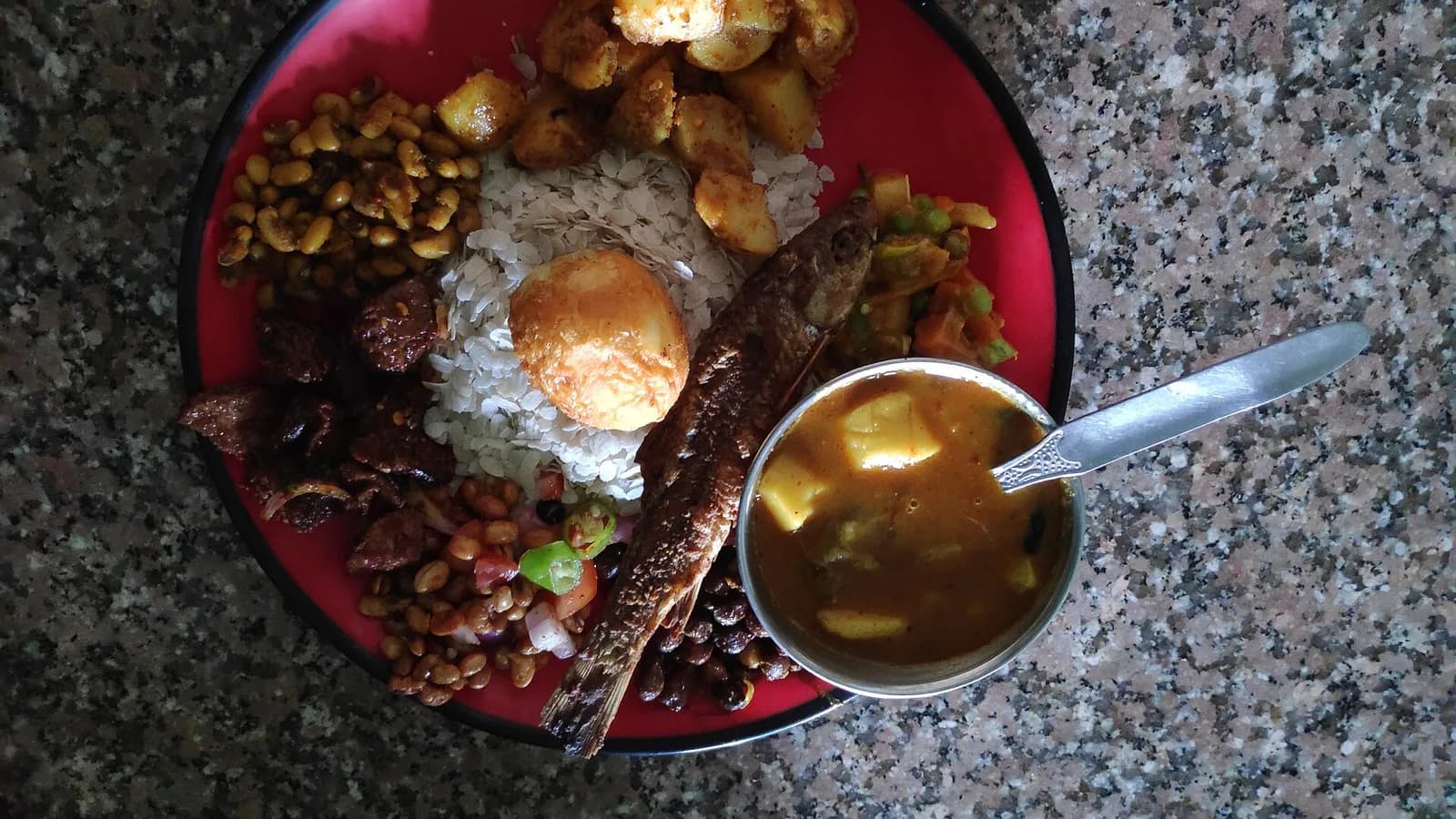
Samay Baji is the iconic Newari meal — a brass plate with multiple items arranged in a specific order. It's served at festivals, ceremonies, and increasingly as a tourist Newari food experience.
A typical plate includes:
- Chiura (beaten/flattened rice) — the base
- Choila (spiced grilled buffalo or chicken with mustard oil)
- Bhuteko masu (fried meat curry)
- Wo (lentil pancakes, savory)
- Bara (lentil fritters, similar to vada but larger)
- Aaloo achaar (pickled potato salad)
- Boiled egg
- Black-eyed peas / soybeans (bhatmas)
- Pickled ginger and garlic
You eat with your right hand, mixing small portions of each item. The chiura is the carbohydrate base; everything else is small intense flavors layered on top. Strong taste, lots of textures.
Often served with aila — Newari rice liquor (clear, fiery, traditionally home-distilled). The combination is the cultural centerpiece of Newari hospitality.
Chatamari — the Newari "pizza"
Chatamari is a thin rice-flour crepe topped with minced meat (usually buffalo), egg, and minced vegetables, then cooked together so the toppings bind into the crepe. It's sometimes called "Newari pizza" because of the round shape and topping style.
It's also one of the easier Newari dishes for newcomers — the flavors are accessible, the texture is familiar, and the portion size works as a snack or meal.
Best version: at small Newari shops in Asan (Kathmandu's central market square) or Patan.
Yomari — the festival dumpling
A teardrop-shaped sweet dumpling made of rice flour, filled with a mix of jaggery (raw cane sugar) and sesame, then steamed. The shape is symbolic of fertility and harvest.
Yomari is traditionally made during Yomari Punhi — the December full moon festival celebrating the rice harvest. The dumplings are offered to deities and then eaten by the family. Many Newari households still make them.
You can find yomari year-round at specific Newari sweet shops, but they're at their best during December.
Bara — the lentil fritter
Round, palm-sized fritters made from black lentil paste, deep-fried until crispy. Sometimes with an egg baked into the top.
Bara is the casual Newari food you'll find at small shops throughout the old city. Eat with a side of tomato-ginger chutney. NPR 30-50 per piece. The best ones come out of the fryer onto your plate.
Choila — the spicy grilled meat
Spiced grilled buffalo (sometimes chicken, sometimes goat) tossed with mustard oil, garlic, ginger, chili, and other spices. Served as a side or a main with chiura.
There are two main styles:
- Haku choila — black, made with smoke-treated meat, intense smoky flavor
- Mana choila — fresher version with herbs
The Patan version is particularly good. The flavor is unlike anything in mainstream Nepali food.
Aila — the local rice liquor
Clear, strong (40-50% alcohol), home-distilled rice liquor served at room temperature in small cups. Traditional with Samay Baji.
It's not for everyone — the taste is strong and the alcohol kicks fast. But at a traditional Newari meal, refusing aila is missing half the cultural experience.
Sukuti — dried meat
Buffalo or yak strips dried into jerky, then spiced and either eaten as-is or pan-fried. Common bar snack in Newari pubs. Salty, chewy, intensely flavored.
Where to find Newari food in Kathmandu
Patan (Lalitpur):
- Honacha — the most famous traditional Newari restaurant. Brass plates, traditional seating, full Samay Baji experience. Touristy but the food is real.
- Sasa — modern Newari fine-dining. Beautifully presented, good for first-time eaters.
- Bhaikaaji's — local Newari pub-style. Casual, cheap, authentic.
Bhaktapur:
- Newa Lahana — large traditional restaurant, full menu, popular with tour groups but the food is solid
- Café Nyatapola (in Taumadhi Square) — touristy location but decent Newari thali
Kathmandu (Asan and Indra Chowk area):
- Kasthamandap Restaurant — traditional, slightly touristy
- Krishnarpan (in Dwarika's Hotel) — high-end, upscale Newari fine-dining, expensive but exceptional
- Small shops throughout Asan — for chatamari, bara, and casual snacks
Boudhanath area:
- Several Tibetan-Newari fusion places near the stupa
What to order if you're new to Newari food
Start with:
- Chatamari with egg and meat — easy entry, familiar texture
- Bara — casual, snackable
- Yomari if available — sweet and approachable
Then graduate to: 4. Samay Baji set — the full ceremonial plate 5. Choila with chiura — the strong-flavored Newari core 6. Aila to taste
A few tips
- Newari restaurants serve buffalo meat as the default red meat. The flavor is darker and richer than beef. If you don't eat beef for religious reasons, buffalo is generally fine (Hindus often eat buffalo in regions where cows are protected).
- Don't eat with your left hand. The right hand for food.
- Spicy in Newari cuisine often means actually spicy. Ask for milder versions if needed — "kam piro garnu hos" (less spicy please).
- The traditional seating in many Newari restaurants is on the floor with low tables. Knees and hips need to cooperate.
- Some Newari shops are alcohol-friendly (serve aila); others are strictly vegetarian and dry. The reputation usually carries.
The connection to Newar festivals
Many Newari dishes are linked to specific festivals:
- Yomari Punhi (December) — yomari
- Samay Baji at Indra Jatra (September) — see our Indra Jatra guide
- Specific sweets at Tihar — see our Tihar guide
If you're in Kathmandu during a major Newari festival, you can sometimes find food being served at home shrines or community feasts. Accept any invitation.
Pre-meal checklist
- Cash (most authentic Newari places don't take cards) — NPR 800-1,500 for a full meal
- Right-hand eating ready
- Willingness to try unfamiliar textures and flavors
- The Nepali greetings — "Namaste, ek samay baji set, ek aila" works
- Patience for the slower pace of traditional Newari restaurants
Newari food is one of the most rewarding food experiences in Kathmandu, and the easiest to miss if you stick to tourist restaurants. Find one Patan or Asan Newari restaurant, eat slowly, and you'll understand a layer of Kathmandu that's invisible from Thamel.
Related posts
Newari Food: A Beginner's Guide to the Newar Feast
Newari food explained for travellers — samay baji, choila, chatamari, yomari and juju dhau, plus the festivals and feasts that the dishes belong to.
Read postNewari Khaja Set: A Guide to the Brass-Platter Feast
What is a Newari khaja set? A traveller's guide to Samay Baji — the beaten-rice platter, what each item is, and how to eat it in Kathmandu.
Read postPatan Durbar Square: A Visitor's Guide to Lalitpur
Patan Durbar Square is Lalitpur's UNESCO-listed palace plaza of Newari temples, courtyards and bronze art. History, monuments, fees and tips.
Read post