Nepali vs Hindi — How Similar Are They Really?
Both Indo-Aryan languages. Both use Devanagari. Both share vocabulary. But the grammar diverges in ways that surprise Hindi speakers — and English speakers.
A Hindi speaker can survive in Nepal. They can't pass for local.
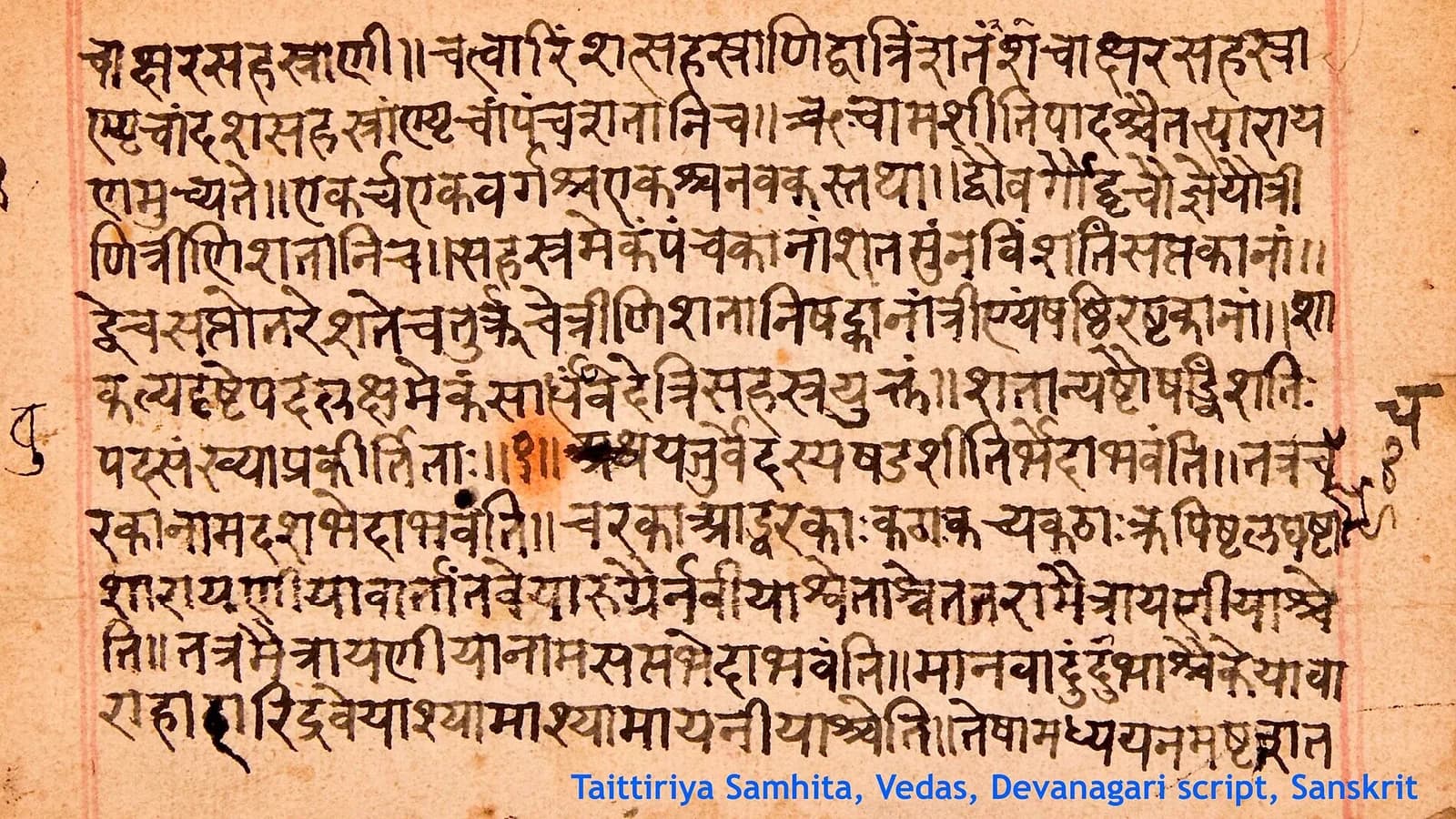
If you speak Hindi (or Urdu — they're essentially the same spoken language), how much Nepali do you already know?
The short answer: about 30-40% of the vocabulary and 60% of the basic grammar. That's enough to be functional in Nepal — to understand directions, order food, and have simple conversations. It's not enough to be fluent, and Nepali speakers immediately recognize a Hindi speaker speaking Nepali as a non-native (in a friendly way).
For an English speaker considering whether to learn Nepali specifically or just lean on Hindi if you have it: the honest answer is mixed. Here's the breakdown.
Shared roots
Nepali and Hindi are both Indo-Aryan languages — descended from Sanskrit through different lineages over the past 1,500-2,000 years. They share:
- The same script: both use Devanagari
- Significant vocabulary overlap: most everyday nouns are similar or identical (water, food, house, family, numbers, time)
- Many verb roots: especially common verbs (go, come, eat, see, do)
- Similar sentence structure: both are Subject-Object-Verb languages
A Hindi speaker reading Nepali text can grasp the gist of about 50-60% of a typical written sentence. Spoken Nepali at conversational speed is harder — the prosody is different.
The key differences
1. Honorifics and pronouns
This is the biggest grammatical divergence. Hindi has a 3-level honorific system (तू tu, तुम tum, आप aap for "you"). Nepali has the same 3 levels but uses different words and stricter contextual rules:
- तपाईं (tapaai) — formal/respectful "you" (used for elders, strangers, in business)
- तिमी (timi) — informal "you" (peers, friends, younger relatives)
- तँ (ta) — very informal/intimate or condescending "you" (close friends, children, sometimes deities)
The verb conjugation changes with each level. The Hindi-trained speaker often defaults to tum equivalents, which in Nepali maps to timi — appropriate for friends but sometimes inappropriate for service interactions.
Nepali also has more elaborate verb conjugation for the honorific level than Hindi does. Saying "go" properly in Nepali requires knowing whether you're commanding a child, requesting from a peer, or politely asking an elder.
See our Nepali honorifics guide for the full breakdown.
2. Verb endings
Nepali verb endings change with gender of the speaker in some tenses, where Hindi doesn't. Saying "I went" in past tense:
- A man says: Ma gaayen (म गएँ)
- A woman says: Ma gaayen (म गएँ) — but other tenses do conjugate by gender
Hindi historically didn't distinguish speaker gender in verb endings (though Urdu sometimes does). Nepali maintains this distinction more rigorously in some forms.
3. Vocabulary divergence
About 30-40% of common vocabulary differs between Nepali and Hindi:
| English | Hindi | Nepali | |---|---|---| | how much | kitna | kati | | where | kahaan | kahaan (same) | | what | kya | ke | | good | accha | ramro | | big | bada | thulo | | small | chhota | sano | | friend | dost | saathi | | to do | karna | garnu | | to come | aana | aaunu | | food (meal) | khana | khana (same) |
A Hindi speaker can guess about half of these from context, but the unfamiliar half requires actual learning.
4. Sounds
Nepali has the same Devanagari sounds as Hindi (with one or two minor differences), but the way native speakers pronounce them differs:
- Nepali tends to soften certain consonants where Hindi keeps them harder
- Nepali rhythm and stress patterns are different — even speaking exactly the same words, a Nepali speaker sounds different from a Hindi speaker
- Vowel pronunciations are slightly different in some words (especially long vowels)
5. The "Hindi-fication" of Nepali
In modern Nepali, especially in Kathmandu, you'll hear significant code-switching with Hindi — both because of Bollywood influence and the large Nepali community in India. Some Nepali speakers will use Hindi words interchangeably with Nepali ones, especially in casual conversation.
This means: if you speak Hindi and use Hindi words occasionally in Nepali conversation, it usually works. The speaker understands and might respond in either language.
Can a Hindi speaker just use Hindi in Nepal?
Yes, mostly. Most Nepalis you'll meet in tourist contexts (Kathmandu, Pokhara, trekking lodges) understand basic Hindi well. Many speak Hindi fluently. You can navigate Nepal entirely in Hindi if needed.
But here's the social texture: speaking Hindi in Nepal can come across as slightly culturally tone-deaf. There are political tensions in Nepal-India relations, and some Nepalis are sensitive to the assumption that they should speak Hindi for Indian/foreign visitors. Hindi speakers who make even a token effort with Nepali greetings get noticeably warmer responses.
A Hindi speaker who says namaste and dhanyabad in Nepali (instead of namaskar and shukriya in Hindi) is making the right gesture, and Nepalis recognize it.
What should a Hindi speaker do?
If you speak Hindi and are visiting Nepal:
- Learn 20-30 specifically Nepali phrases, the most common everyday vocabulary
- Practice the Nepali greetings (namaste, dhanyabad, pheri bhetaunla) — these land differently than Hindi equivalents
- Use Nepali pronouns where you can (tapaaiko instead of aapka)
- Listen for code-switching cues — your interlocutor will signal whether they prefer Hindi or Nepali
- Accept that you'll be understood as a Hindi speaker speaking some Nepali — this is a charming category in Nepal, not a problem
A Hindi speaker can become functionally conversational in Nepali in about 2-3 months of focused practice, vs the 6-12 months an English speaker typically needs.
What about Nepali speakers learning Hindi?
Easier in the other direction — Bollywood and the Indian media presence in Nepal mean most Nepalis already understand significant Hindi. Most Nepali school curricula include Hindi or significant Hindi-medium content.
Should you learn Nepali specifically if you only have a short trip?
For travelers with no prior South Asian language background:
- 1-week trip: learn 10-15 Nepali phrases. Don't worry about Hindi.
- 2-3 week trip: learn 30-50 phrases plus Devanagari basics. Still don't worry about Hindi.
- 1-3 month stay: learn Nepali properly. The Hindi vs Nepali distinction matters for full fluency.
- Long-term in Kathmandu: learn both — they're useful in different contexts.
The pragmatic answer for tourists: focus on Nepali specifically. The phrasebook on this site is built for that. See the trekking phrases and scenarios for the targeted lists.
The cultural angle
Language choice in Nepal carries political weight that English speakers often miss. Tibetan-Nepali communities (like in Boudhanath) often speak Tibetan as their primary language. Newari communities in Kathmandu Valley have their own language (Nepal Bhasa). Indian communities along the southern border speak primarily Hindi or regional Indian languages.
Speaking "the right language" in the right neighborhood matters. Default to Nepali where Nepali speakers live. Default to Hindi only where it's clearly appropriate (border regions, Indian-Nepali communities).
Common false friends
A few words that exist in both languages but mean slightly different things:
- Bhayo (Hindi: "happened" / Nepali: "happened, became, OK")
- Aata (Hindi: "is coming" / Nepali: "is coming" — same meaning, different conjugation)
- Chha (Hindi: minor word / Nepali: extremely important — "is/exists" — used in nearly every sentence)
Most overlap is benign; chha is the one to watch — its usage in Nepali is far more central than its rare Hindi appearances.
Pre-trip checklist
- If Hindi speaker: learn the 20 most common specifically-Nepali phrases
- Practice Nepali greetings even if you'd default to Hindi
- The Nepali phrasebook for the targeted vocabulary
- The scenarios for context-specific scripts
- The Devanagari roadmap — Hindi speakers already know the script, which is half the battle
Hindi gets you most of the way in Nepal. Nepali gets you the rest of the way — and the cultural warmth that the rest is mostly made of.
Related posts
Nepali Language: A Traveller's Guide to Nepal's Tongue
The Nepali language explained for visitors: where it comes from, how its grammar works, the Devanagari script, and the handful of words that open doors.
Read postLanguages of Nepal: Official Language & 124 Mother Tongues
Languages of Nepal explained: Nepali is the official language, but the 2021 census counted 124 mother tongues from Maithili to Newar. A clear guide.
Read postThe Nepali Alphabet: A Traveler's Plain-English Guide
The Nepali alphabet explained for tourists: how many letters, vowels, consonants, matras and numerals — and why the script is easier than it looks.
Read post