Khukuri Buying Guide: The Gurkha Knife & Flying It Home
How to buy a real khukuri (Gurkha knife) in Nepal — spot a forged blade, understand the parts, and fly it home legally in checked baggage.
A real khukuri is forged, not cast — and it flies home in your hold bag, never your carry-on.
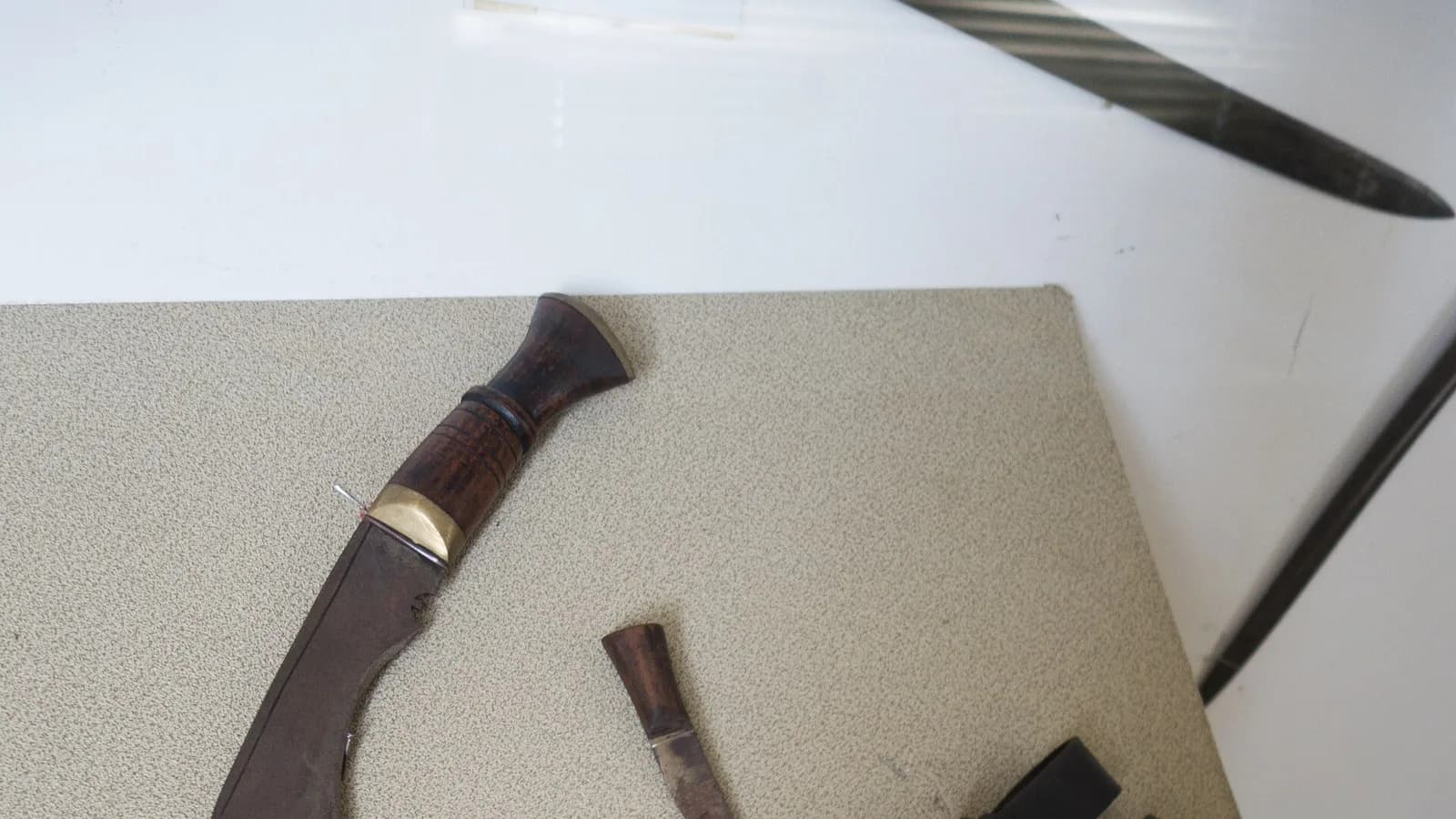
The khukuri — the forward-curved blade carried by Nepal's legendary Gurkha soldiers — is the most characterful thing you can carry home from Nepal, and the one with the most rules attached. A real one is a forged tool with centuries of history behind it; a fake one is a soft, cast lump sold to people who do not know the difference. And whichever you buy, getting it home means knowing exactly how a bladed weapon may travel by air. This guide covers buying a genuine Gurkha knife in Nepal, reading its parts, and flying it home legally.
This is a deep dive on one item from our wider what to buy in Nepal guide. Prices here are rough 2024-2025 figures from Nepal-based forges (sources at the end); they move with size, steel, and exchange rates, so use them to calibrate rather than as a fixed quote.
Key takeaways
- A real khukuri is forged from high-carbon steel with a proper tang — cheap stall versions are thin and often cast, not forged.
- The genuine article usually ships with two companion tools in the sheath: the karda (small knife) and chakmak (honing steel).
- That notch near the handle is the cho — part engineering, part Hindu symbol.
- Flying rule: a khukuri travels in checked baggage only, never carry-on — wrap it, and declare it at check-in.
- Before you buy, check your destination country's import and knife-carry laws — they vary widely and can be strict.
What the khukuri is
The khukuri (commonly spelled kukri in English) is a knife with a distinctive inward-curving blade that originated in the Gorkha kingdom, in what is now Nepal. It is the national weapon of Nepal and doubles as an everyday utility tool — splitting wood, clearing brush, preparing food — which is exactly why it became the signature blade of the Gurkha soldier.
It is also a powerful symbol. The khukuri is the recognised emblem of Gurkha military units worldwide, from the Brigade of Gurkhas in the British Army to various Gorkha regiments of the Indian Army and the Gurkha Contingent of the Singapore Police Force. That dual identity — humble tool and fighting blade with a fearsome reputation — is a big part of why travellers want one.
The anatomy of a khukuri
Knowing the parts helps you judge quality and talk to a seller with some credibility. A traditional khukuri is more than a curved blade.
| Part | Nepali term | What it is | |---|---|---| | Edge | dhaar | The sharpened cutting edge along the curve | | Spine | beet | The thick, blunt back of the blade | | Belly | bhundi | The widest part, where chopping power concentrates | | Fuller / hump | chirra | A groove or ridge that absorbs impact and saves weight | | Notch | cho / kaudi | The small distinctive cut near the handle | | Companion knife | karda | A small utility blade in the sheath | | Honing tool | chakmak | A blunt steel for maintaining the edge |
The cho (the notch)
The little notch where the edge meets the handle is the cho (or kaudi), and it is doing several jobs at once. Practically, it is a stress-relief point that stops cracks from propagating up into the blade under hard impact. Functionally, it helps fluids drip clear of the handle rather than running onto your grip. And spiritually, its shape is read as the trident of Shiva or a cow's hoof, both sacred in Hindu tradition — a small reminder that this is a cultural object, not just a tool.
The karda and chakmak
A traditional sheath has two slots holding small companion tools. The karda is a little utility knife for fine work; the chakmak is a blunt, hardened steel used to hone the edge and, historically, to strike a spark for fire. A khukuri arriving with both is showing you its proper duty-issue configuration — and their presence is itself a mark of a maker working in the tradition rather than knocking out souvenirs.
How to spot a real khukuri
The gap between a genuine forged khukuri and a tourist fake is wide and easy to learn.
- Forged, not cast. A real khukuri is hand-forged from high-carbon steel (often recycled leaf-spring), then heat-treated and tempered. Cheap versions are frequently cast — poured into a mould — which leaves a soft, brittle blade that will never hold an edge. Look for subtle hammer marks and a blade with real heft.
- The tang. Quality blades have a full tang (a continuous strip of steel running the length of the handle) or a traditional hidden/rat tang. A full tang is strongest; a well-made hidden tang is historically authentic and gives lighter balance. What you do not want is a flimsy stub.
- The handle. Authentic grips are wood or horn, tightly fitted to the tang with no wobble or gaps; leather or cord wraps should be neat and unfrayed. A loose, rattling handle is a warning.
- The companion tools. The presence of a properly fitted karda and chakmak is a good sign of a maker working in the tradition.
- The sheath. A genuine khukuri sits in a sturdy leather-over-wood scabbard, not flimsy stitched card.
Many of the country's best blades come from forging towns such as Bhojpur and Dharan in the eastern hills, and reputable Nepali forges sell directly to travellers. The differences between a forged tool and a NPR 500 display piece are exactly the kind of "antique" and quality cons covered in our Nepal tourist scams guide — worth a read before you hand over cash.
Sizes, styles, and price
Khukuris come in a wide range of sizes, usually quoted by overall length. Common blades run from around 10 inches up to 18 inches or more. A useful rough framing:
| Size (overall) | Best for | Trade-off | |---|---|---| | ~10-12 in | Souvenir, light utility, easy packing | Less chopping power | | ~13-15 in | All-round working blade | Heavier to carry | | 16 in+ | Heavy chopping, presentation pieces | Bulky; harder to carry legally at home |
The slim, leaf-shaped sirupate style — named after the siru grass blade it resembles — is a popular lighter pattern that still cuts well. Working blades are typically made from high-carbon steels (5160 spring steel is common), differentially hardened so the edge is hard while the spine stays tougher.
On price, the headline is simple: a genuine forged khukuri is not a NPR 500 trinket. Real pieces from established Nepali forges commonly run into the tens of US dollars and up depending on size, steel, and finish — a small tactical sirupate might sit around US$40 (as of 2025), with presentation and collector blades climbing well beyond. The very cheap stall versions are decorative castings. If you want a tool, expect to pay for one, and use the Nepali numbers and bargaining phrases to settle on a fair figure rather than to chase an impossibly low one.
Flying home with a khukuri
This is the part that catches people out, so treat it as non-negotiable.
Checked baggage only — never carry-on
A khukuri is a bladed weapon, and aviation security treats it as one. It must travel in your checked (hold) baggage only. Put it in your cabin bag and it will be confiscated at the security checkpoint. Specifically:
- Nepal Airlines and Yeti Airlines prohibit khukuris in carry-on luggage. The knife must be packed in checked baggage, securely wrapped, and declared at check-in to avoid confiscation.
- In the United States, the TSA permits knives only in checked bags, and they must be sheathed or securely wrapped so they cannot injure baggage handlers.
- India's civil aviation authority (DGCA) bans sharp objects including khukuris from the cabin; they must go in checked luggage.
Practically: sheath the blade, wrap it in clothing or bubble wrap so it cannot shift or cut through the bag, pack it deep in your hold luggage, and tell the check-in agent. Because policies differ between carriers, confirm with your specific airline before you fly.
The destination-country import caveat
Getting it onto the plane is only half the problem — your home country has its own import and knife-carry laws, and these vary widely. You must check yours before you buy. Two illustrative examples:
- United Kingdom: you may own and import a khukuri for legal personal use, but a knife with a blade over three inches cannot be carried in a public place without a good reason (such as work, bushcraft, or transporting it). So a souvenir khukuri is fine to bring home and keep — but do not wander around town with it.
- India: beyond the cabin ban, customs allows knives for personal use, but blades over roughly six inches (15 cm) may require documentation. Declare it.
These two are only examples. Other countries range from relaxed to outright prohibitive, and the rules change. Check your own customs and weapons regulations before purchasing — it is far better to know at the shop than at the airport.
Where to buy and how to carry it home
Buy from a reputable forge or specialist shop that sources directly from Nepali smiths and can talk credibly about steel, tang, and hardening — not from a generic souvenir rack. Many of the best makers trace to the eastern forging towns, and several sell to travellers in Kathmandu and online.
When you buy, ask the seller to wrap it properly for hold-baggage travel and keep your receipt — useful both for proving it is a modern reproduction (not a restricted antique) and for any customs questions at home. If your shopping takes you across the valley, the metal-and-craft workshops of Lalitpur are worth a wander; see our Patan (Lalitpur) guide. And to base yourself near the Kathmandu shops in the first place, our where to stay in Kathmandu guide has the neighbourhoods.
The bottom line
A khukuri is one of the few souvenirs that is also a genuine, useful tool with a real story — but only if you buy the forged article, not the cast imitation. Look for high-carbon steel, a proper tang, a tight handle, and the karda and chakmak in the sheath. Pay a fair price for a real blade rather than chasing a fake's price. Then handle the logistics with care: checked baggage only, wrapped and declared, and your home country's import rules checked before you buy. Do that, and the Gurkha knife on your wall will be the real thing — and you will have got it home without a hitch.
Sources
- How to Identify Genuine Gurkha Kukri Knife — Kukri House Online
- Real Khukuri vs Fake Khukuri: How to Identify a Genuine Blade — Everest Forge
- Kukri — Wikipedia
- Kukri (Khukuri) Terminology Guide — Everest Forge
- Is It Legal to Import a Kukri? Laws by Country — Everest Forge
- Knives — Transportation Security Administration
- UK Knife Law: Legal to Own & Buy Kukri Guide — KBS Knives Store
- Can I Carry a Kukri Knife from Nepal to India on a Flight — India Baggage Rules
Frequently asked questions
- What is a khukuri?
- A khukuri (also spelled kukri) is the forward-curved blade that is the national knife of Nepal and the symbol of the Gurkha regiments. It originated in the Gorkha kingdom and serves as both a working tool and a fighting blade, which is why English speakers often call it the Gurkha knife.
- How do I tell a real khukuri from a tourist fake?
- A genuine khukuri is forged from high-carbon steel, with a full or hidden tang running into the handle, visible hammer work, and a tightly fitted grip of wood or horn. Cheap display pieces are thin, often cast rather than forged, with a loose handle and a soft blade. A working khukuri usually arrives with two small companion tools tucked into the sheath.
- Can I take a khukuri on a plane?
- Only in checked baggage, never in your carry-on. It is a bladed weapon, so airport security will confiscate it from a cabin bag. Nepal Airlines and Yeti Airlines require it to be packed in the hold, securely wrapped, and declared at check-in, and the same checked-only rule applies under TSA in the United States and most other carriers.
- Is it legal to bring a khukuri into my home country?
- Usually yes for personal use, but the rules vary a lot and you must check before you buy. In the UK you may own and import one for legal personal use, but a blade over three inches cannot be carried in public without a good reason. India's aviation authority bans it from the cabin and blades over about six inches may need documentation at customs. Always confirm your own country's import and carry laws.
- What is the notch in the blade for?
- That small notch near the handle is called the cho or kaudi. It works as a stress-relief point that stops cracks travelling up the blade, helps fluids drip off rather than run onto the grip, and carries spiritual meaning — its shape is read as the trident of Shiva or a cow's hoof, both sacred in Hindu tradition.
- What are the two little knives that come with a khukuri?
- They are the karda and the chakmak. The karda is a small utility knife for fine cutting, and the chakmak is a blunt steel honing tool used to maintain the edge and, traditionally, to strike a spark. Together they make up the classic duty-issue set tucked into the sheath.
- What size khukuri should I buy?
- For a souvenir or general utility blade, something in the rough 10-to-12-inch overall range is easy to handle and to pack. Larger 15-inch-plus blades look dramatic and chop well but are heavier and harder to carry legally at home. The slim sirupate style is a popular lighter choice.
- How much does a real khukuri cost in Nepal?
- A solid hand-forged working khukuri is not a NPR 500 souvenir. Genuine pieces from reputable Nepali forges commonly run in the tens of US dollars and up depending on size, steel, and finish, with collector and presentation blades costing considerably more. The very cheap stall versions are display pieces, not tools.
Related posts
Buy Khukuri Nepal: Where to Shop for a Real One
Where to buy a khukuri in Nepal — Thamel shops, the eastern forging towns, ethical sourcing, and how to shop without getting a cast fake.
Read postBest Things to Buy in Nepal: A Smart Shopper's Guide
The best things to buy in Nepal and how to buy them well — fair-trade artisans, value-for-luggage picks, a shopping-day plan, and tips that respect makers.
Read postNepal Souvenirs: Gift Guide & Getting Them Home
A practical Nepal souvenirs guide by recipient and budget — what packs light, how to spot fakes, and the export and airport rules that actually matter.
Read post