Buddha Jayanti at Lumbini — Buddha Purnima Festival Guide
Buddha Jayanti at Lumbini marks Buddha's birth on the May full moon. What the festival looks like, when it falls, and how to attend respectfully.
Once a year the quiet birthplace of the Buddha fills with butter lamps, chanting, and pilgrims who have travelled half of Asia to be there.
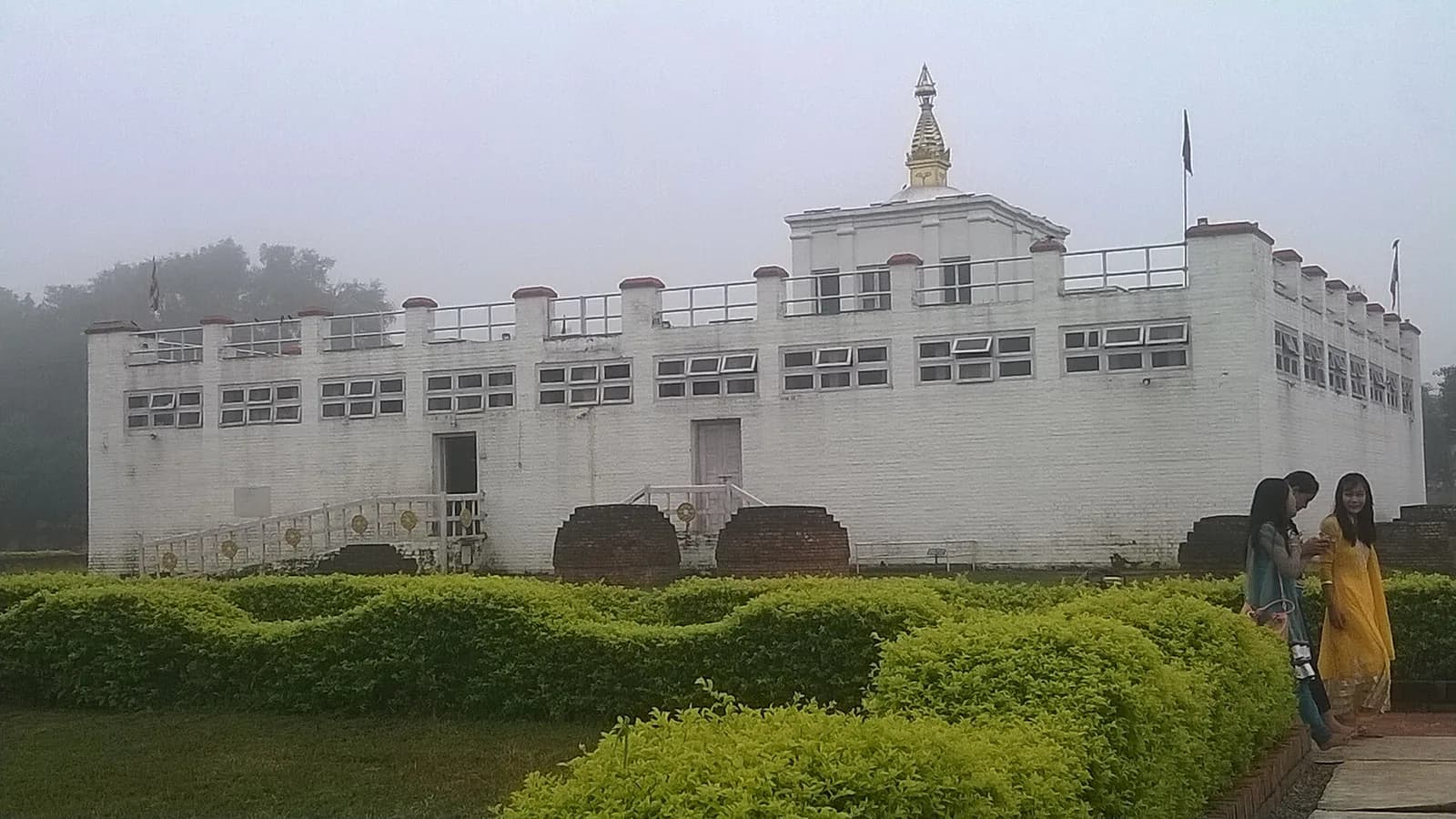
Buddha Jayanti is the day the Buddhist world honours the birth of Siddhartha Gautama — and in Nepal, the most meaningful place to mark it is Lumbini, the southern-plains town recognised as his actual birthplace. For most of the year Lumbini is a quiet, contemplative pilgrimage park. On the May full moon it transforms: butter lamps line the Sacred Garden, monks lead circumambulations from dawn, and pilgrims arrive from across Asia. If your Nepal trip lands near this date, attending Buddha Jayanti at Lumbini is one of the more genuinely moving cultural experiences the country offers.
This guide covers what the festival actually celebrates, when it falls, what you will see on the ground, and how to attend without getting in the way of the people for whom it is a once-in-a-lifetime pilgrimage. For the broader question of whether Lumbini is worth the long journey at all, see our honest take on whether Lumbini is worth visiting — this post is the festival-specific companion to it.
Key takeaways
- Buddha Jayanti (also called Buddha Purnima or Vesak) falls on the full moon of Baisakh, landing in late April or May — the date shifts yearly with the lunar calendar, so confirm it for your travel year.
- It commemorates three events on one day: the Buddha's birth, enlightenment, and death.
- Lumbini hosts Nepal's largest celebration; in Kathmandu, Swayambhunath and Boudhanath are the focal points.
- It is a national public holiday in Nepal — expect office and bank closures, but tourist sites stay open.
- The atmosphere is contemplative, not a party: butter lamps, chanting, meditation, and processions rather than music and crowds-for-show.
- Early morning at the Maya Devi Temple is the most atmospheric and least crowded window.
What Buddha Jayanti actually celebrates
Buddha Jayanti is unusual among festivals because it folds three milestones into a single date. Buddhist tradition holds that Siddhartha Gautama was born, attained enlightenment, and passed into Mahaparinirvana all on the full moon of the same lunar month, centuries apart. That triple coincidence is precisely why the day carries such weight — it is treated as the holiest date in the Buddhist year.
The Buddha was born in Lumbini around the sixth century BCE, attained enlightenment under the Bodhi tree at Bodh Gaya in present-day India, and died at Kushinagar, also in India. Of these three sites, only the birthplace lies inside Nepal, which is part of why Nepal treats Buddha Jayanti with national pride and why Lumbini becomes the centre of gravity for the celebration.
The day is also internationally recognised. The United Nations observes it as the Day of Vesak, a designation that grew out of a 1990s proposal to honour the full-moon day sacred to a large share of the world's population. So while you will hear "Buddha Jayanti" and "Buddha Purnima" in Nepal, the same observance is "Vesak" across Sri Lanka, Thailand, and much of Southeast Asia.
When Buddha Jayanti falls
Buddha Jayanti follows the lunar calendar, so it does not have a fixed Western date. It lands on the full moon day of Baisakh, the first month of the Nepali year, which translates to late April or May on the Gregorian calendar.
Because the date drifts by a couple of weeks from year to year, the single most important planning step is simple: look up the date for your specific travel year rather than assuming. Nepali calendars, the Nepal Tourism Board, and any Lumbini monastery will confirm it. As a rough anchor, recent years have placed it in the first half of May.
| Detail | What to know | | --- | --- | | Lunar timing | Full moon of Baisakh (first Nepali month) | | Western window | Late April to May | | Date stability | Shifts each year — always verify | | Holiday status | National public holiday in Nepal | | Peak location | Lumbini (birthplace) |
One practical consequence of the timing: May in the Terai plains, where Lumbini sits, is hot — frequently in the high 30s Celsius and sometimes above 40. The festival crowds plus the heat make early-morning attendance not just atmospheric but genuinely more comfortable.
What you will see at Lumbini
On Buddha Jayanti, the normally hushed Sacred Garden around the Maya Devi Temple comes alive from before sunrise. The temple itself marks the exact spot where, by tradition, the Buddha was born; beside it stand the ancient Ashoka Pillar, the sacred pond where his mother is said to have bathed, and a Bodhi tree draped in prayer flags.
Expect to encounter:
- Monks and nuns leading circumambulations — slow, clockwise walks around the temple and the pillar, often chanting, from early morning onward.
- Butter-lamp and incense offerings — rows of small flames lit by pilgrims, one of the day's most photogenic and meaningful rituals.
- Recitation of scriptures — monastic communities reading and chanting Buddhist texts aloud.
- Processions and prayer gatherings — organised walks and communal prayers, sometimes with international monastic delegations.
- Dharma talks and reflection — discussions of the Buddha's teachings on compassion and non-violence, often hosted by the international monasteries in the surrounding zone.
The Monastic Zone — the large park where countries such as Thailand, Myanmar, Korea, China, and Japan have each built a monastery — is also more active than usual, with individual monasteries holding their own observances. Walking or cycling between them is one of the best ways to experience the international breadth of the day.
The overall tone is important to set expectations: this is contemplative, not festive in the Western sense. There is no parade-and-music spectacle. The power of the day is in the quiet density of devotion — thousands of people meditating, chanting, and offering lamps at the precise place their tradition began.
Buddha Jayanti in Kathmandu
If you cannot make the long journey south to Lumbini, Kathmandu hosts its own substantial celebrations, centred on two of the valley's great Buddhist stupas.
- Swayambhunath (the "Monkey Temple") — the hilltop stupa above the city is a primary gathering point, with pilgrims climbing the steps before dawn to light lamps and circumambulate. Our Swayambhunath visitor guide covers the site in detail.
- Boudhanath — the enormous stupa east of the centre, the heart of Kathmandu's Tibetan Buddhist community, sees processions, mass lamp-lighting, and monks in formal robes. See the Boudhanath Stupa guide for layout and etiquette.
Both sites are dramatically busier and more candle-lit than on an ordinary day. Boudhanath in particular, ringed by monasteries, is spectacular after dark on the full-moon evening.
How to plan a festival visit to Lumbini
Reaching Lumbini takes effort, and the festival does not change that. Your options from the rest of Nepal:
| Route | Time | Notes | | --- | --- | --- | | Bus from Kathmandu | 8–10 hours | Cheapest; tourist buses more comfortable than local | | Flight to Bhairahawa | ~35 min + 30 min taxi | Saves a full day; airport is near Lumbini | | From Chitwan | 5–6 hours by road | Common pairing with a jungle safari | | From India (Sunauli border) | 30 min from the border | Natural add-on to a Varanasi or Bodh Gaya trip |
Because Buddha Jayanti is a public holiday and a major pilgrimage date, book accommodation early. Lumbini has a modest stock of hotels plus monastery guesthouses, and nearby Bhairahawa offers more comfortable options 25 km away. The classic festival plan is to stay one night nearby, be at the Maya Devi Temple for dawn on the full-moon day, and explore the Monastic Zone afterward — a bicycle rented at the gates makes the large park far more manageable.
For deeper context on the site itself, accommodation choices, and who tends to find the long trip worthwhile, our Lumbini guide is the place to start. Many travellers also fold Lumbini into a southern loop with Chitwan's safari parks.
Etiquette: attending respectfully
Buddha Jayanti is first and foremost a religious occasion, and at Lumbini you are a guest among people on serious pilgrimage. A few principles keep you on the right side of respectful:
- Dress modestly. Shoulders and knees covered. The Maya Devi Temple enforces a dress code.
- Mind your shoes. Remove them where signs or attendants indicate, especially around the inner temple.
- Keep quiet near prayer. Lower your voice around meditating pilgrims and chanting monks; silence your phone.
- Follow photography rules. Photography is restricted inside the Maya Devi Temple. Outside, avoid pushing a camera into the faces of praying pilgrims — wide, distant shots of lamps and architecture are fine.
- Move clockwise. When walking around stupas and shrines, go clockwise, the traditional direction, and never climb on or sit with your feet pointing at a shrine.
If you are new to navigating Nepal's sacred sites in general, our guide to temple etiquette for tourists translates these habits into simple, repeatable rules.
A few useful Nepali phrases
You do not need much language to attend respectfully, but a little goes a long way:
- A quiet "namaste" with a small bow — the universal respectful greeting.
- "Buddha Jayanti ko subhakamana" — best wishes on Buddha Jayanti.
- "Photo khichna hunchha?" — "May I take a photo?" — the polite check when you are unsure whether a moment or a person is fair game.
The scenarios phrasebook covers the rest of the everyday basics for getting around and ordering food on a festival day.
Is it worth timing your trip around?
For the right traveller, attending Buddha Jayanti at Lumbini is a quietly profound experience — the holiest day of the Buddhist year, observed at the place where it all began, surrounded by lamplight and chanting before the Terai heat rises. If you already have an interest in Buddhism, or you value contemplative atmosphere over visual spectacle, it can be a genuine highlight of a Nepal trip.
If you are chasing big, colourful festival energy, temper your expectations: this is a day of devotion, not display. But for travellers who go knowing what it is, the May full moon at Lumbini rewards the long journey south.
Sources
Frequently asked questions
- When is Buddha Jayanti celebrated in Nepal?
- Buddha Jayanti, also called Buddha Purnima, falls on the full moon day of the Nepali month of Baisakh, which lands in late April or May on the Western calendar. Because it follows the lunar calendar the exact date shifts every year, so always check the date for the year you plan to travel.
- What does Buddha Jayanti celebrate?
- It marks three events that tradition holds happened on the same full moon: the birth, the enlightenment, and the death (Mahaparinirvana) of Siddhartha Gautama, the Buddha. This is why the day is considered the single most sacred date in the Buddhist calendar.
- Is Buddha Jayanti the same as Vesak?
- Yes, they are the same full-moon observance under different names. Vesak is the term widely used across Sri Lanka and Southeast Asia, while Buddha Jayanti and Buddha Purnima are the names used in Nepal and India. The United Nations recognises the day internationally as the Day of Vesak.
- Where is the best place to experience Buddha Jayanti in Nepal?
- Lumbini, the birthplace of the Buddha in southern Nepal, hosts the largest and most significant celebration. In Kathmandu, the Swayambhunath and Boudhanath stupas are the main gathering points, with processions and butter-lamp offerings drawing big crowds.
- Is Buddha Jayanti a public holiday in Nepal?
- Yes. Buddha Jayanti is a national public holiday in Nepal, so government offices and many businesses close. Tourist services, hotels, and temple sites stay open, but plan transport and any official errands around the closure.
- How should tourists behave at Lumbini during the festival?
- Dress modestly with shoulders and knees covered, remove your shoes where signs require it, keep your voice low near praying pilgrims, and never turn your back to or climb on shrines. Photography is restricted inside the Maya Devi Temple, so follow the posted rules and the lead of monks.
- How do you say Happy Buddha Jayanti in Nepali?
- A simple and well-received greeting is Buddha Jayanti ko subhakamana, meaning best wishes on Buddha Jayanti. Pairing it with a quiet namaste and a small bow is more than enough at a religious site.
Related posts
Buddha Purnima Lumbini: Festival Day Plan
A practical, hour-by-hour companion for Buddha Purnima at Lumbini — the dawn peace prayer, the procession, and how to time the day well.
Read postBuddha Statue Nepal: A Traveller's Guide to the Best
Where to see the most striking Buddha statue sites in Nepal, from the giant golden trio at Swayambhu to the stone Buddha of Mustang.
Read postBuddhism in Nepal — A Traveler's Guide to Its Roots
Buddhism in Nepal began at Lumbini and split into three living traditions. Where to see it, what it means, and how to visit with respect.
Read post