Nepali Music: Genres, Instruments and Artists Explained
A clear guide to Nepali music: folk and dohori, adhunik geet, filmi, pop, rock and rap, the instruments behind them, and the artists worth knowing.
Before you understand a single word, the madal already tells you where you are.
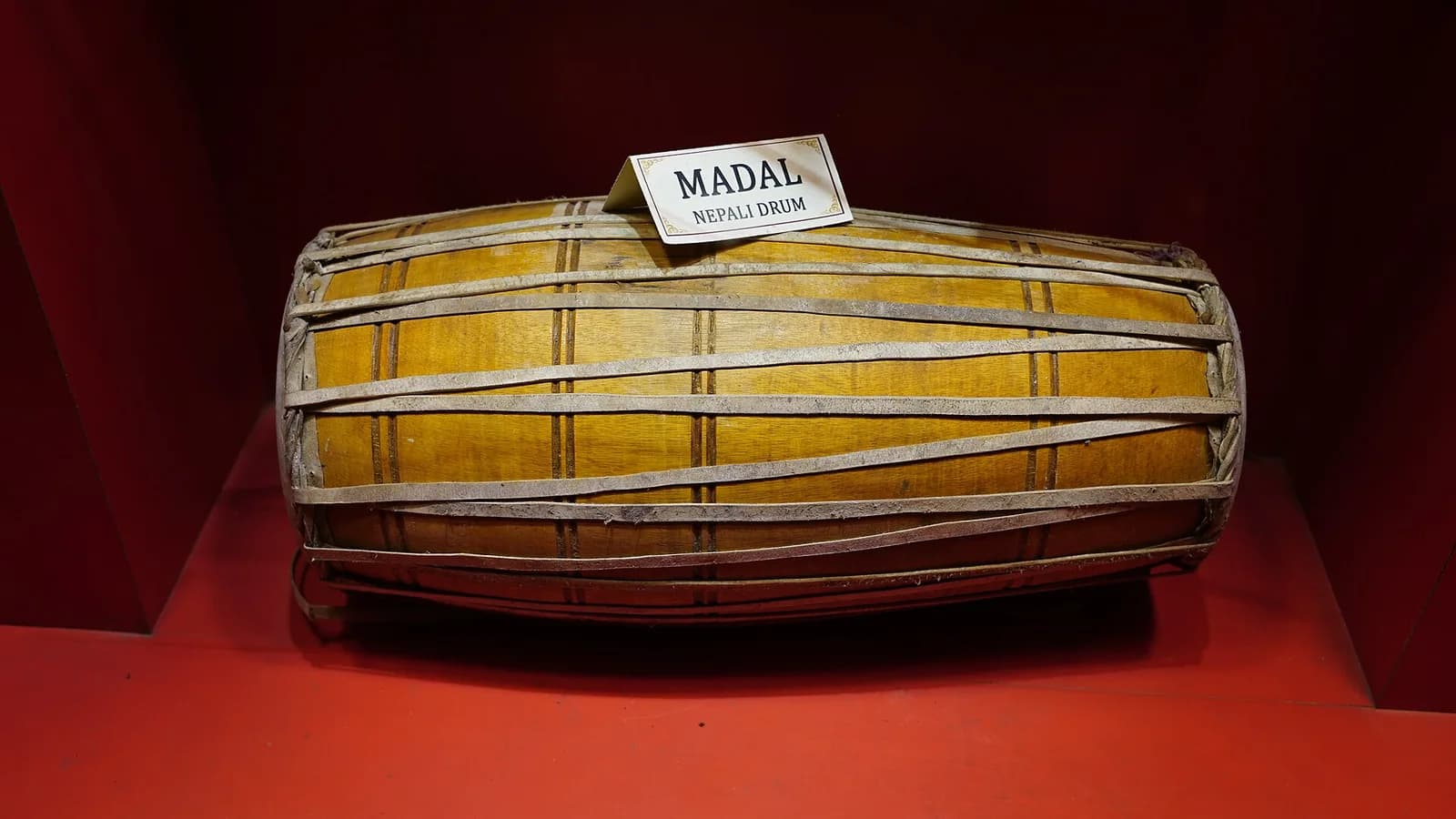
Spend even a few days in Nepal and Nepali music will find you before you go looking for it: a folk tune leaking from a taxi radio in Kathmandu, a madal drum at a roadside festival, a soulful ballad in a hill-town tea shop. Music here is woven into daily life, festivals and faith, and it spans everything from centuries-old village songs to the polished pop on streaming apps today. With more than fifty ethnic groups across mountains, hills and plains, the country's sound is unusually varied. This guide maps the main genres, the instruments behind them, and the artists worth knowing, so the music makes more sense whether you are planning a trip or just curious.
Key takeaways
- Nepali music is highly diverse, shaped by more than fifty ethnic groups plus Indian and Tibetan influence.
- The big genres are folk (lok geet), the duet form dohori, devotional bhajan, filmi film songs, melodic adhunik geet, and modern pop, rock and rap.
- The madal drum is widely treated as the national instrument; the sarangi and bamboo flute are its close companions.
- Narayan Gopal, honoured as Swar Samrat, defined the golden adhunik geet era; bands like 1974 AD and Nepathya shaped modern rock and folk-rock.
- Today's scene is busy and online, with artists releasing directly to YouTube, Spotify and Apple Music.
- Music is tied closely to festivals and faith, so much of what you hear carries a story.
A quick map of Nepali music
Nepal is a small country with extraordinary variety, home to many communities and well over a hundred mother tongues. Its music reflects that, mixing indigenous rhythms, Hindu and Buddhist devotion, and waves of outside influence from India and Tibet. Rather than a single tradition, think of it as several overlapping families of song that constantly borrow from one another.
| Genre | In short | Where you'll meet it | | --- | --- | --- | | Lok geet (folk) | Traditional village songs about love, land and daily life | Festivals, villages, tea shops | | Dohori | Improvised sung duet between men's and women's teams | Dohori restaurants, fairs, weddings | | Bhajan | Hindu and Buddhist devotional songs | Temples, shrines, home worship | | Adhunik geet | Soft "modern" melodic songs from the mid-1900s | Radio, classic playlists | | Filmi | Songs written for Nepali films | Cinemas, radio, streaming | | Pop, rock, rap | Contemporary urban styles | Cafes, clubs, YouTube, Spotify |
These categories blur all the time. A modern pop track might lean on a folk melody, and a dohori song might arrive with studio polish. That cross-pollination keeps the scene alive.
Folk songs and the dohori duet
Folk songs, or lok geet, are the oldest layer and the most rooted in everyday Nepali life. They are typically built around traditional instruments and tell stories of love, longing, work and the rhythms of rural society. Different communities have their own forms, such as the Tamang Selo associated with the Tamang people, which uses the damphu drum and the tungna, so "folk" is really an umbrella over many regional styles, several of them tied closely to specific groups like the Magar and Gurung.
What makes dohori special
The form most worth seeking out is dohori. The name means roughly "from both sides", and the music is a back-and-forth duel of improvised verse. It is usually performed by two teams, one of men and one of women, who answer each other in witty rhyming couplets, each side trying to top the last. According to the Music of Nepal overview, dohori has roots in rural courtship traditions, where replies had to come quickly to keep the exchange going. A single session can stretch on for hours, its length depending on the wit and stamina of the singers.
Dohori grew out of communal gathering traditions, including the Gurung rodi social houses where young people met, sang and socialised. Modern lok dohori brings the form into the studio, fusing folk roots with contemporary production while keeping the call-and-response between male and female voices. For a visitor, a dohori restaurant in a tourist area is a great window into all this. Even if you cannot follow the wordplay, the energy, humour and audience participation come through clearly.
Bhajan and devotional song
Religion and music are deeply entwined in Nepal. Bhajan are devotional songs, sung in Hindu and Buddhist settings alike, from temple courtyards to family shrines. At dawn and dusk you may hear them drifting from a temple, often accompanied by harmonium, hand cymbals and drums, sometimes sung communally late into the evening. Buddhist chanting and ritual music add another devotional layer, especially around the great stupas and monasteries.
If you visit a devotional gathering, treat it as you would any act of worship: keep a respectful distance, dress modestly, and ask before photographing people mid-prayer. This music is participatory and heartfelt rather than staged for visitors, which is exactly what makes it moving to witness.
Adhunik geet: the golden melodic era
In the mid-twentieth century, Nepali musicians began recording a softer, more polished style by adding Western instruments to Eastern classical and folk foundations. The result was adhunik geet, literally "modern song", also known as sugam sangeet. These are the gentle, melodic, often romantic songs that older generations grew up on, and many remain cultural touchstones.
Narayan Gopal and his generation
The towering figure of this era is Narayan Gopal (Narayan Gopal Gurubacharya, 1939 to 1990), widely honoured as Swar Samrat, the emperor of voice, and sometimes called the "tragedy king" for his melancholy love songs. He belonged to the first generation of professional Nepali singers, releasing well over a hundred songs and working with composers and lyricists who shaped the sound of an era.
He was part of a remarkable generation that built modern Nepali music, alongside contemporaries including Amber Gurung, Tara Devi, Prem Dhoj Pradhan and Nati Kaji, while Aruna Lama earned the nickname "Nightingale of the Hills" for her own beloved songs. If you want to understand the emotional core of Nepali popular song, this catalogue is the place to start, and several of these names appear in our guide to famous Nepali people.
The modern scene: pop, rock, rap and streaming
From the 1980s and 1990s onward, Western-influenced pop and rock took hold among younger audiences, and the decades since have added rap and hip-hop to the mix. Bands such as 1974 AD and the Pokhara-born folk-rock group Nepathya, formed in 1991 and fronted by Amrit Gurung, became household names; Nepathya went on to become the first Nepali band to play London's Wembley Arena, in 2013. Rock and metal acts including Cobweb and Albatross, and hip-hop artists such as Yama Buddha and VTEN, widened the field further.
Today the scene is busy and very much online, with artists releasing singles and EPs directly to global platforms. Singer-songwriter Sajjan Raj Vaidya, who fuses Nepali folk colour with acoustic pop, is among the most-streamed names, while Bartika Eam Rai, Sushant KC and others feature heavily in current playlists. Classical and instrumental ensembles such as Kutumba also keep traditional sounds in front of new audiences.
Build a playlist before you travel
Because so much of this music lives on YouTube, Spotify and Apple Music, the easiest way to prepare is to make a Nepali playlist before your trip. Start with a couple of Narayan Gopal classics for the older sound, add some lok dohori for folk energy, drop in a Nepathya track for folk-rock, and mix in current pop names. By the time you land, the radio in your taxi will already feel a little familiar. For a focused starting point, see our companion guides to iconic Nepali songs and how to discover new Nepali songs.
The instruments behind the sound
Much of what gives Nepali music its character comes from a handful of traditional instruments.
| Instrument | Type | Role | | --- | --- | --- | | Madal | Two-headed hand drum | The rhythmic backbone of most folk songs | | Sarangi | Bowed string instrument | Soulful melodic lead in folk music | | Bansuri (flute) | Bamboo flute | Airy melody lines | | Harmonium | Hand-pumped reed organ | Accompaniment for song and bhajan | | Tabla | Pair of hand drums | Rhythm in classical and devotional styles | | Damphu | Frame drum | Drives Tamang Selo and community songs |
The madal and the sarangi
The madal is the one to listen for first. A cylindrical, two-headed drum with a smaller head and a larger one, it is widely considered the national instrument of Nepal and is the backbone of most folk music. It originated in the Magar community and is played across festivals such as Dashain and Tihar. Its warm, rolling, off-beat groove is the heartbeat under countless songs.
The sarangi carries much of the melody and feeling. A bowed string instrument carved from a single piece of wood, with a deep, resonant voice, it was traditionally played by the Gandharba (also called Gaine) community, travelling musicians who carried news and narrative songs from village to village. Spotting a sarangi player in a tourist area is a chance to hear living folk tradition up close, and buying a small one makes a meaningful souvenir.
How to experience Nepali music as a visitor
You do not need to plan hard to encounter this music. A few simple choices will deepen the experience.
- Catch a festival. Music peaks around big celebrations such as Dashain, Tihar and Teej, the last especially associated with women's songs and dance.
- Visit a dohori venue. In Thamel, Pokhara's Lakeside and similar hubs, dohori restaurants put the duet tradition front and centre, often with audience participation.
- Listen for the sarangi. Travelling Gandharba musicians sometimes perform in tourist areas; a small tip is welcome if you enjoy and record a performance.
- Sit in on a bhajan. If you pass an evening devotional session at a temple, pause respectfully and simply listen.
- Ask locals what they love. People are usually delighted to share a favourite song or artist, which is a lovely way to connect.
A little curiosity goes a long way. Music sits at the heart of Nepali culture, and learning even a few words of the Nepali language will help you catch the gist of a chorus and earns warm smiles when you try.
Sources
Frequently asked questions
- What are the main genres of Nepali music?
- The main families are folk songs (lok geet), the call-and-response duet form called dohori, devotional bhajan, film or filmi songs, the soft melodic style known as adhunik geet or sugam sangeet, and a large modern scene of pop, rock, rap and hip-hop. Many tracks blend several at once.
- What is dohori music?
- Dohori is a Nepali folk form sung as a witty duet, usually between a team of men and a team of women who answer each other in improvised rhyming verse. It has roots in rural courtship traditions, where quick, clever replies kept the exchange going, and a session can run for hours.
- What is the national instrument of Nepal?
- The madal, a two-headed hand drum, is widely described as the national instrument of Nepal and is the rhythmic backbone of most folk songs. It originated in the Magar community and is played at festivals such as Dashain and Tihar.
- What is adhunik geet in Nepali music?
- Adhunik geet means modern song and refers to a soft, melodic style that emerged in the mid-twentieth century, blending Nepali folk and classical roots with Western instruments. It is also called sugam sangeet, and Narayan Gopal is its most famous voice.
- Who are some famous Nepali musicians?
- Narayan Gopal, known as Swar Samrat, is the most revered classical-era singer. Aruna Lama was nicknamed the Nightingale of the Hills. In the modern scene, bands such as 1974 AD and Nepathya and singers including Sajjan Raj Vaidya and Bartika Eam Rai are widely followed.
- What instruments are used in Nepali folk music?
- The madal hand drum is the backbone, with the bowed sarangi carrying much of the melody and the bamboo flute, or bansuri, adding airy lines. The harmonium and tabla feature in devotional and classical styles, and communities such as the Tamang use the damphu drum.
- Has Indian and Tibetan music influenced Nepali music?
- Yes. Nepal sits between two great musical cultures, and musical genres from Tibet and India have greatly influenced Nepalese music over centuries. You hear it in film songs, in classical forms and in the instruments shared across the region, though Nepal keeps its own distinct folk traditions.
Related posts
Iconic Nepali Songs: Classics Every Visitor Should Know
A short guide to iconic Nepali songs, from the folk anthem Resham Firiri to Narayan Gopal classics and modern hits worth adding to your playlist.
Read postNepali Culture: A Visitor's Guide to Customs and Traditions
An overview of Nepali culture for visitors: religion, languages, festivals, food, dress and etiquette, with links to deeper guides on each tradition.
Read postNepali Singer Guide: Notable Voices Across the Genres
A friendly guide to the Nepali singer scene: folk and adhunik legends, classic playback voices, modern pop and rock names, and where to listen.
Read post