Dal Bhat — Nepal's National Meal Explained for Travelers
What dal bhat is, what's on the plate, why trekkers live on it, and how to order Nepal's national meal like a local. A practical traveler's guide.
Dal bhat power, 24 hour — the unofficial motto of every trekker in Nepal.
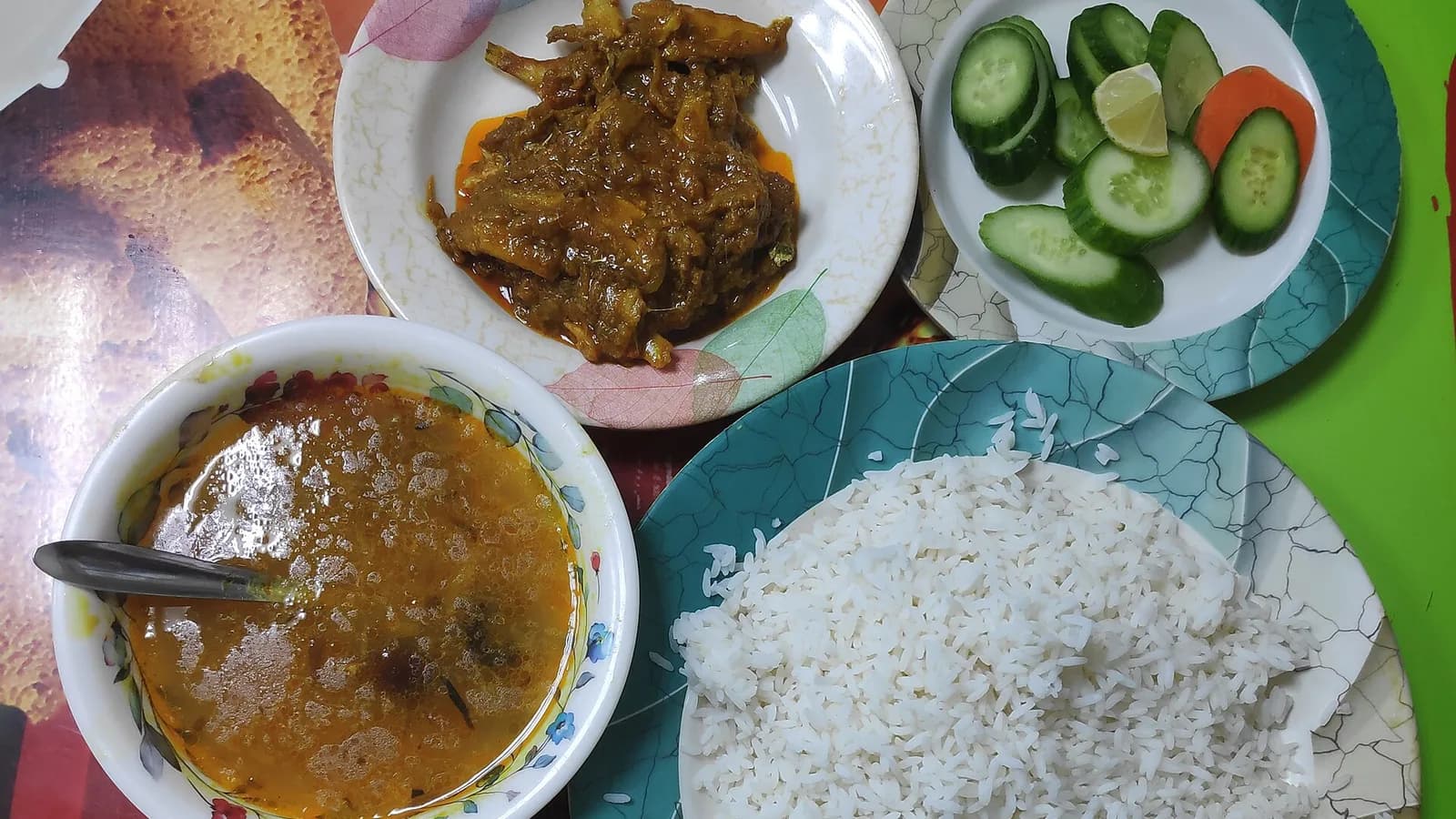
If you spend more than a day or two in Nepal, you will meet dal bhat — the steaming plate of rice and lentils that locals eat once or twice every single day. It is the unofficial national meal, the default fuel for porters and farmers, and the dish trekkers come to swear by with the slogan "dal bhat power, 24 hour."
This guide explains exactly what dal bhat is, what each item on the plate does, why it works so well on the trail, and how to order and eat it without feeling like a tourist. Whether you are heading to a teahouse on the Everest or Annapurna routes or just want to eat well in Kathmandu, dal bhat is the meal to understand first.
Key takeaways
- Dal bhat means "lentils and rice" — dal is the lentil soup, bhat is the steamed rice, and the full plate usually adds vegetable curry, pickle, and sometimes greens or meat.
- It is Nepal's national dish and the everyday staple meal, eaten by most Nepalis once or twice a day.
- The rice-and-lentil combination forms a complete protein, which is why it sustains hard physical work.
- In most teahouses and local eateries, refills are free until you are full.
- It is naturally vegetarian (often vegan), filling, and one of the safer hot meals for travelers.
- "Dal bhat power, 24 hour" is a trekking in-joke meaning one plate keeps you going all day.
What exactly is dal bhat?
At its simplest, dal bhat is two things on a plate: a mound of plain steamed white rice (bhat) and a bowl of soupy cooked lentils (dal). But almost nobody eats just those two alone. The full everyday meal is often called dal bhat tarkari, where tarkari means the cooked vegetable curry served on the side.
A typical plate brings together:
| Component | Nepali name | What it is | |-----------|-------------|------------| | Steamed rice | Bhat | Plain white rice, the neutral base | | Lentil soup | Dal | Cooked lentils, lightly spiced and pourable | | Vegetable curry | Tarkari | Seasonal vegetables in a spiced gravy | | Pickle | Achar | Tangy, spicy, sometimes fermented condiment | | Greens | Saag | Sauteed spinach or mustard greens (when available) | | Yogurt | Dahi | Plain curd, often served on the side |
The dal itself is made from pulses — most commonly yellow, red, or black lentils — simmered with turmeric, cumin, garlic, ginger, and a final sizzle of spices in hot oil or ghee called tarka or jhaneko. The result is savory and comforting rather than fiery; the heat usually comes from the pickle, not the soup.
What's on the plate, and how it fits together
Dal bhat is designed to be mixed and balanced by the eater, which is the part most visitors miss. Each item plays a role:
- The rice is the bulk and the canvas. It is deliberately plain so it can carry everything else.
- The dal is poured over the rice to moisten it and add protein and savory depth.
- The tarkari brings cooked vegetables — potato, cauliflower, beans, pumpkin, whatever is in season.
- The achar (pickle) is the flavor bomb: sharp, sour, and often hot. A tiny amount lifts the whole bite.
- The greens, yogurt, or meat round it out with extra nutrition and contrast.
You do not eat each item separately. You take a little dal and curry, work it into a small portion of rice, add a dab of pickle, and eat that combination — then build the next mouthful slightly differently. No two bites are quite the same, and that variety is exactly why people can eat the same dish twice a day without tiring of it.
Why trekkers live on dal bhat
Anyone who has trekked in Nepal has heard porters and guides chant "dal bhat power, 24 hour!" — usually with a grin, sometimes painted on a teahouse wall. It is part joke, part genuine endorsement. The idea is simple: one big plate of dal bhat gives you enough lasting energy to walk all day in the mountains.
There is real logic behind the slogan. The rice delivers carbohydrates for steady energy, the lentils provide protein to support tired muscles, and the vegetables and pickle add vitamins, minerals, and salt you sweat out on the trail. Together they cover most of what a hiker's body needs in a single, hot, freshly cooked meal.
There are practical reasons too:
- It is everywhere. Every teahouse on every major trekking route serves it, so you always know you can get a reliable meal.
- It is fresh and hot. Because it is the most-ordered dish, it is cooked in volume and served steaming, which is reassuring at altitude where you want to avoid getting sick.
- The refills are free. This is the trekker's favorite part. Order one dal bhat set and the kitchen will keep topping up your rice, dal, and vegetables until you genuinely cannot eat more. For a hungry hiker burning thousands of calories a day, that unlimited refill is worth far more than the modest price.
If you are planning teahouse meals on the way to base camp, our guide to Everest teahouse food and accommodation goes deeper on what to expect from mountain kitchens.
How to order and eat dal bhat like a local
You do not need any special knowledge to order dal bhat — pointing at the menu works — but a few habits will make the meal smoother and more authentic.
Ordering. Ask for a "dal bhat set" or "veg dal bhat." If you eat meat, you can often add chicken, buffalo, or egg where available, though the vegetable version is the classic. In teahouses, expect to wait 20–40 minutes, because it is genuinely cooked fresh; order early if you are hungry.
Eating with your hand. The traditional way is to eat with the fingers of your right hand, mixing the dal and curry into the rice and forming small mouthfuls. It feels awkward at first and then surprisingly natural. If you would rather use a spoon, that is completely fine and widely available in tourist areas. The one firm rule: do not eat with your left hand, which is traditionally considered unclean.
Accepting refills. When the server comes around with more rice or dal, a small nod accepts and a hand over the plate politely declines. Take what you want — refusing the first refill is not rude, and neither is accepting three. When you are done, leaving a little food is normal.
A few useful phrases:
- Pugyo — "enough / I'm full" (to decline more)
- Mitho chha — "it's delicious"
- Kam piro — "less spicy"
For more table phrases, see our guide to ordering food in Nepali, and if you want to tell the cook the meal was great, here is how to say delicious in Nepali. When you have eaten your fill, how to say "I am full" in Nepali will stop the refills coming.
Is dal bhat healthy?
For most travelers, dal bhat is one of the most nutritionally sensible meals on the menu. The standard plate is naturally vegetarian and frequently vegan, built from whole foods: rice, lentils, vegetables, and pickle.
The headline nutritional point is the complete protein. Rice and lentils each lack some essential amino acids on their own, but eaten together they complement each other to provide the full set — the same principle behind rice-and-beans dishes worldwide. On top of that, the meal is high in fiber from the lentils and vegetables, and the vegetable and pickle components add iron, potassium, magnesium, folate, and vitamins A and C.
What you actually get depends heavily on how it is cooked and what is in season, so treat any single calorie figure with caution. The broad picture is reliable, though: carbohydrates for energy, plant protein for repair, and a spread of micronutrients, all in one plate. If you are watching the oil, ask for it cooked lightly; mountain and home kitchens vary in how rich they make the dal and curry.
Regional and seasonal variations
Dal bhat is a template, not a fixed recipe, so it changes with geography and season:
- The lentils change. Lowland Terai kitchens often use lighter yellow or red lentils; hill and mountain areas may serve thicker, darker black lentils.
- The vegetables change. Tarkari follows the harvest — pumpkin and beans in one season, cauliflower and potato in another, leafy greens when they are fresh.
- The pickle changes. Achar ranges from a quick fresh tomato or radish pickle to intensely fermented mustard-oil pickles that can be very hot.
- The extras change. In some homes and regions you will get yogurt, a piece of fried fish or meat, papad, or fermented greens (gundruk) alongside.
In the mountains, the plate tends to get simpler and the price gets higher the further you climb, because every ingredient is carried up by porter, mule, or jeep. Down in Kathmandu and Pokhara, you will find everything from a humble local bhojanalaya (eatery) version to elaborate hotel thali sets. For the city food scene, our best restaurants in Kathmandu guide is a good starting point, and curious cooks can learn the dish hands-on at a cooking class in Kathmandu.
A note on safety for travelers
Stomach trouble is the most common complaint among visitors to Nepal, and your food choices matter. Dal bhat is generally a safe bet because it is cooked thoroughly, served piping hot, and — being the national favorite — turns over quickly so it rarely sits around. To stack the odds in your favor:
- Eat where it is busy with locals; high turnover means fresher food.
- Make sure the plate arrives steaming hot, not lukewarm.
- Be a little more cautious with the raw pickle and salad garnishes than with the cooked items.
- Stick to bottled, boiled, or treated water, and skip ice you are unsure about.
Eaten sensibly, dal bhat is exactly the kind of hot, fresh, well-cooked meal that keeps you healthy on the road — which is part of why Nepalis have built their daily life around it for generations.
Sources
Frequently asked questions
- What is dal bhat?
- Dal bhat is Nepal's national meal of steamed rice (bhat) and lentil soup (dal), usually served with a vegetable curry (tarkari), pickle (achar), and sometimes greens, yogurt, or meat. Together the rice and lentils form a complete protein, which is why it works as an everyday staple.
- What does dal bhat taste like?
- The rice is plain and neutral, the lentil soup is savory and lightly spiced with turmeric, cumin, garlic, and ginger, and the curry and pickle add the bold flavors. You mix small amounts of each into the rice with your right hand, so every bite tastes a little different.
- What does dal bhat power 24 hour mean?
- It is a friendly trekking slogan meaning that one plate of dal bhat gives you enough sustained energy to walk all day. Guides and porters say it to hikers with a smile, and it is often painted on teahouse walls along popular trekking routes.
- Are dal bhat refills really free?
- In most teahouses and traditional eateries, yes. Once you order a dal bhat set, staff will usually top up your rice, dal, vegetables, and pickle until you are full at no extra charge. Tourist restaurants in cities may not always offer unlimited refills, so it is worth asking.
- Is dal bhat vegetarian and healthy?
- The standard plate is naturally vegetarian and often vegan, built around rice, lentils, vegetables, and pickle. It is high in fiber and plant protein and provides a balanced mix of carbohydrates, protein, and micronutrients in one meal. Meat or egg can be added where available.
- How do you eat dal bhat properly?
- Traditionally you eat with the fingers of your right hand, mixing a little dal and curry into the rice and shaping small mouthfuls. Cutlery is widely available in tourist areas if you prefer it. Avoid eating with your left hand, which is considered unclean.
- How much does dal bhat cost in Nepal?
- Prices vary a lot by location. In local eateries in Kathmandu and Pokhara a vegetable dal bhat is often very affordable, while prices climb steadily as you trek higher because everything is carried up by porter or mule. Always check the menu, since costs are altitude-dependent.
- Is dal bhat safe for tourists to eat?
- Dal bhat is one of the safer choices for travelers because it is cooked fresh and served hot, and busy eateries have high turnover. Choose places that are full of locals, make sure the food arrives steaming, and pair it with bottled or treated water to lower your risk of stomach trouble.
Related posts
Dhido — Nepal's Hill-Country Porridge, Explained
What dhido is, the millet and buckwheat it is made from, how to eat the dhido thali by hand, and why this gluten-free Nepali staple is back in style.
Read postGundruk and Dhido — Nepal's Fermented Greens and Porridge
What gundruk (fermented leafy greens) and dhido are, how they are made and eaten, their health benefits, and why this hill-country pair is a national dish.
Read postIs Nepali Food Spicy? A Traveler's Honest Guide
Is Nepali food spicy? Mostly no — the dal is mild, the heat hides in the pickle. Here is what to expect and how to order milder food in Nepal.
Read post