Pashupatinath Temple — What Foreigners Can and Can't See
The temple complex is open to all. The main temple isn't. Here's where you can walk, what you can photograph, and how to navigate the cremation ghats respectfully.
Pashupatinath is two visits in one — the temple you can't enter, and the cremation ghats you wish you hadn't seen.
Pashupatinath is the most sacred Hindu temple in Nepal — one of the holiest sites for Shiva worship in the entire Hindu world. It sits on the banks of the Bagmati River, about 5km east of central Kathmandu. The temple is functionally a working religious site, not a museum. Foreigners are restricted to specific areas. The cremation ghats along the river are open to all observers and are the most distinct cultural experience the site offers.
Here's how to visit respectfully and honestly.
The basic rules
Foreigners cannot enter the main temple. This is firmly enforced. Only practicing Hindus are permitted into the inner sanctum.
Foreigners can enter the surrounding complex. This includes most of the rest of the area — the river ghats, the cremation platforms, the smaller surrounding temples, the meditation areas, and the various smaller shrines on the eastern side of the river.
Entry fee for foreigners: NPR 1,000 (~$7.50). Paid at the main entrance. Nepalis and Indians enter free.
The fee includes access to the entire complex except the main temple. Tickets are checked at multiple points.
Layout of the complex
The Bagmati River flows north-south through the site. The main temple is on the west bank. The cremation ghats (called Aryaghat for the upper-caste cremations and Bhasmeshwor for the general ones) are along the river. The east bank has smaller temples, shrines, and the sadhus' (Hindu holy men's) shelters.
From the main entrance, you'll walk:
- Through the surrounding outdoor temple courtyard
- To the river overlooks where you can see the main temple's golden roof and the cremation ghats below
- Across the bridge to the east bank
- Through the smaller temples and shrines
A full visit takes 2-3 hours. Less if you're moving quickly; more if you're observing rituals.
The cremation ghats
The river's edge is where Hindu cremations happen — multiple times per day, almost continuously. Bodies are wrapped in colored cloth, laid on wooden pyres on stone platforms, and burned. The smoke and the ash are visible from any of the overlooks.
This is the most foundationally cultural part of the visit. It's also confronting for many foreigners — particularly those from cultures where death is hidden behind institutional walls. Watching a stranger's body burn 20 meters away is a visceral encounter with mortality that doesn't have a Western equivalent.
The cremations happen continuously throughout the day. You can sit on the steps across the river and watch from a respectful distance — many travelers spend an hour or more doing exactly that. The cremation cycles take about 3 hours from start to finish.
Photography rules
Allowed: photos of the temple architecture, the river, the surrounding complex from a distance.
Allowed with caution: photos of cremation ghats from across the river, at distance, without zooming into individual mourners or bodies.
Not allowed: close-up photos of cremations, photos of mourners' faces, photos inside any temple area, photos of the main temple's interior (which you can't enter anyway).
Strictly avoided: photos of mourners weeping. The grief is real and not yours to capture.
A guideline that works: if you'd be uncomfortable being photographed in a similar moment of grief or vulnerability, don't photograph it.
Sadhus — the holy men with the painted faces
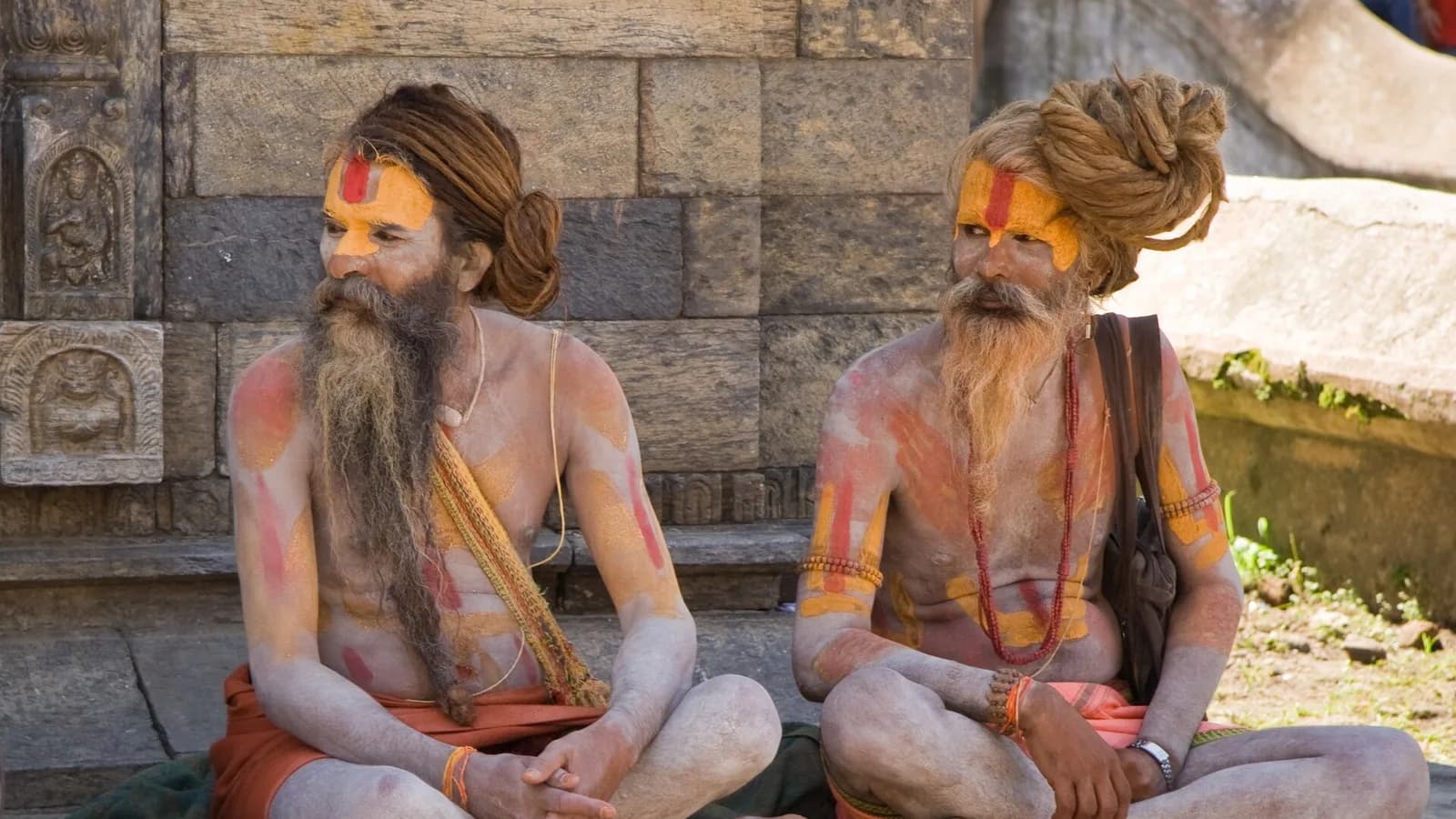
You'll see Hindu sadhus (holy men) at Pashupatinath, particularly on the east bank. They have ash-painted bodies, dreadlocks, often saffron robes, and sometimes elaborate makeup. Many will pose for photos and ask for money in return.
The honest situation: most sadhus at Pashupatinath are genuine renouncers; some are essentially performers earning tourist money. Distinguishing the two is hard. The reasonable approach: if you take a photo, give NPR 200-500. If you're not interested in photos, smile and keep walking.
The Bagmati River
The Bagmati is considered sacred but is also one of the most polluted urban rivers in South Asia. The water carries the ashes of cremations, urban sewage, and industrial waste. Don't touch it. Don't let pets near it. The smell on hot days is significant.
This is the painful tension at Pashupatinath — a deeply sacred river that is also visibly degraded by the modern city around it.
Best time to visit
Morning (7-10 AM): the most active religious activity. Hindu pilgrims performing morning rituals, sadhus more visible, the temple bells ringing. Fewer foreign tourists. Best light for photography.
Mid-afternoon (2-4 PM): quieter. Most ceremonies have finished. Easier to walk around without crowd density.
Festivals (Maha Shivaratri, in February or March): the largest single religious event at Pashupatinath. Tens of thousands of Hindu pilgrims arrive. Sadhus from across India come specifically for it. Spectacular cultural moment but extremely crowded. Foreigners can visit but should expect long lines and limited mobility.
Dress code
Pashupatinath requires respectful dress for foreigners:
- Shoulders covered — no tank tops or sleeveless shirts
- Legs covered — long pants or long skirts, not shorts
- Shoes removed before entering certain inner areas (though most of the complex you keep them on)
- Hats removed when entering temple buildings
- No leather items (belts, wallets visible) in some inner areas — it's considered impure
You'll see signs and staff enforcing dress code, particularly at inner sanctum entrances.
The respectful approach to cremations
A few guidelines from Hindu families who have hosted foreigner visits:
- Don't talk loudly or laugh near the ghats
- Don't eat or drink while watching cremations
- Don't get visibly emotional for the family — your grief isn't their grief, and visible foreign tears can feel intrusive
- Don't approach the platforms for closer views — observe from the steps across the river
- Don't ask questions about specific bodies — this is private to the family
The standard approach: sit quietly, observe, leave when you're ready. No interaction with the mourners required.
How long to stay
Most foreigners spend 2-3 hours. If you want to experience the daily rhythm of the cremation cycle, plan for 4-5 hours and bring a water bottle and snack.
If you're emotionally fatigued after 90 minutes, leave. There's no obligation to stay longer.
Pre-visit checklist
- Dress conservatively (covered shoulders and legs)
- NPR 1,000 cash for entry
- A few NPR 200 notes for sadhu photos if you'll take them
- Camera or phone — but commit to respectful photography only
- Water bottle (the complex is large and hot in afternoon)
- The Nepali greetings for any interactions
- A few hours of mental availability
Pashupatinath is one of Nepal's most foundationally important sites. Even foreigners restricted from the main temple come away with a vivid encounter with Hindu culture and the public visibility of death. Visit slowly, observe respectfully, and let the place register.
Related posts
Maha Shivaratri at Pashupatinath — Festival Guide for Visitors
Maha Shivaratri turns Pashupatinath into Nepal's biggest Shiva pilgrimage. What to expect from the crowds, sadhus, and night vigil, and how to visit.
Read postPashupatinath Temple: History, Meaning & How to Visit
A guide to Pashupatinath temple in Kathmandu — its history, pagoda architecture, Shiva mythology, opening hours, and how to visit respectfully.
Read postBuddha Statue Nepal: A Traveller's Guide to the Best
Where to see the most striking Buddha statue sites in Nepal, from the giant golden trio at Swayambhu to the stone Buddha of Mustang.
Read post