Thakali People and Thakali Cuisine of Mustang, Nepal
Who the Thakali people of Mustang are, and why the Thakali thali became Nepal's most refined dal bhat. A guide to a Himalayan culture and cuisine.
Along the old salt road of the Kali Gandaki, the Thakali turned dal bhat into an art.
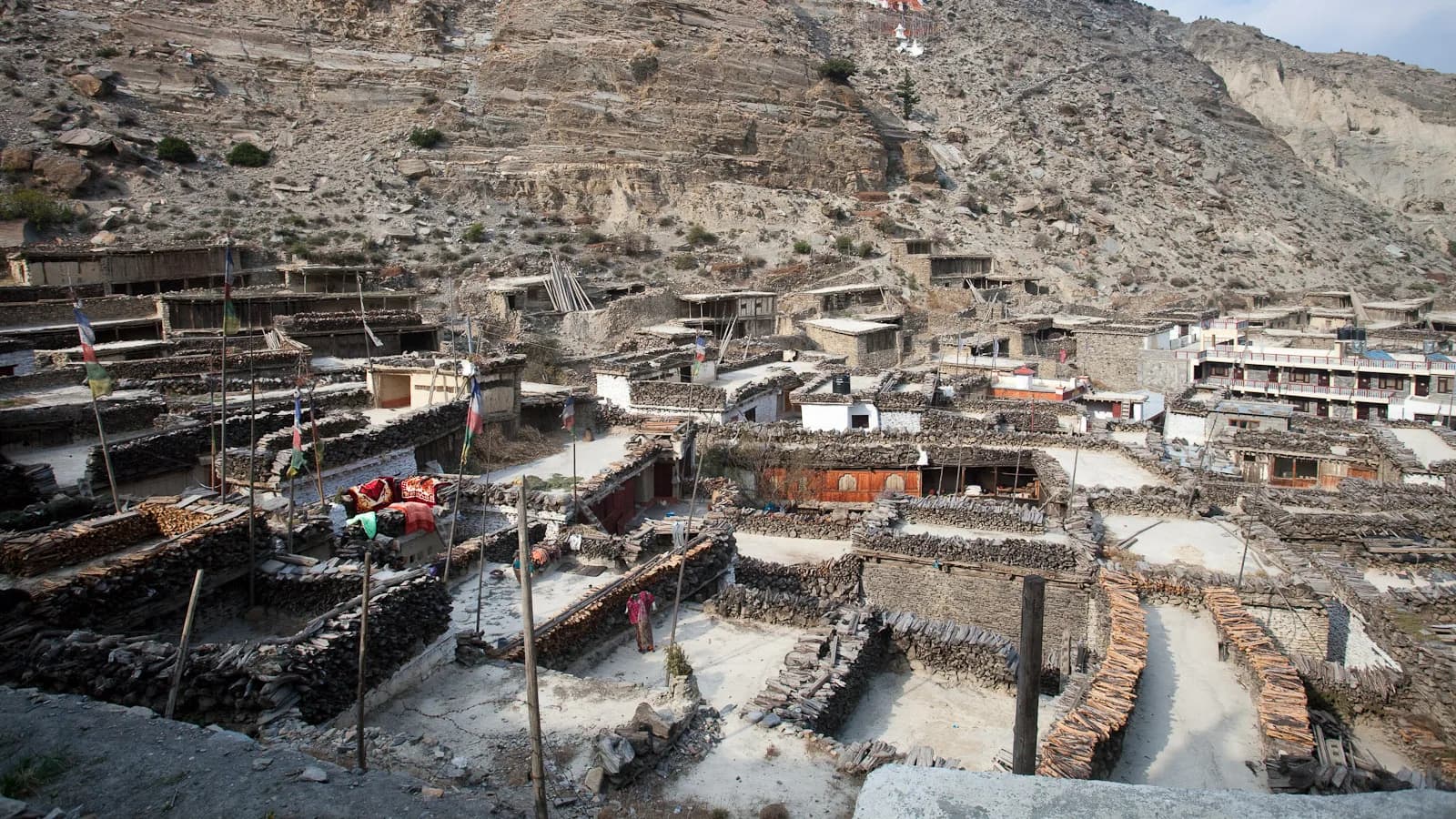
If you have eaten dal bhat anywhere in Nepal and been told it was special, there is a good chance someone meant Thakali food. The Thakali people, a small Himalayan community from the Mustang region, turned Nepal's everyday rice-and-lentil meal into something cleaner, more balanced, and more carefully composed, and in doing so gave the whole country a benchmark for how good dal bhat can be. This guide explains who the Thakali are, where they come from, and why a Thakali thali is one of the most rewarding meals you can eat in Nepal.
Key takeaways
- The Thakali are a Tibeto-Burman ethnic group from the Thak Khola valley in Mustang District, along the Kali Gandaki gorge in western Nepal.
- They were historically traders on the salt-for-grain route between Tibet and the Nepali lowlands, and later became renowned innkeepers and cooks.
- A Thakali thali (khana set) is a refined dal bhat: small, balanced portions of rice, lentils, curry, fermented greens and pickles, served with generous refills.
- Thakali cooking is defined by balance and clean flavors, using Himalayan ingredients like the jimbu herb and timur pepper rather than heavy heat.
- The community is small, around 11,700 people in the 2021 census, and most now live outside Mustang in cities like Pokhara and Kathmandu.
- You can eat authentic Thakali food on the Annapurna and Mustang treks and in dedicated restaurants in Nepal's cities.
Who are the Thakali people?
The Thakali are an ethnolinguistic group of Tibeto-Burman origin whose traditional territory, known as Thak-sat-se or the Thak Khola region, sits in the Kali Gandaki River valley in Mustang District, Gandaki Province. The valley runs through one of the deepest gorges on earth, hemmed in by the Annapurna and Dhaulagiri massifs, and forms a natural corridor between the arid Tibetan plateau to the north and the green middle hills of Nepal to the south.
By the 2021 National Population and Housing Census there were roughly 11,700 Thakali in Nepal, making them one of the country's smaller recognized groups. Yet they have an outsized presence in national life, partly through business and partly through food. An estimated majority now live outside their homeland, in urban centers such as Pokhara and Kathmandu, while maintaining ties to ancestral villages and returning for major festivals.
The four clans
Thakali society is often described through its clan structure. The best-known grouping is the Chaar Jaat, or "four clans," traditionally rendered as Sherchan, Tulachan, Bhattachan and Gauchan. Alongside these are communities associated with particular villages, such as the Marphali of Marpha and the Teen Gauley linked to Thini, Syang and Chimang. These surnames are common across Nepal today, and many Thakali carry them with pride as a marker of origin.
Religion and festivals
Thakali religious life is a layering of traditions rather than a single faith. Tibetan Buddhism, the older Bon tradition, and Hinduism all leave their mark, and the 2021 census records most Thakali as Buddhist with a substantial Hindu minority. The community's signature celebration is Lha Phewa (also written Lhafewa), a grand festival held only once every twelve years that draws Thakali home from across Nepal and beyond to honor clan deities and renew community bonds.
A history shaped by the salt road
To understand the Thakali, it helps to understand the Kali Gandaki trade route. For centuries this gorge was a highway for trans-Himalayan commerce, and the Thak Khola valley sat at its pivot: a transit zone where Tibetan salt and wool moving south were exchanged for grain and goods moving north. The Thakali built their early prosperity on managing this exchange, running mule caravans, warehouses and inns along the route.
Politically, the region passed through many hands. Mustang fell under the influence of Tibetan dynasties and, later, the western Nepali kingdom of Jumla, before the unification campaigns of Prithvi Narayan Shah of Gorkha brought Thak Khola into the Nepali state in the late eighteenth century.
The salt trade's decline in the mid-twentieth century, following the political changes in Tibet and the arrival of cheaper Indian salt, forced the Thakali to adapt. Many shifted decisively into hospitality and trade in the towns, and the teahouse-and-restaurant tradition that travelers now associate with Thakali culture grew from this pivot. Their reputation for clean lodgings and reliable, tasty food spread along the trekking trails and then into Nepal's cities.
What is a Thakali thali?
The Thakali thali, or Thakali khana set, is the dish that made the community famous far beyond Mustang. At first glance it looks like dal bhat, because it is dal bhat, but assembled with unusual care. The meal arrives on a metal plate (a thali), with rice at the center and a ring of small bowls and portions around it.
A typical set includes:
| Component | What it is | |-----------|------------| | Bhat | Steamed rice, often topped with a little ghee | | Dal | Lentil soup, frequently scented with jimbu or ginger | | Tarkari | A seasonal vegetable curry | | Masu | A meat curry, commonly mutton or chicken | | Gundruk / sinki | Fermented, dried leafy greens, sour and savory | | Achaar | Pickles, such as tomato or radish | | Papad | A crisp lentil wafer | | Dahi | Yogurt, to cool the plate |
A defining feature of the Thakali style is that portions start small and come with a brief sense of how each item is meant to be eaten, after which the refills are generous. You mix a little of everything with the rice, building the meal in layers rather than eating each dish on its own.
Dhindo, the buckwheat alternative
In place of rice, many Thakali meals offer dhindo, a thick porridge made from buckwheat or millet flour stirred over heat until it forms a smooth, dense mass. It is a mountain staple suited to the high, cool valleys where these grains grow well, and it pairs beautifully with gundruk and a sharp pickle. Ordering dhindo instead of rice is a small step toward the older, more local version of the meal.
What makes Thakali food taste different?
If standard tourist dal bhat can feel generic, Thakali food feels composed. Three things set it apart.
Himalayan ingredients
Thakali cooking is built on flavors that belong to the high valleys. Jimbu, a dried Himalayan herb from the allium family, gives dal its distinctive savory aroma, while timur, the local Sichuan-style pepper, adds a bright, tongue-tingling note to pickles and curries. Buckwheat, barley and mountain greens round out a larder shaped by altitude.
Balance over heat
Where some Nepali and Indian cooking reaches for chili, Thakali food reaches for balance. The aim is a plate where sour, savory, fresh and rich elements play off one another, and where the heat is a guest rather than the host. This restraint is a big part of why the cuisine travels so well and appeals to so many palates.
Care in preparation
The Thakali reputation was built in inns and teahouses, where consistency mattered. Clean preparation, fresh pickles and well-balanced dal became a kind of brand. The phrase "Thakali khana" on a signboard, anywhere in Nepal, is a promise of a particular standard of dal bhat.
Where to eat Thakali food in Nepal
You do not have to reach Mustang to taste it, though the journey there is one of Nepal's great trips.
On the trail
The Annapurna Circuit and the trails into Upper Mustang pass straight through Thakali country. Teahouses around Jomsom, Marpha, Kagbeni and Tukuche serve khana sets to trekkers, often with local touches like apple products from Marpha's famous orchards. If you are planning a high route, our guide to altitude sickness on Nepal treks is worth reading first, and the Upper Mustang trek permit guide covers the paperwork for the restricted area.
In the cities
Dedicated Thakali restaurants are easy to find in Kathmandu and Pokhara, and a khana set there is a great introduction before or after a trek. For a wider sense of where Thakali sits among Nepal's food traditions, see our overviews of dal bhat and what to eat in Nepal, and for a very different valley cuisine, the Newari food guide.
Marpha and the apple country
No account of Thakali culture is complete without Marpha, a tidy village of whitewashed stone houses and flagstone lanes in lower Mustang. Sheltered enough to grow fruit, Marpha became Nepal's apple capital, and its apples, dried apple slices and apple brandy are sold up and down the valley. A plate of Thakali khana followed by Marpha apples is, for many trekkers, the taste of Mustang.
Respect and etiquette
A few small courtesies go a long way when you eat and travel in Thakali country:
- Eat with your right hand if you go traditional, or simply use the cutlery provided.
- Accept refills graciously; offering more is part of the hospitality, and you can always say when you are full.
- In homes, temples and around clan shrines, follow your hosts' lead, as you would anywhere; our temple etiquette guide covers the basics.
- Learn a word or two of thanks. A simple dhanyabad and mitho chha ("it is delicious") are always welcome, and our ordering food in Nepali guide has more.
Thakali culture is a reminder that some of the most memorable things in Nepal are also the most modest: a small community from a deep mountain valley that, through trade, hospitality and an unusual care for a humble meal, shaped the way a whole country eats.
Sources
Frequently asked questions
- Who are the Thakali people?
- The Thakali are a Tibeto-Burman ethnic group from the Thak Khola valley in Mustang District, in the Kali Gandaki gorge of western Nepal. They were historically traders along the salt route between Tibet and the Nepali lowlands, and today are widely known across Nepal for their food and innkeeping.
- Where do the Thakali people live?
- Their traditional homeland is Thak-sat-se, the Thak Khola region of Mustang around villages such as Tukuche, Marpha, Jomsom and Thini. Most Thakali now live outside Mustang, in cities like Pokhara and Kathmandu, while keeping strong ties to their home villages and festivals.
- What is a Thakali thali?
- A Thakali thali, or Thakali khana set, is a refined version of dal bhat served on a metal plate with rice, lentil soup, a meat or vegetable curry, fermented greens, pickles, papad and more. Portions start small and are refilled, and the meal is prized for its clean, balanced flavors.
- What makes Thakali food different from regular dal bhat?
- Thakali cooking leans on Himalayan ingredients like the jimbu herb and timur pepper, careful preparation, and a balanced spice profile rather than heavy heat. The result is a cleaner, more layered take on dal bhat that has become a benchmark for the dish across Nepal.
- Is Thakali food spicy?
- It is flavorful rather than fiery. Thakali cuisine is known for balance, with aromatic herbs and pickles providing depth instead of overwhelming chili heat, though a side pickle can add a sharp kick if you want it.
- What religion do the Thakali follow?
- Thakali religious life blends Tibetan Buddhism, the older Bon tradition and Hinduism, and according to the 2021 census most Thakali identify as Buddhist, with a large Hindu minority. Many households honor clan deities and ancestral rites alongside these traditions.
- Can tourists eat Thakali food on the Annapurna and Mustang treks?
- Yes. Thakali khana is a staple at teahouses along the Annapurna Circuit and in Mustang, especially around Jomsom, Marpha and Kagbeni, and it is also served in dedicated Thakali restaurants in Pokhara and Kathmandu.
- What is Marpha famous for?
- Marpha is a whitewashed Thakali village in Mustang famous for its apple orchards and apple products, including dried apples and locally distilled apple brandy, as well as traditional Thakali hospitality and food.
Related posts
Dal Bhat — Nepal's National Meal Explained for Travelers
What dal bhat is, what's on the plate, why trekkers live on it, and how to order Nepal's national meal like a local. A practical traveler's guide.
Read postDhido — Nepal's Hill-Country Porridge, Explained
What dhido is, the millet and buckwheat it is made from, how to eat the dhido thali by hand, and why this gluten-free Nepali staple is back in style.
Read postGundruk and Dhido — Nepal's Fermented Greens and Porridge
What gundruk (fermented leafy greens) and dhido are, how they are made and eaten, their health benefits, and why this hill-country pair is a national dish.
Read post