Places to Visit in Nepal: A Region-by-Region Guide
A region-by-region guide to places to visit in Nepal, from the Himalaya to the Terai lowlands, so you can match destinations to your interests and time.
Nepal isn't one destination — it's three countries stacked on top of each other, from jungle to ice.
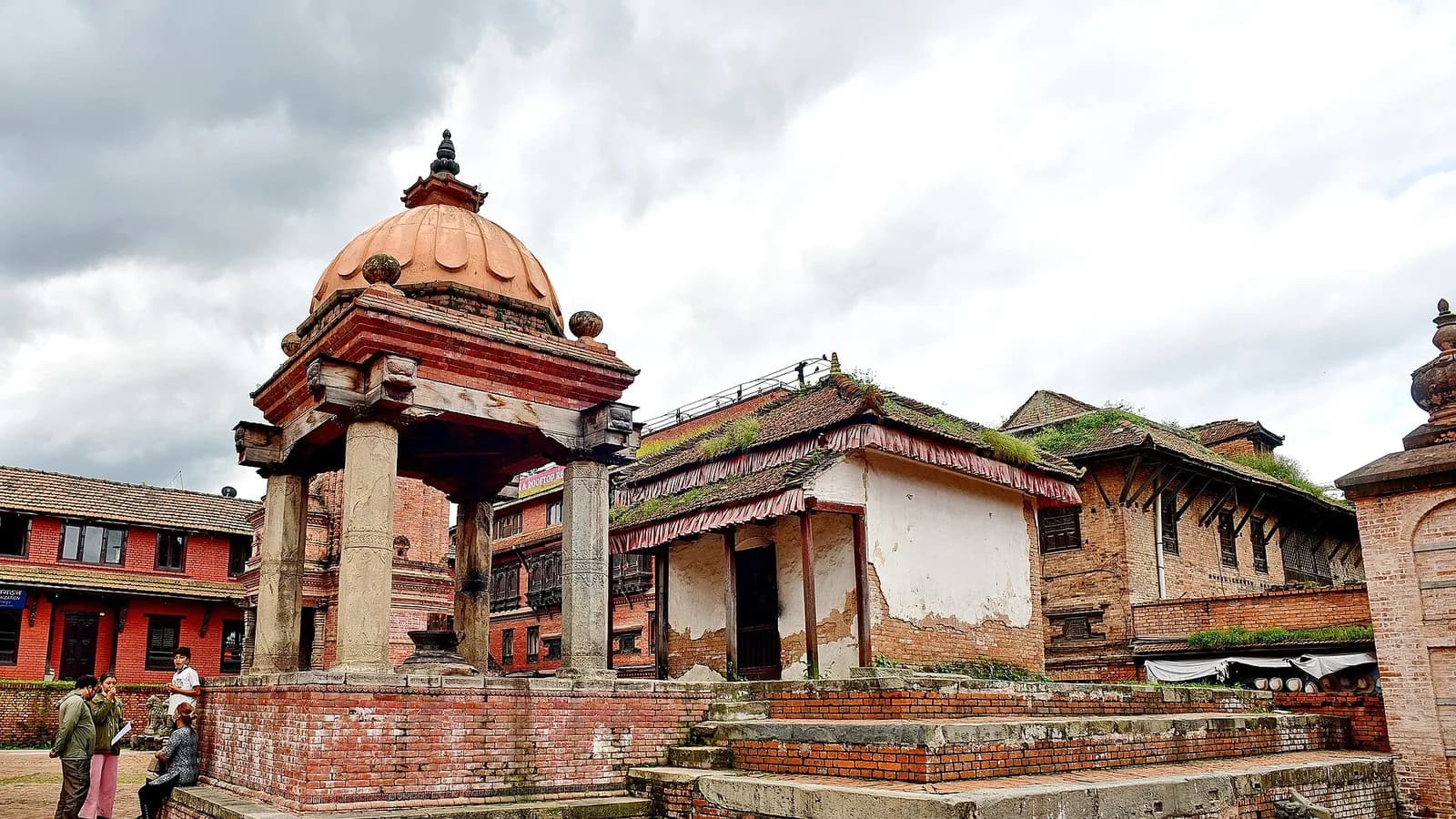
If you have searched for places to visit in Nepal and drowned in identical top-ten lists, this guide takes a different cut. Instead of ranking sights, it maps them — because Nepal is not one destination but three distinct worlds stacked north to south, from steamy jungle to the highest ice on earth. Understanding that geography is the fastest way to build a trip that actually fits your interests and your calendar.
This is the companion to our ranked shortlist of the best places to visit in Nepal, which orders the icons by how reliably they reward a first visit. Read that one for the "what to see first" verdict. Read this one to understand where everything is, how the regions differ, and how to slot them together. For travellers who actively avoid crowds, our hidden gems and off-the-beaten-path guides go further afield.
Key takeaways
- Nepal divides into three horizontal belts: the high Himalaya, the middle Hills, and the Terai lowlands — and most good trips combine at least two of them.
- The middle Hills hold Kathmandu and Pokhara and are the natural base for almost every itinerary.
- Nepal has four UNESCO World Heritage Sites — two cultural (Kathmandu Valley, Lumbini) and two natural (Sagarmatha, Chitwan) — spread across all three belts.
- The country drew 1,158,459 international visitors in 2025, a record, with October the single busiest month.
- Match the region to your interest: Hills for culture and lakes, Himalaya for trekking and views, Terai for wildlife.
Nepal's three belts, explained
Nepal is a narrow rectangle that rises like a staircase from less than 100 metres above sea level on its southern border to 8,849 metres at the summit of Everest. That extreme relief, packed into a country roughly the size of a single mid-sized American state, is the whole story. Travel north and the landscape — and the culture, food and climate — changes completely every couple of hours.
| Belt | Rough elevation | What defines it | Signature places | | --- | --- | --- | --- | | Terai (lowlands) | Below ~700 m | Flat, hot, jungle and farmland | Chitwan, Bardia, Lumbini | | Hills (middle) | ~700–3,000 m | Valleys, terraced ridges, towns | Kathmandu, Pokhara, Bandipur | | Himalaya (high) | Above ~3,000 m | Snow peaks, alpine trails | Everest, Annapurna, Mustang |
The practical upshot: you do not have to choose between mountains, culture and wildlife. A standard two-week loop touches all three belts. The rest of this guide walks through each one and the places worth your time inside it.
The middle Hills: where most trips begin
The Hills are Nepal's populated heartland and the region nearly every traveller sees first, because the two main tourist cities sit here and most domestic transport radiates from them.
Kathmandu Valley
The valley is the cultural core of the country and home to seven of the monuments inside Nepal's UNESCO-listed Kathmandu Valley cluster — the three royal Durbar Squares of Kathmandu, Patan and Bhaktapur, the stupas of Boudhanath and Swayambhunath, and the Hindu sites of Pashupatinath and Changu Narayan. Give it three full days. Of the old cities, Bhaktapur is the best-preserved and Patan the most refined, while most travellers base themselves near Thamel.
Pokhara
Six to eight hours west by road, Pokhara trades temples for a lake and a mountain wall. It sits on Phewa Lake beneath the Annapurna massif and the fishtail peak of Machhapuchhre, and it doubles as Nepal's adventure capital and the gateway to the Annapurna treks. Even non-hikers should budget two or three nights for the things to do in Pokhara: a Sarangkot sunrise, a boat to the island temple, the World Peace Pagoda, and paragliding off the ridge.
Hill towns between the cities
The ridge towns reward anyone who slows down. Car-free Bandipur breaks up the Kathmandu–Pokhara highway with a preserved Newar bazaar and a balcony view of the Himalaya. On the valley rim, Nagarkot and Dhulikhel deliver dawn mountain panoramas — from the Annapurnas to the Everest group on the clearest winter mornings — with no trek and no permits required.
The Himalaya: trekking and high places
The northern belt is why many people come to Nepal at all, holding eight of the world's fourteen peaks above 8,000 metres. You experience it on foot, by air, or both.
The Everest region
The Khumbu, around Sagarmatha National Park, is the most famous trekking landscape on earth. The full Everest Base Camp trek is a roughly two-week round trip from Lukla that climbs above 5,000 metres, so read our altitude sickness guide before committing. Short on time? The Everest View Trek reaches Namche in under a week, and a scenic mountain flight puts you beside the peak in an hour.
The Annapurna region
Reached from Pokhara, Annapurna rivals Everest for scenery and beats it for variety. Options run from the multi-day Annapurna Base Camp trek into the glacial sanctuary, to the gentle Poon Hill loop, to the short and quiet Mardi Himal. The Gurung village of Ghandruk makes a worthwhile destination in its own right. Torn between routes? See Annapurna Circuit versus Base Camp.
Mustang and the trans-Himalaya
Behind the main range lies a different world — the high desert of Mustang, in the rain shadow of the Annapurnas and Dhaulagiri. Lower Mustang is the accessible part, taking in Jomsom, Kagbeni and the pilgrimage temple of Muktinath along the Kali Gandaki gorge. The restricted Upper Mustang, with the walled former capital of Lo Manthang, preserves Tibetan Buddhist culture and needs a special permit. Crucially, this region stays dry through the summer, making it one of the few good monsoon-season trekking choices.
The Terai: jungle and the Buddha's birthplace
Drop off the hills into the flat southern lowlands and Nepal becomes tropical. This belt holds the country's best wildlife and one of Buddhism's holiest sites.
Chitwan National Park
Nepal's first national park and a UNESCO natural site, Chitwan protects sal forest and grassland sheltering the greater one-horned rhino, Bengal tigers, gharial crocodiles and more than 500 bird species. It is the easiest safari to reach, about five to six hours by tourist bus from either Kathmandu or Pokhara, which makes it the standard wildlife add-on.
Bardia National Park
For a wilder, quieter alternative, the far-western Bardia National Park gives the best odds in Nepal of seeing a wild tiger, along with elephants and crocodiles, with a fraction of Chitwan's foot traffic. The trade-off is a longer journey to the country's far west. Both parks are best in the cooler, drier months from roughly October to March.
Lumbini
In the southern plains near the Indian border, Lumbini marks the birthplace of Siddhartha Gautama, the Buddha — a UNESCO World Heritage Site and a major Buddhist pilgrimage destination. The sacred garden holds the Maya Devi Temple, the ancient Ashokan pillar, and a monastic zone where countries worldwide have each built a temple in their national style. It is flat, hot and contemplative, suiting pilgrims more than thrill-seekers.
The far west: Nepal's quiet frontier
Beyond the standard circuit, Nepal's western Karnali region rewards travellers with time and patience. Its centrepiece is Rara Lake, the largest lake in the country at roughly 10.8 square kilometres, sitting at about 2,975 metres inside Rara National Park — Nepal's smallest national park — in remote Mugu District. The lake is famed for changing colour through the day, and the park shelters red pandas, Himalayan black bears and more than 240 bird species.
Nearby, the trans-Himalayan Dolpo region offers some of Nepal's most remote trekking around Phoksundo Lake. Access to all of this is slow — Rara is several days from Kathmandu by road or trek — and facilities are basic, so the far west best suits a second or third trip rather than a first.
How to choose by interest
If you are still deciding where to point your trip, start from what you most want out of it.
| If you want... | Go to... | Belt | | --- | --- | --- | | Temples, art and old cities | Kathmandu Valley, Bhaktapur, Patan | Hills | | A lake and easy mountain views | Pokhara, Nagarkot | Hills | | A serious high-altitude trek | Everest, Annapurna, Manaslu | Himalaya | | Tibetan culture and desert scenery | Mustang | Himalaya | | Rhinos, tigers and birdlife | Chitwan, Bardia | Terai | | Buddhist pilgrimage | Lumbini | Terai | | Solitude and raw nature | Rara, Dolpo | Far west |
Most first trips combine the top two or three rows. A classic loop — mapped day by day in our two-week Nepal itinerary — links the Kathmandu Valley, Pokhara, a trek and Chitwan, hitting all three belts in a fortnight.
When to go, by region
Season interacts with geography in Nepal, so the "best" time depends on which belt you are aiming for.
| Season | Months | Best regions | | --- | --- | --- | | Autumn | Oct–Nov | All belts; clearest Himalayan views | | Spring | Mar–May | Hills and Himalaya; rhododendron blooms | | Winter | Dec–Feb | Terai parks and low-altitude Hills | | Monsoon | Jun–Aug | Mustang and Dolpo (rain-shadow) |
October and November are peak across the board, which is exactly why October was Nepal's single busiest tourist month in 2025. For the full breakdown, see our guide to the best time to visit Nepal.
Practical first steps
Geography sorted, square away the basics. Most nationalities get a visa on arrival at Kathmandu airport. Pick up a local SIM or eSIM on landing to book buses and guesthouses, and budget for domestic flights if you want to skip the longer overland legs between belts. Nepal is generally a safe country for visitors, and a few Nepali phrases go a long way in every region you pass through.
Sources
- Nepal Tourism Board — International Visitor Arrivals, May 2025 update
- Tourism Info Nepal — Nepal achieves record 1.158 million arrivals in 2025
- List of World Heritage Sites in Nepal — Wikipedia
- Nepal Tourism Board — UNESCO World Heritage Sites
- Rara Lake — Wikipedia
- Bardia National Park travel guide — The Longest Way Home
Frequently asked questions
- How is Nepal divided geographically for travel planning?
- Nepal splits into three roughly horizontal belts: the high Himalaya in the north, the middle Hills with valleys like Kathmandu and Pokhara, and the flat Terai lowlands along the Indian border. Most trips combine the Hills and the Himalaya, and add the Terai for wildlife.
- Which region of Nepal is best for first-time visitors?
- The middle Hills are the easiest starting point because they hold Kathmandu and Pokhara, where most flights, buses and trek trailheads connect. From there you can add a Himalayan viewpoint and a Terai safari without long detours.
- Where should I go in Nepal to see the mountains without a long trek?
- Pokhara, Nagarkot and Dhulikhel all offer big Himalayan panoramas with little or no walking, and a scenic mountain flight from Kathmandu reaches the Everest range in about an hour, weather permitting.
- What is the best region in Nepal for wildlife?
- The Terai lowlands. Chitwan National Park is the most accessible for rhinos and birdlife, while remoter Bardia in the far west gives a better chance of spotting a wild tiger and sees far fewer visitors.
- Is western Nepal worth visiting?
- Yes, if you have time and want quiet. The far west holds Rara Lake, the country's largest, plus Bardia National Park and the trans-Himalayan Dolpo region, but access is slower and facilities are basic compared with the central routes.
- How many UNESCO World Heritage Sites does Nepal have?
- Nepal has four UNESCO World Heritage Sites: the Kathmandu Valley and Lumbini, which are cultural, and Sagarmatha and Chitwan national parks, which are natural. They are spread across all three geographic belts.
- When is the best time to visit Nepal's main regions?
- October and November give the clearest mountain views across the Hills and Himalaya, March to May is the warm spring runner-up, and the Terai parks are best in the cooler, drier months from roughly October to March.
Related posts
Best Places to Visit in Nepal 2026: A Planner
The best places to visit in Nepal 2026 — fresh arrival data, the autumn and spring windows, region picks and what changed this year for trips.
Read postBest Places to Visit in Nepal: 10 Iconic Sights Ranked
The best places to visit in Nepal, ranked — Kathmandu Valley, Pokhara, Everest, Chitwan, Lumbini and more, with seasons, costs and how to link them.
Read postNepal Itinerary 10 Days: Kathmandu, Pokhara, a Trek
A practical Nepal itinerary for 10 days — Kathmandu Valley, a short Annapurna trek, and Pokhara or Chitwan — with permits, transport, and a daily plan.
Read post