Ghandruk Village: Gurung Culture in the Annapurnas
A guide to Ghandruk, the stone-built Gurung village in the Annapurna region — its culture, mountain views, how to get there from Pokhara, and trek links.
Stone houses with slate roofs climbing a green hillside, Annapurna South filling the sky — Ghandruk is the Gurung heartland at its most photogenic.
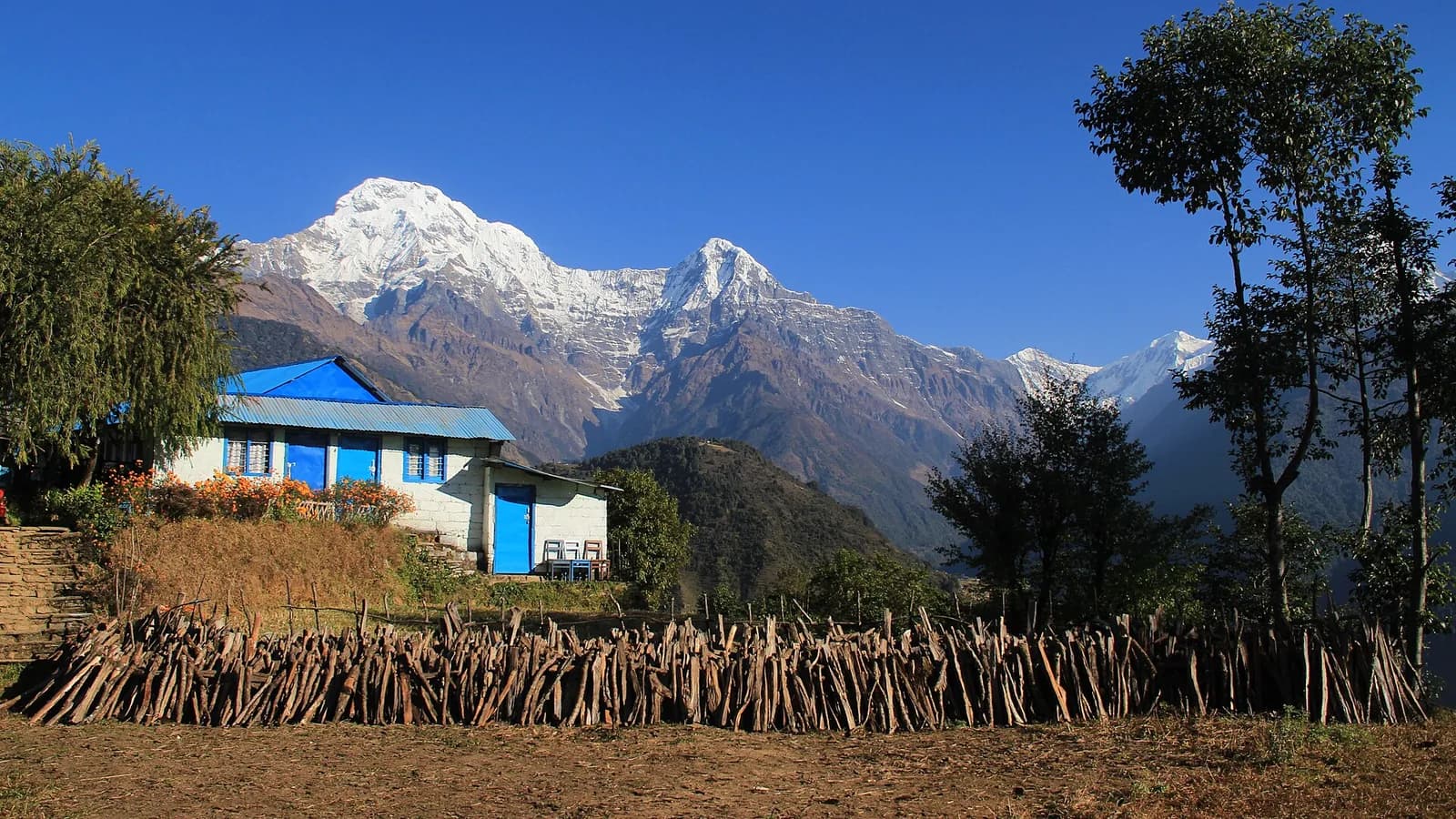
Climbing a steep green hillside in the Annapurna foothills, its stone houses and slate roofs stacked in neat terraces beneath a wall of snow peaks, Ghandruk village is one of the most photogenic places in Nepal. It is also the cultural heart of the Gurung people, the hill community that has supplied generations of famous Gurkha soldiers, and a gateway to some of the country's best-loved treks. With Annapurna South and the fishtail spire of Machapuchare filling the skyline, a night in Ghandruk pairs genuine living culture with a front-row Himalayan view — and it is easy to reach from Pokhara. This guide covers the village, its heritage, the mountain panorama, how to get there, and how it links into the wider Annapurna trails.
Ghandruk sits in the same southern Annapurna country as the Annapurna Base Camp trek, and for many trekkers it is the first or last village on that journey. But it is well worth a visit in its own right.
Key takeaways
- Ghandruk sits at roughly 1,940 to 2,010 m, about 32 km northwest of Pokhara, low enough that altitude is rarely an issue.
- It is one of the largest and most traditional Gurung villages in Nepal, known for stone houses, slate roofs and paved lanes.
- The village has a proud Gurkha soldier heritage, and a small museum displays traditional dress, tools and weapons.
- The view takes in Annapurna South, Machapuchare, Hiunchuli and Gangapurna on a clear day.
- It is a beginner and family friendly destination, reached by a short jeep ride and walk or a gentle multi-day trek.
- Ghandruk is a key stop on the Ghorepani Poon Hill loop and the route to Annapurna Base Camp.
Where Ghandruk is
Ghandruk lies in Kaski district in the Annapurna region of central Nepal, roughly 32 km northwest of Pokhara as the crow flies. The village is spread across a hillside at an altitude of about 1,940 to 2,010 metres — high enough for cool, fresh air and big views, but low enough that altitude sickness is not a real concern for most visitors. That modest elevation is part of what makes it such an accessible destination compared with the high treks deeper in the range.
The setting is the classic middle-hills landscape of Nepal: terraced fields, rhododendron forest, and steep ridges, all rising toward the snow line. Because the village faces the high peaks directly, it enjoys one of the great mountain outlooks in the country from the comfort of a teahouse balcony.
Gurung culture and Gurkha heritage
Ghandruk is, above all, a Gurung village — one of the largest and most important in Nepal. The Gurung are one of the country's notable hill peoples, with their own language, dress and traditions, and Ghandruk is where much of that culture is still lived day to day rather than performed for visitors.
The village is closely tied to the famous Gurkha soldiers. For well over a century, Gurung men from villages like this one have served in the British and Indian armies, earning a worldwide reputation for courage, and that military heritage is a source of deep local pride. You will see it in the village in subtle ways — retired soldiers, regimental connections, and the relative prosperity that overseas service has brought back to the hills.
To get a feel for the traditional way of life, visit the small Gurung museum (sometimes called the Old Gurung Museum), set inside a traditional house. It displays everyday tools, household objects, traditional costumes and the khukuri knives associated with the Gurkhas, offering a window into the customs, dialects and history of the community. The houses themselves are part of the heritage: built of stone with flat slate roofs and linked by stone-paved lanes, they give the village its distinctive, timeworn character.
A little trekking Nepali goes a long way here. A warm Namaste and a few words of greeting are genuinely appreciated and open doors to the famous Gurung hospitality.
The mountain views
The reason Ghandruk features on so many itineraries is the panorama. From the village and its viewpoints, the high Himalaya rises close and clear. Directly ahead stands the great wall of Annapurna South, with the unmistakable twin-pointed Machapuchare — the "fishtail", considered sacred and never climbed — beside it. Hiunchuli and Gangapurna complete the skyline. On a crisp morning, the first light catching those summits while the village is still in shadow is among the most rewarding sights in the Annapurna region.
As almost everywhere in the mountains, mornings are usually clearest, before cloud builds over the peaks through the day. It is worth being up early for the dawn light, then enjoying a slow breakfast as the village wakes.
How to get to Ghandruk from Pokhara
Ghandruk is one of the easier mountain villages to reach, which is a big part of its appeal. There are a few ways in, depending on whether you want to walk a lot, a little, or hardly at all.
| Route | Roughly how long | Good for | |---|---|---| | Jeep/bus to Kimche, then walk up | A few hours by road + 1 to 2 hr walk | The quickest practical way in | | Trek from Nayapul | 1 to 2 days on foot | Walkers wanting a proper short trek | | Arrive on foot from Landruk / Tadapani | Part of a longer loop | Trekkers on a multi-day circuit |
The quick way: jeep to Kimche, then walk
The fastest practical route is to take a jeep or local bus from Pokhara to Kimche, a few hours on a rough mountain road, and then walk the final one to two hours uphill into Ghandruk. A direct jeep can get you closer still, though the road is bumpy and the last stretch on foot is part of the pleasure. This makes a one-night visit very doable even on a tight schedule.
The trekking way: from Nayapul
Many visitors prefer to walk in properly, starting from the Nayapul trailhead — itself reached by road from Pokhara — and trekking up through villages over a day or two. This is the gentle, scenic introduction to Annapurna trekking that suits first-timers and families.
To reach the trailheads, you first travel from the capital or stay over in Pokhara; our Kathmandu to Pokhara transport guide covers getting to the lake town, which is the launch pad for everything in this region.
Trekking routes through Ghandruk
Ghandruk is woven into several of the most popular trails in Nepal, which is why so many trekkers pass through it.
- Ghorepani Poon Hill loop. Ghandruk is a cornerstone of this classic short trek, usually combined with the famous Poon Hill sunrise over the Annapurna and Dhaulagiri ranges and the village of Ghorepani. It is one of the most accessible multi-day treks in the country and a perfect first Himalayan walk.
- Annapurna Base Camp. Ghandruk is a common gateway and overnight stop on the way to Annapurna Base Camp, sitting on the southern approach into the sanctuary.
- Annapurna Circuit links. The village connects into the broader web of Annapurna trails. If you are deciding between the great routes, our comparison of the Annapurna Circuit versus Base Camp lays out the differences, and the quieter Mardi Himal trek starts from the same corner of the region.
Daily walking on these routes runs around five to six hours at a relaxed pace, and you sleep in teahouses and lodges rather than tents.
Permits, when to go, and where to stay
Ghandruk lies within the Annapurna Conservation Area, so you need the ACAP entry permit, which costs NPR 3,000 for foreign nationals and NPR 1,000 for SAARC nationals (as of June 2026); trekkers also carry a TIMS card. Both are arranged through a government-registered trekking agency in Pokhara or Kathmandu. It is a fitting place to need that permit, since Ghandruk is historically where the Annapurna Conservation Area Project was first piloted in the 1980s — a model of community-led conservation that has shaped the whole region.
For timing, the best windows are spring (around March to May) and autumn (around September to November), when skies are clearest and the walking weather is comfortable. Spring has the bonus of rhododendron blooms colouring the surrounding forest. The monsoon is lush but cloudy and wet, while winter is cold but can be beautifully crisp and clear. For the full seasonal picture, see our guide to the best time to visit Nepal.
On accommodation, Ghandruk has a good spread of teahouse lodges, and many traditional homes also offer homestays. Staying with a Gurung family in a stone house, eating home-cooked dal bhat and sharing an evening by the fire, is one of the most authentic experiences in the Annapurna region. Standards are simple but the welcome is genuine.
How long to spend, and how it fits your trip
A single night in Ghandruk is enough to catch a sunset, a dawn mountain view, the museum and a wander through the lanes. But the village really shines as part of a longer journey. Folded into a Ghorepani Poon Hill loop or the approach to Annapurna Base Camp, it becomes one memorable stop among several, and the short, low-altitude trail makes it forgiving for those new to trekking.
If you are planning the bigger picture, Ghandruk and the Annapurna foothills slot naturally into a wider trip — our two-week Nepal itinerary shows how the region links with Pokhara, Kathmandu and the lowland parks. However you arrange it, an evening watching the light fade on Annapurna South from a Ghandruk balcony, with the slate roofs of the village below, is the kind of quiet Himalayan moment people come to Nepal for.
Sources
- Ghandruk Village: A Cultural Treasure in the Annapurna Region — Magical Nepal
- Annapurna Conservation Area Project (ACAP) — National Trust for Nature Conservation
- Annapurna Trekking Permits 2026: ACAP, TIMS & RAP Guide — Nepal Hiking Team
- Ghorepani Poonhill Ghandruk Trek Comparison — Nepal Base Camp Treks
- Ghandruk: A Famous Nepali Village for Gurung Culture — Himalayan Masters
Frequently asked questions
- Where is Ghandruk village and how high is it?
- Ghandruk is in Kaski district in the Annapurna region of central Nepal, about 32 km northwest of Pokhara. The village sits at roughly 1,940 to 2,010 metres, so altitude is not a serious concern for most visitors. It is one of the largest Gurung settlements in the country.
- How do you get to Ghandruk from Pokhara?
- The quickest way is a jeep or bus from Pokhara to Kimche, taking a few hours on a rough road, then a short uphill walk of one to two hours into the village. Trekkers often walk in from the Nayapul trailhead over a day or two, or arrive on foot from Landruk and Tadapani. A direct jeep ride is possible but bumpy.
- What is special about Ghandruk village?
- Ghandruk is the cultural heart of the Gurung people, famous for stone houses with slate roofs, paved lanes, and warm hospitality, all set beneath towering Annapurna peaks. Many Gurung men served as Gurkha soldiers, and that proud military heritage runs through the village. A small museum showcases traditional dress, tools and weapons.
- Which mountains can you see from Ghandruk?
- On a clear day Ghandruk offers some of the finest village mountain views in Nepal. You look straight up at Annapurna South and the fishtail peak of Machapuchare, with Hiunchuli and Gangapurna also in view. Mornings are usually clearest before cloud builds over the peaks later in the day.
- Is Ghandruk a good trek for beginners?
- Yes. The walk to Ghandruk is short, scenic and not technically hard, making it one of the most beginner and family friendly options in the Annapurna region. You sleep in comfortable teahouses and lodges rather than tents, and the altitude stays low. It is a popular gentle introduction to Himalayan trekking.
- Do you need a permit to visit Ghandruk?
- Yes. Ghandruk lies within the Annapurna Conservation Area, so you need the ACAP entry permit, which costs NPR 3,000 for foreign nationals and NPR 1,000 for SAARC nationals as of June 2026. Trekkers also carry a TIMS card. Both are arranged through a registered trekking agency in Pokhara or Kathmandu.
- How long do you need in Ghandruk?
- A single night is enough to enjoy a sunset, an early mountain view and a wander through the stone lanes and the museum. Many visitors fold Ghandruk into a longer loop, such as the Ghorepani Poon Hill trek or the route to Annapurna Base Camp, spending one night there as part of a multi-day trip.
- What is the best time to visit Ghandruk?
- Spring, around March to May, and autumn, around September to November, bring the clearest skies and the best mountain views, plus comfortable walking weather. Spring also brings rhododendron blooms on the surrounding hills. The monsoon is green but cloudy and wet, and winter is cold but can be crisp and clear.
- Can you stay with a local family in Ghandruk?
- Yes. Alongside teahouse lodges, many of the village homes offer homestay accommodation in traditional Gurung houses, which is one of the most authentic ways to experience the culture. Staying with a family gives you home-cooked food and a window into daily village life. Standards are simple but welcoming.
Related posts
Gurung People (Tamu): Culture of the Annapurna Region
A respectful guide to the Gurung (Tamu) people of Nepal's Annapurna region — their language, religion, Rodi tradition, Tamu Lhosar and Gurkha heritage.
Read postCustomized Trekking Tours Annapurna: Plan It Right
How to plan customized trekking tours in the Annapurna region — routes, permits, the guide rule, seasons and what makes a private itinerary worth it.
Read postLuxury Trekking Nepal: Comfort in the Himalaya (2026)
A practical guide to luxury trekking in Nepal — heated lodges, en-suite rooms and helicopter shortcuts on the Everest and Annapurna trails.
Read post