Bardia National Park: Nepal's Wild Tiger Park (2026)
Bardia National Park guide — Bengal tigers, rhinos, entry fees, safaris and how Nepal's quietest Terai park compares to Chitwan in 2026.
Chitwan has the crowds. Bardia has the tigers — and far fewer jeeps fighting for the sighting.
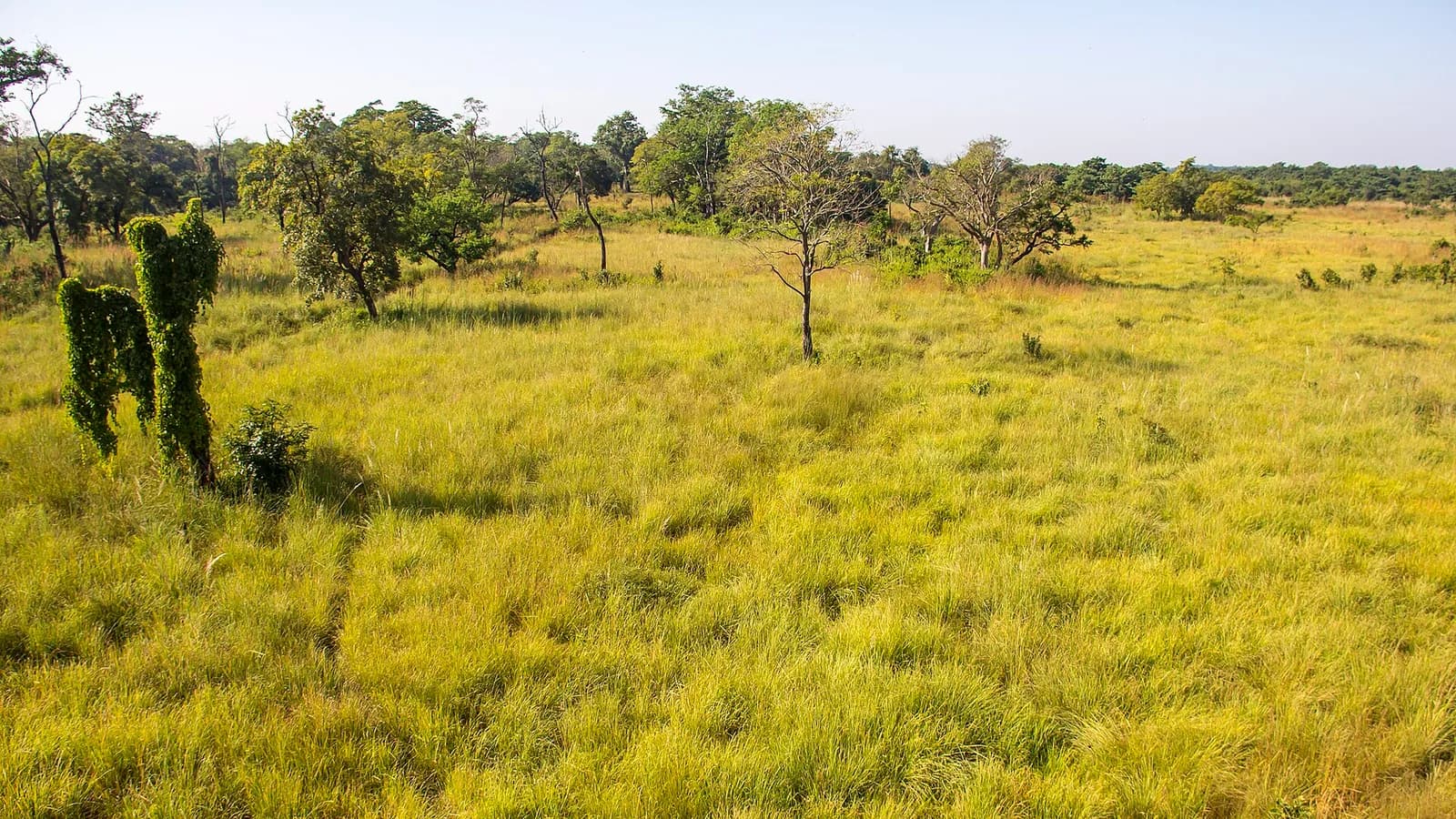
If Chitwan is Nepal's safari park for everyone, Bardia National Park is the one for travellers willing to go a little further for a wilder, emptier and more tiger-focused experience. Tucked into the far-western Terai along the great Karnali River, Bardia is the largest and most undisturbed protected wilderness in Nepal's lowlands — a mosaic of sal forest, floodplain grassland and riverine jungle that holds one of the densest Bengal tiger populations in the country. Crucially, it sees a fraction of the visitors Chitwan does, which means when you do get a sighting, you are not sharing it with twenty other jeeps.
This guide covers what the park protects, the wildlife you can realistically hope to see, what it costs to enter, how to get there, and how it stacks up against its more famous eastern cousin. For the wider picture of how Bardia fits Nepal's protected estate, see our overview of Nepal's national parks.
Key takeaways
- Bardia covers 968 km² of western-Terai wilderness, gazetted as a national park in 1988 after decades as a hunting and wildlife reserve.
- It is a stronghold for the Bengal tiger, with 125 tigers recorded in the 2022 national census — among the highest densities in Nepal.
- The foreigner entry fee is NPR 1,500 per entry (Nepal Tourism Board, as of June 2026); children under 10 enter free.
- Wildlife includes one-horned rhino, wild elephant, swamp deer, Gangetic dolphin and gharial, across 53 mammal and 407 bird species.
- The trade-off versus Chitwan is harder access for far fewer crowds and a genuinely wild feel.
What and where Bardia National Park is
Bardia sits in the western Terai, in Bardiya District of Lumbini Province, bordered to the west by the Karnali River and split through its core by the Babai River; the Siwalik (Churia) Hills form its northern edge. It covers 968 km², making it the largest national park in Nepal's lowland belt.
Its conservation history is long. The area was set aside as a Royal Hunting Reserve in 1969, redesignated the Royal Karnali Wildlife Reserve in 1976, renamed the Royal Bardia Wildlife Reserve in 1982, and finally expanded and gazetted as Bardia National Park in 1988. Today around 70% of the park is forest — predominantly sal — with the remainder a patchwork of grassland, savanna and riverine forest that supports an unusually rich web of wildlife. Over 839 plant species have been recorded inside its boundaries.
The wildlife: a real chance at tigers
Bardia's headline draw is the Royal Bengal tiger. Thanks to sustained anti-poaching work and the buffer-zone conservation model, the park's tiger numbers have surged: the 2022 national census recorded 125 tigers in Bardia, up sharply from 87 in 2018. That makes it one of Nepal's two great tiger parks alongside Chitwan, and arguably the better bet for actually glimpsing one, because the population is dense and the visitor pressure is low. A new national tiger census began in December 2025, with fresh figures expected to follow.
Beyond tigers, the park hosts at least 53 species of mammal, including:
- Greater one-horned rhinoceros — reintroduced to Bardia and now breeding, though numbers are lower than Chitwan's.
- Wild Asian elephant — herds move through the park and adjoining forests.
- Swamp deer (barasingha) — a Terai grassland specialist.
- Spotted deer, sambar, hog deer and wild boar — the tiger's prey base.
- Gangetic river dolphin — in the Karnali, one of the few places in Nepal you can hope to see this endangered freshwater dolphin.
Reptiles include the fish-eating gharial and the mugger crocodile, while the rivers hold around 125 fish species. Birdlife is exceptional, with 407 recorded species spanning the grasslands, forest and waterways — Bardia is a serious birding destination in its own right.
Tigers without the crowds: Bardia vs Chitwan
The honest comparison most travellers want is Bardia versus Chitwan. Both are Terai jungle parks; both have tigers and rhinos. The differences come down to access, crowds and emphasis.
| | Bardia | Chitwan | |---|---|---| | Location | Far-western Terai | Central Terai | | Area | 968 km² | 953 km² | | Best for | Tigers, solitude, wild feel | Rhinos, easy access | | Tigers (2022 census) | 125 | 128 | | Crowds | Low | High | | Access from Kathmandu | Harder (fly + drive) | Easy (tourist bus) | | Foreigner entry fee | NPR 1,500 | NPR 2,000 |
The short version: choose Chitwan if you want convenience and near-guaranteed rhinos, and choose Bardia if you want a wilder, quieter park with stronger tiger odds and you can spare the extra travel time. Many serious wildlife travellers consider Bardia the more rewarding of the two precisely because it has not been polished for mass tourism.
Safaris and activities
Bardia is explored much the same way as other Terai parks, always with a licensed guide:
- Jeep safari — the most efficient way to cover ground and reach the grasslands and riverbanks where tigers and rhinos appear. Half- or full-day options.
- Jungle walking safari — on foot with a trained naturalist; more immersive and quieter, and a genuine (if small) chance of a close tiger or rhino encounter. Walking gives the strongest sense of the wild.
- Karnali River trips — boat or raft outings to look for Gangetic dolphins, gharials, crocodiles and waterbirds.
- Tharu cultural experiences — the indigenous Tharu people are the heart of the local communities around the park, and many lodges in Thakurdwara offer respectful village visits and cultural performances.
Because sightings here take patience, two to three full days is the sensible minimum. Tiger viewing in particular rewards multiple outings rather than a single rushed safari.
Entry fees and permits
Entry to Bardia is charged per entry, paid at the park headquarters in Thakurdwara. The figures below come from the Nepal Tourism Board:
| Visitor type | Entry fee (per entry) | |---|---| | Foreigner | NPR 1,500 | | SAARC national | NPR 750 | | Nepali citizen | NPR 100 |
Figures in Nepali rupees (NPR) per person per entry, as of June 2026 per the Nepal Tourism Board. Children under 10 enter free. Confirm at the gate, as fees are revised periodically.
Notes:
- Pay in cash at the park office or your lodge can usually arrange permits.
- The entry fee is a small part of the total cost — guides, jeeps and lodging are the bigger spend. Plan the wider trip with our Nepal travel budget guide.
- Bardia is a lowland park, so Japanese encephalitis and mosquito-borne risks are a Terai consideration — see our vaccinations for Nepal guide.
How to get there
Bardia's remoteness is the price of its tranquillity. The main routes:
- Fly to Nepalgunj from Kathmandu (about an hour), then drive 2–3 hours to Thakurdwara. This is the standard, sane option.
- Overland bus from Kathmandu or Pokhara is possible but long — typically 12–16 hours — and only worth it for budget travellers with time to spare.
Because of the distance, Bardia works best as a dedicated leg of a trip rather than a quick add-on. Pair it with the far-western circuit, or treat it as the wild bookend to a mountain trek. Our two-week Nepal itinerary shows how to balance jungle and Himalaya.
When to visit
- October to early April is the dry season and the prime wildlife window: cool, comfortable, with thinner vegetation that improves visibility. This is the best all-round time.
- April–May is hot pre-monsoon, with daytime temperatures climbing high — but tiger odds often improve as animals concentrate around shrinking water sources.
- June–September is monsoon: lush and dramatic but with muddy trails, swollen rivers, more mosquitoes and tougher viewing.
For most visitors, November to March hits the sweet spot of pleasant weather and strong wildlife activity. A month-by-month view is in our best time to visit Nepal guide.
Practical tips for Bardia
- Allow time. The access is slower than Chitwan; build in a travel day each way and at least two full days in the park.
- Wear earth tones, long sleeves and closed shoes for walking safaris, and bring strong insect repellent.
- Bring binoculars and a telephoto lens. Sightings are at distance and birdlife is prolific.
- Hire a knowledgeable local guide — it is required on foot and dramatically improves your odds and your understanding of the forest.
- Manage expectations on tigers. A dense population improves your chances, but no guide can promise a sighting; treat one as a thrilling bonus, not a given.
The bottom line
Bardia National Park is Nepal's wildlife park for travellers who want the real thing over the easy thing. It is harder to reach than Chitwan, but in exchange you get the country's wildest lowland forest, one of its densest tiger populations, the chance of a Gangetic dolphin in the Karnali, and a stillness that the busier parks lost long ago. Give it three days, go in the dry season, walk quietly with a good guide — and you will understand why the people who know Nepal's parks best so often name Bardia as their favourite. For the bigger context, see our guides to Nepal's national parks and the Chitwan safari.
Sources
- Bardiya National Park — Wikipedia
- Bardiya National Park — Nepal Tourism Board
- National Park Entry Fees — Nepal Tourism Board
- Nepal's tiger population reaches 355 — The Kathmandu Post
- Nepal begins national tiger census — The Kathmandu Post
- Department of National Parks and Wildlife Conservation (DNPWC)
Frequently asked questions
- What is Bardia National Park known for?
- Bardia National Park is Nepal's largest and wildest national park in the western Terai, best known for one of the country's densest Bengal tiger populations. It also shelters one-horned rhinos, wild elephants, swamp deer and Gangetic river dolphins, with far fewer tourists than Chitwan.
- How much is the Bardia National Park entry fee in 2026?
- The Nepal Tourism Board lists the entry fee at NPR 1,500 per entry for foreigners, NPR 750 for SAARC nationals and NPR 100 for Nepali citizens. Children under 10 enter free. Fees are paid at the park headquarters in Thakurdwara (as of June 2026).
- Can you see tigers in Bardia National Park?
- Bardia offers some of Nepal's best wild tiger-viewing odds thanks to a dense population recorded at 125 tigers in the 2022 census. Sightings are never guaranteed because tigers are elusive, but multi-day visits with a guide along the riverbanks give a realistic chance.
- How do you get to Bardia National Park?
- Most visitors fly from Kathmandu to Nepalgunj, then drive about two to three hours to the park hub at Thakurdwara. Overland buses from Kathmandu or Pokhara take far longer, often 12 to 16 hours, so flying to Nepalgunj is the usual choice.
- Is Bardia better than Chitwan?
- It depends on what you want. Chitwan is easier to reach and more reliable for rhinos, while Bardia is wilder, quieter and stronger for tigers. Travellers chasing solitude and big-cat odds prefer Bardia, those short on time often choose Chitwan.
- What is the best time to visit Bardia National Park?
- October to early April is the dry season and the prime window for wildlife, with cool comfortable weather and thinner vegetation. The hot months of April and May improve tiger odds as animals gather at shrinking water sources, while the summer monsoon makes trails muddy.
Related posts
Gangetic Dolphin in Nepal: Where to See the Susu
A traveller's guide to the Gangetic dolphin in Nepal: where it lives, why it is endangered, and how to spot the Karnali susu responsibly.
Read postJungle Lodge Nepal: Guide to Terai Wildlife Stays
How to choose a jungle lodge in Nepal near Chitwan or Bardia, with park fees, what to expect, and tips for safaris and wildlife.
Read postNepal National Parks: A Visitor's Overview (2026)
A plain-English guide to Nepal's national parks — which to visit for tigers, rhinos or Everest, entry fees, best seasons and how the system works.
Read post