Nepal Off the Beaten Path: 8 Lesser-Known Regions
Nepal off the beaten path — Dolpo, Mustang, Nar Phu, Kanchenjunga, Tsum, Makalu and more. Remote regions, permit rules and how to reach them in 2026.
Past the teahouse highways, Nepal opens into valleys where a passing trekker is still an event.
The famous trails — Everest Base Camp, the Annapurna Circuit, Langtang — are famous because they are superb. But they are also crowded, and in peak weeks the lodges fill and the viewpoints queue. Go off the beaten path in Nepal and the country changes character entirely: passes where you may not see another foreigner all day, villages that opened to outsiders only this century, and cultures along the Tibetan frontier that have barely shifted in generations.
This guide covers the lesser-known regions — whole valleys and mountain districts, not single sights. It is the middle layer between the country's iconic must-sees and the small surprises in our hidden gems of Nepal guide. Most places below sit inside restricted areas with their own permit rules, so read the practicalities before you fall in love with the photos.
Key takeaways
- "Off the beaten path" in Nepal mostly means the restricted and remote regions — Dolpo, Upper Mustang, Nar Phu, Tsum, Manaslu, Makalu and Kanchenjunga.
- These regions require a Restricted Area Permit and a licensed guide through a registered agency; fully solo trekking is not allowed inside them.
- They reward you with far fewer trekkers and stronger Tibetan and indigenous cultures, but ask for more time, fitness and budget.
- Rain-shadow regions like Upper Mustang and Dolpo stay relatively dry in the monsoon, making them rare summer options.
- Some areas opened to foreigners only recently — Nar Phu around 2002 and Tsum Valley in 2008.
What "off the beaten path" really means here
Nepal's trekking map has a clear hierarchy. The open, teahouse-served trails of Everest, Annapurna and Langtang carry the great majority of trekkers. Beyond them lie the restricted areas, sealed off near the Tibetan border for political and cultural reasons, which the government opens only to permit-holding groups travelling with a guide. That permit barrier is exactly what keeps these regions quiet, traditional and wild. Going off the beaten path in Nepal is, in practice, a matter of paperwork, time and willingness to camp or accept simpler lodges. The payoff is solitude that the main trails can no longer offer.
1. Dolpo and Phoksundo Lake
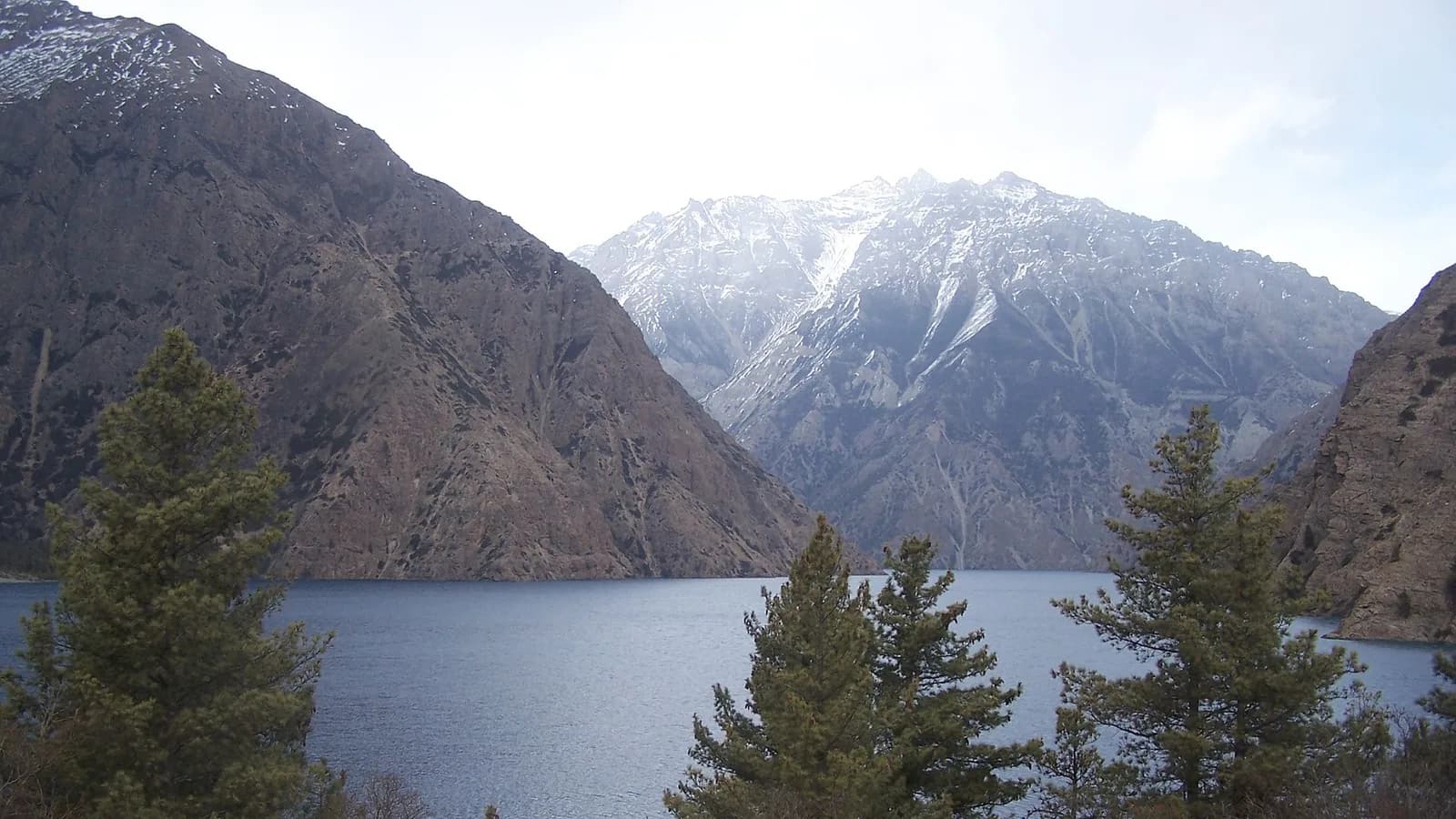
Behind the main Himalayan wall in the far west, Dolpo is the Nepal of Himalaya (the 1999 film) and Peter Matthiessen's The Snow Leopard — a high, arid, Tibetan-Buddhist world of walled gompas and yak caravans. Its centrepiece is Phoksundo Lake, an alpine lake of almost unreal turquoise sitting at about 3,612 m in Shey Phoksundo National Park, and at up to 145 m the deepest lake in Nepal. Lower Dolpo can be reached on a roughly two-week trek from the Juphal airstrip; Inner Dolpo, crossing 5,000 m passes to the Shey Gompa, is one of the most committing journeys in the country. The park itself, gazetted in 1984, is Nepal's largest at 3,555 km².
2. Upper Mustang
North of the Annapurnas, the old Kingdom of Lo is a slice of the Tibetan plateau that happens to lie inside Nepal — ochre cliffs, sky caves, and the walled capital of Lo Manthang. Because it sits in the Himalayan rain shadow, it is one of the few regions you can trek through the summer monsoon. The trade-off is cost: Upper Mustang carries one of Nepal's steepest restricted-area permits, and our Upper Mustang trek permit guide explains exactly what the fee covers and why. Time your visit to the spring Tiji Festival and you witness three days of masked monastic dance in Lo Manthang's main square.
3. Nar Phu Valley
A short hop off the busy Annapurna Circuit, the Nar Phu valley feels like another century. Opened to foreign trekkers only around 2002, it shelters two ancient Tibetan-style villages, Nar and Phu, that once served as refuge for Khampa fighters. The valley reportedly sees only a few hundred trekkers a year, against the tens of thousands on the Circuit a ridge away. It needs a Restricted Area Permit plus the standard Annapurna conservation-area entry, and it pairs beautifully with the Annapurna Circuit and the Thorong La crossing for trekkers who want the icon and the secret in one trip.
4. Tsum Valley
Tucked beside the Manaslu region in northern Gorkha, Tsum is a sacred beyul — a hidden valley blessed in Tibetan-Buddhist tradition, sometimes called the Hidden Valley of Happiness. It stayed closed to outsiders until 2008, and the isolation preserved a deeply Buddhist culture of mani walls, chortens and the cliffside gompas of Mu and Rachen. It is usually combined with the Manaslu Circuit, and like Manaslu it is a restricted area requiring a permit and guide. For trekkers who care more about culture than summit views, Tsum is one of Nepal's most moving walks.
5. Manaslu Circuit
The Manaslu Circuit has become the go-to "next step" for trekkers who found the Annapurna Circuit too busy. Looping around the world's eighth-highest peak and crossing the Larkya La at over 5,100 m, it offers Annapurna-grade scenery with a fraction of the foot traffic, partly because its restricted-area status keeps numbers down. Teahouses now line the route, so it does not require camping, but it does require a permit, a guide and a minimum group size. Our Manaslu Circuit trek guide and the head-to-head on Manaslu versus Annapurna difficulty help you judge whether you are ready.
6. Kanchenjunga
In Nepal's far north-east, hard against the borders with India and Sikkim, rises Kanchenjunga, the world's third-highest mountain — and almost nobody walks beneath it. The trek to its north and south base camps (Pangpema and Oktang) is a remote, roughly three-week undertaking through Limbu and Sherpa country, with long road approaches and minimal infrastructure. It is a restricted area, so the usual permit-and-guide rules apply. For trekkers chasing genuine wilderness over convenience, our Kanchenjunga trek guide lays out the considerable logistics.
7. Makalu Base Camp
East of Everest but a world away in foot traffic, the Makalu region is one of Nepal's least-travelled corners. The trek to the base of Makalu, the world's fifth-highest peak, climbs through the astonishing biodiversity of the Makalu-Barun National Park, from subtropical forest to glacier in the span of days. There are few lodges, the trail crosses high passes, and the sense of isolation is total. It rewards experienced trekkers who treat the wilderness itself, rather than a single viewpoint, as the destination.
8. The far west: Rara and Khaptad
The far-western districts are the emptiest part of the entire country for tourism, and that is precisely their appeal. Rara Lake, Nepal's largest at roughly 10.8 km² and sitting near 2,975 m in Mugu, is a sapphire sheet of water ringed by forest and snow peaks, reachable by flights to Talcha or a multi-day trek from Jumla. Nearby Khaptad National Park spreads its rolling grassland plateaus and pilgrimage shrines across four districts, almost unknown to foreign visitors. Both feature in our hidden gems of Nepal guide as standout natural escapes.
Region-by-region snapshot
| Region | Where | Restricted? | Rough duration | Standout | | --- | --- | --- | --- | --- | | Dolpo / Phoksundo | Far west | Yes | 12–24 days | Deepest lake in Nepal | | Upper Mustang | North of Annapurna | Yes | 10–14 days | Walled Lo Manthang | | Nar Phu | Off Annapurna Circuit | Yes | 4–7 days add-on | Medieval Tibetan villages | | Tsum Valley | Gorkha / Manaslu | Yes | 7–12 days | Sacred beyul | | Manaslu Circuit | Gorkha | Yes | 12–16 days | Larkya La, low crowds | | Kanchenjunga | Far east | Yes | ~20–24 days | World's 3rd-highest peak | | Makalu Base Camp | East of Everest | No (park entry) | 18–22 days | Extreme remoteness | | Rara / Khaptad | Far west | No (park entry) | Varies | Nepal's largest lake |
Durations are typical round-trip ranges; confirm current permit categories with your agency, as restricted-area rules and fees are revised periodically.
Permits and the guide rule
This is the part that trips up first-timers. Inside a restricted area, you cannot trek solo and you cannot simply buy a permit at a counter — the Restricted Area Permit must be arranged by a government-registered trekking agency, you must travel with a licensed guide, and most zones require a minimum of two trekkers. On top of the restricted permit you generally still pay the relevant conservation-area entry (ACAP for the Annapurna and Manaslu fringes, and so on). Permit prices vary widely by region and by the number of days; Upper Mustang's is famously among the highest in the country (as of June 2026). Always budget for permits, mandatory guide and porter wages, and the flights or long jeep rides that remote trailheads demand. For wage norms, see our guide to tipping guides and porters.
Preparing for the remote regions
Off-the-beaten-path treks are less forgiving than the highways, so prepare accordingly:
- Build in contingency days. Remote airstrips like Juphal and Jumla are weather-dependent, and a single fogged-in morning can cascade through your schedule.
- Take altitude seriously. Many of these routes cross 5,000 m passes with sparse rescue coverage — read our altitude sickness guide and consider trekking insurance with helicopter evacuation.
- Pack for self-sufficiency. Lodges thin out and shops vanish; our trekking packing list covers the essentials.
- Carry enough cash. ATMs do not exist past the trailheads — our ATM withdrawal guide explains where to stock up.
- Learn the courtesies. A few Nepali trail phrases go a long way in villages that rarely meet foreigners.
Who should go off the beaten path
These regions are not for every traveller, and that is the point. If it is your first trip and you have ten days, start with the best places to visit in Nepal and save the wild west for a return visit. But if you have done the icons, have two or three weeks, and care more about solitude and living culture than about ticking off the highest base camp, this is where Nepal becomes unforgettable. Pair this guide with our hidden gems of Nepal round-up for the smaller, easier surprises that fill the gaps between the big remote treks.
Sources
Frequently asked questions
- What does off the beaten path mean for Nepal trekking?
- It usually means the restricted and remote regions away from the Everest, Annapurna and Langtang highways — places like Dolpo, Upper Mustang, Nar Phu, Tsum, Makalu and Kanchenjunga. These areas see a fraction of the trekkers, keep stronger Tibetan and indigenous cultures, and often require special permits and a licensed guide.
- Do you need a special permit for off-the-beaten-path treks in Nepal?
- Most do. Restricted areas such as Upper Mustang, Nar Phu, Tsum Valley, Manaslu, Kanchenjunga and Dolpo require a Restricted Area Permit on top of the relevant conservation-area entry, and the rules require trekking through a registered agency with a licensed guide rather than fully solo.
- Which is the most remote trek in Nepal?
- Inner Dolpo and the Makalu region rank among the most remote, with multi-week itineraries, high passes and very little infrastructure. Kanchenjunga in the far east is similarly isolated, often taking around three weeks round trip from the nearest airport with long road approaches.
- Are off-the-beaten-path treks in Nepal harder than Everest or Annapurna?
- Often yes, in logistics if not always in altitude. Remote regions have fewer teahouses, longer road approaches, less rescue coverage and stricter permit rules, so many are done camping-style or with full agency support. Strong fitness and extra contingency days are sensible.
- When is the best time for remote Nepal treks?
- Autumn from late September to November gives the most stable weather for most regions. Spring from March to May is the second window. The rain-shadow areas behind the Himalaya, such as Upper Mustang and Dolpo, also stay relatively dry during the summer monsoon, making them rare warm-season options.
- Can you trek Nepal's restricted areas without a guide?
- No. Restricted-area regulations require trekkers to go through a government-registered agency with a licensed guide, and most require a minimum of two trekkers for the permit. Fully independent solo trekking is not permitted inside these zones, though it remains possible on many open routes.
- Is it expensive to trek off the beaten path in Nepal?
- It costs more than the main trails. Restricted-area permits can run from tens to hundreds of US dollars depending on the region and days, and remote logistics, flights and mandatory guides add up. Upper Mustang's permit alone is among the highest in the country (as of June 2026).
Related posts
Annapurna Trek Package: How to Choose One in 2026
A practical guide to picking an Annapurna trek package in 2026 — durations, what is included and excluded, permits, the guide rule, and how to compare quotes.
Read postBackpacker Nepal: A First-Trip Guide for 2026
A backpacker Nepal guide for first-timers — when to go, where to base, getting around, route ideas, money, safety and the trekking-guide rule.
Read postHow to Choose the Best Trekking Agency in Nepal (2026)
A practical buyer's guide to choosing a trekking agency in Nepal: TAAN registration, the licences to check, fair pricing, and the red flags to avoid.
Read post