Everest View Trek: See Everest in Under a Week
A 2026 Everest View trek guide — a short, lower Khumbu trek to Namche, Hotel Everest View and Tengboche, with itinerary, permits, costs and difficulty.
All the giants of the Khumbu, none of the punishing altitude — Everest in your sights in under a week.
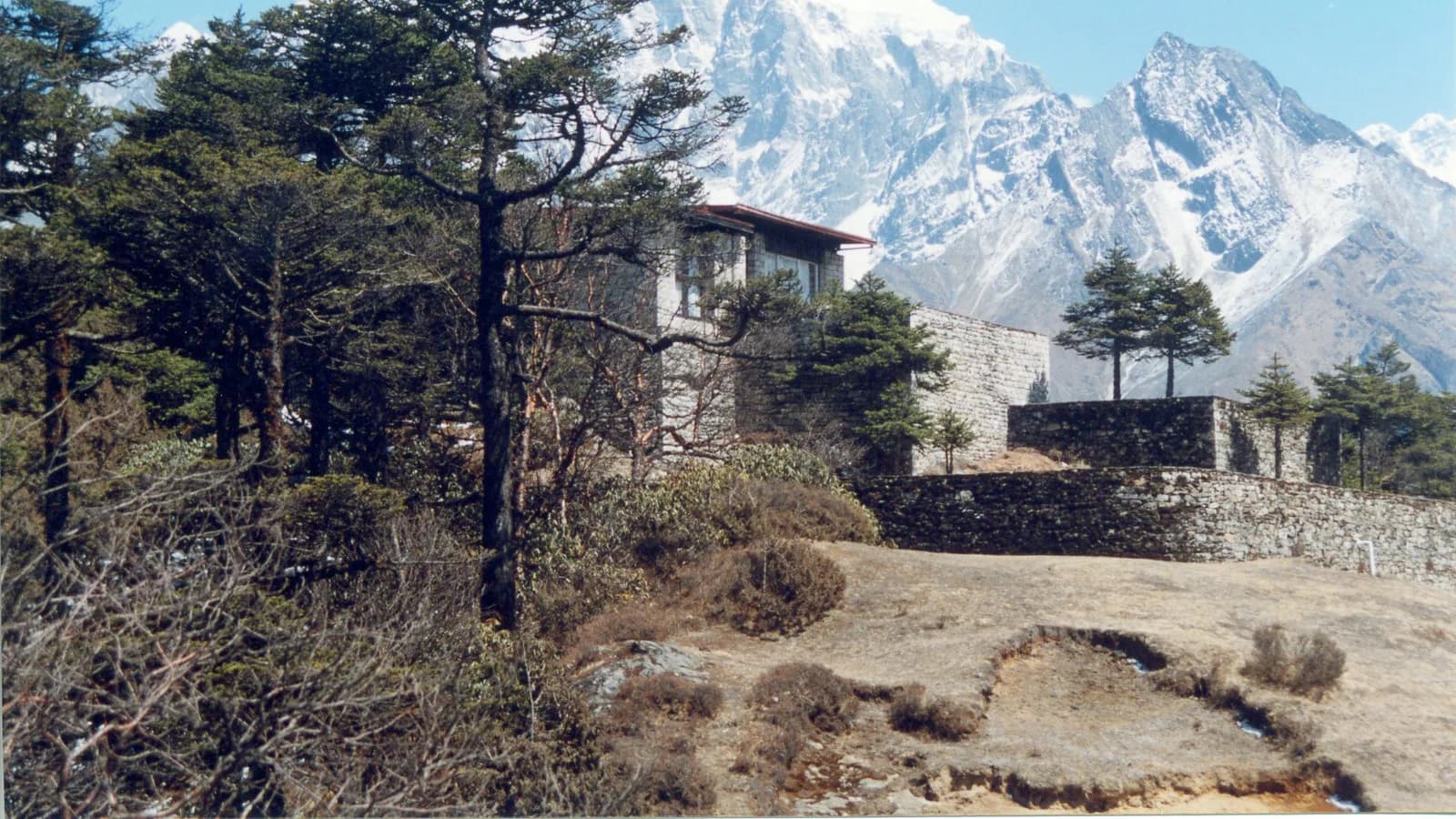
Not everyone has three weeks, the fitness, or the appetite for altitude that a trek to Everest Base Camp demands — and the good news is you do not need any of those things to actually see Everest. The Everest View trek is the short, lower-altitude alternative that delivers the Khumbu's most famous panoramas in well under a week. You fly into Lukla, climb to the Sherpa capital of Namche Bazaar, hike up to the legendary Hotel Everest View for a terrace view of the world's highest mountain, and usually continue to the monastery village of Tengboche, all while staying close to or below 4,000 metres. This guide covers the route, the permits, the realistic costs and the difficulty, stamped to mid-2026.
If you are torn between this and the full pilgrimage, our Everest Base Camp itinerary lays out the longer, higher option in detail — the Everest View trek is essentially its gentle opening act, turned into a complete trip of its own.
Key takeaways
- The Everest View trek reaches the classic Khumbu viewpoints — Namche, the Hotel Everest View and usually Tengboche — without going to Base Camp.
- It is short (about 5 to 8 days from Lukla) and lower than the full trek, mostly staying near or below 4,000 metres.
- The Hotel Everest View sits at about 3,880 metres and was listed by Guinness World Records as the highest-placed hotel in the world.
- You still see Everest, Lhotse and Ama Dablam up close on a clear day from the viewpoints.
- Permits are the same two as the full Everest trek — Sagarmatha National Park (NPR 3,000) and Khumbu municipality (~NPR 2,000) (as of June 2026).
- It is a strong choice for families, older travellers and time-pressed visitors — though the steep Namche climb and altitude still deserve respect.
Why choose the Everest View trek
The standard trek to Everest Base Camp is a magnificent undertaking, but it is also a serious one: around two weeks of walking, multiple nights above 5,000 metres, and a real risk of altitude sickness. The Everest View trek strips that down to its most scenic and most accessible core. You get the same dramatic flight into Lukla, the same vibrant Sherpa culture in Namche, and the same first, breathtaking sightlines of the high peaks — but you turn around before the trail climbs into the thin, cold air of the upper Khumbu.
That makes it ideal for several kinds of traveller: anyone short on time, families with older children, older or less experienced walkers, and people who simply want to see Everest rather than to stand at its foot. Because you stay lower, the altitude risk drops sharply, the nights are warmer, and the whole trip feels more like a spectacular hike than an expedition. You still earn your views with a steep climb or two, but the overall demand is a different order of magnitude from Base Camp.
The route, stage by stage
The Everest View trek shares its opening with every Khumbu adventure, then simply turns around earlier. Here is the shape of a typical plan; shorter versions stop at Namche, while longer ones add Tengboche and nearby villages.
| Day(s) | Stage | Approx. altitude | Notes | |---|---|---|---| | 1 | Fly Lukla, walk to Phakding | ~2,840 m start | Gentle first afternoon | | 2 | Phakding to Namche Bazaar | ~3,440 m | Big climb, suspension bridges | | 3 | Namche: rest + Hotel Everest View | ~3,880 m viewpoint | Climb high, sleep low | | 4 | Khumjung/Khunde, or on to Tengboche | ~3,867 m | Monastery and Ama Dablam | | 5 | Descend toward Namche | ~3,440 m | Mostly downhill | | 6 | Namche to Lukla | ~2,840 m | Final descent | | 7 | Fly Lukla to Kathmandu | — | Keep a buffer day |
Namche Bazaar and the Hotel Everest View
The heart of the trek is Namche Bazaar, the amphitheatre-shaped Sherpa town that serves as the gateway to the whole high Khumbu. It is a wonderful place to spend a day: bakeries, gear shops, coffee houses, a Saturday market and a genuine mountain-town buzz. The set-piece is the climb up to the Hotel Everest View at around 3,880 metres above the town at Syangboche. Opened in 1971 and once listed in the Guinness World Records as the highest-placed hotel in the world, its terrace frames a postcard panorama of Everest, Lhotse and the unmistakable fang of Ama Dablam. You do not need to be a guest — most trekkers hike up, order a tea or coffee, and linger over the view before walking back down to sleep at the lower altitude of Namche. That short climb doubles neatly as an acclimatisation hike.
Tengboche and the monastery
Longer versions of the trek continue from Namche to Tengboche at about 3,867 metres, home to the most famous monastery in the Khumbu. The walk there is one of the most scenic stretches of the entire Everest trail, and the monastery itself — set on a saddle directly beneath Ama Dablam — is a working centre of Sherpa Buddhist life. Reaching Tengboche turns a simple viewpoint hike into a richer cultural trek without adding serious altitude.
How hard is it, really?
The Everest View trek is one of the most accessible ways to experience the high Himalaya, but "accessible" does not mean "flat." The climb from the river up to Namche is a sustained, steep ascent that will get your heart pounding, and you walk several hours a day on uneven mountain trails. The deciding factor, as everywhere in the Khumbu, is altitude rather than distance — and here the trek's great advantage is that it largely keeps you near or below 4,000 metres, where altitude sickness is far less likely than on the Base Camp route.
That said, altitude can affect anyone, and even a fit walker can feel the thin air on the Namche climb. Build in the Namche rest day, drink plenty of water, and ascend at a steady pace. Our altitude sickness guide for Nepal treks is worth reading even for this gentler itinerary so you recognise the early warning signs. With sensible pacing, reasonably fit travellers of most ages complete this trek comfortably.
Permits and the guide rule
Even though it is short and low, the Everest View trek enters the same protected area as the full Base Camp trek, so the permit requirements are identical.
| Permit | Fee (as of June 2026) | Where you pay | |---|---|---| | Sagarmatha National Park entry | NPR 3,000 | Monjo checkpoint | | Khumbu Pasang Lhamu Rural Municipality | ~NPR 2,000 | Lukla |
The old TIMS card is not required for the Everest region — our Everest Base Camp permits explainer covers why so many outdated pages still list it. Since 2023, Nepal has required foreign trekkers to use a licensed guide hired through a registered agency on its trekking routes; for a short, well-travelled trek like this one, a guide also adds real value in arranging logistics and sharing the culture. Our guide-or-no-guide breakdown covers the current picture in the Everest region.
What it costs
Because it is short and stays low, the Everest View trek is one of the more affordable ways into the Khumbu — fewer days on the trail, and no high-altitude logistics. The single biggest cost is the same as on every Everest-region trek: the Lukla flight, which is weather-dependent and the part most prone to delay. Rather than quote a fixed package price, plan around the two permit fees above, the round-trip Lukla flights, and your chosen number of trail days and standard of lodging.
On the trail, the familiar Khumbu economics apply: rooms are cheap if you eat where you sleep, dal bhat is the best value because refills are usually free, and the price of food, charging and hot showers rises with altitude — though on this lower route the mark-ups are gentler than higher up. For what the lodges are actually like, see our teahouse food and accommodation guide, and carry enough rupees from Kathmandu because mountain ATMs are scarce and unreliable.
As with any Himalayan trek, take out proper travel insurance. Even on a lower route, a weather delay or a health problem at altitude can mean a helicopter, and our guide to trekking insurance with helicopter evacuation explains what a good policy should cover.
When to go
The Everest View trek follows the same two prime windows as the rest of the region: spring (roughly March to May) and autumn (roughly September to November). Both deliver the stable weather and clear skies that the whole trip depends on — there is little point hiking up to a famous viewpoint to find Everest wrapped in cloud.
- Spring brings warming days and rhododendron in bloom on the lower trail.
- Autumn is celebrated for crisp, settled, post-monsoon skies and the sharpest mountain views.
Both seasons also mean fewer Lukla flight cancellations, which matters on a short trip where a lost day hurts more. Avoid the June to August monsoon, when low cloud frequently hides the peaks. For a fuller seasonal picture across the country, see our guide to the best time to visit Nepal.
How it compares with the bigger Khumbu treks
The Everest View trek is the gentlest member of a family of Everest-region routes, and it is worth knowing where it sits.
- Everest View trek: short, low, viewpoint-focused — Everest in under a week. The subject of this guide.
- Everest Base Camp: the classic two-week pilgrimage to the foot of the mountain; see our EBC itinerary.
- Gokyo Lakes: quieter turquoise lakes and a superb viewpoint, at full Khumbu altitude; see our Gokyo Lakes guide.
If the Everest View trek lights a fire and you find you want to go higher next time, those longer routes are the natural progression — and you will already know the first few days by heart.
Practical tips for a smoother trek
- Take the Namche day. The rest day with a hike to the Hotel Everest View is both the scenic highlight and your acclimatisation.
- Keep a buffer day. Lukla flights are weather-dependent; a spare day in Kathmandu saves a lot of stress.
- Pace the Namche climb. Go slowly on the steep ascent from the river and drink plenty of water.
- Pack warm layers. Even on this lower route, mornings and evenings get cold at altitude.
- Carry cash from the city. Draw your trail rupees in Kathmandu rather than relying on mountain ATMs.
- Learn a few words. A handful of Nepali phrases every trekker should know goes a long way in the teahouses.
Is it right for you?
Choose the Everest View trek if you want to genuinely see Everest and experience Sherpa country without committing to the time, altitude and effort of the full Base Camp trek. It is short, scenic, culturally rich and far gentler on the body, which makes it one of the best options for families, older travellers, and anyone with only a week to spare. You will not stand at Base Camp — but you will stand on a ridge with the highest mountain on earth filling the skyline, and for many travellers that is exactly the trip they were looking for.
Sources
Frequently asked questions
- What is the Everest View trek?
- It is a short trek in Nepal's Everest region that reaches the classic Khumbu viewpoints without going all the way to Base Camp. The highlights are Namche Bazaar, the Hotel Everest View viewpoint above it, and usually Tengboche with its famous monastery. It delivers close views of Everest, Lhotse and Ama Dablam in a fraction of the time and altitude of the full trek.
- How many days is the Everest View trek?
- Most versions run about 5 to 8 days from Lukla and back, depending on whether you turn around at Namche or continue to Tengboche. Adding buffer days in Kathmandu for possible Lukla flight delays, plan for roughly a week to ten days door to door.
- How high does the Everest View trek go?
- It is deliberately a low-altitude trek by Khumbu standards. Namche Bazaar sits at about 3,440 metres, the Hotel Everest View viewpoint at around 3,880 metres, and Tengboche at about 3,867 metres. Most itineraries stay below or close to 4,000 metres, which greatly reduces the altitude risk compared with Base Camp.
- Is the Everest View trek hard?
- It is one of the easier ways to see Everest, but it is not flat. The steep climb from the river up to Namche is a genuine workout, and you walk several hours a day on mountain trails. Reasonably fit walkers of most ages manage it comfortably, and the lower altitude makes it far gentler than the Base Camp trek.
- What is the Hotel Everest View?
- It is a famous lodge perched at about 3,880 metres above Namche Bazaar at Syangboche, with a terrace offering a panoramic view of Everest, Lhotse and Ama Dablam. It opened in 1971 and was listed in the Guinness World Records as the highest-placed hotel in the world. You can hike up for a drink on the terrace even if you are not staying there.
- Do I need permits for the Everest View trek?
- Yes, the same two as the full Everest trek: the Sagarmatha National Park entry permit at NPR 3,000 and the Khumbu Pasang Lhamu Rural Municipality permit at around NPR 2,000 for foreigners (as of June 2026). The old TIMS card is not required for the Everest region.
- Is the Everest View trek good for families or older travellers?
- Yes. The short duration, the lower altitude and the shorter walking days make it one of the better Everest-region options for families with older children and for travellers who want the scenery without the rigours of Base Camp. The main caution is still altitude and the steep Namche climb, so a steady pace and a rest day at Namche help a lot.
- When is the best time for the Everest View trek?
- Spring (roughly March to May) and autumn (roughly September to November) are best, with stable weather, clear skies and fewer Lukla flight cancellations. Autumn is famous for crisp post-monsoon views, while spring adds rhododendron blooms on the lower trail. Avoid the June to August monsoon, when cloud often hides the peaks.
Related posts
Gokyo Lakes Trek: Turquoise Lakes Above Everest's Crowds
A complete Gokyo Lakes trek guide for 2026 — itinerary, permits, costs, difficulty and how the turquoise lakes and Gokyo Ri compare with Everest Base Camp.
Read postEverest Three Passes Trek: The Khumbu's Toughest Loop
A 2026 Everest Three High Passes trek guide — Kongma La, Cho La and Renjo La, with itinerary, direction, permits, costs, difficulty and gear.
Read postEverest Base Camp Trek Itinerary: Day-by-Day (2026)
A day-by-day Everest Base Camp trek itinerary — the classic 12-day route with elevations, acclimatization days, permits, costs, and the best seasons to go.
Read post