Muktinath Temple: Pilgrimage Guide & How to Reach
A guide to Muktinath temple in Mustang — its meaning to Hindus and Buddhists, the 108 water spouts, the eternal flame, how to reach it, and visitor tips.
A temple of liberation at the foot of a Himalayan pass, where 108 spouts of icy water are said to wash away the sins of a hundred lifetimes.
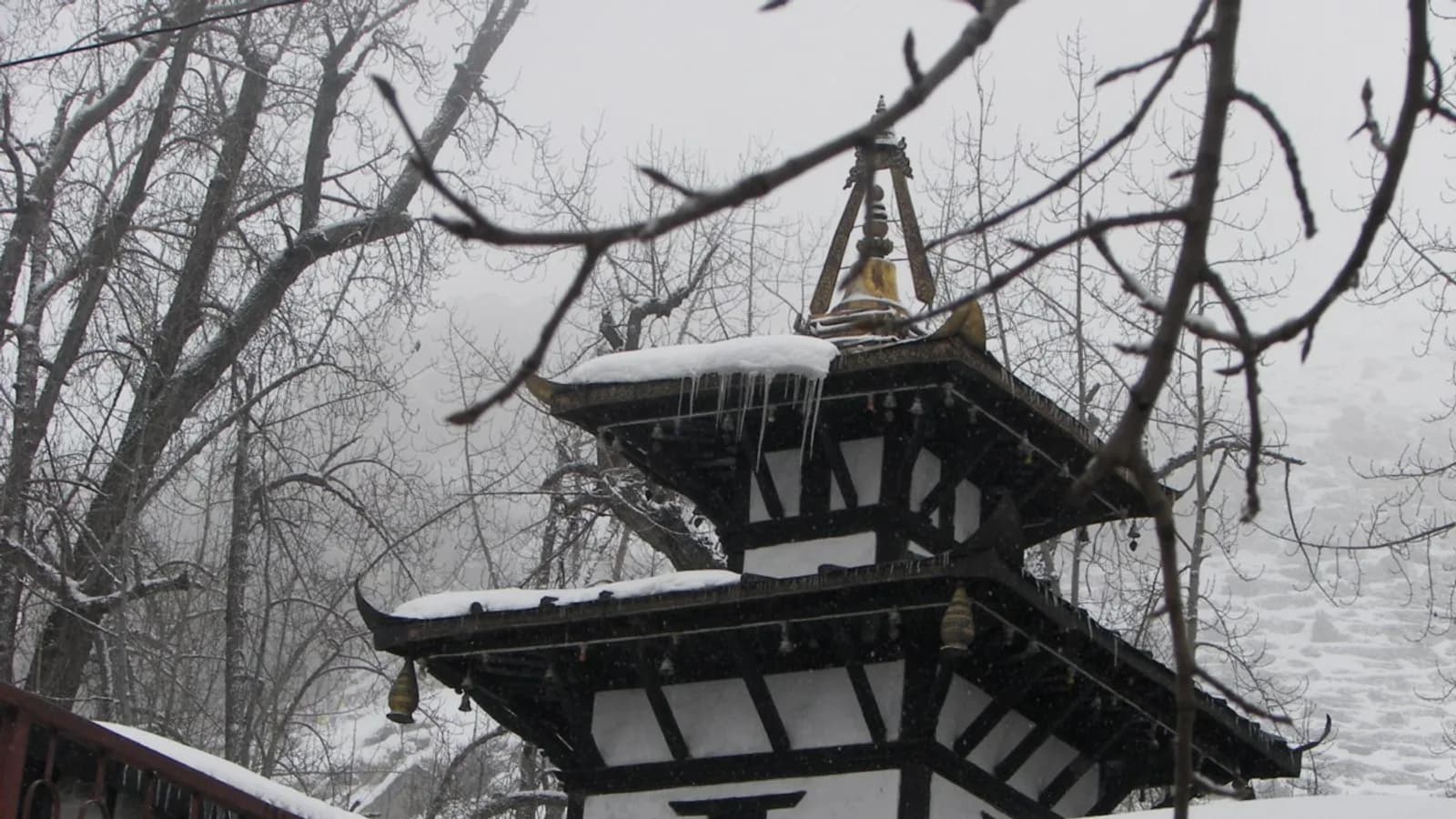
At over 3,700 metres in the windswept valleys of Mustang, where the Himalaya gives way to the high Tibetan plateau, stands one of the most revered shrines in the region. Muktinath temple — its name means "the lord of liberation" — is sacred to both Hindus and Buddhists, a rare double devotion that draws pilgrims from across Nepal and India to the foot of the Thorong La pass. Behind the temple, 108 spouts of icy mountain water pour in an unbroken arc; beside it, a natural flame burns from the bare earth. This guide explains what makes Muktinath so significant, how to reach it, when to go, and what visitors should know before they arrive.
Muktinath is one of the great destinations of the wider Mustang region, the same arid rain-shadow country covered in our Upper Mustang trek permit guide. But while Upper Mustang lies behind a costly restricted-area permit, Muktinath itself is far more accessible.
Key takeaways
- Muktinath sits at roughly 3,760 m in Mustang, at the foot of the Thorong La pass, making it one of the world's highest temples.
- It is sacred to both Hindus and Buddhists — Mukti Kshetra and a form of Vishnu for Hindus, Chumig Gyatsa and a seat of Avalokiteshvara for Buddhists.
- The 108 bull-faced water spouts and two sacred ponds are the focus of the central pilgrimage ritual.
- A small eternal flame burns at the Jwala Mai shrine, fed by natural gas from the ground.
- The quickest visit is a flight to Jomsom plus a jeep, doable in a day; the road from Pokhara is long and rough.
- You need the ACAP permit but not the expensive Upper Mustang permit, since the temple is in lower Mustang.
What and where Muktinath is
Muktinath lies in the Muktinath valley of Mustang district in north-central Nepal, tucked at the base of the high Thorong La pass. Sources cite its altitude variously between about 3,710 and 3,800 metres; a figure around 3,760 m (roughly 12,300 ft) is a fair middle ground, and in any case it ranks among the highest temples on earth. The landscape here is dramatic and arid — this is the Himalayan rain shadow, where bare ochre hills, snow peaks and a vast sky replace the green ridges of the lower country.
The temple complex is known as Mukti Kshetra, "the place of liberation". The main pagoda-style temple houses a golden image of the deity, and the site is set among poplar groves with the great peaks of the Annapurna and Dhaulagiri massifs ringing the horizon.
Why two faiths revere it
What sets Muktinath apart is that it is genuinely holy to two religions at once, worshipped side by side rather than in competition.
For Hindus
Hindus revere Muktinath as an abode of Vishnu, the lord of liberation, and it is one of the Char Dham pilgrimage sites of Nepal. In the Vaishnava tradition it carries exceptional status: it is counted among the 108 Divya Desams, the holy abodes of Vishnu celebrated by the Tamil saints, and is the only one of those 108 located outside India. It is also regarded as one of the Svayam Vyakta Kshetras, the small group of shrines considered self-manifested rather than established by human hands.
There is a further connection that runs deep in Hindu practice. The Gandaki river, which flows down from this region, is the only natural source of the shaligram — sacred black ammonite stones revered as a non-anthropomorphic form of Vishnu and kept in temples and homes across the Hindu world. To pilgrims, this makes the whole valley a source of holiness, not just the temple.
For Buddhists
Tibetan Buddhists know the site as Chumig Gyatsa, which means "hundred waters", a direct reference to the spouts. They venerate it as a manifestation of Avalokiteshvara, the bodhisattva of compassion, and it has long been an important place on the Buddhist map of the Himalaya. Buddhist nuns help care for the site, and the surrounding region carries a strong Tibetan Buddhist culture, the same heritage that makes the wider Mustang area so distinctive.
This shared sanctity, drawing Hindu and Buddhist pilgrims to the same shrines, is part of the syncretic religious landscape you also see at sites like Pashupatinath in Kathmandu, where traditions overlap.
The 108 water spouts and the sacred ponds
The most striking feature of Muktinath is the arc of 108 water spouts set into a wall behind the main temple. Each spout is shaped like a bull's head, and cold spring water pours continuously from all of them in a long semicircle. They are called the mukti dharas, and the number 108 is deeply significant in both Hinduism and Buddhism; here it echoes the 108 Divya Desams.
The central act of pilgrimage is to bathe under all 108 spouts in turn, then take a dip in the two sacred ponds in front of the temple, traditionally named Laxmi Kunda and Saraswati Kunda and known together as the Mukti Kunda. The belief is that this purification washes away the accumulated sins of many lifetimes. The water is glacier-fed and genuinely freezing, so the full ritual is brisk — pilgrims describe needing real determination to walk the whole line. The complete circuit typically takes around 20 to 30 minutes.
The eternal flame at Jwala Mai
Close to the main temple is the small Jwala Mai shrine, and it holds the site's other great wonder. Here a natural flame burns continuously, fed by gas seeping from the rock, in some accounts flickering over or beside flowing spring water. The presence of fire and water together in one sacred spot — earth giving up both flame and stream — is central to why Muktinath is held in such awe by both faiths. For many pilgrims, seeing the small natural flame is the spiritual high point of the visit.
How to reach Muktinath
Getting to Muktinath has become far easier than it once was, and there are several options depending on your time, budget and appetite for adventure.
| Route | Roughly how long | Notes | |---|---|---| | Fly Pokhara to Jomsom, then jeep | Possible in a day | Quickest; short flight then jeep to Ranipauwa and a 20 to 30 min walk up | | Drive from Pokhara via Beni and Jomsom | About 2 days each way | Long; smooth to Beni, then rough off-road needing a 4WD jeep | | Trek the Annapurna Circuit | Multi-day | Walk in over the Thorong La pass or up from Jomsom |
By air via Jomsom
The fastest approach is to fly from Pokhara to Jomsom, a short and scenic mountain flight, then take a jeep up to Ranipauwa, the settlement just below the temple, followed by a walk of about 20 to 30 minutes (or a pony ride) up to the shrine itself. Done this way, a determined visitor can reach Muktinath and return in a single day, though an overnight in Jomsom or Ranipauwa is wiser for acclimatisation and far less rushed.
By road from Pokhara
Overland, Muktinath is a long haul. The drive from Pokhara runs via Beni, Tatopani, Ghasa and Marpha to Jomsom, and on up to Ranipauwa. The first stretch to Beni is largely sealed road, but beyond that it becomes a rough, narrow off-road route along the Kali Gandaki gorge that demands a 4WD jeep and a tolerance for bumps and dust. Most road trips break the journey over two days each way. It is hard travel, but the gorge scenery — claimed to be one of the deepest in the world — is extraordinary.
On foot
For trekkers, Muktinath is a classic waypoint on the Annapurna Circuit, reached either by crossing the high Thorong La pass from the Manang side or by walking up from Jomsom. If you are weighing the great Annapurna routes against one another, our comparison of the Annapurna Circuit versus Base Camp sets out how they differ in character and difficulty.
Permits and best time to go
Muktinath lies inside the Annapurna Conservation Area, so you need the ACAP entry permit (NPR 3,000 for foreign nationals and NPR 1,000 for SAARC nationals as of June 2026), and independent trekkers also carry a TIMS card. Crucially, the temple is in lower Mustang, which does not require the expensive restricted-area permit that applies to Upper Mustang beyond Kagbeni — so a Muktinath visit is far cheaper to arrange. Permits are issued through a government-registered agency in Pokhara or Kathmandu.
For timing, aim for the two stable seasons: spring (around April to June) and autumn (around September to November), when skies are clearest and the roads and trails are in their best shape. Winter brings snow and biting cold that can close the high road, while the monsoon turns the off-road sections slick and risky. As with most of the high country, the logic behind these windows is laid out in our guide to the best time to visit Nepal.
Altitude, health and practical tips
At over 3,700 metres, Muktinath is high enough that altitude deserves respect — especially if you ascend fast by flight and jeep rather than walking up gradually. Some visitors feel headaches, breathlessness or nausea. To reduce the risk, spend a night at a lower elevation such as Jomsom before going up, drink plenty of water, avoid alcohol, and take the final climb to the temple slowly. Anyone with heart or respiratory conditions should be cautious and seek medical advice first. Our altitude sickness guide for Nepal explains the symptoms and the golden rules in detail.
A few more practicalities for a smooth visit:
- Dress modestly and warmly. It is cold even in summer at this altitude, and shoulders and knees should be covered out of respect.
- Shoes off before entering the inner temple, as at all Nepali shrines — see our notes on temple etiquette for visitors.
- For the spout ritual, pilgrims often change into light cotton clothing and bring a towel and warm layers for afterwards.
- Carry cash. Mustang is remote, ATMs are scarce and unreliable, and most services up here take rupees only.
- Photography, broadly fine in the open complex, but ask before photographing the inner shrine or people at prayer.
Why Muktinath stays with you
Muktinath rewards the effort it takes to get there. Few places concentrate so much meaning in one spot: a temple that two great religions hold sacred, an arc of a hundred and eight icy spouts, a flame that burns from the rock, all set against the bare, luminous mountains of Mustang. Whether you come as a devout pilgrim or a curious traveller, standing in that thin, bright air at the foot of the Thorong La is the kind of experience that lingers long after you have descended.
Sources
Frequently asked questions
- Where is Muktinath temple and how high is it?
- Muktinath sits in the Muktinath valley of Mustang district in north-central Nepal, at the foot of the Thorong La pass. It stands at roughly 3,760 metres, about 12,300 feet, which makes it one of the highest temples in the world. Exact figures vary slightly between sources, but it is comfortably above 3,700 metres.
- Why is Muktinath temple sacred?
- It is one of very few sites holy to both Hindus and Buddhists. Hindus revere it as Mukti Kshetra, a place of liberation, and as a form of Vishnu, while Tibetan Buddhists know it as Chumig Gyatsa and link it to Avalokiteshvara, the bodhisattva of compassion. For Hindus it is also one of the 108 Divya Desams and the only one outside India.
- What are the 108 water spouts at Muktinath?
- Behind the main temple, 108 bull-shaped spouts pour continuous spring water in a semicircle. They are called the mukti dharas, and pilgrims traditionally bathe under all of them in turn. Bathing beneath the icy water, followed by a dip in the two sacred ponds, is believed to cleanse a person of the sins of many lifetimes.
- How do you reach Muktinath temple from Pokhara?
- The fastest way is a short flight from Pokhara to Jomsom, then a jeep up to Ranipauwa and a short walk to the temple, which can be done in a day. By road, it is a long drive from Pokhara via Beni and Jomsom, mostly rough off-road beyond Beni and best done in a 4WD jeep. Trekkers walk in from Jomsom on the Annapurna Circuit.
- What is the Jwala Mai eternal flame at Muktinath?
- Next to the main temple is the small Jwala Mai shrine, where a natural flame burns from gas seeping out of the ground, alongside spring water. The combination of fire and water in one place is central to the site's sacredness and draws both Hindu and Buddhist pilgrims. It is one of the features that gives Muktinath its deep spiritual reputation.
- When is the best time to visit Muktinath?
- The most reliable windows are spring, roughly April to June, and autumn, around September to November, when the weather is stable and the trails and roads are at their best. Winter brings snow and cold that can block the high road, while the monsoon makes the off-road sections slippery. Mornings tend to be clearer for mountain views.
- Do you need a permit to visit Muktinath?
- Muktinath lies within the Annapurna Conservation Area, so you need the ACAP entry permit, and trekkers also carry a TIMS card. The temple itself is in lower Mustang, which does not need the expensive restricted-area permit required for Upper Mustang beyond Kagbeni. Permits are arranged through a registered agency in Pokhara or Kathmandu.
- Is Muktinath difficult to visit because of altitude?
- It can be. At over 3,700 metres, some visitors feel the effects of thin air, especially those who ascend quickly by flight and jeep. Spending a night at a lower elevation such as Jomsom, drinking plenty of water, and walking the final stretch slowly all help. Anyone with heart or breathing conditions should take particular care and seek advice.
- What should pilgrims and visitors wear at Muktinath?
- Dress modestly and warmly, since the temple is high and cold even in summer. Shoulders and knees should be covered out of respect, and you remove your shoes before entering the inner temple. Pilgrims who bathe under the spouts often change into light cotton clothing for the icy water and bring a towel and warm layers for afterwards.
Related posts
Nepal Temples: A Tourist's Guide to the Best Ones
A tourist guide to Nepal temples: the must-visit Hindu and Buddhist sites, the architecture styles, entry rules and how to plan your visits.
Read postTemple Rules in Nepal: A Site-by-Site Guide
Temple rules in Nepal vary by site. What changes between a Hindu temple, a Buddhist stupa, a monastery and the cremation ghats — and why.
Read postNepal Temple Etiquette — What Tourists Should and Shouldn't Do
Shoes, dress code, photography, walking direction, leather, women's restrictions. The 12 rules that cover 95% of awkward temple moments.
Read post