Chitwan National Park Safari — Jeep vs Walking, Permits, What You'll See
Nepal's biggest national park, the realistic wildlife you'll see, the elephant-riding ethics, and how to choose between jeep, walking, and canoe safaris.
Don't ride the elephants. Do everything else — the rhinos, the canoe, the jungle walks, the village dance.
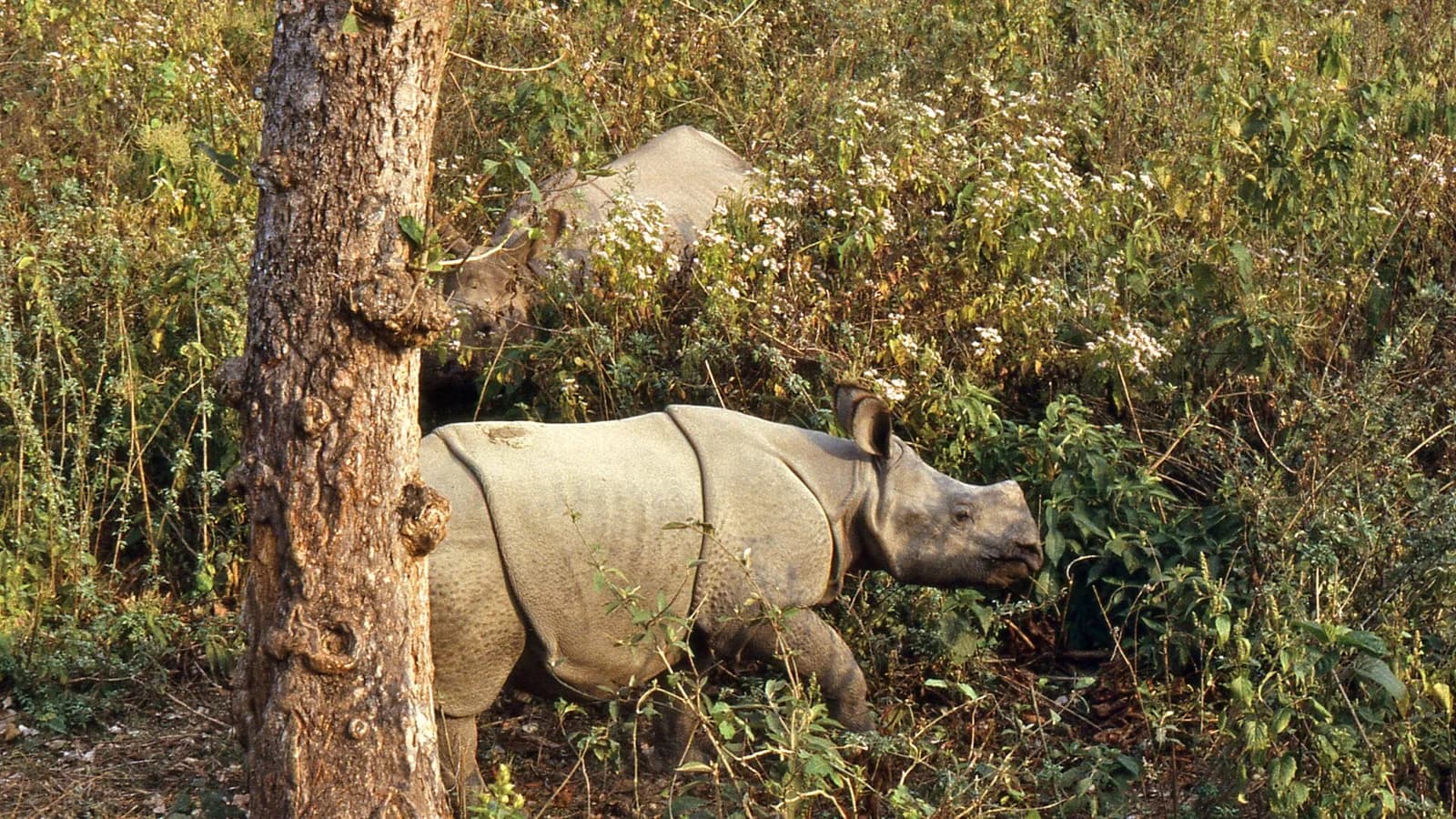
Chitwan National Park, in Nepal's southern Terai region, is the country's largest national park and one of South Asia's best places to see wild one-horned rhinoceros. It's also home to Bengal tigers (rarely seen), wild elephants, sloth bears, gharial crocodiles, and 500+ bird species.
The park is accessible, well-organized for tourists, and a strong contrast to the mountain-focused rest of Nepal. Most travelers spend 2-3 days here. Here's how to do it well.
Where to base yourself
The main tourist hub is Sauraha, on the eastern edge of the park. Sauraha is a small town built around safari tourism — dozens of hotels and resorts, restaurants, tour operators, and an elephant breeding center.
Less common alternatives: Meghauli (southwestern edge, fewer tourists, harder to reach), Bharatpur (the nearby city, less convenient for the park).
For most travelers, Sauraha is the right base.
How to get there
From Kathmandu:
- Tourist bus to Chitwan: 5-6 hours, NPR 1,200-2,000
- Domestic flight to Bharatpur: 25 minutes, NPR 6,000-10,000, plus 30-minute taxi to Sauraha
From Pokhara:
- Tourist bus: 5-6 hours, similar cost
The tourist bus is the standard option. Greenline and others run direct services to Sauraha.
What you'll see
Realistic wildlife sightings per safari, in rough probability order:
Almost certain to see:
- One-horned rhinoceros (Chitwan has 600+, you'll likely see multiple)
- Spotted deer (chital)
- Sambar deer
- Wild boar
- Hundreds of bird species
- Monkeys (langur, rhesus)
Likely to see:
- Crocodiles (especially gharials at the river)
- Mongoose
- Various reptiles
Possible:
- Wild elephants (more common in winter)
- Sloth bears (mostly nocturnal — dawn/dusk best)
- Leopards
- Various wild cats
Very rare:
- Bengal tigers — Chitwan has ~125, but they're elusive. Maybe 1-2% of visitors see one.
- Wild Asian elephant herds (mostly in the more remote sections)
Safari options
Jeep safari (4-6 hours)
The classic option. Open-top jeep with driver and naturalist guide. Covers a larger area, gets you to multiple parts of the park.
- Cost: NPR 4,000-6,000 per person (shared jeep)
- Best for: rhinos, wide-range wildlife viewing, first-time visitors
- Time: half-day (morning or afternoon)
- What you see: rhinos, deer, birds, possibly elephants
Walking safari (3-4 hours)
Guided walk through forest with a trained naturalist. Smaller groups (2-6 people). More immersive but slower coverage.
- Cost: NPR 3,000-5,000 per person
- Best for: birdwatchers, photographers, returning visitors
- Time: morning or afternoon
- What you see: dense birding, sometimes rhinos at close range, jungle texture
Canoe ride (1-2 hours)
Wooden dugout canoe down the Rapti River. Look for crocodiles, water birds, and (if very lucky) elephants at the riverbank.
- Cost: NPR 1,500-3,000 per person
- Best for: photographers, relaxation, sunset
- Time: morning or evening (sunset is magical)
- What you see: gharials, crocodiles, water birds, sometimes rhinos at the riverbank
Elephant breeding center
Walking visit to a center where domesticated elephants are bred for the government conservation program. You can see baby elephants and the breeding herd.
- Cost: NPR 200-500 entrance
- Best for: families, anyone interested in elephant ethics
- Time: 1-2 hours
- Important: this is NOT a riding experience. It's an observational center. See the next section.
Elephant-back safari — DO NOT DO THIS
Elephant-back safaris used to be a Chitwan tourist staple. They've now been widely discontinued by responsible operators because:
- Domesticating elephants for tourist riding involves abusive training
- The weight of multiple tourists on a back is physically harmful
- The wildlife you see isn't worth the ethical cost
If a hotel offers an elephant-back safari in 2026, find a different hotel. The elephant breeding center visit gives you authentic elephant interaction without the welfare issues.
Booking a safari package
Most hotels offer all-inclusive packages: 2 nights/3 days with multiple safaris, meals, and transfers. Costs:
- Budget: NPR 8,000-12,000 ($60-90)
- Mid-range: NPR 12,000-25,000 ($90-180)
- Upscale: NPR 25,000+ ($180+)
What's included typically:
- Hotel accommodation (1-2 nights)
- All meals
- Jeep safari (1-2)
- Canoe ride
- Walking safari or guided forest walk
- Elephant breeding center visit
- Cultural Tharu dance show (most hotels)
- Bus transfer from Kathmandu/Pokhara
Booking through your hotel is usually the simplest and most reliable. Standalone safari companies exist but the hotel-package model is what most travelers use.
What to bring
- Long-sleeved shirt and pants in earth tones (khaki, olive, brown) — mosquitoes and ticks are real
- Closed shoes for walking safari (sandals are dangerous)
- Wide-brimmed hat
- Sunscreen and insect repellent with DEET 25%+
- Binoculars (the park rents them, but bringing your own is better)
- Camera with telephoto lens (100-400mm is ideal)
- Light rain jacket (especially in monsoon transitions)
- Water bottle
- Anti-diarrheal medication (just in case — see vaccinations guide)
Best season
October-March: best wildlife viewing. Cooler weather, animals more active in daylight, vegetation thinner. Rhinos most visible.
April-May: hot pre-monsoon. Daytime 35-40°C+. Tigers slightly more visible (need water sources). Bring sun protection.
June-September: monsoon. Trails muddy. Mosquitoes worse. Reduced visibility of animals but the jungle is dramatic.
For most tourists, November-February is the sweet spot: comfortable temperatures, great wildlife visibility, lower humidity.
A typical 3-day itinerary
Day 1 (arrival day):
- Morning: bus to Sauraha
- Afternoon arrival
- Elephant breeding center
- Cultural Tharu dance show (most hotels host these in the evening)
Day 2 (full safari day):
- 5:30 AM: pre-dawn canoe ride
- 7:30 AM: breakfast back at hotel
- 9:00 AM-1:00 PM: jeep safari (morning is best for wildlife)
- 2:00 PM: lunch
- 4:00 PM: walking safari or sunset canoe
- Evening: cultural performance, dinner
Day 3 (departure):
- 5:30 AM: another canoe or walk if you want
- Breakfast
- 9:00 AM: bus back to Kathmandu/Pokhara
Most travelers feel 2 full days is enough; some extend to 3-4 for serious birdwatching or repeated tries at tiger viewing.
Hotels in Sauraha (independent overview)
Budget:
- Sauraha Resort — basic, clean, NPR 1,500-2,500
- Eco Adventure Resort — slightly upscale of budget, NPR 2,500-4,000
Mid-range:
- Tigerland Safari Resort — popular with package tours
- Hotel National Park — solid, includes safaris in pricing
Upscale:
- Barahi Jungle Lodge — outside Sauraha, on the river, $200+
- Tiger Tops — historic upscale, very expensive, in remote western section
Cultural extras
Tharu people: the indigenous people of the Terai region. Most Sauraha hotels offer Tharu cultural dance performances at sunset — these are simplified versions of traditional dance but worth seeing once. Free with most safari packages.
Tharu village visit: many hotels offer a brief visit to a nearby Tharu village. Pleasant if done respectfully, exploitative if rushed. Choose a hotel that does this well.
Combining with Lumbini
Chitwan + Lumbini is a natural southern Nepal combination. Both are in the Terai region. Bus from Sauraha to Lumbini takes 5-6 hours.
See our Lumbini guide for context.
A few useful Nepali phrases
- Safari kati paisa? — "How much for the safari?"
- Rhino dekhne moka? — "Chance of seeing rhinos?"
- Suraksha? — "Safe?" (asking about walking conditions)
- Bistari — "Slowly" (to your driver if needed)
- Dhanyabaad — "Thank you" (to guides and drivers)
Pre-trip checklist
- 2-3 days allocated for Chitwan
- Booked through reputable hotel with all-inclusive package
- Skip any elephant-riding options
- Earth-tone clothing for safari
- Insect repellent
- Camera with telephoto
- Binoculars
- Long sleeves and pants
- The vaccinations guide — Japanese encephalitis is a Terai-specific consideration
- The Nepali greetings for hotel and guide interactions
Chitwan delivers the wildlife experience Nepal isn't otherwise known for. Plan it as the southern complement to your mountain trip.
Related posts
Bengal Tiger in Chitwan: Tiger Safari Nepal Guide 2026
Chitwan holds 128 of Nepal's 355 Bengal tigers. Honest odds, best season, and how to plan a tiger safari in Nepal — plus why Bardia rivals it.
Read postOne-Horned Rhino in Nepal: Where to See Them in Chitwan
See the greater one-horned rhino in Nepal. Chitwan holds 694 of the country's 752 rhinos — where, when, and how to spot them on safari in 2026.
Read postRhino Safari Chitwan: Where, When & How in 2026
A rhino safari Chitwan trip has the best one-horned rhino odds in Nepal. Park fees, jeep vs canoe, the monsoon closure, and best season for 2026.
Read post