Upper Mustang Trek: Route, Permits & Lo Manthang Guide
A complete Upper Mustang trek guide — the route to Lo Manthang, the new 2026 USD 50/day permit, costs, difficulty, culture and the best time to go.
A desert kingdom in Nepal's rain shadow — walled cities, ochre cliffs and Tibetan Buddhism behind the Annapurnas.
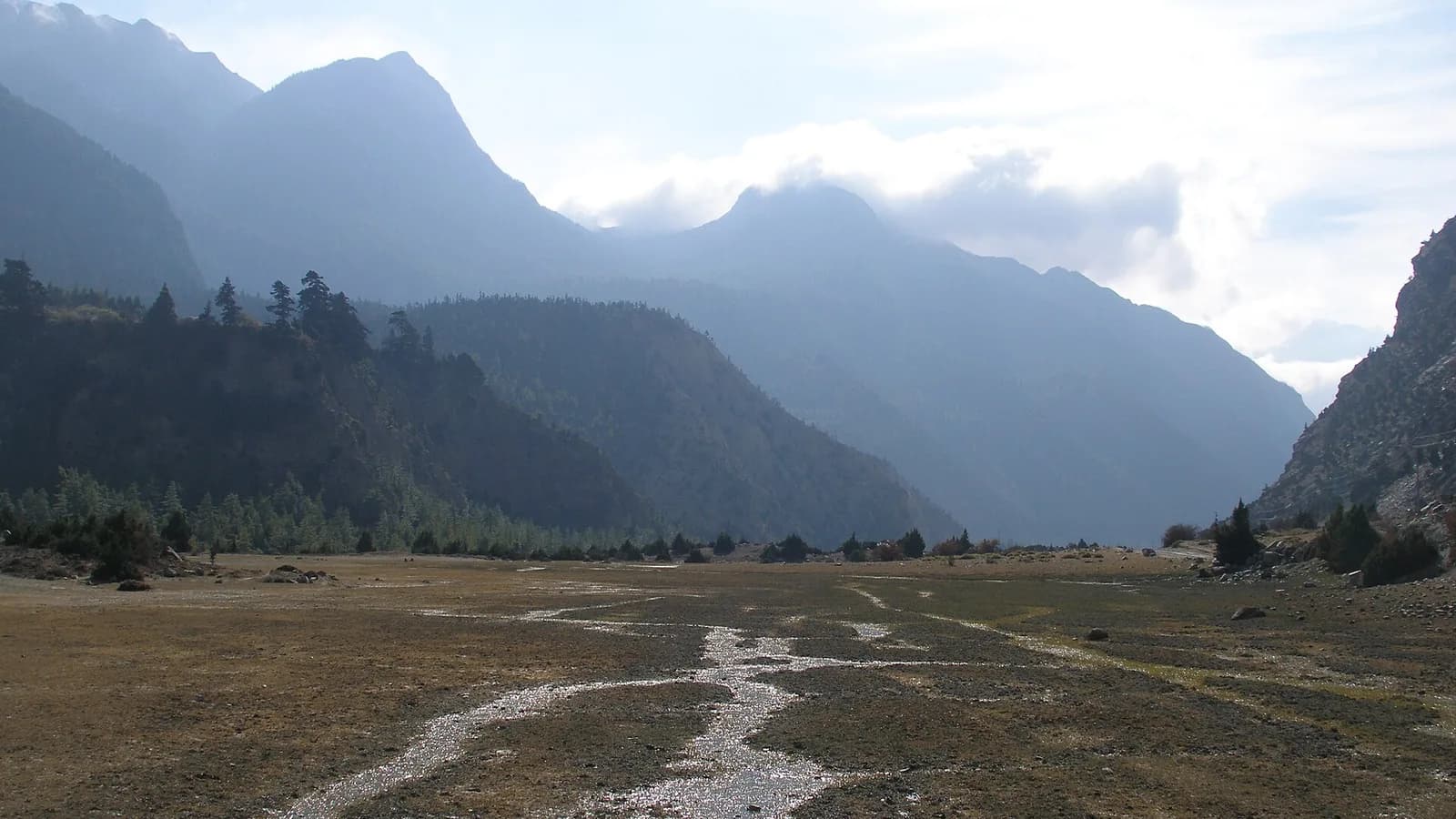
The Upper Mustang trek leads into one of the most unusual corners of Nepal: a high desert plateau behind the Annapurna and Dhaulagiri giants, where Tibetan Buddhist culture, medieval walled towns and wind-carved canyons have survived in near isolation. Often called the "forbidden kingdom" or "last forbidden kingdom," Upper Mustang was closed to foreign visitors until 1992 and is still a restricted area with its own permit rules. The reward for the paperwork is a landscape and culture that feel far closer to Tibet than to the green hills most people picture when they think of Nepal.
This guide covers the route to Lo Manthang, the new 2026 permit system, realistic costs, difficulty, the best season and what makes the region special. If you only want the fee and paperwork detail, our focused Upper Mustang trek permit guide drills into that; this article is the wider planning picture.
Key takeaways
- Upper Mustang is a moderate trek that mostly stays below 4,000m, with Lo Manthang at roughly 3,800m.
- The classic walking route runs about 125km from Jomsom to Lo Manthang and back, over roughly 10 to 12 days on foot.
- It is a restricted area: a licensed guide via a registered agency is mandatory, even though solo permits became possible in early 2026.
- Since November 2025 the permit is USD 50 per person per day (as of June 2026), replacing the old flat USD 500 fee — plus an ACAP of NPR 3,000.
- It sits in the Annapurna rain shadow, so it is dry, Tibetan in feel, and even trekkable during the monsoon.
- The cultural high point is Lo Manthang, the walled former capital, best seen around the spring Tiji festival.
Why trek Upper Mustang
Most of Nepal's famous trails chase big snow peaks. Upper Mustang offers something different: a cultural and geological journey rather than a high-altitude one. The trek follows the upper Kali Gandaki, the river that has cut one of the deepest gorges on Earth between Annapurna and Dhaulagiri, into a plateau of eroded red, grey and ochre cliffs that locals and guides often nickname the "Himalayan Mars."
Culturally, Mustang is essentially a pocket of old Tibet inside Nepal. Until 2008 it had its own hereditary king, the Raja of Mustang, and the region's monasteries, chortens, prayer walls and the Tibetan dialect spoken in villages all reflect that heritage. Because the area was sealed off for so long, much of this survived the disruption seen across the border. For trekkers who have already done Everest or Annapurna and want a genuinely different experience, Mustang is one of Nepal's strongest options.
The route to Lo Manthang
The standard trek starts in Jomsom (about 2,720m), reached by a short, scenic flight from Pokhara, or by road. From Jomsom you walk up the Kali Gandaki to Kagbeni, the gateway village where the restricted area begins. From there the trail climbs north through a string of Tibetan-style villages to the walled town of Lo Manthang (around 3,800m), then returns — often on a slightly different route to vary the scenery.
A typical itinerary looks like this:
| Day | Route | Approx. altitude | | --- | --- | --- | | 1 | Fly Pokhara to Jomsom, trek to Kagbeni | ~2,800m | | 2 | Kagbeni to Chele (restricted area begins) | ~3,050m | | 3 | Chele to Syangboche / Geling | ~3,500m | | 4 | Geling to Ghami | ~3,520m | | 5 | Ghami to Tsarang (Charang) | ~3,560m | | 6 | Tsarang to Lo Manthang | ~3,800m | | 7 | Lo Manthang exploration (caves, monasteries, walls) | ~3,800m | | 8–11 | Return south to Jomsom via alternative trails | descending |
Distances are real but the days are not brutal — most stages are 5 to 7 hours of walking. Exact village stops vary by agency and by whether you take the newer eastern trails that avoid the road.
Trekking versus the jeep road
A rough gravel road now connects Jomsom to Lo Manthang along the valley, roughly 120km of 4WD track via Kagbeni, Ghami and Tsarang. This has made jeep and overland tours to Lo Manthang possible in just a few days, which suits travellers short on time or unable to walk long stages. The trade-off is dust and traffic on the main valley floor. Many trekking operators now route walkers onto quieter side trails on the eastern bank of the Kali Gandaki to keep the experience on foot and away from vehicles.
Permits and the 2026 rule change
Upper Mustang is the part of the region that needs the special Restricted Area Permit (RAP); the lower valley around Jomsom does not. The big news for planning is that the fee structure changed in late 2025.
| Item | Cost (as of June 2026) | Notes | | --- | --- | --- | | Restricted Area Permit (RAP) | USD 50 per person per day | Charged for days above Kagbeni; replaced the old flat USD 500 / 10-day fee in Nov 2025 | | Annapurna Conservation Area Permit (ACAP) | NPR 3,000 (foreign nationals) | Required for the whole Mustang region | | TIMS card | Around USD 20 | Requirement varies; often waived if flying in/out of Jomsom — confirm with your agency |
Under the old system, everyone paid a flat USD 500 for ten days even on a shorter visit. The new USD 50 per day rate means you pay only for the days you actually spend in the restricted zone, which makes short cultural visits and jeep tours much cheaper, while a full 10-day trek still lands near the old price. Always treat these as guideline figures and re-confirm with a registered agency, since government fees can change.
Guide and group rules
Two rules matter most:
- A registered Nepali trekking agency must obtain the permit for you. You cannot apply independently at the immigration desk.
- A licensed guide is mandatory the entire time you are in the restricted area.
The long-standing two-trekker minimum was lifted in early 2026, so a single traveller can now legally get the permit — but only through an agency and with a guide. In other words, "solo" Upper Mustang trekking means solo plus a guide, not walking entirely alone.
Costs: what a trip really adds up to
Upper Mustang is not a budget trek. Beyond permits you are paying for a mandatory guide, flights to and from Jomsom (or long jeep transfers), and teahouse food and lodging that costs more this far from the road network. As a rough planning guide, a full guided Upper Mustang trek commonly runs into four figures in US dollars per person once everything is included — closer to a Manaslu-level budget than a Poon Hill weekend.
To keep costs realistic:
- Decide between flying to Jomsom (faster, weather-dependent) and driving (cheaper, much longer, dustier).
- Book through a reputable agency in Kathmandu or Pokhara rather than pre-paying a premium from abroad.
- Carry enough cash, as ATMs are scarce north of Jomsom — see our Nepal ATM withdrawal guide.
- Factor in good trekking insurance with helicopter evacuation, since Mustang is remote and flights are weather-sensitive.
Difficulty and altitude
By Himalayan standards Upper Mustang is moderate. The route mostly stays below 4,000m, peaking around Lo Manthang at roughly 3,800m, so the severe altitude risk of Everest Base Camp or the Larkya La is reduced. That said, "moderate" is not "easy":
- Days are long, often 5 to 7 hours of walking on dusty trail.
- The plateau is exposed, with strong, cold afternoon winds funnelling up the valley.
- Facilities are simpler and the region is genuinely remote.
Altitude sickness can still occur even below 4,000m, so steady pacing and hydration matter. Our general guide to altitude sickness on Nepal treks covers the warning signs and sensible precautions.
Best time to go
Mustang's weather is the opposite of most of Nepal because it sits in the Annapurna rain shadow and receives very little annual rainfall.
| Season | Months | Conditions | | --- | --- | --- | | Spring | April–May | Clear, mild, and the window for the Tiji festival | | Monsoon | June–August | Largely dry in Mustang itself, but Jomsom flights can be delayed | | Autumn | September–October | Stable, clear skies and comfortable temperatures | | Winter | November–March | Cold, windy, some lodges close and flights are often cancelled |
The standout point is the monsoon: while much of Nepal is rained out from June to August, Upper Mustang stays relatively dry, making it one of the country's few good summer trekking choices. The main catch is that getting in and out via Jomsom's airstrip still depends on mountain weather.
Culture and the Tiji festival
The heart of the trek is Lo Manthang, the compact walled capital of the former Kingdom of Lo. Its medieval city walls still enclose narrow lanes, whitewashed houses, ancient monasteries and a royal palace once home to Mustang's kings. In the cliffs around the valley are the famous sky caves — thousands of human-made caves carved high into the rock, some holding old murals and manuscripts.
The cultural highlight to time a trip around is the Tiji festival, a three-day Tibetan Buddhist event held in Lo Manthang in spring (usually May, set by the lunar calendar). Monks perform sacred masked dances enacting a myth of good overcoming a destructive demon, drawing villagers and visitors into the walled square. We cover it in depth in our Tiji festival in Upper Mustang guide. If your dates can line up with Tiji, the trek's culture comes fully alive.
Because the culture is strongly Tibetan, a little local courtesy goes a long way: walk clockwise around chortens and mani walls, ask before photographing people or monastery interiors, and learn a few greetings. Our list of Nepali phrases every trekker should know is a good starting point for the trail.
How it compares
If you are weighing Upper Mustang against Nepal's other restricted and remote treks, the differences are mostly about altitude, scenery and crowds:
- Versus the Manaslu Circuit: Manaslu is higher and harder, built around the 5,106m Larkya La and big snow peaks; Mustang is lower, drier and more about culture and desert landscape.
- Versus Everest Base Camp: EBC is the classic high-altitude pilgrimage to the foot of the world's highest peak; Mustang trades the giant mountains for a living Tibetan-Buddhist kingdom and far fewer trekkers.
- Versus mainstream Annapurna routes: Annapurna offers green variety and easy logistics, while Mustang feels like stepping into a different country and weather system entirely.
For first-time Himalayan trekkers on a tight budget, the standard Annapurna or Everest trails are usually a better fit. Upper Mustang rewards those who want something rarer and can absorb the permit, guide and flight costs.
Sources
- Upper Mustang Permit 2026: New USD 50/Day Fee Explained — Himalaya-King
- Upper Mustang Trek Permit Update 2025: 50$/Day Instead of 500$ — Nepal Guide Trekking
- Upper Mustang Permit Fee 2025: From $500 Flat to $50 Per Day — Awesome Holidays Nepal
- Upper Mustang Trek 2026: Nepal Guide & Itinerary — The Longest Way Home
- Upper Mustang Permit 2026: Nepal Guide & Requirements — The Longest Way Home
- Upper Mustang Trek Difficulty — Nepal Trekking Routes
- Upper Mustang Trek Distance: A Complete 2026 Route & Mileage Breakdown — Excellent Trek
- Upper Mustang Permits, Cost & Culture: The Definitive 2026 Guide — Best Heritage Tour
Frequently asked questions
- How long is the Upper Mustang trek?
- The classic walking route from Jomsom up to Lo Manthang and back covers roughly 125km and takes about 10 to 12 days on foot. Most agencies sell it as a 12 to 16 day package once you add Pokhara, the flight to Jomsom and a rest day in Lo Manthang. Shorter jeep-assisted versions now exist thanks to the road.
- How much does the Upper Mustang permit cost in 2026?
- Since November 2025 the old flat USD 500 fee is gone. The Restricted Area Permit now costs USD 50 per person per day for the days you spend above Kagbeni, so a 10-day visit still works out near USD 500 but a shorter trip costs less. On top of that you pay the Annapurna Conservation Area Permit of NPR 3,000. All figures are as of June 2026.
- Can you trek Upper Mustang solo in 2026?
- You can now apply for the permit as a single trekker — the old two-person minimum was lifted in early 2026 — but you still cannot walk it truly alone. A licensed guide arranged through a registered Nepali trekking agency is mandatory throughout the restricted area, so in practice you always trek with a guide.
- How high and how hard is the Upper Mustang trek?
- It is a moderate trek that mostly stays below 4,000m, with Lo Manthang at roughly 3,800m, so serious altitude sickness is less of a worry than on Everest or Manaslu routes. The challenge is the daily 5 to 7 hours of walking, the dust, the strong afternoon wind and the remoteness rather than steepness or extreme height.
- When is the best time to trek Upper Mustang?
- Spring (April to May) and autumn (September to October) give the clearest, mildest conditions. Because Mustang sits in the Annapurna rain shadow and gets very little rain, it is also one of the few Nepali regions you can trek through the June to August monsoon, though flights to Jomsom can still be delayed by weather.
- How do you get to Upper Mustang?
- The usual approach is to fly Pokhara to Jomsom (about 2,720m) and start walking from there via Kagbeni. A rough gravel road now links Jomsom to Lo Manthang along the Kali Gandaki, so jeep and overland tours are possible, but many trekkers use quieter side trails to avoid the road dust.
- What is there to see in Lo Manthang?
- Lo Manthang is the walled former capital of the old Kingdom of Lo, with its medieval city walls still standing. Inside are centuries-old monasteries, a royal palace, and nearby sky caves carved into the cliffs. The spring Tiji festival, with three days of masked monk dances, is the region's cultural highlight.
- Do I need a TIMS card for Upper Mustang?
- It depends on how you travel and which agency you use. Some operators say the TIMS card is unnecessary if you fly in and out of Jomsom or already hold the Restricted Area Permit, while others still arrange one for the Annapurna section. Confirm the current requirement with your trekking agency before you pay.
Related posts
Upper Mustang Trek 2026 — The $500 Restricted Area Permit, Explained
Why Upper Mustang costs more, what the permit covers, what you actually see, and why it's worth the price for the right trekker.
Read postDolpo Trek: Nepal's Wild Trans-Himalayan Frontier
A guide to the Dolpo trek in far-west Nepal: Upper vs Lower Dolpo, Phoksundo Lake, restricted-area permits, the 2026 rules, best season and access.
Read postLo Manthang Upper Mustang: The Walled City Guide
A guide to Lo Manthang in Upper Mustang — the last walled city in the Himalayas, its monasteries, sky caves, royal palace, permits and how to visit.
Read post