Best Places to Visit in Nepal: 10 Iconic Sights Ranked
The best places to visit in Nepal, ranked — Kathmandu Valley, Pokhara, Everest, Chitwan, Lumbini and more, with seasons, costs and how to link them.
Start with the icons. Nepal earns its reputation in the first week — then rewards you for staying longer.
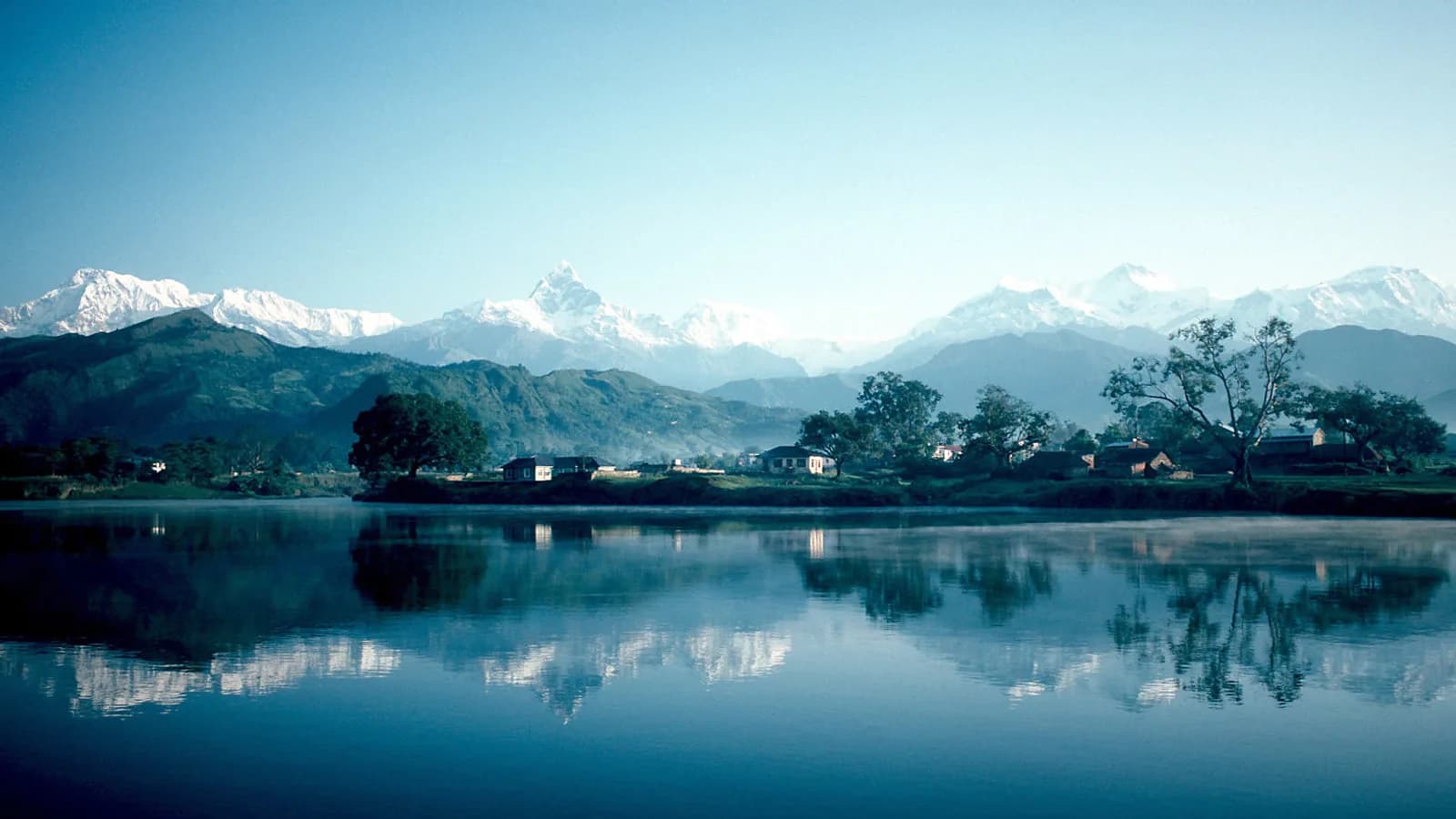
If you are planning a first trip and want the best places to visit in Nepal without wading through fifty-item listicles, this is the ranked shortlist. Nepal packs an astonishing amount into a country the size of a single American state: eight of the world's fourteen highest peaks, jungle that hides tigers and rhinos, medieval temple cities, and the birthplace of the Buddha. The icons below are famous for a reason, and they connect into one logical route that most travellers cover in ten days to two weeks.
This is the "must-see" list — the places that justify Nepal's reputation. If you have already done the headline sights, or you actively avoid crowds, see our companions on Nepal off the beaten path and the smaller hidden gems of Nepal. Here, we are starting with the heavy hitters.
Key takeaways
- The unmissable core is the Kathmandu Valley, Pokhara, a Himalayan viewpoint or trek, and Chitwan National Park — heritage, mountains, lake and wildlife in one loop.
- Nepal welcomed 1,158,459 foreign visitors in 2025, up slightly from 1,147,567 in 2024, so the big sights are busy but rarely overwhelming outside peak weeks.
- October–November is the prime season for clear peaks; March–May is the spring runner-up.
- Most icons sit on a single Kathmandu → Pokhara → Chitwan axis, linked by tourist bus or short domestic flights.
- Budget travel runs roughly USD 30–60 per day outside trekking (as of June 2026), plus permits and entry fees.
How this list is ranked
These ten are ordered by a blend of iconic pull, ease of access, and how reliably they reward a first visit. A remote trek can be more spectacular than a city temple, but it asks for time, fitness and money that not every traveller has. The early entries are near-universal recommendations; the later ones reward specific interests. Think of the top four as the spine of any trip and the rest as the muscles you add depending on your time.
1. The Kathmandu Valley
Almost every Nepal trip starts here, and it should. The valley was historically three rival kingdoms — Kathmandu, Patan and Bhaktapur — and their three Durbar Squares sit within a short drive of each other, each a dense cluster of pagoda temples, royal palaces and carved-wood courtyards. The valley's UNESCO World Heritage listing covers seven monument zones, including the Hindu cremation complex of Pashupatinath, the vast Tibetan-Buddhist dome of Boudhanath, and the hilltop Swayambhunath, the "Monkey Temple."
Give the valley three full days. Spend one on Kathmandu's old city and Swayambhunath, one on Patan and Boudhanath, and one on the day trip to Bhaktapur, the best-preserved of the three old cities. Base yourself in or near Thamel for convenience.
2. Pokhara
If Kathmandu is the country's hectic brain, Pokhara is where it exhales. Nepal's second tourist city sits on the shore of Phewa Lake with the Annapurna massif and the unmistakable fishtail peak of Machhapuchhre filling the skyline on a clear morning. It is the launchpad for most of the country's classic treks and the home of its adventure scene — paragliding off Sarangkot, boating, and the lakeside café strip that makes it the easiest place in Nepal to do nothing at all.
Even non-trekkers should budget two or three nights. Watch sunrise over the Annapurnas from Sarangkot, boat to the island temple on Phewa Lake, and walk or ride up to the World Peace Pagoda. Our full guide to things to do in Pokhara covers the rest.
3. The Everest region
The world's highest mountain is the reason many people come to Nepal at all. You do not have to be a mountaineer to experience it. The full Everest Base Camp trek is a roughly two-week round trip from Lukla, and it remains the single most aspirational trek on earth. If that is too much, the shorter Everest View Trek reaches Namche Bazaar and the Everest viewpoint hotels in under a week, and a scenic mountain flight puts you alongside the peak in an hour with no walking at all.
Whichever you choose, respect the altitude — the EBC route climbs above 5,000 m, and our altitude sickness guide is essential reading before you go.
4. Chitwan National Park
Drop off the Himalayan front into the steamy lowland Terai and Nepal turns into something completely different. Chitwan, the country's first national park and a UNESCO site, protects sal forest and grassland that shelter the greater one-horned rhino, Bengal tigers, gharial crocodiles and more than 500 bird species. A jeep safari, a dugout-canoe float and a guided jungle walk over two or three days give a realistic chance of a rhino sighting, and a slimmer one at a tiger. Our Chitwan safari guide breaks down the activities and how to reach the park.
5. Bhaktapur
Bhaktapur earns its own entry because it is, for many travellers, the highlight of the valley. The old city is largely traffic-free in its core, its brick lanes opening onto squares dominated by the five-tiered Nyatapola temple and the 55-Window Palace. Spend an unhurried day here, eat the local juju dhau (king curd), and you get a clearer picture of Newar urban life than anywhere else in the country. It works as a day trip from Kathmandu or, better, an overnight to catch the empty early-morning streets.
6. Lumbini
In the far south, the gardens of Lumbini mark the birthplace of Siddhartha Gautama, the Buddha — a UNESCO World Heritage Site and one of the four great Buddhist pilgrimage destinations. The sacred zone holds the Maya Devi Temple over the traditional birth spot, the ancient Ashokan pillar, and a sprawling monastic park where countries from Thailand to Germany have each built a temple in their national style. It is remote, flat and hot, and it suits pilgrims and contemplative travellers more than thrill-seekers — our honest take on whether Lumbini is worth visiting helps you decide.
7. Annapurna treks beyond Everest
The Annapurna region rivals Everest for scenery and beats it for variety and accessibility from Pokhara. The classic options range from the multi-day Annapurna Base Camp trek into the glacial sanctuary, to the gentler Poon Hill circuit, to the short and quiet Mardi Himal. The Gurung village of Ghandruk, with its stone houses and Annapurna South backdrop, is a worthwhile destination in its own right. If you are torn, our comparison of the Annapurna Circuit versus Base Camp lays out the trade-offs.
8. Nagarkot and the valley rim
You do not have to trek to stand in front of the Himalaya. On the eastern rim of the Kathmandu Valley, the ridge town of Nagarkot delivers a sweeping dawn panorama that, on the clearest winter mornings, stretches from the Annapurnas to the Everest group. It is the easiest big-mountain view in the country — a short drive from Kathmandu, no permits, no altitude. We weigh up whether the Nagarkot sunrise is worth it for those short on time.
9. Patan (Lalitpur)
Across the river from Kathmandu, Patan is the valley's city of artisans, and its Durbar Square is arguably the most refined of the three. The Patan Museum, housed in a restored palace wing, is the best-curated museum in the country, and the surrounding lanes still hum with metalworkers and the families who cast the bronze statues sold across the Himalaya. Half a day here, ideally paired with a Newari lunch, rounds out the valley. Start with our Patan and Lalitpur guide.
10. Bandipur
Halfway along the Kathmandu–Pokhara highway, the hilltop town of Bandipur is the easiest "discovery" on this list. Its car-free Newari bazaar, ridge-top mountain views and slow pace make it the ideal pause between the two big cities — a single overnight that breaks up the long drive and gives you a taste of small-town Nepal. It bridges naturally into the lesser-known places covered in our off-the-beaten-path guide.
How the icons connect
The beauty of Nepal's headline sights is that they fall on one logical line. Here is the standard flow and the typical travel time between each stop:
| Leg | Distance / mode | Typical time | | --- | --- | --- | | Kathmandu → Pokhara | Tourist bus or 25-min flight | 6–8 hours by road | | Pokhara → Annapurna trailhead | Local jeep / bus | 1–4 hours | | Pokhara → Chitwan | Tourist bus | 5–6 hours | | Chitwan → Kathmandu | Tourist bus | 5–6 hours | | Kathmandu → Lukla (for Everest) | Domestic flight | 35 minutes |
A clean two-week loop is Kathmandu Valley → Pokhara → a trek → Chitwan → Kathmandu, which our two-week Nepal itinerary maps day by day. Lumbini slots in between Pokhara and Chitwan if Buddhism draws you more than wildlife.
When to go
Season shapes which icons shine. This is the short version; the detailed breakdown is in our guide to the best time to visit Nepal.
| Season | Months | Best for | | --- | --- | --- | | Autumn | Oct–Nov | Clearest peaks, prime trekking, festivals | | Spring | Mar–May | Rhododendrons, warm trekking, good visibility | | Winter | Dec–Feb | Crisp valley views, quiet sights, cold high trails | | Monsoon | Jun–Aug | Green hills, fewer crowds, ideal for Upper Mustang |
October and November are when the Himalaya reveals itself most reliably, which is why they are also the busiest weeks at the marquee sights.
What it costs
Nepal is one of the better-value destinations in Asia. Outside of trekking, independent travellers commonly spend in the region of USD 30–60 per day (as of June 2026) on guesthouses, local meals and transport, with plenty of room to go lower or higher. Layered on top are heritage-site entry fees at most major monuments, trekking permits, and domestic flights if you skip the long bus rides. Our Nepal travel budget and overall trip cost guides give realistic numbers for different styles.
Practical first steps
Before you fixate on the sights, square away the basics. Most nationalities get a visa on arrival at Kathmandu airport. Sort a local SIM or eSIM on landing so you can book buses and call guesthouses. Nepal is generally a safe country for travellers, including solo women, with the usual city-scam caution. And learning even a handful of Nepali phrases transforms how locals respond to you on the trail and in the squares.
Sources
Frequently asked questions
- What are the best places to visit in Nepal for first-timers?
- For a first trip, the core circuit is the Kathmandu Valley, Pokhara, an Annapurna or Everest viewpoint trek, and Chitwan National Park. These four cover heritage, mountains, lakeside relaxation and wildlife, and they connect on a single overland-plus-flight route in about two weeks.
- How many days do you need to see the best of Nepal?
- Ten days lets you pair Kathmandu and Pokhara with a short trek or a Chitwan safari. Two weeks is the comfortable sweet spot, adding a full teahouse trek and buffer days for weather and flight delays, which are common on Nepal's domestic routes.
- What is the number one tourist attraction in Nepal?
- The Kathmandu Valley's UNESCO World Heritage cluster is the single most-visited draw, with seven monument zones including three Durbar Squares, Pashupatinath, Boudhanath and Swayambhunath. Almost every itinerary starts here because most international flights land in Kathmandu.
- When is the best time to visit Nepal's top sights?
- October and November bring the clearest mountain views and stable trekking weather, followed by March to May for spring and rhododendron blooms. The monsoon from June to August clouds the peaks but suits Upper Mustang and keeps the hills green and quiet.
- Is Pokhara or Kathmandu better to visit?
- They serve different moods. Kathmandu is dense, historic and chaotic, the cultural heart of the country. Pokhara is relaxed and scenic, built around a lake with the Annapurnas on the horizon and most adventure sports nearby. Most travellers visit both rather than choosing.
- Can you see Mount Everest without trekking in Nepal?
- Yes. A one-hour scenic mountain flight from Kathmandu flies along the Everest range with guaranteed window views, weather permitting. Day trips to Nagarkot or Dhulikhel and the Everest View Trek offer distant Himalayan panoramas without a long expedition.
- How much does it cost to travel to the main sights in Nepal?
- Nepal is budget-friendly. Independent travellers commonly spend roughly USD 30 to 60 a day outside trekking, covering guesthouses, local food and transport (as of June 2026). Teahouse trekking, permits and domestic flights add cost, and heritage-site entry fees apply at most major monuments.
Related posts
Best Places to Visit in Nepal 2026: A Planner
The best places to visit in Nepal 2026 — fresh arrival data, the autumn and spring windows, region picks and what changed this year for trips.
Read postNepal Itinerary 10 Days: Kathmandu, Pokhara, a Trek
A practical Nepal itinerary for 10 days — Kathmandu Valley, a short Annapurna trek, and Pokhara or Chitwan — with permits, transport, and a daily plan.
Read postNepal Itinerary 7 Days: Kathmandu, Pokhara & Chitwan
A practical Nepal itinerary for 7 days covering Kathmandu, Pokhara, and Chitwan, with transport, costs, and the logistics that connect them.
Read post