Sagarmatha National Park: The Everest Park Guide (2026)
Sagarmatha National Park explained — Everest, entry fees, wildlife, Sherpa culture and how the UNESCO park fits your Khumbu trek in 2026.
Every Everest Base Camp photo you've ever seen was taken inside one park — and you pay to enter it at a checkpoint called Monjo.
If you have ever seen a photograph of Mount Everest, the chances are it was taken inside Sagarmatha National Park. "Sagarmatha" is the Nepali name for Everest — loosely, "forehead of the sky" — and the park that bears that name protects the entire Khumbu high country: the glaciers, the alpine valleys, the rhododendron forests and the Sherpa villages strung along the world's most famous trekking trails. It was Nepal's first natural UNESCO World Heritage Site and it remains the centrepiece of the country's mountain tourism.
This guide explains the park itself — what it protects, what it costs to enter, the wildlife and culture inside it, and how it slots into an Everest trek. For the logistics of the trek itself, lean on our companion guides linked throughout. This piece is about understanding where you actually are when you walk into the Khumbu.
Key takeaways
- Sagarmatha National Park covers 1,148 km² in the Khumbu region, with a 275 km² buffer zone added in 2002.
- It was established on 19 July 1976 and inscribed as a UNESCO World Heritage Site in 1979 under natural criterion (vii).
- Elevations run from 2,845 m at Monjo to the 8,848 m summit of Everest — the greatest vertical range of any national park on Earth.
- The foreigner entry permit is NPR 3,000 per entry, paid in cash at the Monjo checkpoint (Nepal Tourism Board, as of June 2026).
- The park protects snow leopard, Himalayan tahr, musk deer and red panda, plus 208 bird species — and the living Sherpa culture centred on Tengboche monastery.
What and where Sagarmatha National Park is
The park sits in the Solukhumbu District of north-eastern Nepal, hard against the Tibetan border. It encompasses the upper catchments of the Dudh Koshi and Bhote Koshi rivers and the famous Gokyo Lakes. Gazetted on 19 July 1976, it spans 1,148 km², and in January 2002 a surrounding buffer zone of 275 km² was added to give nearby communities a formal stake in conservation and tourism revenue.
Its defining feature is vertical scale. The lowest point sits at around 2,845 m near the village of Monjo; the highest is the 8,848 m summit of Everest itself. That range packs temperate forest, subalpine scrub, alpine meadow and permanent ice and snow into one protected area. More than 1,000 species of flowering plants have been recorded, from blue pine and Himalayan birch lower down to juniper, dwarf rhododendron, mosses and lichens at altitude.
Alongside Everest, the park shelters a wall of celebrated peaks — Lhotse, Cho Oyu, Nuptse, Pumori and the spire of Ama Dablam among them — and some of the Himalaya's great glaciers, including the Khumbu Glacier below Base Camp and the ice that feeds the turquoise Gokyo Lakes. Those glaciers are also the park's quiet emergency: like ice across the high Himalaya, they are thinning and retreating, and glacial-lake outburst floods are a recognised hazard in the valleys below. It is a reminder that this is a living, changing landscape, not a fixed postcard.
UNESCO World Heritage status
Sagarmatha was inscribed on the UNESCO World Heritage List in 1979, making it Nepal's first natural World Heritage Site (Chitwan followed in 1984). The listing was made under natural criterion (vii) — areas of exceptional natural beauty and aesthetic importance. UNESCO's citation highlights the "dramatic mountains, glaciers and deep valleys" dominated by Everest, alongside rare species such as the snow leopard and red panda and the distinctive culture of the Sherpa people.
What that status means in practice is a layer of international scrutiny over how the park is managed — important in a place under constant pressure from trekking traffic, lodge construction, firewood demand and, increasingly, the effects of a warming climate on its glaciers.
Wildlife: shy, high and worth the patience
Do not come to Sagarmatha expecting a safari. This is high-altitude habitat where the animals are sparse, shy and often nocturnal. That said, the species list is special:
Mammals:
- Snow leopard — the park's flagship predator, ranging above roughly 3,500 m; almost never seen but occasionally tracked.
- Himalayan tahr — a wild goat often spotted on steep slopes near Namche.
- Musk deer — small, solitary and threatened.
- Himalayan serow and the occasional Indian leopard in the lower forests.
- Red panda (the "lesser panda") in the rhododendron and bamboo belt.
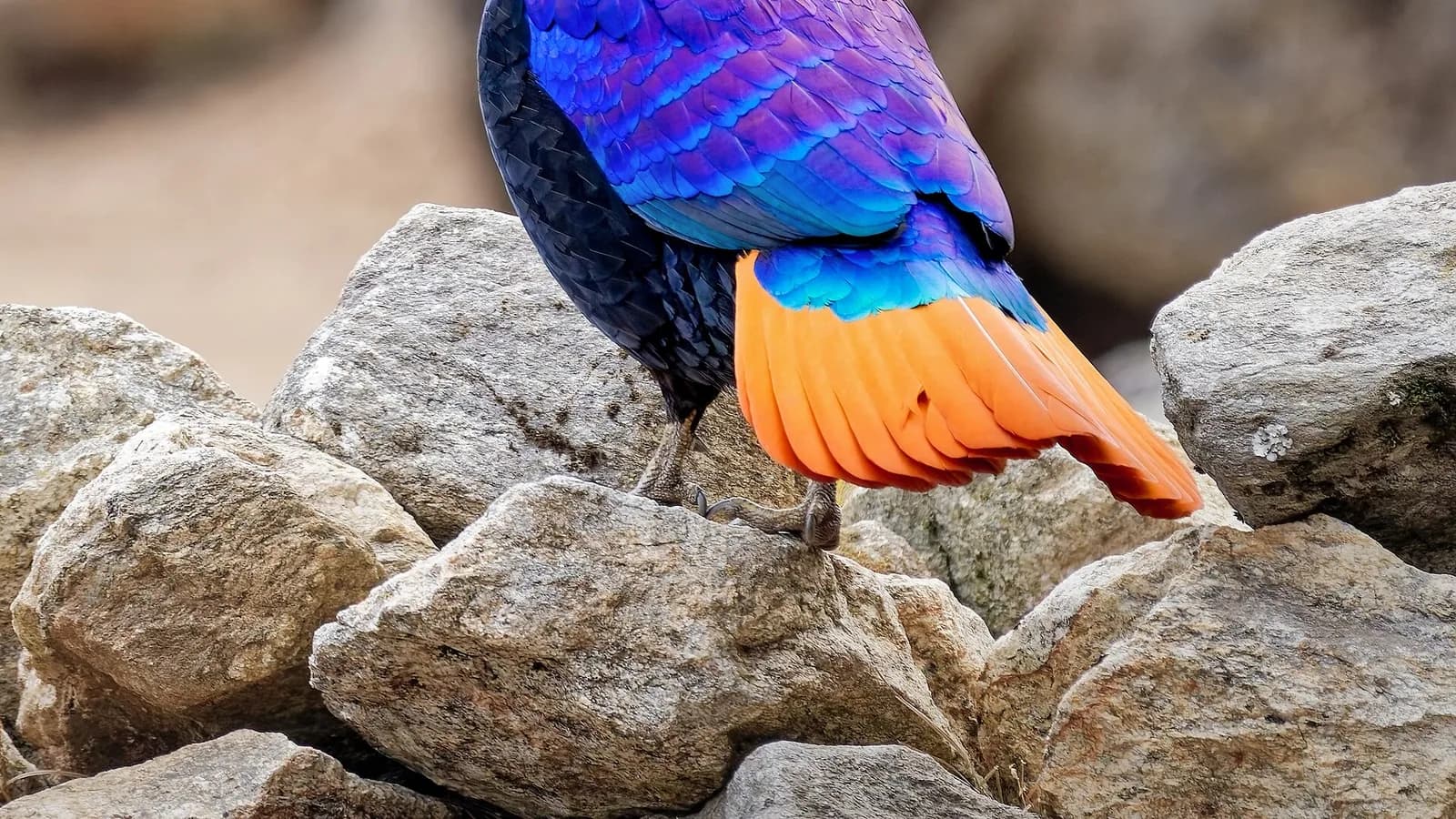
Birds: The park is recognised as an Important Bird Area with around 208 recorded species, including the iridescent Himalayan monal (Nepal's national bird), blood pheasant, snowcock, the huge bearded vulture (lammergeier) and flocks of alpine chough that follow trekkers hoping for scraps.
Your realistic wildlife encounters are tahr, monal, chough and a variety of high-altitude birds. Everything else is a lucky bonus.
The Sherpa heart of the park
Sagarmatha is not a wilderness emptied of people — it is a living cultural landscape. Around 3,500 Sherpa people inhabit the villages along the main trekking routes, and their Tibetan Buddhist culture is as much a part of the park's value as its peaks. Namche Bazaar (around 3,440 m) is the bustling hub — the place trekkers acclimatise, resupply and drink the famous high-altitude coffee — while Lukla is the gateway airstrip most people fly into.
The spiritual centre is Tengboche monastery, perched on a ridge with a postcard view of Ama Dablam and Everest. Passing chortens, mani walls and prayer flags is part of the rhythm of any Khumbu trek; the convention is to keep them on your right as you pass. Treating these sites and the people who maintain them with respect is part of visiting responsibly — our temple etiquette guide covers the basics.
Permits and fees: what you pay to enter
Entering the park means paying the Sagarmatha National Park entry permit. Per the Nepal Tourism Board, the rates are:
| Visitor type | Entry permit (per entry) | |---|---| | Foreigner | NPR 3,000 | | SAARC national | NPR 1,500 | | Nepali citizen | NPR 100 |
Figures in Nepali rupees (NPR) per person per entry, as of June 2026 per the Nepal Tourism Board. Children under 10 enter free.
A few essentials:
- You pay at the Monjo checkpoint, roughly four hours into day one from Lukla. It is not pre-arranged; you buy it on arrival.
- Cash only — NPR, INR or USD accepted, but the NPR rate is best. Bring rupees.
- This is not the only permit you need. The Khumbu region also requires the Khumbu Pasang Lhamu Rural Municipality permit (NPR 2,000), and the old TIMS card requirement was scrapped for this region in 2023. The full, current breakdown is in our Everest Base Camp permits 2026 guide.
- Keep every receipt. They are checked at points further up the trail.
How the park fits an Everest trek
For almost everyone, "visiting Sagarmatha National Park" means trekking through it. The classic routes all begin with a flight to Lukla and a walk up the Dudh Koshi valley, crossing the park boundary at Monjo. From there your itinerary determines how much of the park you see:
- Everest Base Camp — the iconic route to the foot of the mountain and the Kala Patthar viewpoint. Plan and budget it with our EBC itinerary and EBC cost guide.
- Gokyo Lakes — a quieter, lake-studded alternative or add-on. See the Gokyo Lakes trek.
- Everest View Trek — a short, lower-altitude taste of the Khumbu for those without two weeks; details in our Everest View trek guide.
- Three Passes — the demanding high-mountain circuit for experienced trekkers, covered in the Three Passes trek guide.
Whichever you choose, the park's defining challenge is altitude, not wildlife. The thin air above 3,000 m is the real hazard, and acclimatisation discipline matters more than anything else — read our altitude sickness guide before you go.
Practical tips for visiting Sagarmatha
- Carry rupees in cash for the Monjo permit and the municipality permit; there are no card facilities at the gates.
- Build in acclimatisation days, typically at Namche and Dingboche. The park's altitude is unforgiving of rushed schedules.
- Pack out what you pack in. This is a UNESCO site under heavy visitor pressure; rubbish and overuse are real problems.
- Hire a licensed guide. It is required on the main routes and adds real safety and cultural context. Our take on whether you can go without one is in do I need a guide for EBC.
- Respect the monasteries, mani walls and prayer flags — keep them on your right, ask before photographing people, and dress modestly in religious spaces.
The bottom line
Sagarmatha National Park is far more than a backdrop to Everest selfies. It is a UNESCO-protected landscape of extraordinary vertical range, a stronghold for some of the Himalaya's rarest animals, and the homeland of the Sherpa people whose culture is woven into every ridge and monastery along the trail. Pay your NPR 3,000 at Monjo, walk slowly, look up at Ama Dablam and the tahr on the slopes, and remember that the famous mountain is only one part of what this park protects. For the wider context of Nepal's protected estate, see our overview of Nepal's national parks.
Sources
Frequently asked questions
- What is Sagarmatha National Park?
- Sagarmatha National Park is Nepal's UNESCO World Heritage park in the Khumbu region that contains Mount Everest. Sagarmatha is the Nepali name for Everest. The park protects the high valleys, glaciers and Sherpa villages along the main Everest trekking routes.
- How much is the Sagarmatha National Park entry fee in 2026?
- The Nepal Tourism Board lists the entry permit at NPR 3,000 per entry for foreigners, NPR 1,500 for SAARC nationals and NPR 100 for Nepali citizens. Children under 10 enter free. You pay in cash at the Monjo checkpoint (as of June 2026).
- Where do you pay the Sagarmatha National Park permit?
- Most trekkers pay at the Monjo checkpoint, roughly four hours into the first day's walk from Lukla. You can pay in Nepali rupees, Indian rupees or US dollars, but rupees give the best rate. Keep the receipt for checkpoints further up the trail.
- What wildlife lives in Sagarmatha National Park?
- The park shelters snow leopard, Himalayan tahr, musk deer, Himalayan serow and red panda, plus 208 bird species including the Himalayan monal, blood pheasant and bearded vulture. Most mammals are shy and high-altitude, so sightings are uncommon.
- Do I need a guide to enter Sagarmatha National Park?
- A licensed guide is required on the main Everest trekking routes under Nepal's 2023 rules for national park areas. You still pay the separate park entry permit and the local Khumbu rural-municipality permit on top of any guide cost.
- What is the best time to trek in Sagarmatha National Park?
- Autumn from late September to November and spring from March to May give the clearest skies and most stable weather. Winter is cold but doable on lower routes, while the summer monsoon brings cloud, rain and obscured mountain views.
Related posts
Himalayan Tahr: Nepal's Cliff-Dwelling Wild Goat
A trekker's guide to the Himalayan tahr in Nepal: where to see this wild goat, its alpine habitat, conservation status, and the Everest trail's most-spotted mammal.
Read postLuxury Trekking Nepal: Comfort in the Himalaya (2026)
A practical guide to luxury trekking in Nepal — heated lodges, en-suite rooms and helicopter shortcuts on the Everest and Annapurna trails.
Read postAma Dablam Climb: 2026 Expedition Guide (6,812m)
An Ama Dablam climb and expedition guide for 2026 — height, the Southwest Ridge route, camps, fixed ropes, difficulty, permits, cost and the best seasons.
Read post