Nepal Photography Tour: Routes, Light & Best Time
A photographer's guide to a Nepal photography tour — the best locations, golden-hour spots, when to go for clear Himalayan skies, gear and costs.
For a few minutes after dawn the Annapurnas turn from grey to gold, and every photographer on the Sarangkot ridge stops talking at once.
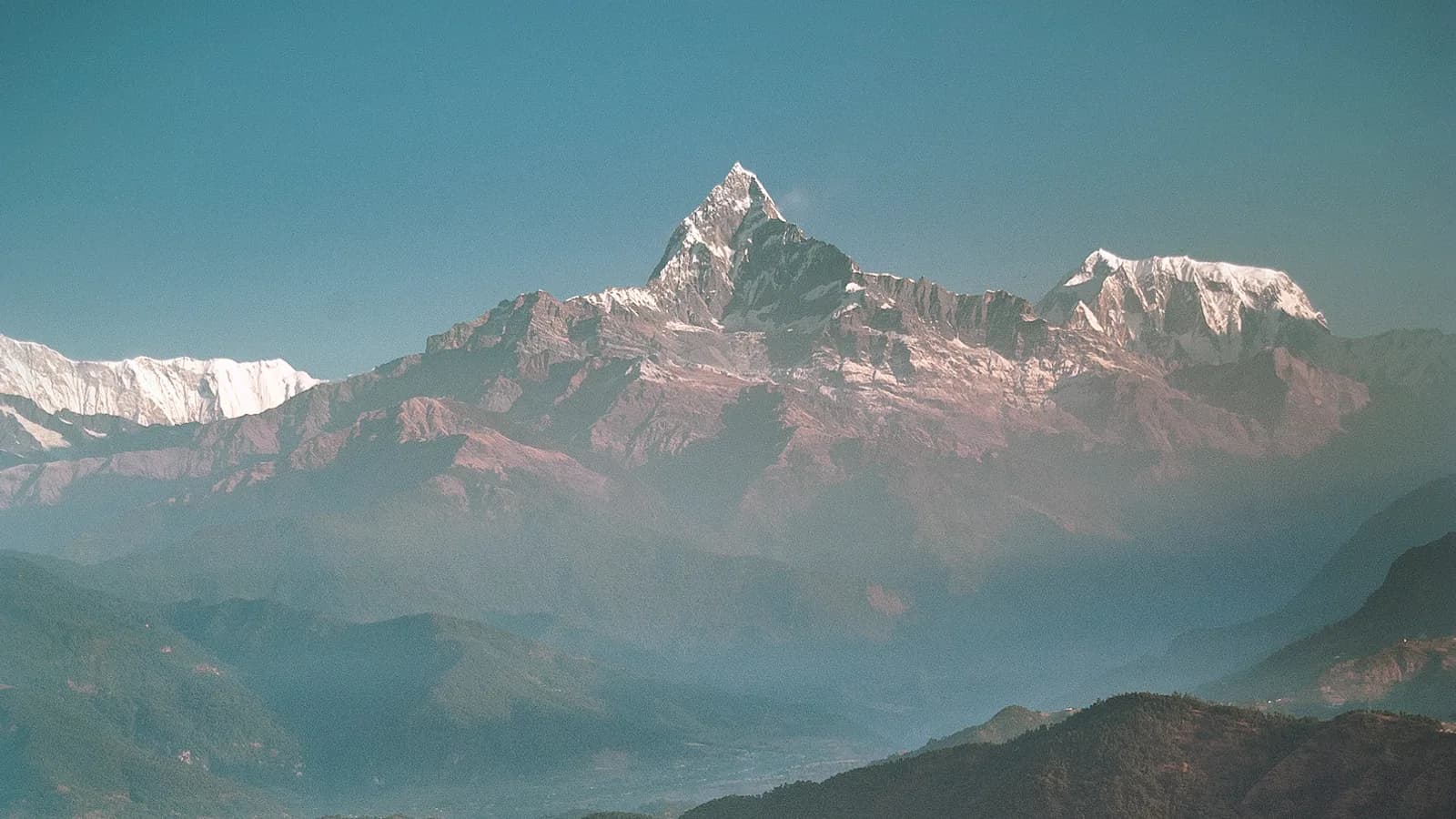
A Nepal photography tour is, for many travellers, the whole point of the trip: this is a country that packs 8,000-metre peaks, medieval temple cities, Tibetan-Buddhist ritual and Bengal-tiger jungle into an area smaller than many single countries. The light on the Himalayas at dawn, the worn carvings of a Newar courtyard, the smoke and colour of a festival — Nepal hands a photographer subject after subject. The challenge is less finding something to shoot than being in the right place at the right hour with the right plan.
This guide is built for exactly that. It walks through the best locations for mountains, culture and wildlife, the golden-hour spots worth setting an alarm for, the seasons that give clean Himalayan skies, and the practicalities of gear, costs and etiquette. Whether you join an organised photography tour or build your own route, the aim is to come home with images that do the place justice.
Key takeaways
- Autumn (October–November) is the prime season — crisp post-monsoon air, the sharpest mountain views, and Nepal's biggest festivals all at once.
- The classic sunrise viewpoints are Sarangkot and Australian Camp near Pokhara, Nagarkot near Kathmandu, and Poon Hill in the Annapurna foothills.
- For culture, the squares of Kathmandu, Patan and Bhaktapur plus the stupas of Boudhanath and Swayambhunath are world-class.
- For dramatic high-altitude landscapes head to Upper Mustang or the Khumbu; for wildlife, the Terai parks of Chitwan and Bardia.
- Costs vary widely — from low-cost half-day city photo walks to substantial multi-day guided tours; entrance fees alone for the main heritage sites run about US$45–50 per person.
- Bring wide, standard and telephoto lenses and a tripod, ask before shooting portraits, and respect temple photography rules.
Why Nepal is a photographer's country
Few destinations compress so much variety into so little ground. In a single trip you can photograph the highest mountains on earth, drop to subtropical jungle for tigers and rhinos, and spend days among living medieval cities where ritual is part of daily life. The Kathmandu Valley alone holds a cluster of UNESCO-listed sites — temples, stupas, palaces and courtyards — within an hour or two of one another, while Pokhara puts a wall of the Annapurnas above a lake at the edge of town.
That density is the photographer's gift here: you are rarely far from a strong subject, and the contrasts between them — snow and jungle, gold leaf and weathered stone — make for a portfolio with real range. The trick is to plan around light and timing, because the difference between a flat snapshot of a famous peak and an unforgettable one is usually just the hour of the day.
Mountain photography: where to catch the Himalayan light
The Himalayas are the headline act, and the best of them comes at the edges of the day. A handful of viewpoints have become classics precisely because they deliver reliably.
Sunrise viewpoints near Pokhara
Sarangkot, a ridge at around 1,600 m just above Pokhara, is the most accessible great mountain viewpoint in the country. From it the dawn light moves across Dhaulagiri, the Annapurnas, Machhapuchhare (Fishtail) and Lamjung Himal, with Phewa Lake and the town below for a foreground. It is deservedly popular — read our take on whether the Sarangkot sunrise lives up to the crowds — and a short walk to the Australian Camp area nearby offers a quieter alternative.
Sunrise near Kathmandu
On the valley's eastern rim, Nagarkot is the standard sunrise escape from the capital, with a long Himalayan horizon on clear mornings that can, in the best conditions, stretch toward Everest. We weigh up honestly whether the Nagarkot sunrise is worth it so you can judge it for your own schedule.
Treks for the serious peaks
To get in among the giants, a short trek pays off. Poon Hill, reached on the Ghorepani circuit, is the celebrated dawn platform over the Annapurna and Dhaulagiri ranges; the Everest View trek brings you face to face with Sagarmatha without a full expedition; and the Mardi Himal trek offers a quieter high ridge beneath Fishtail. For arid, otherworldly colour, Upper Mustang — see our Upper Mustang trek permit guide — delivers canyon walls that catch fire at sunrise against the Mustang Himal and Dhaulagiri.
| Viewpoint | Access | What you get | Best light | | --- | --- | --- | --- | | Sarangkot | Short drive from Pokhara | Annapurnas, Fishtail, lake foreground | Sunrise | | Nagarkot | Drive from Kathmandu | Long Himalayan horizon | Sunrise | | Poon Hill | 3–4 day trek | Annapurna & Dhaulagiri panorama | Sunrise | | Upper Mustang | Fly/drive + permit | Coloured canyons, high desert | Sunrise & late afternoon |
Cultural and heritage photography
If the mountains are the spectacle, the culture is the soul of a Nepal photography tour. The three royal cities of the Kathmandu Valley are an unbroken feast of architecture and ritual.
- Kathmandu Durbar Square — temples, palace facades and the buzz of the old city.
- Patan (Lalitpur) — arguably the finest concentration of Newar craftsmanship, and quieter than the capital.
- Bhaktapur — the most intact medieval city of the three, a photographer's dream of brick, wood and open squares.
For sacred subjects, the great stupas glow under low sun: the vast dome of Boudhanath, ringed by Tibetan pilgrims at dusk, and the hilltop Swayambhunath with the watchful Buddha eyes and a city panorama behind. At all of these, a little courtesy goes a long way — ask before close portraits, mind the restrictions inside shrines, and read our notes on temple etiquette for visitors before you raise the camera near worshippers.
Festivals: colour on a plate
Time your trip to the autumn festival season and the streets become the set. Dashain and Tihar, falling around October and November, fill homes and temples with light, marigolds and ritual; Indra Jatra brings masked dances and chariots to Kathmandu. In spring, the chariot-pulling of Bisket Jatra in Bhaktapur and the colour of Holi are vivid. Festival dates shift with the lunar calendar, so check them early and shoot respectfully from within the crowd rather than above it.
Wildlife photography in the Terai
Drop south to the subtropical lowlands and the camera bag changes character — this is telephoto country. The national parks of the Terai are among the best places in Asia to photograph megafauna at relatively close range.
Chitwan is the most accessible, famous for the one-horned rhino, gharial crocodiles and a huge cast of birds, with a real chance of a Bengal tiger. Further west and wilder, Bardia National Park has become a serious tiger-photography destination for those willing to go off the beaten track. Both reward patience, an early start, and a long lens. For the full list of options, see our overview of Nepal's national parks.
When to go: light, skies and seasons
Season makes or breaks landscape work in Nepal, because it governs how much of the mountains you can actually see.
- Autumn (roughly October–November): the photographer's favourite. The monsoon has scrubbed the air clean, leaving crisp, clear skies and the sharpest mountain views of the year — and the biggest festivals land here too. If you only have one window, this is it.
- Spring (roughly March–May): warm and colourful, with rhododendron forests in bloom across the hills. Mountain views are good early in the season, though haze and pre-monsoon cloud can build as it goes on.
- Winter (December–February): cold but often stable, with some superb clear mornings; high routes may be snowbound and valley haze can creep in.
- Monsoon (June–September): lush and dramatic for those who like cloud and rain, but the peaks are frequently hidden — challenging for classic Himalayan landscapes.
For a deeper month-by-month breakdown, see our guides to the best time to visit Nepal and Nepal weather by month. Whatever the season, build your days around the golden hours: dawn on a mountain ridge, late afternoon in a temple square.
Gear and practicalities
A Nepal trip spans wide landscapes, tight courtyards and distant wildlife, so pack for range:
- Lenses: a wide-angle for sweeping ranges and cramped temple interiors, a standard zoom for everyday work, and a telephoto to compress distant peaks and reach jungle wildlife.
- A tripod: close to essential for the low light of sunrise, sunset, stupas and interiors. Choose one that packs down for travel and trekking.
- Power and storage: plenty of spare batteries and memory cards, plus a way to charge and back up. Cold and altitude drain batteries fast, so keep spares warm.
- Protection: lens cloths and a blower for the dust of the Terai and the dry valleys.
- Clothing for altitude if you trek, where temperatures swing hard between sun and shade.
On the logistics side, sort connectivity and power before you head out — our guides to the best SIM card in Nepal and power adapters save a lot of fumbling. If your itinerary includes the mountains, a short scenic domestic flight to Pokhara or the Everest region can be a photographic highlight in itself.
Guided tour or independent?
You do not strictly need an organised tour. Nepal's main cities and viewpoints are straightforward to reach independently, and plenty of photographers travel solo or in small groups, dipping into the country's affordable homestays and guesthouses along the way.
Where a specialist photography tour earns its fee is in timing, access and logistics: a good photo leader has you on the correct ridge before first light, knows when and where the cultural moments unfold, and takes the permits, transport and acclimatisation off your plate so your attention stays on the picture. For remote or restricted regions — Upper Mustang above all — an organised trip and the correct permits are effectively a requirement rather than a luxury.
What a tour might cost
Pricing ranges enormously with length, group size, how remote you go and whether you fly internally, so most serious multi-day tours are quoted per person on request. At the budget end, short half-day city photo walks are advertised from very low figures. As a concrete anchor for self-planners, the entrance fees alone for the main Kathmandu Valley heritage sites total around US$45–50 per person (as of 2026) — a useful reminder that the headline tour price is rarely the whole spend. As always, confirm exactly what any package covers — guiding, transport, permits, accommodation, internal flights — before you commit, and budget the rest with our Nepal travel budget guide.
Putting a route together
A satisfying photography trip usually mixes the registers: a few days among the temple cities of the Kathmandu Valley for culture and street work, a sunrise or two over the mountains from Nagarkot or Sarangkot, a short scenic trek to get in among the high peaks, and — if time allows — a swing south to the Terai for wildlife. That combination is exactly the spine of our two-week Nepal itinerary, which you can adapt around the light rather than the sights.
Whatever you build, plan your days backwards from the golden hours and leave room for the unplanned moment — the procession that turns a corner, the cloud that lifts off Fishtail for ninety seconds at dawn. In Nepal, those are the frames you will keep.
Sources
- Nepal Photography Tour — Above the Himalaya
- Best Photography Tours in Nepal for Trekking Enthusiasts — Adventure Treks Nepal
- Nepal Photography Tour, 11 Days, Cost — Outfitter Himalaya
- Landscape & Cultural Photography Tour in Nepal — Best Heritage Tour
- Nepal Photography Tours in 2026 (prices) — Viator
- Photography Tour of Nepal — iTour Nepal
Frequently asked questions
- What is the best time of year for a Nepal photography tour?
- Autumn, roughly October and November, is the standout window. After the monsoon clears, the air is crisp and clean, the mountain views are at their sharpest, and the country's biggest festivals fall in this period, giving you culture and landscape together. Spring, around March to May, is the other strong season with warm weather and rhododendron blooms, though haze can build later on. Both beat the cloudy monsoon and the cold, sometimes hazy depths of winter for serious landscape work.
- Where are the best places to photograph in Nepal?
- For mountains, the classic sunrise viewpoints are Sarangkot and the Australian Camp area near Pokhara, Nagarkot near Kathmandu, and Poon Hill on the Annapurna foothills. For culture, the medieval squares of Kathmandu, Patan and Bhaktapur and the great stupas of Boudhanath and Swayambhunath are unmatched. For dramatic high-altitude landscapes, Upper Mustang and the Khumbu deliver, and for wildlife the Terai parks such as Chitwan and Bardia are the place to go.
- How much does a Nepal photography tour cost?
- It varies enormously with length, group size, how remote you go and whether you fly internally. Simple half-day city photo walks are advertised from very low figures, while multi-day guided tours with a photography leader, transport, permits and accommodation cost considerably more and are usually quoted per person on request. As a reference point, the entrance fees alone for the main Kathmandu Valley heritage sites add up to roughly US$45 to 50 per person. Always confirm exactly what a package includes before booking.
- Do I need a guide or an organised tour to photograph Nepal?
- Not strictly — the main cities and viewpoints are easy to reach independently, and many photographers travel solo or in pairs. A specialist photography tour earns its keep mainly through timing and access: a good leader gets you to the right ridge for first light, knows where the cultural moments happen, and handles permits and logistics so you can concentrate on shooting. For remote or restricted areas such as Upper Mustang, an organised trip and the right permits are effectively required.
- What camera gear should I bring to Nepal?
- Bring a versatile setup: a wide-angle lens for landscapes and tight temple courtyards, a standard zoom for general work, and a telephoto to compress distant peaks and reach wildlife. A sturdy but packable tripod is invaluable for the low light of sunrise, sunset and temple interiors. Add plenty of spare batteries and cards, a means of charging and backing up, and lens-cleaning kit for dust. Pack for altitude and cold if you head into the mountains, where batteries drain fast.
- Can I photograph people and temples freely in Nepal?
- Mostly yes, but with courtesy and care. Always ask before taking close portraits, and respect anyone who declines. Many temples allow exterior photography but restrict or forbid it inside shrines or around certain ceremonies, and some sites charge a camera fee or are off-limits to non-Hindus. Cremation areas and acts of worship call for particular sensitivity. When in doubt, ask, and read up on temple etiquette before you go.
- Is a photography tour combined with trekking a good idea?
- Yes, and it is one of the best ways to reach Nepal's most photogenic landscapes. Short treks to viewpoints like Poon Hill, the Everest View area or Mardi Himal put you among high peaks with manageable effort, and walking lets you shoot the changing light through the day. Just plan for the slower pace, the weight of your gear at altitude, and the need to acclimatise. Pairing a few cultural days in the valleys with a scenic trek gives the most varied portfolio.
- Which festivals are best for photography in Nepal?
- The autumn festival season is exceptional. Dashain and Tihar fall around October and November and fill streets, homes and temples with colour, light and ritual. Indra Jatra in Kathmandu brings masked dances and chariot processions, and spring's Bisket Jatra in Bhaktapur and Holi are vivid too. Festivals reward respectful, patient shooting and a willingness to be in the crowd, so research dates early because they shift with the lunar calendar each year.
Related posts
Is Nepal Worth Visiting? An Honest 2026 Answer
Is Nepal worth visiting in 2026? An honest look at the mountains, culture, wildlife, cost, and the real downsides to weigh before you book.
Read postNepal Time Zone: Why Nepal Is UTC+5:45 (the 45-Min Quirk)
Nepal's time zone is UTC+5:45 — one of only a few in the world with a 45-minute offset. Here is why Nepal runs 15 minutes ahead of India, explained.
Read postNepal: A First-Timer's Guide to the Himalayan Nation
A clear, factual overview of Nepal for travellers: geography, the eight-thousanders, culture, visas, currency, when to go, and how to plan a first trip.
Read post