Phewa Lake Pokhara: Boating, Tal Barahi & Guide
A guide to Phewa Lake (Fewa Lake) in Pokhara: boating, the Tal Barahi island temple, mountain reflections, costs, best times and practical tips.
Hire a painted rowboat, drift toward the island shrine, and watch the fishtail peak ripple back at you from the water — Phewa Lake at its simplest and best.
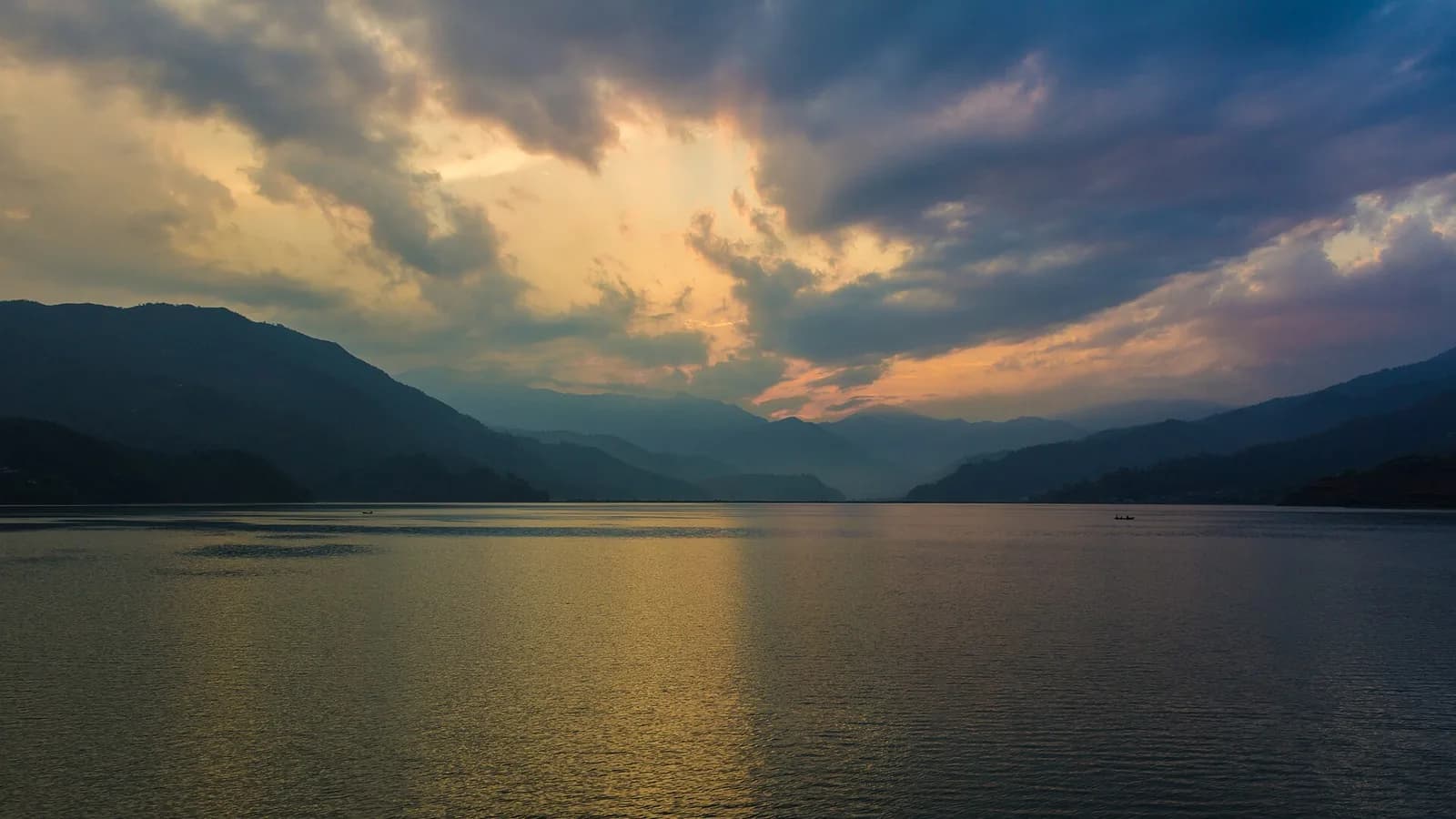
Pokhara has many charms, but it has one beating heart: Phewa Lake. Also spelled Fewa Lake or Phewa Tal, this broad sheet of green water on the southwestern edge of town is the reason the lakeside city exists in the form it does. On a calm morning the Annapurnas float upside down on its surface, painted rowboats glide toward a tiny island temple, and the whole valley seems to slow to the pace of the water. This guide covers what makes Phewa Lake special — the boating, the Tal Barahi shrine, the mountain reflections — and the practical details that turn a quick paddle into one of the best hours of your trip.
The lake is the centrepiece of a wider day out, and it pairs naturally with the rest of the things to do in Pokhara. You can spend a morning on the water and an afternoon climbing to the ridge above it without ever feeling rushed.
Key takeaways
- Phewa Lake is the largest lake in Gandaki Province and the third largest in Nepal, covering roughly 5.7 square kilometres at about 742 metres altitude.
- The Tal Barahi temple sits on a small island near the shore and is reached by a short boat trip — the lake's signature image.
- On a clear, calm morning the water mirrors Machhapuchhre and the Annapurna range, which is why the lakefront is Pokhara's most photographed spot.
- Boating is the main activity: wooden rowboats, paddle boats and shared barges all leave from jetties along Lakeside.
- Go at sunrise for the reflections or sunset for the glow; the drier months from roughly October to April have the clearest skies.
- The Lakeside strip along the north shore is the town's social hub, lined with cafes, restaurants and trekking shops.
What Phewa Lake is
Phewa Lake is a freshwater lake on the floor of the Pokhara Valley, in Kaski District, at an altitude of about 742 metres (2,434 feet). It is the third largest lake in Nepal and the largest in Gandaki Province, covering a surface of roughly 5.7 square kilometres. The water is relatively shallow — an average depth of around 8.6 metres, dropping to a maximum of about 24 metres — which is part of why it warms up and takes on that distinctive jade-green colour. It holds somewhere in the region of 43 million cubic metres of water, fed by hill streams and drained at its southern end past a small dam.
What turns a pleasant lake into an unforgettable one is its backdrop. The high Himalaya rises just to the north, and on a clear day the lake reflects Machhapuchhre — the sacred "fishtail" peak — along with summits of the Annapurna and Dhaulagiri ranges. The Annapurna massif sits only around 28 kilometres away as the crow flies, close enough to loom over the water yet far enough to mirror cleanly when the surface is still. That reflection, with a wooden boat in the foreground, is the postcard everyone comes for.
Boating on Phewa Lake
Getting out onto the water is the whole point, and it could not be easier. Small jetties line the Lakeside shore, each with a fleet of brightly painted wooden boats. You have a few choices:
- Wooden rowboat (doonga): the classic, cheapest option. Paddle it yourself or hire a boatman to row.
- Paddle boat / pedal boat: easy and fun, popular with families, a little pricier.
- Shared barge to the island: a cheap ferry that shuttles pilgrims and visitors out to the Tal Barahi temple and back.
- Kayak / stand-up paddleboard: available in a few spots for the more active.
Boating is organised through a local boat operators' association, and prices are set by boat type, duration and whether you take a boatman. Rates have risen noticeably over the years, and different operators quote differently, so the golden rule is simple: agree the price, the duration and whether it is one-way or return before you set off. A short trip to the island and back costs far less than a leisurely half-day of paddling. If you want to be sure you are paying a fair local rate rather than a marked-up tourist one, our guide to common tourist scams in Nepal is worth a quick read first.
Life jackets are normally provided and worth wearing. The water can get choppy when the afternoon wind picks up, so the calmest paddling is usually early in the day. Swimming in the busy lakeside zone is not advised — boat traffic and uncertain water quality make it a poor idea — so treat Phewa as a place to be on the water rather than in it.
A typical boating plan
| Step | What to do | Rough time | |---|---|---| | Hire a boat at Lakeside | Pick a rowboat or paddle boat, agree the price | 10 min | | Row out to Tal Barahi | Visit the island temple | 30–45 min | | Paddle the open lake | Drift toward the far shore for reflections | 30–60 min | | Return to Lakeside | Hand the boat back | 15 min |
The Tal Barahi temple
Near the Lakeside shore, on a small island, stands the Tal Barahi temple — the spiritual centre of the lake and one of the most important shrines in Pokhara. The two-tiered pagoda is dedicated to the goddess Barahi, regarded as a manifestation of the mother goddess Durga and counted among the protective Shakti deities in Hindu belief. Local tradition links the temple's founding to the era of the Kaski kings who once ruled the valley.
For visitors, the temple is reached by that short boat hop across the water, and the crossing is half the experience. The island buzzes on Saturdays and festival days, when local families come to make offerings, and a small barge ferries a steady stream of pilgrims back and forth. As at any active place of worship, dress modestly, take your shoes off where indicated, and follow the lead of the people around you. Our broader guide to temple etiquette for visitors covers the customs that apply across Nepal.
The view: mountains in the water
The single most celebrated thing about Phewa Lake is the reflection. When the air is clear and the surface is glassy — most reliably just after sunrise — the north of the lake fills with an upside-down Himalaya. The unmistakable spire of Machhapuchhre dominates, flanked by the broad shoulders of Annapurna South and the wider Annapurna range, with the giant bulk of Dhaulagiri away to the west on the clearest days.
The catch is that the mountains are shy. A breath of wind ripples the reflection, and an hour of morning haze can swallow the peaks entirely. To stack the odds in your favour:
- Go early, ideally not long after dawn, before the wind and haze build.
- Pick a clear, dry-season day — roughly October to April brings the sharpest skies.
- Find a calm corner away from the busiest jetties, where the water is stillest.
If the lake-level view leaves you wanting more, the same peaks are even grander from above. A boat across the water and a hike up to the World Peace Pagoda delivers both the lake and the mountains in one sweep, while a dawn trip up to Sarangkot for sunrise puts you on a ridge facing the full Annapurna skyline.
Lakeside: the shore that never sleeps
The north shore of Phewa Lake has grown into Lakeside (Baidam), Pokhara's main tourist district and one of the most relaxed travel hubs in Nepal. A long strip of cafes, bakeries, bookshops, craft stalls and trekking outfitters runs parallel to the water, with boat jetties spilling off it at intervals. By day it is the place to refuel, browse and arrange activities; after dark it becomes the town's social centre, with rooftop restaurants and easygoing live-music venues.
An evening stroll along the lakefront, with the boats bobbing and the lights shimmering on the water, is a low-key highlight in its own right. If you are choosing where to stay, many hotels sit a street or two back from the water within easy walking distance — our guide to Pokhara lakeside hotels helps you pick the right spot for lake access without paying purely for the view.
Beyond boating: things to combine with the lake
Phewa Lake works best as the anchor of a varied Pokhara day rather than a standalone stop. A few natural pairings:
- Paragliding from Sarangkot. Many tandem flights launch from the ridge above and land near the lakeshore, so you can drift down toward the water you paddled that morning. See our guide to paragliding in Pokhara.
- The World Peace Pagoda hike. Row across, climb the forest trail, and look back over the whole lake from the ridge.
- A lakeside cafe afternoon. Pokhara rewards slowing down; a long lunch by the water is time well spent.
- A quieter alternative. If central Phewa feels busy, the smaller Begnas Lake a short drive east offers a calmer, more rural counterpoint, covered in our things to do in Pokhara roundup.
Best time to visit
Phewa Lake is open and pleasant year-round, but the experience changes sharply with the seasons. The drier months, roughly October to April, bring the clearest skies and the best chance of those mirror-perfect mountain reflections — the prime window for boating, paragliding and sunrise viewpoints alike. The monsoon, from around June to September, turns the surrounding hills a vivid green and the lake fills out, but cloud often hides the peaks and afternoon downpours can cut a paddle short. For a fuller breakdown across the year, see our guide to the best time to visit Nepal.
Within the day, early morning is the sweet spot for calm water and clear mountains, while late afternoon into sunset wins for golden light and atmosphere. Avoid being out in the open in strong midday wind.
Getting there and fitting it in
Most travellers reach Pokhara from the capital. You can take a tourist coach along the highway or fly in on a short domestic hop — our Kathmandu to Pokhara transport guide compares the options, including timings and what to expect on the road. Once you are in town, Phewa Lake is walkable from most Lakeside accommodation, so no special transport is needed to reach the water.
If you are mapping out a longer trip, Pokhara and its lake slot neatly into a wider loop. Our two-week Nepal itinerary shows how the lake town links the Kathmandu Valley, the trekking trails and the lowland parks. However you arrange it, give yourself one slow morning on Phewa Lake — a painted boat, a still surface and the fishtail peak floating below you is the moment Pokhara is remembered for.
Sources
Frequently asked questions
- How much does boating on Phewa Lake cost?
- Prices are set by the local boat association and vary by boat type, whether you take a boatman and how long you stay out. A simple wooden rowboat is the cheapest option, paddle boats cost more, and a boatman adds to the price. Rates have crept up over the years, so agree the price and whether it is one-way or return before you push off.
- Can you visit the Tal Barahi temple on Phewa Lake?
- Yes. The Tal Barahi temple sits on a small island near the Lakeside shore, and a short boat trip takes you across. Shared barge boats run back and forth cheaply, or you can row yourself out as part of a longer paddle. The shrine is an active Hindu temple, so dress modestly and move respectfully.
- What is the best time of day to go boating on Phewa Lake?
- Early morning is calmest and clearest, with the Annapurna range often reflected in the still water before haze builds. Late afternoon and sunset are the other favourite, when the light turns golden and the lakefront glows. Midday is fine but tends to be hazier and busier.
- Can you see the mountains from Phewa Lake?
- On a clear day, yes. The lake famously mirrors Machhapuchhre, the fishtail peak, along with peaks of the Annapurna and Dhaulagiri ranges. The reflection is sharpest on a calm, cloudless morning in the drier months, roughly October to April.
- How big and deep is Phewa Lake?
- Phewa Lake covers about 5.7 square kilometres at an altitude of roughly 742 metres, making it the third largest lake in Nepal and the largest in Gandaki Province. Its average depth is around 8.6 metres, reaching a maximum of about 24 metres.
- Is Phewa Lake safe for swimming and boating?
- Boating is the main and safest activity, and life jackets are normally provided. Swimming is not recommended in the busy areas because of boat traffic and uncertain water quality. Stick to the boats, wear the life jacket, and avoid going out in strong afternoon wind.
- Where is Phewa Lake and how do you get there?
- Phewa Lake lies on the southwestern edge of Pokhara, with the Lakeside tourist district running along its north shore. It is walkable from most Lakeside hotels. Pokhara itself is reached from Kathmandu by tourist bus or a short domestic flight.
Related posts
Fewa Lake Boating: Boats, Prices & Tips (2026)
A practical guide to Fewa Lake boating in Pokhara: boat types, hiring a boatman, fair prices, life jackets, kayaks and the best time to push off.
Read postPokhara Lakeside: A Tourist's Guide to Baidam
A guide to Pokhara Lakeside (Baidam): how the strip is laid out, where to eat, sleep and stroll, plus the lake, viewpoints and practical tips.
Read postPokhara Tour Package: A Smart Planning Guide (2026)
How to plan a Pokhara tour package — what to include, days needed, getting there from Kathmandu, costs to verify, and the season for clear mountain views.
Read post