Power Adapter for Nepal: Plug Types, Voltage & What to Pack
Which power adapter do you need for Nepal? Plug types C, D and M, 230V 50Hz explained, plus voltage advice for US and UK travellers and charging on treks.
Check the small print on your charger before you check the plug — voltage matters more than pin shape.
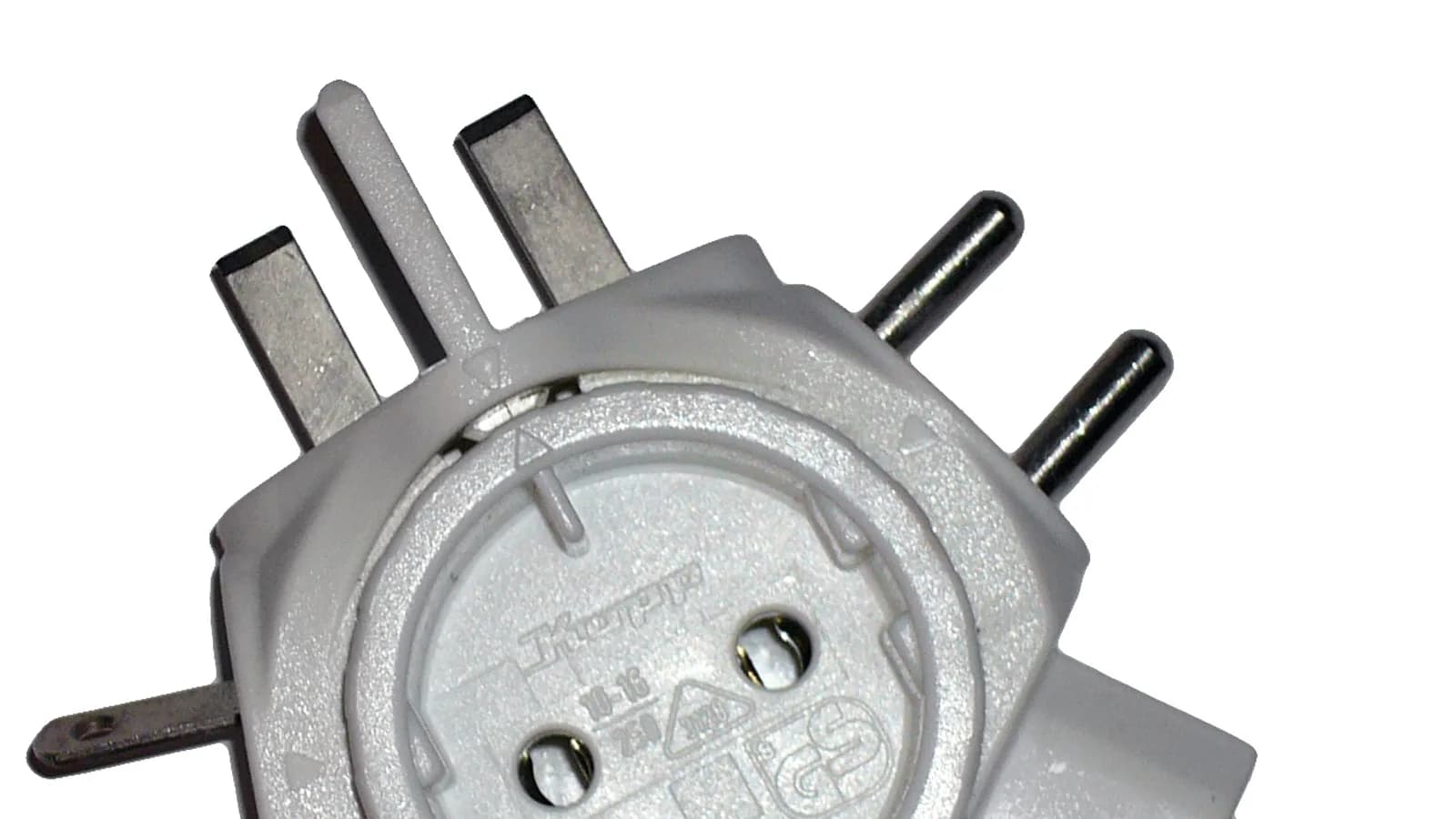
Few things derail the first evening of a trip like discovering your charger doesn't fit the wall. Nepal's sockets aren't exotic, but they aren't a single standard either — and the part that actually matters most isn't the plug shape at all, it's the voltage. Get both right and you'll never think about it again.
This guide covers everything you need to pick the right power adapter for Nepal: the three plug types, the 230-volt supply, what that means for travellers from the US, UK and Europe, and how charging works once you leave the cities for a trek. The core electrical facts here are verifiable against standard references, which are linked at the end.
Key takeaways
- Nepal uses plug types C, D and M at 230V, 50Hz.
- A universal travel adapter, or one covering types C/D/M, is the simplest choice.
- The big risk is voltage, not plug shape — devices not rated for 230V can be damaged.
- Most phone, laptop and camera chargers are dual-voltage (100–240V) and need only a plug adapter.
- US travellers must check for dual-voltage; single-voltage 110/120V devices need a converter.
- UK and European travellers are fine on voltage but still need an adapter for the plug shape.
The essentials at a glance
| Feature | Nepal | | --- | --- | | Voltage | 230V | | Frequency | 50Hz | | Plug types | C, D and M | | Adapter needed? | Yes for most non-European plugs | | Voltage converter needed? | Only for single-voltage 110/120V devices |
If you remember nothing else: bring an adapter that fits types C, D and M (or a universal one), and confirm your devices accept 230 volts. Everything below is the detail behind those two sentences.
Plug types in Nepal: C, D and M
Nepal's outlets accept three plug types, and you'll commonly see all three around the country:
- Type C — the familiar two-round-pin "Europlug" found across much of Europe and Asia. This is the one you'll encounter most often in tourist areas.
- Type D — three round pins arranged in a triangle, the old Indian standard. Because Nepal and neighbouring India share this type, an adapter bought for India usually works here too.
- Type M — a larger three-pin plug (the same family as the South African standard), used for higher-powered appliances.
Because there's no single plug, a universal travel adapter is the most foolproof option — it handles all three without you having to think about which socket you're facing. Encouragingly, many hotels and guesthouses now fit universal sockets that physically accept several plug shapes, so you may sometimes plug in directly. But sockets vary from building to building, and older or budget places are less predictable, so carrying your own adapter is the safe default rather than relying on the room.
How this compares to home
| You're coming from | Your plug type | Adapter for Nepal? | | --- | --- | --- | | United States / Canada | A / B | Yes | | United Kingdom / Ireland | G | Yes | | Continental Europe | C / F | Type C often fits; F needs an adapter | | India | C / D / M | Often already compatible | | Australia / New Zealand | I | Yes |
Voltage: the part that really matters
Here's the point most plug guides bury: matching the plug shape only stops your charger falling out of the wall. What protects your devices is matching the voltage. Nepal supplies 230 volts at 50 hertz. That's typical for much of Europe, Asia and Africa — but it's roughly double the 120-volt supply used in North America.
The consequence is simple but important. Plug a device built only for 110–120 volts straight into a 230-volt Nepali socket and you risk destroying the device, and in the worst case causing a fire or shock. A plug adapter does nothing to change the voltage — it only changes the shape. So the question to answer before you travel isn't "will it fit?" but "is it rated for 230 volts?".
Checking your devices: the one label that decides everything
Every charger and appliance has its rating printed on it, usually in small text on the plug brick or underside. Find it and look at the voltage range:
- "100–240V" (or "100–240V ~ 50/60Hz") — this is dual-voltage. It handles Nepal's supply happily and needs only a plug adapter. The vast majority of modern phone, laptop, tablet and camera chargers fall into this group.
- "110V" or "120V" only — this is single-voltage, built for North American power. To use it in Nepal you need a voltage converter as well as a plug adapter, or you should simply leave it at home. Common culprits are some hair dryers, hair straighteners, and older or cheaper appliances.
| Device label says | What you need in Nepal | | --- | --- | | 100–240V | Plug adapter only | | 110V / 120V only | Plug adapter and voltage converter | | 220–240V | Plug adapter only |
The good news for most travellers is that the gadgets you care about most — phone, laptop, camera — are almost always dual-voltage, so a lightweight plug adapter is all you need. It's the bulky heat-generating appliances that cause trouble, and those are exactly the things worth leaving behind anyway.
Advice by where you're travelling from
From the United States or Canada
You have two things to check, not one. The plug shape (your type A/B) won't fit, so you need an adapter for types C/D/M. And because home is 120 volts, you must confirm each device is dual-voltage before trusting it to Nepal's 230 volts. Phone and laptop chargers usually pass; hair dryers and similar often don't, and forcing them risks damage.
From the UK, Europe, Australia or beyond
If you're coming from a 230-volt part of the world — the UK, continental Europe, much of Asia, Australia and elsewhere — the voltage is a non-issue, and your dual-voltage devices are fine. You still need to solve the plug shape: UK type G and Australian type I plugs don't fit Nepali sockets, and even continental type F needs an adapter, though a bare type C plug often slots in. A simple adapter covering type D or M handles it.
Charging on a trek: a different game
Everything above assumes a city socket. On a multi-day trek, electricity becomes a resource you pay for and ration. Most teahouses and lodges will let you charge a phone or power bank, but typically for a fee per device, because power at altitude is limited and frequently solar. Those charges add up over a long trek, sockets aren't always free when you roll in tired, and the higher you go the less guaranteed the supply becomes.
The practical answer is to carry a large power bank, fully charged in the city, so your phone survives between paid top-ups and you're not held hostage by a busy charging point. A few habits help:
- Charge everything to full in Kathmandu or Pokhara before you set off.
- Bring a high-capacity power bank — and check it's allowed in your carry-on for the flight in.
- Use battery-saving mode and flight mode on the trail to stretch each charge.
- Budget a little cash for charging fees, alongside paid WiFi.
For how this fits into what you actually carry uphill, see our honest Nepal trekking packing list, and for staying connected up there, the realities of WiFi in Nepal and the best SIM card for Nepal.
Common mistakes to avoid
A few avoidable errors account for most of the charging trouble travellers run into in Nepal:
- Assuming a plug adapter changes the voltage. It doesn't. An adapter only reshapes the pins; it offers zero protection against the 230-volt supply. This is the single most expensive misunderstanding, because it's how single-voltage US appliances get fried.
- Bringing a US hair dryer or straightener "just in case." These are the classic single-voltage offenders. Either buy a dual-voltage travel version, borrow one at your accommodation, or accept a bad-hair fortnight. A bulky voltage converter is rarely worth packing for one appliance.
- Relying on the room having a universal socket. Many do, increasingly — but budget guesthouses and older buildings are unpredictable, and you don't want to discover the gap at 11pm. Carry your own adapter regardless.
- Forgetting you'll want to charge several things at once. Phone, power bank, camera and headphones all competing for one adapter is a daily annoyance. A second adapter or a small power strip run off one adapter solves it neatly.
- Packing your power bank in checked luggage for the flight in. Lithium power banks generally must travel in your carry-on, not the hold. Pack it in your day bag from the start.
None of these are exotic problems, and all of them are solved before you leave home by spending two minutes reading your charger labels and dropping the right adapter in your bag.
A simple packing checklist
To keep it foolproof, pack:
- One universal travel adapter (covers types C, D and M).
- A spare adapter if you have several devices to charge at once, or a small power strip you can run off a single adapter.
- A voltage converter only if you're bringing a single-voltage 110/120V appliance — otherwise skip it.
- A power bank, especially for trekking.
That's genuinely all most travellers need. Confirm your chargers read 100–240V, drop a universal adapter in your bag, and Nepal's power supply becomes a non-event. For wider trip planning, our two-week Nepal itinerary and Nepal travel budget cover what to do with all that charged-up gear.
Sources
- Nepal — Power Plugs & Sockets: Travel Adapter Needed? — power-plugs-sockets.com
- Nepal Power Plugs & Sockets — Type C, Type D, Type M — powerplugsockets.world
- Nepal Power Adapter — Electrical Outlets & Plugs — World-Power-Plugs.com
- Electric Plugs in Nepal: Socket Types, Voltage & Adapter Guide — Himalayan Recreation
- Nepal Electrical Voltage, Plug Types, and Adapters — Mosaic Adventure
Frequently asked questions
- What power adapter do I need for Nepal?
- Nepal uses plug types C, D and M, so you want an adapter that covers those, or a universal travel adapter. Type C is the two-round-pin Europlug, type D is the Indian-style three round pins in a triangle, and type M is a larger three-pin plug. Many hotels and guesthouses now have universal sockets that accept several plug shapes, but carrying your own adapter is the safe bet.
- What is the voltage in Nepal?
- Nepal runs on 230 volts at 50 hertz. That is the same kind of supply used across much of Europe, Asia and Africa, but it is roughly double the 120-volt supply used in North America. If your devices are not rated for 230 volts, plugging them in directly can damage them, so always check the label before you connect anything.
- Can I use my US devices in Nepal?
- Only if they are dual-voltage. Most modern phone, laptop and camera chargers are labelled 100 to 240 volts, which means they handle Nepal's 230-volt supply and need only a plug adapter. Single-voltage US devices marked 110 or 120 volts, such as some hair dryers and older appliances, need a voltage converter as well, or they can be damaged or cause a hazard.
- Do UK and European travellers need an adapter for Nepal?
- On voltage, no problem, because the UK and Europe also run at around 230 volts, so dual-voltage devices are fine on that front. On plug shape, you still need an adapter: UK type G and European type F plugs do not fit Nepal's type C, D and M sockets directly. A simple plug adapter that fits type D or M solves it.
- Will my phone charger work in Nepal?
- Almost certainly, with just a plug adapter. Modern phone and laptop chargers are nearly always dual-voltage, labelled 100 to 240 volts, so they accept Nepal's 230-volt supply. You only need something to bridge the plug shape. Check the small print printed on the charger brick to confirm it shows the 100 to 240 volt range before you travel.
- How do I charge devices while trekking in Nepal?
- Most teahouses and lodges let you charge phones and power banks for a fee, since electricity at altitude is limited and often solar. Charging costs add up over a multi-day trek, and a socket is not always free when you arrive. A large power bank charged in the city is the most reliable way to keep a phone going between paid top-ups on the trail.
- Are Nepal's power sockets the same as India's?
- Partly. Nepal and India both use type D sockets, and a plug that works in one often works in the other, which is handy if you are travelling between the two. Nepal also uses types C and M, so the match is not perfect. If you already have an adapter that fits Indian sockets, it will usually cover much of what you need in Nepal too.
Related posts
ATMs in Nepal: What Changed in 2026 (Fees & Limits)
A 2026 update on ATMs in Nepal — new withdrawal limits, the fee-saving trick most travellers miss, and where machines actually work.
Read postBackpacker Nepal: A First-Trip Guide for 2026
A backpacker Nepal guide for first-timers — when to go, where to base, getting around, route ideas, money, safety and the trekking-guide rule.
Read postBest Restaurants Pokhara Lakeside: Where to Eat
The best restaurants in Pokhara Lakeside — lakeside trout, wood-fired pizza, Tibetan momos and healthy cafes, with what to order and rough 2026 prices.
Read post