Universities in Nepal: Top Institutions Guide (2026)
A clear guide to universities in Nepal — the top public and private institutions, what they are known for, and how higher education works here.
Higher education in Nepal stretches from the vast public campuses of Tribhuvan to the green hills of Dhulikhel — a small system with a few genuinely strong institutions.
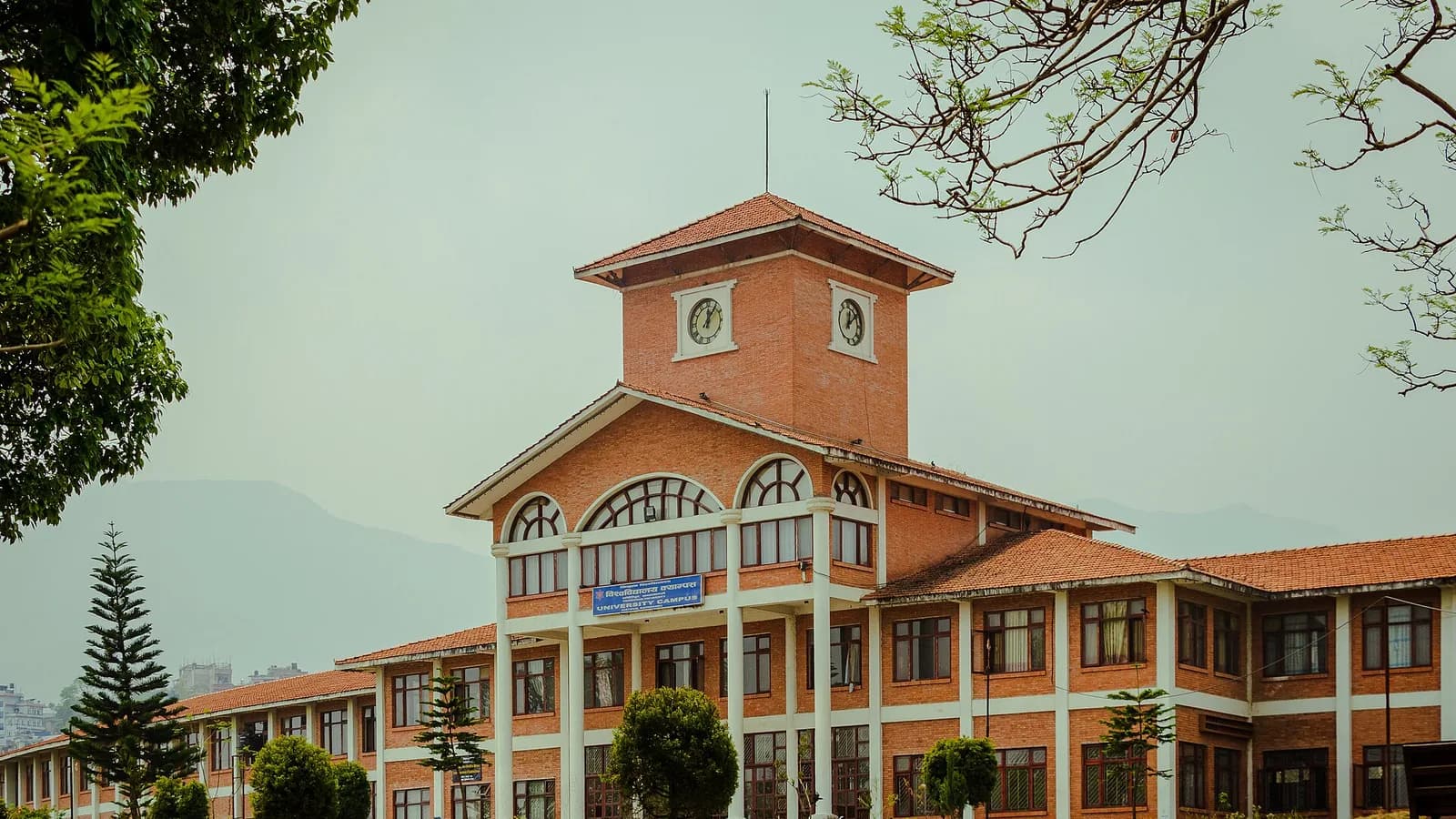
The story of universities in Nepal is the story of a small but surprisingly varied system: a few large public institutions, one standout private university, and a cluster of specialist schools that punch above their weight. For a country of roughly thirty million people, the higher-education landscape is compact, and almost everything traces back to a single giant — Tribhuvan University — that still teaches the large majority of Nepali students.
This guide gives travellers, prospective students and the simply curious a clear overview of the top institutions: who they are, where they sit, and what they are known for. The facts and rankings below come from recent university data and official sources, linked at the end. If you are weighing up studying here, treat this as orientation rather than admissions advice and confirm details directly with each university.
Key takeaways
- Tribhuvan University (1959) is the oldest and largest, based in Kirtipur near Kathmandu, and ranks first nationally in many fields.
- Kathmandu University (1991) in Dhulikhel is the leading private/autonomous institution, strong in science, engineering and medicine.
- Pokhara University and Purbanchal University (both 1990s) are known for management, IT and professional programmes through wide networks of affiliated colleges.
- BPKIHS in Dharan is widely seen as Nepal's best medical university, especially for postgraduate training.
- The system is compact but expanding, with newer provincial universities added since 2019 and specialist institutions for agriculture, Sanskrit and Buddhist studies.
- Nepal is an affordable, welcoming place to study, drawing international students to subjects from medicine to Himalayan and Buddhist studies.
How higher education works in Nepal
Nepal's university system is dominated by the public sector and, above all, by Tribhuvan University, whose constituent and affiliated colleges blanket the country. Most other public universities run a similar model: a central campus that sets curriculum and awards degrees, plus a large network of affiliated colleges that actually teach most students. That structure keeps higher education accessible and cheap, but it also means quality varies a great deal between a flagship campus and a small affiliated college.
Alongside the federal universities sit a handful of newer provincial universities, all founded since 2019 as Nepal decentralises education, and a set of autonomous institutes that focus on a single discipline — most notably medicine. English is widely used in higher education, particularly in science, technology and medical programmes, which is one reason Nepal attracts international students despite its modest budgets. If you are visiting and want the wider cultural backdrop, our guide to Nepali culture sets the scene, and travellers keen to pick up the language can start with learn Nepali.
Tribhuvan University — the giant
Founded in 1959 and named after King Tribhuvan, Tribhuvan University (TU) is the oldest and by far the largest university in Nepal. Its main campus is at Kirtipur, a historic town on the southwestern edge of the Kathmandu Valley, but its real footprint is national: a sprawling web of constituent and affiliated colleges that together teach the majority of all Nepali undergraduates.
TU covers virtually every field — humanities, management, science, education, law, engineering, agriculture and medicine — and ranks first in Nepal in many research disciplines. In international tables it sits well down the global list, which is typical for a mass public university in a low-income country, but its scale, history and breadth make it the backbone of Nepali academia. For most Nepalis, "going to university" still means TU. Kirtipur itself is an atmospheric Newari town worth a wander if you are exploring beyond the usual best places to visit in Nepal.
Kathmandu University — the private flagship
Established in 1991 in Dhulikhel, a hill town about 30 km east of the capital, Kathmandu University (KU) broke the public-sector mould as Nepal's first privately managed, autonomous, non-profit university. It is self-funded rather than state-funded, runs on a tighter and more selective model than TU, and has built a reputation as the country's strongest institution for science, engineering, management and medicine.
KU is frequently rated the best university in Nepal in meta-rankings that aggregate many international lists, and it generally edges ahead of TU on global metrics. Its setting helps, too — Dhulikhel is a relaxed town with classic Himalayan views, a world away from the bustle of central Kathmandu. If a campus visit tempts you east, our Dhulikhel guide covers what else there is to see, and you can fold it into a wider two-week Nepal itinerary.
Pokhara and Purbanchal — the professional networks
Two universities from the 1990s built their reputations on professional and applied education delivered through large affiliated-college networks.
Pokhara University, headquartered in Nepal's lakeside second city, is consistently regarded as a top choice for management, business and information technology. Many of the country's best-known business schools — the kind that dominate BBA and MBA admissions — are affiliated to it. If your campus tour doubles as a holiday, few bases beat Pokhara; see our pick of things to do in Pokhara.
Purbanchal University, based in Biratnagar in the eastern plains and established in 1993, was created to spread professional education across eastern Nepal. It offers programmes in engineering, IT, management, law, education and the arts through its own network of affiliated colleges, and remains an important regional hub.
BPKIHS and specialist institutions
Some of Nepal's most respected academic work happens in single-subject institutions rather than the big general universities.
- B.P. Koirala Institute of Health Sciences (BPKIHS), established in 1993 in Dharan in the east, is an autonomous health-sciences university with colleges of medicine, dentistry, nursing and public health and a large central teaching hospital. It is widely considered Nepal's leading medical institution, especially for postgraduate (MD/MS) training.
- Agriculture and Forestry University (AFU) in Chitwan is the national centre for agricultural and veterinary higher education — fittingly close to the wildlife-rich plains; see our Chitwan safari guide if you are heading that way.
- Nepal Sanskrit University preserves classical Sanskrit and traditional scholarship, while Lumbini Buddhist University, near the Buddha's birthplace, specialises in Buddhist studies. Pilgrims and students alike can read more in our guide to whether Lumbini is worth visiting.
Studying in Nepal as an international student
Nepal is an increasingly popular place to study for international students, and the appeal is easy to understand: respected programmes in fields from medicine to Buddhist and Himalayan studies, instruction often in English, and living costs that are a fraction of those in the West. Our cost of living in Nepal guide shows just how far a modest budget stretches here, which matters enormously for a multi-year degree.
The practicalities need care, though. Tuition, entry requirements and the right visa category vary by university and programme, and a tourist visa is not a study visa — start with our Nepal visa requirements overview, then confirm the exact student-visa process with your chosen institution. Picking up some everyday language smooths daily life enormously, so our basic Nepali phrases guide is a good companion before you arrive.
Visiting university towns
You do not need to enrol to enjoy Nepal's university towns. Kirtipur rewards visitors with old Newari streets and temple-topped views over the valley; Dhulikhel pairs a relaxed hill-town feel with some of the easiest Himalayan panoramas near the capital; and Pokhara, home to Pokhara University, is simply one of the loveliest places in the country to spend a few days. Each makes a natural add-on to a Kathmandu trip — see best places to visit in Nepal to weave them into a wider route, and our best time to visit Nepal guide to time it well.
Universities in Nepal may be modest in budget and global ranking, but the system has real strengths: a venerable public giant, a sharp private flagship, and specialist schools that lead their fields. For students it offers serious value, and for travellers the campus towns are some of the most pleasant corners of the country to explore.
Sources
- Wikipedia — List of universities in Nepal: https://en.wikipedia.org/wiki/List_of_universities_in_Nepal
- Wikipedia — Kathmandu University: https://en.wikipedia.org/wiki/Kathmandu_University
- TopUniversities — Tribhuvan University: https://www.topuniversities.com/universities/tribhuvan-university
- TopUniversities — Kathmandu University: https://www.topuniversities.com/universities/kathmandu-university
- EduRank — Best universities in Nepal 2026: https://edurank.org/geo/np/
- Edusanjal — BPKIHS: https://edusanjal.com/university/bpkihs/
Frequently asked questions
- How many universities are there in Nepal?
- Nepal has more than a dozen federal universities plus a handful of newer provincial ones founded since 2019, alongside autonomous medical institutes such as BPKIHS. Tribhuvan University is by far the largest, teaching the majority of all students in the country.
- Which is the best university in Nepal?
- It depends on the field. Tribhuvan University is the oldest and largest and ranks first nationally in many disciplines, while Kathmandu University is widely regarded as the strongest private institution for science, engineering and medicine. Pokhara University is well known for management.
- What is the oldest university in Nepal?
- Tribhuvan University, established in 1959 in Kirtipur near Kathmandu, is the oldest and largest university in Nepal. Most other public universities and affiliated colleges grew up around it in the decades that followed.
- Is Kathmandu University public or private?
- Kathmandu University, founded in 1991 in Dhulikhel, is an autonomous, non-profit institution that is self-funded rather than state-funded. It is often described as Nepal's first privately managed public university and is known for quality science and technology programmes.
- Where is the best medical university in Nepal?
- B.P. Koirala Institute of Health Sciences (BPKIHS) in Dharan, established in 1993, is widely considered Nepal's leading medical institution, especially for postgraduate training, with its own large teaching hospital. Kathmandu University and Tribhuvan also run respected medical programmes.
- Can international students study at universities in Nepal?
- Yes. Tribhuvan, Kathmandu University and others enrol international students, and Nepal is a popular, affordable place to study subjects from Buddhist studies to medicine. Confirm current entry, visa and tuition details directly with the university before you apply.
Related posts
Accessible Travel Nepal: Wheelchair & Disability Guide
Accessible travel in Nepal for wheelchair users and travellers with disabilities: what works, what's hard, specialist operators and how to plan a trip.
Read postBest Places to Visit in Nepal 2026: A Planner
The best places to visit in Nepal 2026 — fresh arrival data, the autumn and spring windows, region picks and what changed this year for trips.
Read postBest Places to Visit in Nepal: 10 Iconic Sights Ranked
The best places to visit in Nepal, ranked — Kathmandu Valley, Pokhara, Everest, Chitwan, Lumbini and more, with seasons, costs and how to link them.
Read post