Nepal Visa Requirements 2026 — Documents, Fees & Rules
A clear guide to Nepal visa requirements: who needs a visa, document checklist, tourist visa fees, the 150-day limit, and free-visa exceptions.
Six months of passport validity, a photo, and clean USD cash — that's most of it.
If Nepal is on your itinerary, the good news is that the Nepal visa requirements are among the simplest in the region for most travelers. The vast majority of nationalities can pick up a tourist visa on arrival at the airport in Kathmandu, the documents are minimal, and the fees are modest. This guide pulls the essentials into one place: who needs a visa, what to carry, what it costs, the rules around how long you can stay, and the handful of exceptions that catch people out.
Everything below is drawn from Nepal's Department of Immigration, the Nepal Tourism Board, and the US State Department. Fees and rules do change, so always reconfirm on the official Immigration website close to your travel date.
Key takeaways
- Most foreign nationals can get a Nepal tourist visa on arrival by air at Tribhuvan International Airport; only a short list of nationalities must apply at an embassy first.
- Core requirements are a passport valid for at least six months beyond arrival, a blank visa page, one passport-size photo, and the fee in cash (USD preferred).
- Tourist visa fees are USD 30 / 50 / 125 for 15 / 30 / 90 days respectively, all multiple-entry (as of June 2026).
- You can stay a maximum of 150 days per calendar year on a tourist visa, and extensions are handled at Immigration offices in Kathmandu or Pokhara.
- Children under 10 and SAARC nationals (except Afghans, once per year for 30 days) generally qualify for a free visa, with conditions.
- At land borders visa on arrival exists, but plan ahead — the US State Department advises overland travelers to arrange the visa rather than assume.
Do you need a visa for Nepal?
Yes — with very few exceptions, every foreign visitor needs a visa to enter Nepal. The important distinction is how you obtain it:
- Visa on arrival (most travelers): You arrive, fill in a short form, pay, and the visa is issued at the airport or border. No advance paperwork or embassy visit required.
- Visa in advance (a small list of nationalities): You must apply at a Nepali embassy or consulate before traveling.
Indian nationals are a special case and generally do not require a visa to enter Nepal, though they should carry valid photo identity documents. For everyone else, the question is simply whether your nationality is eligible for the on-arrival route, which the next section covers.
Who can get a visa on arrival (and who can't)
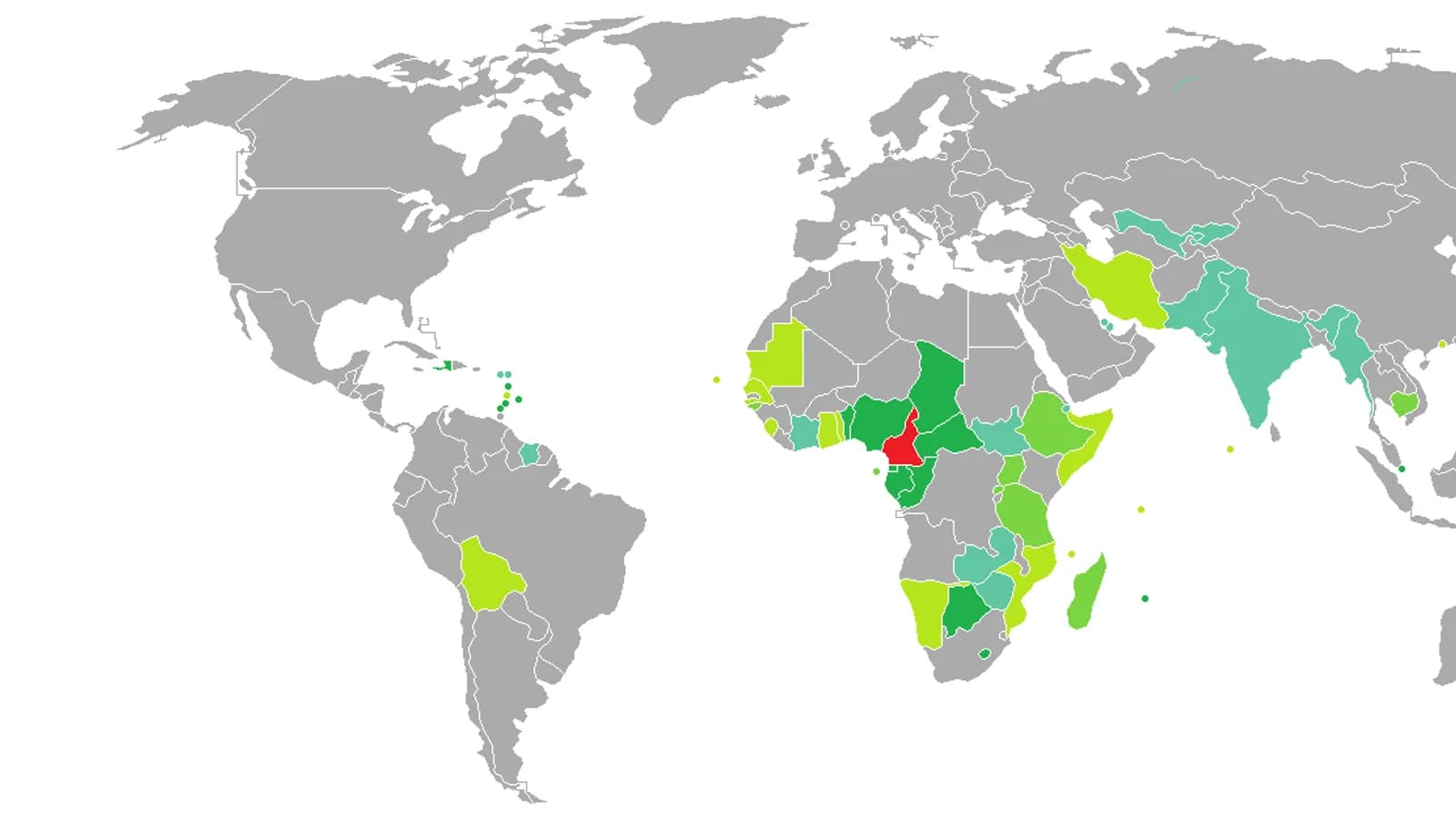
Nationals of most countries can obtain the tourist visa on arrival. According to the Department of Immigration, the nationalities that cannot use visa on arrival — and must apply through a Nepali diplomatic mission in advance — are those of:
- Afghanistan
- Cameroon
- Eswatini (Swaziland)
- Ethiopia
- Ghana
- Iraq
- Liberia
- Nigeria
- Palestine
- Somalia
- Syria
- Zimbabwe
If your passport is on that list, start the process early with your nearest Nepali embassy or consulate. If it is not, you are clear to get the visa on arrival — though it is always worth re-checking the official exclusion list before booking, since these lists are occasionally revised.
Document requirements: what to bring
The Nepal visa requirements for documents are refreshingly light. For a tourist visa on arrival you need:
| Requirement | Detail | |---|---| | Passport | Valid for at least 6 months beyond your arrival date | | Blank page | At least one full blank visa page for the sticker | | Photo | One recent passport-size photo (the airport kiosk can also take one) | | Application form | Filled at a kiosk on arrival, or online beforehand | | Fee | Paid in cash — USD preferred (other major currencies accepted at the airport counter) |
The US State Department confirms the six-month passport-validity rule and notes that a visa is required, with visa on arrival available when traveling by air. Bring clean, untorn banknotes — damaged notes are often refused — and try to have close to the exact amount, as change can be slow.
Proof of onward travel and funds
In practice, immigration officers at Tribhuvan rarely ask tourists for onward tickets or proof of funds, but the authorities reserve the right to. If you want zero friction, keep a printed hotel booking and an onward or return ticket handy. It is reassurance, not a guaranteed checkpoint.
Tourist visa types and fees
Nepal offers three standard tourist-visa durations, all issued as multiple-entry, which means you can leave and re-enter Nepal within the validity period (useful if you plan a side trip to India or Bhutan). The Department of Immigration fee schedule is:
| Duration | Fee (USD, as of June 2026) | Typical use | |---|---|---| | 15 days | USD 30 | A short trip — Kathmandu Valley plus one quick region | | 30 days | USD 50 | The most popular choice for a standard trekking trip | | 90 days | USD 125 | Long treks, multiple regions, or a festival-season stay |
Choose the duration that comfortably covers your plans. If you are uncertain, the 30-day visa suits most first-time visitors, and you can always extend later (see below) rather than overbuy. For the airport mechanics — kiosks, payment counters, and how to avoid the longest queue — see our companion guide to the Nepal visa on arrival process.
Free-visa exceptions
A few categories qualify for a gratis (free) tourist visa, though the rules have conditions:
- Children under 10: Generally granted a free tourist visa. Note that this waiver does not extend to US citizens in the same way, so American families should reconfirm on the official site.
- SAARC nationals (except Afghans): Eligible for one free 30-day tourist visa per visa year (the visa year runs January to December). Afghan nationals are excluded from this concession.
- Certain other categories: Some official, diplomatic, and special cases fall outside the standard tourist fee structure.
Because these concessions are periodically clarified by Immigration, treat the above as a starting point and verify your specific situation, especially for children's visas tied to nationality.
How long can you stay? The 150-day rule
The single most important rule to internalize is the annual cap: a tourist can stay in Nepal for a maximum of 150 days within one calendar year (January through December). This is not per-visit — it is cumulative across the year.
So if you visit for 60 days in spring and return later in the same year, you have at most 90 days remaining before you hit the ceiling. Once you reach 150 days, you cannot simply extend further in that calendar year; you must leave Nepal and return after a new year begins (or shift to a different, non-tourist visa category if you qualify).
A worked example
| Scenario | Days used | Days remaining this year | |---|---|---| | Arrive on a 30-day visa | 30 | 120 | | Extend by 30 days | 60 | 90 | | Return trip later, 60 days | 120 | 30 | | Final extension attempt | up to 150 | 0 |
Plan multi-trip years with this ceiling in mind so you are not forced to cut a trek short.
Extending your visa
If your trip runs longer than your visa allows, extensions are routine. They are processed at the Department of Immigration in Kathmandu (Kalikasthan) and at the Immigration office in Pokhara — not at the airport on your way out.
The published extension fee structure is a minimum of USD 45 for up to 15 days, then USD 3 per day for additional days, all within the 150-day annual cap. If you need your visa converted to multiple-entry (or it was issued single-entry), an additional charge applies.
Bring your passport, the fee in cash (USD or NPR), a passport photo, and arrive early in the day to beat the queue. Our full walkthrough — addresses, hours, document list, and queue tactics — is in the Nepal visa extension guide.
Overstaying: why you should avoid it
If you remain in Nepal past your visa's expiry, you pay a penalty when you leave. Reputable Nepal legal summaries describe a combined charge in the region of USD 8 per day for shorter overstays (a daily late fine plus the per-day extension rate), settled at the airport before departure.
Overstays beyond 150 days are a different matter entirely, carrying much steeper financial penalties and the risk of deportation and future entry difficulties. The takeaway is simple: extending on time is far cheaper and less stressful than overstaying. If you are even close to your expiry date, make the trip to Immigration.
Applying online before you arrive
You do not have to wait until you land to fill in the form. The Department of Immigration runs an online tourist-visa application that lets you complete your details in advance and receive a barcoded receipt by email. You then print the receipt and present it at the airport, skipping the on-site data-entry step.
A few practical notes:
- The submitted application typically stays valid in the system for about 15 days, so fill it in close to your travel date — not months ahead.
- You still pay the fee and complete the visa issuance in person on arrival; the online step is the form, not the whole visa.
- Have a digital passport photo ready (the portal specifies a small square format) and a working email address.
This is optional but genuinely speeds things up during busy afternoon arrival waves.
Entry points and land borders
By air, the main entry point is Tribhuvan International Airport (TIA) in Kathmandu, with Pokhara and Bhairahawa also operating international terminals. Visa on arrival is the norm at TIA.
Overland, visa on arrival is available at the principal land borders with India — including Sunauli/Belahiya, Birgunj/Raxaul, Kakarbhitta/Panitanki, and Nepalgunj/Rupaidiha. However, the US State Department specifically advises that travelers entering by land should plan to obtain the visa rather than assume every entrant is stopped and processed. The crossing from Tibet (China) does not issue Nepal visas on arrival — that route requires a visa arranged in advance.
If you are weighing a side trip across a border, remember your multiple-entry visa allows re-entry within its validity, but each fresh tourist visa still counts toward the 150-day annual cap.
Putting it together: a pre-departure checklist
- Passport valid 6+ months beyond arrival, with a blank visa page.
- Confirm your nationality is eligible for visa on arrival (or apply at an embassy if not).
- Decide your duration — 15, 30, or 90 days — and budget the USD fee in clean cash.
- Carry one passport photo as backup even though kiosks can take one.
- Optionally complete the online form within 15 days of travel for a faster airport experience.
- Keep a hotel booking and onward ticket printed, just in case.
- Note the 150-day annual limit if you plan more than one trip this year.
Get those right and the visa is the easy part of your trip. A friendly "namaste" at the counter never hurts either — you can pick up a few more from our essential Nepali phrases for travelers before you go. Once you are through, our two-week Nepal itinerary and the country's trekking permit requirements are the natural next reads.
Sources
- Department of Immigration, Nepal — Tourist Visa
- Department of Immigration, Nepal — Visa Fee and Documents
- Department of Immigration, Nepal — Visa on Arrival
- Department of Immigration, Nepal — Online Visa Application
- Tribhuvan International Airport Immigration — Visa cost FAQ
- Nepal Tourism Board — Tourist Visa Information
- US Department of State — Nepal International Travel Information
Frequently asked questions
- Do I need a visa to visit Nepal as a tourist?
- Yes. Almost every foreign visitor needs a tourist visa, but most nationalities can get it on arrival at Tribhuvan International Airport rather than applying in advance.
- How much does a Nepal tourist visa cost?
- The Department of Immigration lists USD 30 for 15 days, USD 50 for 30 days, and USD 125 for 90 days, all multiple-entry (as of June 2026). Confirm current rates before you fly.
- How long must my passport be valid for Nepal?
- Your passport needs at least six months of validity beyond your date of arrival, plus a blank page for the visa sticker.
- Can I get a visa on arrival at a land border?
- Yes, visa on arrival is available at the main India land borders, but the US State Department advises that overland travelers should plan to arrange the visa rather than assume officials will stop everyone to process it.
- Is the visa really free for children and SAARC nationals?
- Children under 10 are generally granted a gratis (free) tourist visa, and SAARC nationals except Afghans get one free 30-day visa per visa year, with some exceptions noted by Immigration.
- What is the maximum I can stay in Nepal on a tourist visa?
- A maximum of 150 days within a single calendar year (January to December). Beyond that you must leave Nepal and return in a new calendar year.
- What happens if I overstay my Nepal visa?
- You pay a daily penalty when you exit; reputable summaries describe roughly USD 8 per day for short overstays, and far steeper consequences beyond 150 days, so extend on time instead.
- Which nationalities cannot get a visa on arrival?
- Nationals of a short list including Afghanistan, Nigeria, Ghana, Cameroon, Somalia, Liberia, Ethiopia, Iraq, Syria, Zimbabwe, Eswatini and Palestine must apply at a Nepali diplomatic mission first.
Related posts
Do I Need a Visa for Nepal? 2026 Answer by Nationality
Do I need a visa for Nepal? Who needs one, who doesn't, who must apply at an embassy, plus 2026 fees and documents — sorted by your passport.
Read postNepal 15 Day Visa: Cost, Rules, and When to Pick It
The Nepal 15 day visa costs USD 30, is multiple-entry, and suits short trips. Who it fits, who should size up, and how to extend it if plans change.
Read postNepal 30 Day Visa: Cost, Rules, and Who It Suits
A focused guide to the Nepal 30 day visa — the USD 50 fee, multiple-entry rules, when to pick it over 15 or 90 days, and how to extend.
Read post