Basic Nepali Phrases: A Traveler's Starter Kit
Basic Nepali phrases for tourists and trekkers — greetings, numbers, food, directions and emergencies, with pronunciation and Devanagari.
Five Nepali words said warmly outperform a hundred said in fluent English.
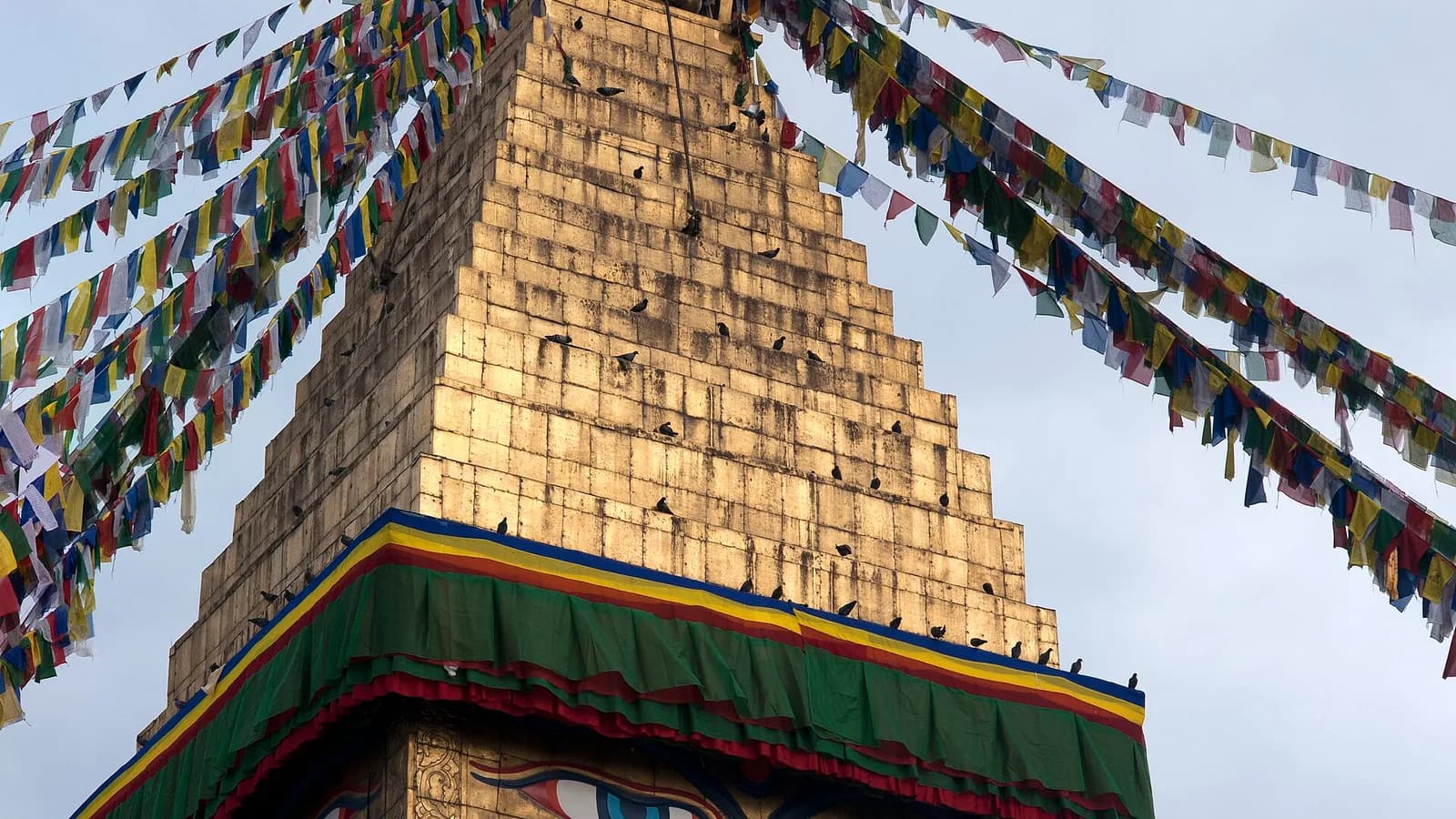
Most travelers reach Nepal with exactly three words: namaste, dal bhat, and dhanyabad. That is a fine start, but a slightly wider set of basic Nepali phrases changes nearly every interaction — the price you are quoted, the warmth of the welcome, and how quickly a stranger becomes a host. None of these require grammar. They are short, repeatable, and useful from the moment you land at Tribhuvan Airport.
This is a starter kit, not a textbook. Learn the dozen or so phrases below, practice the sounds, and you will cover the great majority of everyday moments in Kathmandu, Pokhara, the Chitwan plains, and on the trail.
Key takeaways
- Namaste does the heavy lifting — it means hello, goodbye, and respect, all in one gesture.
- Nepali uses the Devanagari script and is the official language of Nepal, spoken as a mother tongue by roughly 44.9% of the country (2021 census) and as a second language by many millions more.
- A little goes a long way: English is common in tourist areas, so phrases are about goodwill, not survival.
- Pronunciation matters more than vocabulary size — aspirated sounds and dental consonants are the two things worth practicing early.
- Honorifics are real: use the polite tapaai form with strangers, elders, and anyone serving you.
- Effort beats accuracy — locals reward the attempt, not perfect grammar.
Why bother with Nepali at all?
Nepali (नेपाली) belongs to the Indo-Aryan branch of the Indo-European language family and is written in Devanagari — the same script used for Hindi, which is why the letters may look familiar even if the words do not. It is the official language of Nepal and, per the 2021 National Population and Housing Census, the mother tongue of about 44.86% of the population (roughly 13 million people), with a large additional share speaking it as a second language. Beyond Nepal, it is co-official in the Indian state of Sikkim and has been one of India's scheduled languages since 1992.
For a deeper dive on how Nepali fits among the country's 100-plus tongues, see the languages of Nepal and how it compares in Nepali vs Hindi. If you want the full beginner roadmap rather than just a phrase list, the how to learn Nepali guide lays out a sensible path.
You do not need any of this to get by — guides, lodge owners, and most shopkeepers in tourist zones speak workable English. But a Nepali phrase, delivered with a smile, repositions you from "paying customer" to "respectful guest." That shift is worth more than the words themselves.
Greetings and pleasantries
Start here. These are the phrases you will use dozens of times a day.
| English | Nepali (romanized) | Devanagari | Rough pronunciation | |---|---|---|---| | Hello / goodbye / respect | Namaste | नमस्ते | nuh-muh-STAY | | Formal greeting (to elders) | Namaskar | नमस्कार | nuh-muh-SKAAR | | Thank you | Dhanyabad | धन्यवाद | DHUN-ya-baad | | Sorry / excuse me | Maaf garnus | माफ गर्नुहोस् | MAAF gar-noos | | See you again | Pheri bhetaunla | फेरि भेटौंला | FE-ri be-TOWN-la | | Good (great / nice) | Ramro | राम्रो | RAAM-ro | | It's okay / fine | Thik chha | ठिक छ | TEEK chha |
A few notes that matter more than the table suggests:
Namaste is best with both palms pressed together at chest height, a slight bow, and unhurried eye contact. Said as a quick throwaway it loses its warmth. For elders, officials, or formal settings, upgrade to namaskar.
Dhanyabad is genuine but easy to overuse. In Nepali culture, gratitude among friends and family flows through reciprocity — sharing food, refilling tea — rather than constant verbal thanks. Save dhanyabad for shops, restaurants, guides, and significant kindnesses. For a fuller treatment, see how to say thank you in Nepali and the broader Nepali greetings on the site.
A culturally rich greeting you will hear constantly: khaana khaanu bhayo? — literally "have you eaten?" It functions like "how are you?", not a literal question about lunch. A simple khaye ("I ate") or khaana khaaye closes the loop.
Yes, no, and the words that prevent confusion
Nepali splits "no" into different words depending on what you are denying. Getting this right prevents the most common beginner misunderstandings.
| Meaning | Nepali | Devanagari | When to use | |---|---|---|---| | Yes / it is so | Ho | हो | Confirming a fact | | Okay / it will do | Huncha | हुन्छ | Agreeing to something | | No / it isn't | Hoina | होइन | Disagreeing, correcting | | There isn't / none | Chhaina | छैन | Something is absent | | Not needed | Pardaina | पर्दैन | Declining politely |
If someone asks "tato paani chha?" (is there hot water?) and there is none, the correct reply is chhaina ("there isn't"), not hoina. Mixing these up is the single most common slip English speakers make. For more on these traps, our guide to common mistakes learning Nepali covers the full set.
Numbers and shopping
You will reach for numbers at every market stall, taxi, and teahouse. Even counting to ten unlocks easier bargaining, because answering in Nepali signals you are not a first-day tourist.
| Number | Nepali | Devanagari | |---|---|---| | 1 | ek | एक | | 2 | dui | दुई | | 3 | tin | तीन | | 4 | char | चार | | 5 | paanch | पाँच | | 10 | das | दश | | 100 | saya | सय | | 1000 | hajaar | हजार |
The phrase that pairs with them: kati ho? (कति हो?) — "how much is it?" Add the formal touch yo kati ho? ("this — how much?") in shops. If the answer feels high, mahango bhayo ("that's expensive") and a friendly ghatauns na ("please reduce it") move the conversation along. We cover this in depth in Nepali numbers and bargaining, and you can practice the exact wording at how much does it cost in Nepali.
A quick reality check on money: prices in Nepal are quoted in Nepalese rupees (NPR). Exchange rates move, so confirm current figures locally rather than trusting a fixed number — see the Nepalese rupee for context.
Food and drink
Mealtimes are where a single phrase earns the warmest response in all of Nepal.
| English | Nepali | Devanagari | |---|---|---| | It's delicious | Mitho chha | मिठो छ | | Water | Paani | पानी | | Please give me water | Paani dinus | पानी दिनुस् | | I'm vegetarian | Ma shakahari hun | म शाकाहारी हुँ | | I'm full / enough | Pugyo | पुग्यो | | No spice / not spicy | Piro nahalnus | पिरो नहाल्नुस् |
Mitho chha ("it's delicious") lands harder than almost any other phrase — try it on the didi (older sister) running a trail lodge and watch the dal bhat refills appear. The dedicated guides for how to say delicious in Nepali and how to say "I am full" in Nepali go deeper, and there is a full ordering food in Nepali walkthrough.
Note that dal bhat — the national rice-and-lentil staple — is vegetarian by default and usually comes with free seconds until you wave the server off with pugyo ("enough").
Directions and getting around
Useful in cities and on the trail alike, where "just over there" can mean a 90-minute climb.
| English | Nepali | Devanagari | |---|---|---| | Where is it? | Kahaa chha? | कहाँ छ? | | Where is the toilet? | Charpi kahaa chha? | चर्पी कहाँ छ? | | How many hours? | Kati ghanta? | कति घण्टा? | | Left | Baayaa | बायाँ | | Right | Daayaa | दायाँ | | Straight | Sidha | सीधा | | Slowly | Bistarai | बिस्तारै |
On a trek, kati ghanta? ("how many hours?") gets a more honest answer than asking how far. And bistarai ("slowly") is a phrase guides love to hear from clients gaining altitude — it signals you understand the pace that keeps you healthy.
Emergencies and asking for help
Learn these before you need them.
| English | Nepali | Devanagari | |---|---|---| | Help! | Guhaar! | गुहार! | | Please help me | Malai madad garnus | मलाई मद्दत गर्नुहोस् | | I'm sick | Malai sancho chhaina | मलाई सञ्चो छैन | | I have altitude sickness | Malai lek lagyo | मलाई लेक लाग्यो | | Doctor | Daaktar | डाक्टर | | Hospital | Aspataal | अस्पताल |
Malai lek lagyo ("altitude has caught me") is the most important phrase on any high route. Above Namche on the Everest trail, guides and lodge owners actively watch foreigners for signs of altitude sickness; this phrase makes the situation instantly legible. Pair it with our guide to altitude sickness in Nepal and the practice page for altitude sickness in Nepali. If you are heading to the mountains, the trail-tested Nepali phrases every trekker should know is the companion piece to this one.
Pronunciation: the two things to get right
You do not need a perfect accent, but two features of Nepali repay early practice because they distinguish real words.
Aspirated vs unaspirated
Nepali treats the puff of air after a consonant as a separate letter. क (ka) is a clean "k"; ख (kha) adds an audible puff. The same holds for प/फ (pa/pha), त/थ (ta/tha), and others. Hold a slip of paper in front of your mouth: it should flutter on the aspirated sound and stay still on the plain one.
Dental vs retroflex
English "t" and "d" are roughly retroflex (tongue curled back). Nepali also has dental versions, with the tongue pressed against the back of the upper teeth — softer and breathier. The "t" in namaste is dental. You will be understood either way, but the dental version sounds markedly less foreign. The pronunciation lessons on the site let you hear the contrasts directly.
A quick word on politeness levels
Nepali has three words for "you," ranked by formality: tapaai (तपाईं, formal and respectful), timi (तिमी, informal, for friends and peers), and ta (तँ, very intimate or for children). The safe default for travelers is always tapaai — over-formality is far better than accidental rudeness toward an elder or a shopkeeper. Verb endings shift with each level too, which is why many of the polite phrases above end in -nus or -nuhos (the respectful imperative). For the full system, see Nepali honorifics: tapai, timi, ta.
Putting it together
You do not need to memorize every table here before you fly. If you learn just this short list, you will handle most daily moments gracefully:
- Namaste — greet everyone
- Dhanyabad — thank meaningfully
- Kati ho? — ask the price
- Mitho chha — praise the food
- Paani dinus — ask for water
- Bistarai — slow down
- Malai madad garnus — ask for help
Say them with pressed palms, a small nod, and no rush. The mountains, the markets, and the people of Nepal reward effort far more than fluency. Bring some.
Sources
- Nepali language — Wikipedia
- Languages of Nepal — Wikipedia
- National Population and Housing Census 2021 (Language in Nepal) — Central Bureau of Statistics, Nepal
- Nepali Language profile — Ethnologue
- Useful phrases and words to learn before travelling to Nepal — Frolic Adventure
- Basic Nepali phrases for travelers (with pronunciation) — Bhasa Nepal
Frequently asked questions
- What is the most important Nepali phrase to learn first?
- Namaste (नमस्ते) is the one to master first — it works as hello, goodbye, and a sign of respect, and pairs naturally with pressed palms and a small nod.
- How do you say thank you in Nepali?
- Thank you is dhanyabad (धन्यवाद), pronounced roughly DHUN-ya-baad. Nepalis use it more sparingly than English speakers, so save it for shops, guides and meaningful help rather than every small act.
- Do I need to learn Nepali to travel in Nepal?
- No. English is widely spoken in tourist hubs like Kathmandu, Pokhara and on popular trekking routes, but a handful of Nepali phrases noticeably warms up how locals treat you.
- Is Nepali written in the same script as Hindi?
- Both Nepali and Hindi use the Devanagari script, which is why the letters look familiar, but they are separate languages with different vocabulary and grammar.
- How do you say yes and no in Nepali?
- For yes you can use ho (हो) to agree something is true or huncha (हुन्छ) for okay; for no use hoina (होइन) to disagree and chhaina (छैन) when something is absent or unavailable.
- What does namaskar mean compared to namaste?
- Namaskar (नमस्कार) is a more formal, respectful version of namaste, often used for elders, officials or in formal settings; namaste is the everyday default.
- How do I politely ask the price of something?
- Say kati ho? (कति हो?) meaning how much is it; adding a formal touch like yo kati ho saying this — how much — sounds polite in markets and shops.
- Will locals mind if I pronounce Nepali words wrong?
- Not at all — most Nepalis respond to effort, not accuracy, and a mispronounced namaste lands far warmer than perfect English, with friendly corrections offered along the way.
Related posts
Learn Nepali: A Traveler's Head-Start Before You Land
A short, practical guide to learn Nepali before a Nepal trip — what the language is, how hard it really is, and the few phrases that change everything.
Read postNamaste Meaning: What It Really Says in Nepal
The real Namaste meaning, from its Sanskrit roots to how the gesture works in Nepal. Pronunciation, etiquette, and when to use Namaskar instead.
Read postHow to Say Hello in Nepali: Namaste and Beyond
How to say hello in Nepali — what namaste means, how to pronounce it, the folded-hands gesture, and when to use namaskar instead. A traveler's guide.
Read post