Is Nepal a Hindu Country? A Traveller's Guide
Is Nepal a Hindu country? Yes by population, no by law. What the Hindu-majority secular republic means for tourists on the ground in 2026.
Four in five Nepalis are Hindu, yet the state is officially secular — and as a visitor you live in the gap between those two facts.
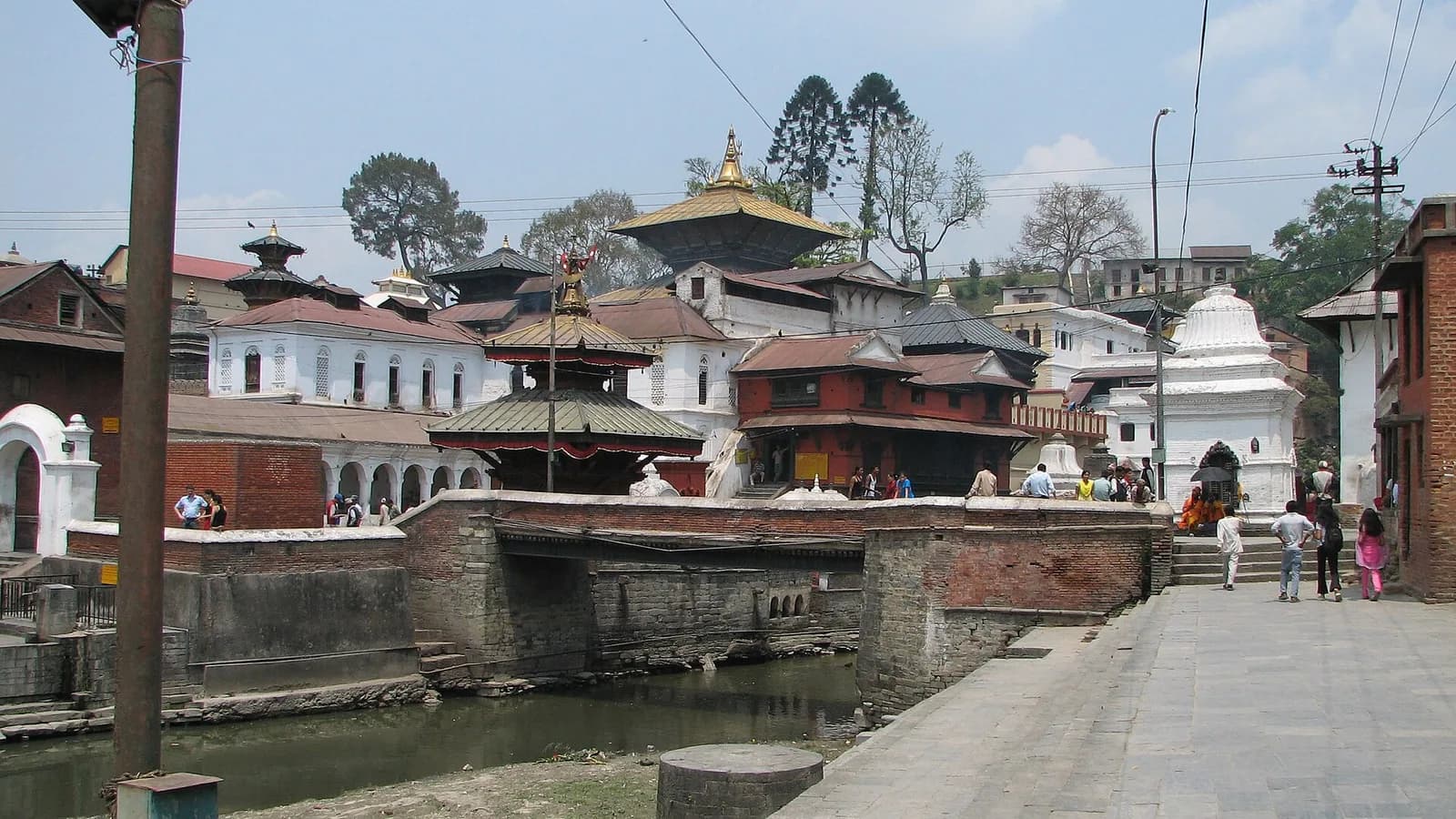
Is Nepal a Hindu country? It is one of the most common questions travellers ask before a trip, and the honest answer is a useful kind of contradiction: yes by population, no by law. More than four in five Nepalis are Hindu — the highest proportion anywhere on Earth — yet since the monarchy fell, Nepal has been a constitutionally secular republic. For a visitor, what matters is less the constitutional theory than how that gap plays out on the ground: which temples you can enter, what etiquette is expected, and where to witness living faith.
This is the practical, traveller-focused companion to our full explainer on Nepal's religion, which covers the census figures, the monarchy-to-republic timeline and the deep Hindu-Buddhist blend in detail. Here we keep our eyes on the road: what the Hindu-majority secular state means for you as you move through the country in 2026.
Key takeaways
- Nepal is roughly 81% Hindu (2021 census) but is officially a secular state, not a Hindu kingdom — that ended in 2008.
- The "secular" label still protects the age-old (sanatana) tradition, so Hinduism shapes daily life far more than the law alone suggests.
- As a tourist you are welcome at almost every sacred site, but a few inner sanctums (notably Pashupatinath) are reserved for Hindus.
- Nepal's anti-conversion law targets active proselytising, not ordinary visitors — observe and respect, don't preach.
- Modest dress, removing shoes, and walking clockwise around shrines cover most of the etiquette you need.
The short answer for travellers
If a Nepali friend tells you "we are a Hindu country" and a guidebook tells you "Nepal is secular," both are right.
- Demographically and culturally, it is profoundly Hindu. Hinduism runs through the calendar, the food customs, the architecture and the rhythm of the day. The cow is the national animal and is protected by law; roadside shrines receive daily offerings.
- Constitutionally, it is a secular republic. Hinduism is not the state religion, and citizens are free to follow any faith or none.
Until the late 2000s the king was widely revered as an incarnation of the god Vishnu, and the state described itself as the world's only Hindu kingdom. That formal status is gone, but its cultural gravity remains — which is exactly why the question keeps coming up. For the full demographic breakdown and history, see the Nepal religion guide.
How Nepal went from Hindu kingdom to secular state
The change was recent and rapid, bundled into the end of the monarchy and the civil conflict.
| Year | What changed | |---|---| | Pre-2006 | Nepal is the world's only official Hindu kingdom | | May 2006 | Parliament declares Nepal a secular state | | 2007 | The interim constitution confirms secularism | | 2008 | The monarchy is abolished; Nepal becomes a federal republic | | 2015 | The permanent constitution enshrines the secular state |
So when you visit today, you are in a republic barely older than a teenager, where the memory of a Hindu monarchy is still fresh in many people's lives. That recency helps explain why a minority of Nepalis still campaign for the restoration of a Hindu state — religion remains a live political topic, not a closed chapter.
A secularism with a Hindu accent
Nepal's secularism is not the strict separation of religion and state found in France or the United States. The constitution defines "secular" in a distinctly local way: it guarantees religious and cultural freedom while pledging to protect the sanatana — the age-old, eternal religion and culture handed down from ancient times. That phrase is widely understood to point to Hinduism. The result is a state that is officially neutral yet quietly protective of its Hindu heritage. As a traveller you will feel this everywhere: secular on paper, saturated with Hindu ritual in practice.
What this means for visiting temples
For most tourists, the "Hindu country or secular state" question becomes concrete at the temple gate. The good news: you are welcome at the overwhelming majority of sacred sites, Hindu and Buddhist alike. A small number of Hindu inner sanctums, however, are reserved for followers of the faith.
| Site | Tradition | Can non-Hindus enter? | |---|---|---| | Pashupatinath | Hindu (Shiva) | Not the main temple; the wider complex and river terraces, yes | | Boudhanath | Buddhist | Yes, fully | | Swayambhunath | Buddhist (Hindu shrines too) | Yes, fully | | Muktinath | Hindu and Buddhist | Yes | | Most valley temples | Hindu / shared | Usually yes; respect any posted limits |
Pashupatinath: the one rule to remember
Pashupatinath, on the banks of the Bagmati river in Kathmandu, is the holiest Shiva temple in Nepal and one of the most revered in the entire Hindu world. Entry to the main temple and its inner sanctum is restricted to Hindus. That is not a snub to visitors — it is a long-standing rule at many of Hinduism's most sacred shrines across South Asia.
Non-Hindus still get an extraordinary experience: you can explore the vast outer complex, the subsidiary shrines and the deer park, watch the cremation rituals on the ghats from a respectful distance, and view the golden temple from the terraces across the river. The evening aarti ceremony is open to all and is one of Kathmandu's most moving sights. There is a foreigner entry fee of around NPR 1,000 (about USD 10, as of June 2026) for the complex; confirm the current rate on arrival, as fees change.
By contrast, the great Buddhist stupas of Boudhanath and Swayambhunath are open to everyone — a reminder that Nepal's sacred landscape is shared, not single-faith.
Etiquette: how to be a respectful visitor
Because Hinduism is woven so tightly into daily life, a little etiquette goes a long way. None of this is hard, and locals are forgiving of honest mistakes. Our full temple etiquette guide for tourists has the details; the essentials:
- Dress modestly. Cover shoulders and knees. Some Hindu temples also ask you to remove leather items such as belts and bags.
- Take off your shoes before entering temple buildings, and often before stepping onto a shrine platform.
- Walk clockwise around stupas, temples and shrines — keep the sacred object on your right.
- Ask before photographing people at worship, cremations or inside sanctums; photography is often banned in inner areas.
- Don't touch offerings or idols unless invited, and step around, not over, items placed on the ground.
- Receive and give with your right hand, or both hands, rather than the left.
These customs are part of the wider fabric of Nepali culture and everyday etiquette, and observing them marks you as a thoughtful guest rather than just a sightseer.
The conversion law — and why it rarely concerns tourists
One genuinely Nepali wrinkle in the secular-state picture is the anti-conversion law. The constitution and a 2017 criminal-code provision prohibit attempts to convert someone from the sanatana tradition through inducement or coercion, with penalties that can include imprisonment and a fine. Human-rights groups and the Christian minority have criticised the law as restricting religious freedom.
For an ordinary traveller, the practical takeaway is simple: observe and participate, but do not proselytise. Visiting churches, mosques, gompas and temples, joining festivals, buying ritual items and asking questions are all completely normal. Actively trying to convert people, or handing out missionary material, is where the law draws its line. Keep your interest cultural and curious and you will never encounter it.
Religious harmony you can see for yourself
Nepal's reputation for religious tolerance is largely earned, and as a visitor you will witness it directly. Centuries of Hindu-Buddhist coexistence created a shared religious culture rather than rival camps.
- At Swayambhunath, Hindu shrines stand within a Buddhist stupa complex.
- Many Hindus revere the Buddha as an avatar of Vishnu, and Nepal is itself the birthplace of the Buddha at Lumbini.
- The indigenous Newar people of the Kathmandu Valley routinely worship at both Hindu and Buddhist temples.
- Major festivals spill across communities, drawing in neighbours of every faith.
This blend is covered in depth in our Buddhism in Nepal guide, but you do not need to read about it to feel it — a single afternoon in the valley makes the point.
Where to witness living faith on your trip
If you want to understand why Nepal feels like a Hindu country even though it is legally secular, time your visit around a festival or build a day around its sacred sites.
- Dashain — the great Hindu festival honouring the goddess Durga; see our Dashain guide for tourists.
- Tihar — the five-day festival of lights; covered in our Tihar guide.
- Holi — the spring festival of colours, with a distinct Nepali flavour.
- Maha Shivaratri — a vast night-long gathering of pilgrims and sadhus at Pashupatinath.
Away from the festival calendar, the temples of Nepal — from the Shiva shrine of Pashupatinath to the high-altitude Muktinath, sacred to Hindus and Buddhists alike — let you read the country's faith straight off the landscape.
The bottom line
So, is Nepal a Hindu country? For the traveller, the most useful answer is: it is a Hindu-majority society inside a secular republic, and you will spend your trip in the space between those two truths. You will be welcomed almost everywhere, asked to step around a handful of Hindu-only sanctums, expected to dress modestly and tread respectfully, and rewarded with one of the richest living religious cultures on the planet. Come curious, follow the simple etiquette, and let the temples, stupas and festivals explain the rest. For the full story behind the numbers, read our companion guide to Nepal's religion.
Sources
Frequently asked questions
- Is Nepal a Hindu country?
- By population, yes — about 81% of Nepalis are Hindu, the highest share of any nation. By law, no. Since 2015 Nepal has been a secular republic that guarantees freedom of religion to all faiths.
- When did Nepal stop being a Hindu state?
- Parliament declared Nepal secular in May 2006, the interim constitution confirmed it in 2007, the monarchy was abolished in 2008, and the permanent 2015 constitution enshrined the secular state.
- Can tourists visit Hindu temples in Nepal?
- Mostly yes, but some inner sanctums are reserved for Hindus. At Pashupatinath, non-Hindus cannot enter the main temple but can explore the wider complex and view it from across the Bagmati river.
- Does Nepal's anti-conversion law affect tourists?
- It is not aimed at ordinary visitors. The 2017 law penalises trying to convert people through inducement or coercion, so avoid proselytising; simply observing, photographing respectfully and joining festivals is fine.
- Is it safe to travel in Nepal as a non-Hindu?
- Yes. Nepal has a long tradition of religious tolerance, communal violence is rare, and visitors of any faith or none are welcome at the vast majority of sacred sites and festivals.
- What should I wear to visit a temple in Nepal?
- Dress modestly with shoulders and knees covered, remove your shoes before entering, and at some Hindu sites avoid leather items. Walk clockwise around stupas and shrines.
- Why is Nepal called secular if most people are Hindu?
- Secular here means the state has no official religion and protects all faiths, while a clause pledges to safeguard the age-old sanatana tradition — language widely read as referring to Hinduism.
Related posts
The Dashain Festival Explained — Meaning and Rituals
What is the Dashain festival? A clear guide to the meaning, mythology, and day-by-day rituals of Nepal's biggest Hindu celebration of good over evil.
Read postNepal Religion: Is Nepal a Hindu Country? (2026)
Nepal religion explained: 81% Hindu, 8% Buddhist, plus Islam and Kirat. Is Nepal a Hindu country? Why it's a secular state, and how faith shapes life.
Read postThe Tihar Festival Explained — Meaning and Five Days
What is the Tihar festival? A clear guide to the meaning, mythology, and five days of rituals behind Nepal's festival of lights, animals, and siblings.
Read post