The Dashain Festival Explained — Meaning and Rituals
What is the Dashain festival? A clear guide to the meaning, mythology, and day-by-day rituals of Nepal's biggest Hindu celebration of good over evil.
At its core Dashain is one story told two ways — a goddess and a prince, each defeating a demon, each standing for good outlasting evil.
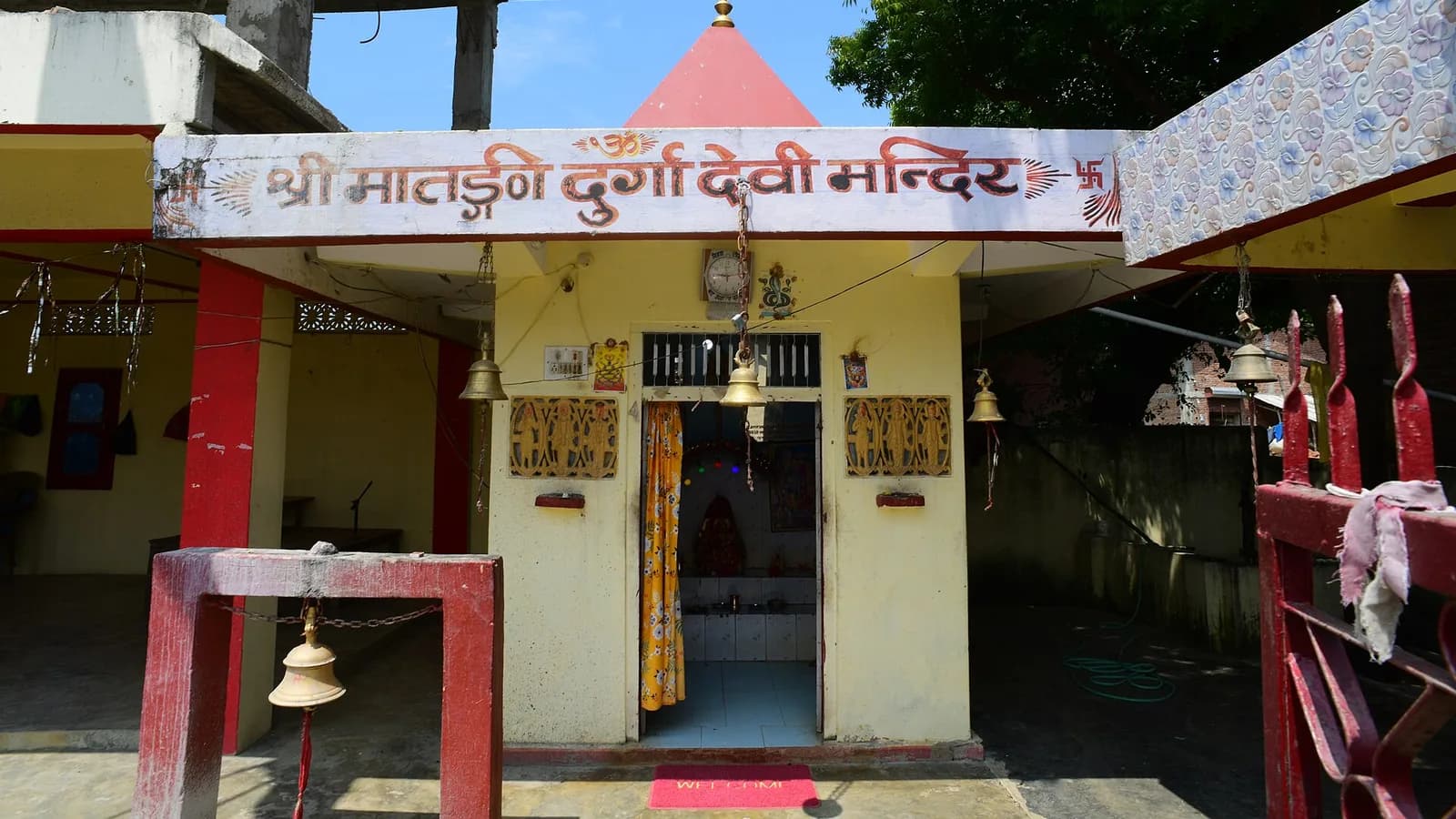
If you have heard Nepal grinds to a joyful halt for two weeks every autumn, the Dashain festival is the reason. It is the country's biggest and longest Hindu celebration — fifteen days devoted to the victory of good over evil, the worship of the goddess Durga, and above all the gathering of families. For Nepalis it is the emotional center of the year, the holiday people travel hundreds of kilometers to spend at home. This guide explains what Dashain actually is: the mythology behind it, the meaning of its central rituals, and a plain-language walk through the days that matter most.
It pairs with our on-the-ground Dashain tourist guide, which covers what the festival feels like as a visitor — the empty streets, the closures, and the etiquette. Think of this page as the "what and why," and that one as the "what it's like."
Key takeaways
- Dashain is Nepal's largest Hindu festival, a fifteen-day celebration of good triumphing over evil.
- It honors the goddess Durga and draws on two myths: Durga defeating Mahishasura and Rama defeating Ravana.
- The tenth day, Vijaya Dashami, is the climax, when elders give tika and jamara as blessings.
- Tika (rice, yogurt, vermilion) and jamara (barley grass) are the festival's signature symbols.
- Animal sacrifice to Durga features on days eight and nine and is the most confronting element for visitors.
- It is above all a family festival — the year's great homecoming and reunion.
What Dashain actually celebrates
At heart, Dashain marks the victory of good over evil, and it tells that idea through two intertwined Hindu stories. The first and central one is the goddess Durga's defeat of Mahishasura, a powerful buffalo-demon who had overrun the realm of the gods. After a long battle the goddess slays him, restoring cosmic order — and the nine nights of fighting are echoed in the nine days of worship that lead up to Dashain's climax.
The second story is the one many travelers already half-know from across the region: the prince Rama's defeat of the demon king Ravana, who had abducted his wife Sita. Rama's triumph is celebrated on the same tenth day, which is why that day carries the name Vijaya Dashami — literally the "victory on the tenth." The word Dashain itself comes from the Sanskrit for "tenth," fixing the whole festival to that decisive day.
Both legends land on the same moral, and that overlap is the point. Whether you frame it through Durga or through Rama, Dashain is a fifteen-day meditation on the same reassurance: that good, after struggle, outlasts evil.
The names you will hear
Dashain travels under several names. You will see it written as Bada Dashain (the "great" Dashain), Bijaya Dashami, and Nauratha, the last derived from Navaratri, the "nine nights" of Durga worship that the festival shares with the wider Hindu world. For the calendar logic behind these days — which lunar month they fall in and why the dates move yearly — see our companion piece on when Dashain falls and how the dates are set.
The rituals, day by day
Dashain's fifteen days are not all the same intensity. A handful of marked days give the festival its shape.
Ghatasthapana — the opening (day 1)
The festival begins with Ghatasthapana, the "establishing of the pot." At an astrologically chosen time, families set up a sacred water vessel — the kalasha — representing the goddess, and sow barley seeds in a bed of sand and soil. Kept in dim light and watered daily, these seeds grow over the following days into the pale-yellow grass called jamara, which becomes central on the main day. From this point a lamp is often kept burning and Durga is worshipped in the home.
The quieter middle (days 2–6)
The next several days are inward and domestic: daily prayers and offerings to Durga in her various forms, temple visits, and preparation. For a visitor these days look comparatively normal, with the city still busy as people shop for new clothes, gifts, and feast supplies.
Phulpati — the shift (day 7)
On the seventh day, Phulpati marks the move into the festival's most intense phase. The name joins phul (flower) and pati (leaves): it refers to a ceremonial bundle of flowers, sacred leaves, sugarcane, and banana stalks that is carried in procession. Historically a grand Phulpati procession travels to Kathmandu's old royal square. From here, the cities visibly begin to empty as people head to their family homes.
Maha Ashtami and Maha Nawami — the intense days (days 8–9)
The eighth and ninth days, Maha Ashtami and Maha Nawami, are the most ritually charged. This is when animal sacrifice — chiefly goats and buffalo — is offered to Durga at temples, homes, and public squares, with the meat later cooked into the family feast. Tools, vehicles, and instruments are also blessed on these days. For travelers, the sacrifices are the festival's most jarring sight; our tourist guide explains how to navigate or avoid them.
Vijaya Dashami — the climax (day 10)
The tenth day is the one everything builds toward. On Vijaya Dashami, elders apply tika — a paste of rice, yogurt, and red vermilion — to the foreheads of younger relatives, tuck sprigs of jamara behind their ears, and offer blessings along with money or small gifts. Families travel between households all day to receive tika from their seniors. It is warm, elaborate, and unmistakably the emotional peak of the year. The most auspicious moment to begin is calculated annually by Nepal's calendar committee.
Kojagrat Purnima — the close (day 15)
Dashain winds down on the full-moon day, Kojagrat Purnima. The name means roughly "who is awake": the goddess Lakshmi is believed to descend and bless those who stay awake through the night, tying the festival's end to prosperity and rounding out the fifteen days.
The symbols at the center
A few objects carry the meaning of the whole festival, and you will see them everywhere during Dashain week.
| Symbol | What it is | What it means | | --- | --- | --- | | Tika | Paste of rice, yogurt, and red vermilion | A blessing pressed on the forehead by elders | | Jamara | Yellow barley grass grown from day 1 | A sacred token of growth and prosperity | | Kalasha | The sacred water pot set up at Ghatasthapana | The presence of the goddess in the home | | Phulpati | Bundle of flowers, leaves, and stalks | The auspicious shift into the festival's peak |
The pairing of tika and jamara is the image most associated with Dashain — a red mark and a sprig of yellow grass that together say you are blessed for the year ahead.
A family festival above all
Strip away the mythology and the rituals, and the thing that defines Dashain in practice is reunion. It is the season when Nepal comes home: workers leave the cities, students return from abroad when they can, and three generations gather under one roof to receive tika from the eldest. The feasting is lavish, new clothes are traditional, and for children there are gifts, kite-flying, and tall bamboo swings (linge ping) raised in villages.
This is also why the festival reshapes the country so completely for visitors. When you read that Kathmandu falls quiet or that local restaurants close for days around the main date, the cause is simply that the people who run them are home with family. The same homecoming that makes Dashain meaningful for Nepalis is what makes it such an unusual time to travel — explored fully in our Dashain tourist guide.
Where Dashain fits in the festival year
Dashain does not stand alone. About two weeks after it ends comes Tihar, the festival of lights, a brighter and more outward celebration of oil lamps, marigolds, and animal-honoring days — see our guide to Tihar and Deepawali in Nepal. Together, Dashain and Tihar form the spine of the autumn festival season. Elsewhere in the calendar sit major celebrations like the women's festival of Teej and the spring festival of colors, Holi, each with its own character. Dashain is simply the largest and most deeply felt of them all.
For respectful behavior around the temples and rituals you may encounter during the festival, our guide to temple etiquette for tourists is a useful primer.
The short version
The Dashain festival is Nepal's grand annual celebration of good over evil — told through the goddess Durga and the prince Rama, centered on the tenth-day blessing of tika and jamara, and rooted, above everything, in family. Understand those three threads and you understand Dashain. To see how it plays out for someone actually in Nepal during the festival, read our full Dashain tourist guide next.
Sources
Frequently asked questions
- What is the Dashain festival?
- Dashain is Nepal's largest and longest Hindu festival, a fifteen-day celebration of the triumph of good over evil. It honours the goddess Durga and is the most important family holiday of the year, centred on blessings, feasts, and reunions across the country and the Nepali diaspora.
- What does Dashain celebrate?
- It celebrates two linked victories of good over evil: the goddess Durga slaying the buffalo-demon Mahishasura, and the prince Rama defeating the demon king Ravana. Both stories carry the same message, which is why the festival's tenth day is called Vijaya Dashami, meaning the victory on the tenth.
- What is tika and jamara in Dashain?
- Tika is a paste of rice, yogurt, and red vermilion that elders press onto the foreheads of younger relatives as a blessing on the main day. Jamara is the yellow barley grass grown from seeds sown on the first day of the festival, given alongside the tika as a sacred token of prosperity.
- Why are animals sacrificed during Dashain?
- Animal sacrifice, mainly of goats and buffalo on the eighth and ninth days, is a traditional offering to the goddess Durga. The meat is then cooked for family feasts. The practice is religious and long-standing, though it is debated within Nepal and can be confronting for visitors who are unprepared.
- What is the meaning of Vijaya Dashami?
- Vijaya Dashami means the victorious tenth and is the climax of Dashain. It marks the day good triumphed over evil in both the Durga and Rama legends, and it is when families gather so elders can give tika, jamara, and blessings to the younger generation.
- Is Dashain only celebrated in Nepal?
- Dashain is most strongly associated with Nepal, where it is the national festival, but it is also observed by Nepali and Gorkha communities in the Indian regions of Sikkim, Darjeeling, and Assam, and by the wider Nepali diaspora worldwide. It overlaps with the broader Hindu festival of Navaratri and Dussehra.
- How is Dashain different from Tihar?
- Dashain is family-focused and inward, built around the goddess Durga, tika blessings, and reunions over fifteen days. Tihar, which follows about two weeks later, is the festival of lights, known for oil lamps, marigold garlands, and days devoted to honouring animals. The two together form Nepal's main festival season.
Related posts
The Tihar Festival Explained — Meaning and Five Days
What is the Tihar festival? A clear guide to the meaning, mythology, and five days of rituals behind Nepal's festival of lights, animals, and siblings.
Read postIs Nepal a Hindu Country? A Traveller's Guide
Is Nepal a Hindu country? Yes by population, no by law. What the Hindu-majority secular republic means for tourists on the ground in 2026.
Read postNepal Religion: Is Nepal a Hindu Country? (2026)
Nepal religion explained: 81% Hindu, 8% Buddhist, plus Islam and Kirat. Is Nepal a Hindu country? Why it's a secular state, and how faith shapes life.
Read post