Nepal 15 Day Visa: Cost, Rules, and When to Pick It
The Nepal 15 day visa costs USD 30, is multiple-entry, and suits short trips. Who it fits, who should size up, and how to extend it if plans change.
Fifteen days is plenty for one region — and a trap if you want two.
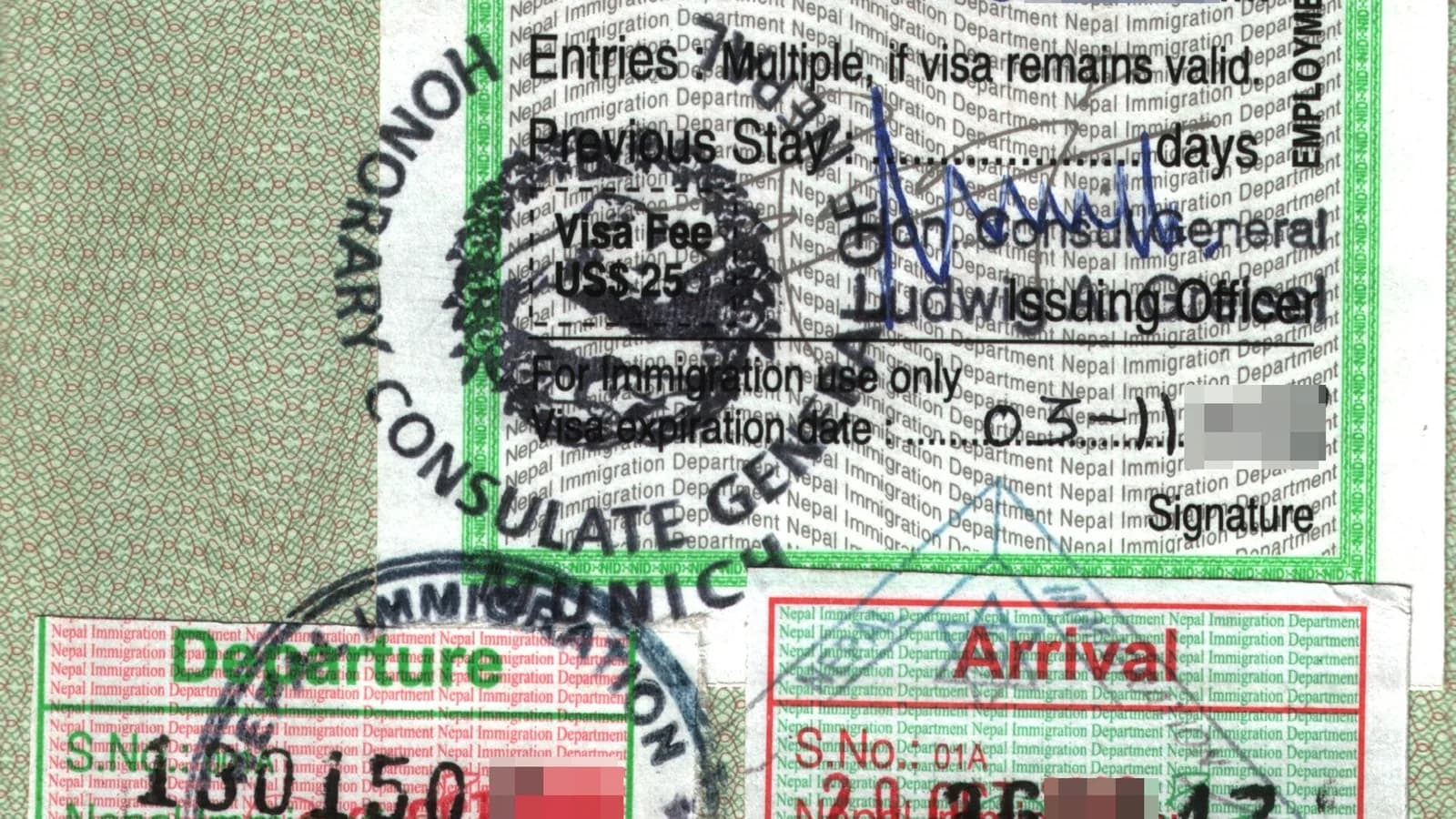
The Nepal 15 day visa is the cheapest tourist visa-on-arrival tier, costing USD 30 (as of June 2026), and it is the right choice for a specific kind of trip: short, focused, and built around one valley or one trek. For everyone else, it is a false economy. This guide explains exactly who the 15-day option suits, who should size up to 30 days, and what to do if your plans stretch once you are already in Kathmandu.
If you want the full airport walkthrough and the eligibility list, start with our Nepal visa on arrival guide and the pre-trip eligibility companion. This post zooms in on the 15-day tier specifically — the cost math, the multiple-entry detail, and the upgrade paths.
Key takeaways
- The 15-day tourist visa costs USD 30 and is issued in 15, 30, or 90-day increments at the airport — you pick the length when you pay.
- It is a multiple-entry visa, so a side trip to India or Bhutan and back is allowed within the validity window.
- You can extend it at a Department of Immigration office: a minimum 15-day extension is USD 45, then USD 3 per day, up to a hard ceiling of 150 days per calendar year.
- Overstaying triggers a USD 5 per day late fine plus the visa fee — and a long overstay can mean deportation.
- For most trips, the 30-day visa (USD 50) is the smarter buy: USD 20 more for double the buffer against Lukla weather and flight delays.
What the 15 day visa actually is
Nepal issues tourist visas on arrival in three fixed lengths only: 15, 30, and 90 days. There is no 7-day or 21-day option — if your trip is ten days, you still buy the 15-day visa. The Department of Immigration, the Nepal Tourism Board, and the US State Department all list the same fee structure.
| Duration | Fee (as of June 2026) | Entry type | Typical use | |---|---|---|---| | 15 days | USD 30 | Multiple | One region, one short trek | | 30 days | USD 50 | Multiple | Standard tourist trip | | 90 days | USD 125 | Multiple | Long treks, multiple regions |
All three tiers are multiple-entry, which surprises a lot of travelers. The 15-day visa is not a single-use stamp — you can cross into India for a few days and re-enter Nepal on the same visa, as long as you are still inside the 15-day window.
The fee is payable in cash in convertible currency. US dollars are the cleanest, and the counters reject torn or marked notes, so bring two crisp USD 20 bills (you will get USD 10 change) or exact change if you have it.
Who the 15 day visa is right for
The 15-day visa fits when your itinerary is genuinely two weeks or shorter and stays in one area. Realistic examples:
- Kathmandu Valley plus a short hike. Three or four days around Kathmandu, Bhaktapur, and Patan, then a Ghorepani Poon Hill trek or the Mardi Himal trek — both comfortably under two weeks.
- Pokhara and the lakes. A relaxed week split between Kathmandu and Pokhara's lakeside, with paragliding and a sunrise viewpoint.
- A single national park. Kathmandu plus a Chitwan safari, which only needs a handful of days.
- A business or transit stop. A few days of meetings in Kathmandu with a re-entry from a regional hub.
If that is your trip, the 15-day visa saves you USD 20 over the 30-day option with no downside. There is no penalty for leaving early — the visa simply expires unused.
Who should size up to 30 days instead
Here is the honest math: the 30-day visa costs USD 50, only USD 20 more than the 15-day. That USD 20 buys you double the validity and a large margin for the two things that most often break Nepal itineraries — mountain weather and flight delays.
Choose 30 days if any of these apply:
- You are flying to or from Lukla. The Everest Base Camp trek runs 12 to 14 days in the best case, but Lukla flights are routinely grounded by cloud. A single weather day can push a 14-day trek past the 15-day visa. Read why in our note on whether Lukla airport is dangerous.
- You want two regions. Everest and Annapurna, or Annapurna and Chitwan, will not fit in 15 days once you account for travel between them.
- You are doing a longer circuit. The Annapurna Circuit and the Manaslu Circuit both run beyond two weeks on their own.
- You like a relaxed pace. Acclimatisation days, a rest day in Namche, a buffer for a stomach bug — these add up fast.
A blown visa is a hassle you fix by queuing at an immigration office mid-trip. For USD 20, most travelers should just buy the headroom up front.
The multiple-entry detail that trips people up
Because every tourist visa-on-arrival tier is multiple-entry, a common question is whether you can "reset" the clock by leaving and coming back. You cannot. The 15-day visa gives you 15 days of validity total, whether you spend them all inside Nepal or split them across a border hop.
If you exit to India for three days in the middle of a 15-day visa, you have used those three days. You re-enter on the same visa with the remaining days, not a fresh 15. The multiple-entry facility is about convenience — making a Bhutan or India side trip painless — not about extending your total stay.
To genuinely add days, you extend (below) or you buy a longer visa to begin with.
Extending a 15 day visa
If your two weeks turn into three, you can extend without leaving the country. Extensions are handled at the Department of Immigration office in Kathmandu (Kalikasthan) and at the Pokhara immigration office.
The rules:
- An extension is granted for a minimum of 15 days at USD 45.
- Beyond that minimum, additional days cost USD 3 per day.
- The absolute ceiling is 150 days on a tourist visa per calendar year (1 January to 31 December), no matter how you combine visas and extensions.
So a traveler who arrives on a 15-day visa and then extends by the 15-day minimum ends up with 30 days for USD 30 + USD 45 = USD 75 — which is USD 25 more than simply buying the 30-day visa for USD 50 at the airport. That gap is exactly why sizing up front is cheaper than fixing it later, if you already suspect you will stay longer.
Extend before your visa expires. You cannot extend a visa that has already lapsed; at that point you are in overstay territory. Our full Nepal visa extension guide covers the office hours, queue tactics, and documents.
What an extension costs at a glance
| Scenario | Cost (as of June 2026) | |---|---| | 15-day visa on arrival | USD 30 | | + minimum 15-day extension | USD 45 | | Each extra day beyond the extension minimum | USD 3 | | Overstay late fine (paid on top of visa fee) | USD 5 per day |
Overstaying: the part to avoid
If your visa lapses, the penalty is a late fine of USD 5 per day on top of the standard visa fee for the overstayed days. You settle it at an immigration office or on departure at the airport. The US State Department warns that any overstay incurs daily fines and that staying beyond 150 days on a tourist visa can lead to deportation.
The fine is not catastrophic for a day or two, but it is entirely avoidable. If you can see your departure slipping, walk into an immigration office and extend while the visa is still valid — it is cheaper and far less stressful than negotiating a fine at the airport with a flight to catch.
Free and discounted cases
Not everyone pays the USD 30. A few documented exemptions apply on arrival:
- Children under 10 generally receive a gratis (free) visa, with the documented exception of US citizens, who pay the standard fee under a reciprocity arrangement. Carry the child's passport or birth certificate to prove age.
- SAARC nationals (except Afghanistan) can receive a free 30-day visa on arrival once per visa year. Beyond that allowance, standard fees apply.
- Non-Resident Nepali cardholders and Chinese nationals also fall under gratis categories per the Nepal Tourism Board.
These are eligibility categories, not loopholes — bring documentation, and confirm the current list on the official immigration site before you rely on them.
Where you can get the 15 day visa on arrival
Visa on arrival is available at Nepal's three international airports and at the major land borders:
- Tribhuvan International Airport (Kathmandu) — the main entry point.
- Pokhara International Airport.
- Gautam Buddha International Airport (Bhairahawa, near Lumbini).
- Land borders with India, including Sunauli, Birgunj, Kakarbhitta, and Nepalgunj.
A short list of nationalities cannot use visa on arrival and must apply at a Nepali embassy in advance — the pre-trip eligibility guide lists who is affected. Entry from Tibet is the other exception: the Kerung crossing requires a Chinese-issued Nepal visa arranged in advance, not an on-arrival one.
Quick decision checklist
Before you choose at the counter, ask yourself:
- Is my trip truly 15 days or less, in one region? If yes, the 15-day visa is right.
- Am I flying Lukla or chaining two trekking regions? If yes, buy 30 days.
- Do I have clean USD cash for the exact fee? The counters are fussy about notes.
- Have I pre-filled the online form? It is valid for 15 days from submission and speeds up the kiosk step.
- Is anyone in my group under 10 or a SAARC national? Check the gratis categories first.
The visa form is the easy part. The real decision is the length — and for most travelers, the USD 20 jump to 30 days is the cheapest insurance you will buy on the whole trip. A few Nepali greetings at the immigration desk do not hurt either.
Sources
Frequently asked questions
- How much does a Nepal 15 day visa cost?
- The Department of Immigration fee is USD 30 for a 15-day tourist visa (as of June 2026), payable in cash in convertible currency, usually clean US dollars.
- Is the Nepal 15 day visa multiple entry?
- Yes. Tourist visas issued on arrival, including the 15-day one, carry a multiple re-entry facility, so you can leave to a neighbouring country and return within the same validity period at no extra charge.
- Can I extend a 15 day Nepal visa?
- Yes. You can extend at a Department of Immigration office; an extension is granted for a minimum of 15 more days at USD 45, then USD 3 per additional day, up to 150 days total in the calendar year.
- Should I get a 15 day or 30 day Nepal visa?
- Pick 15 days only if your trip is genuinely two weeks or shorter and covers one region; otherwise the 30-day visa at USD 50 buys far more buffer for flight delays and weather for just USD 20 more.
- Is the 15 day visa long enough for Everest Base Camp?
- It is tight but possible for the classic 12 to 14 day Everest Base Camp trek if flights run on schedule, though many trekkers choose a 30-day visa to absorb Lukla weather delays.
- Do I have to pick the visa length before I fly to Nepal?
- No. You choose the 15, 30 or 90-day option at the airport visa counter when you pay, so you can decide based on your final itinerary.
- What happens if I overstay my 15 day visa?
- You pay a late fine of USD 5 per day plus the applicable visa fee for the extra days at the Department of Immigration or on departure, and a long overstay can lead to deportation, so extend before the visa expires.
- Can children get a free 15 day visa to Nepal?
- Children under 10 generally receive a gratis visa on arrival, with the documented exception of US citizens who pay the standard fee; carry the child's passport or birth certificate as proof of age.
Related posts
Do I Need a Visa for Nepal? 2026 Answer by Nationality
Do I need a visa for Nepal? Who needs one, who doesn't, who must apply at an embassy, plus 2026 fees and documents — sorted by your passport.
Read postNepal 30 Day Visa: Cost, Rules, and Who It Suits
A focused guide to the Nepal 30 day visa — the USD 50 fee, multiple-entry rules, when to pick it over 15 or 90 days, and how to extend.
Read postNepal e-Visa: Online Application, ETA, and What to Expect
How the Nepal e-visa and ETA system actually works in 2026 — what you can do online, what still happens at the airport, fees, and documents.
Read post