Nepal e-Visa: Online Application, ETA, and What to Expect
How the Nepal e-visa and ETA system actually works in 2026 — what you can do online, what still happens at the airport, fees, and documents.
Online you fill the form. At the desk you still meet an officer.
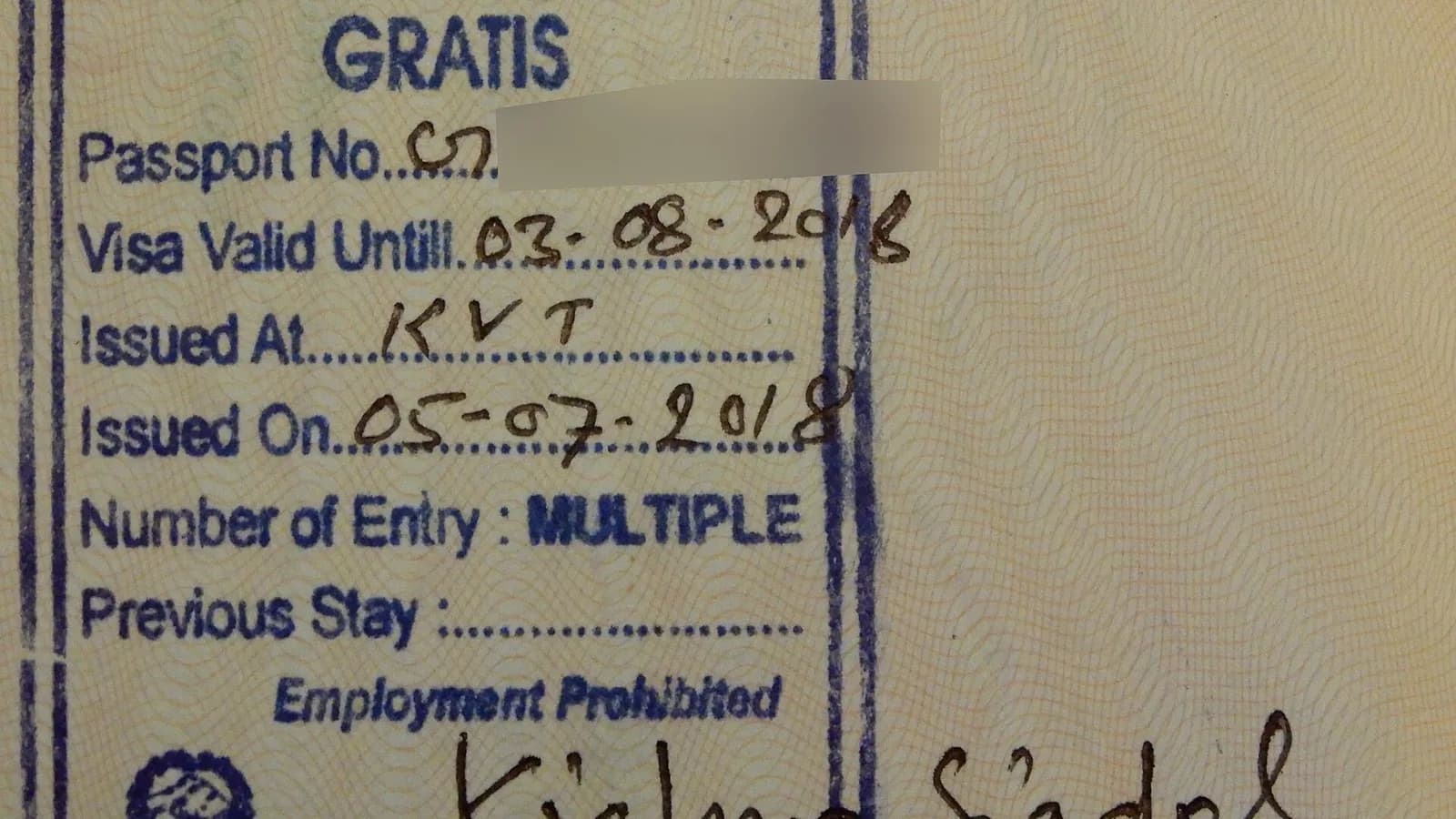
If you are searching for a "Nepal e-visa," here is the honest version up front: for tourists, Nepal does not yet issue a full electronic visa that arrives in your inbox before you fly. What it does have — since February 2024 — is an online application and Electronic Travel Authorization (ETA) system that lets you fill the form ahead of time and link an approval to your passport. The actual tourist visa is still stamped into your passport when you land. Understanding that distinction saves a lot of confusion at the immigration desk.
This guide explains what the Nepal e-visa process really involves, what you can finish online versus what still happens at Tribhuvan International Airport, the current fees, and the documents to have ready. For the on-the-ground airport tactics, our companion piece on the Nepal visa on arrival in 2026 covers the queue itself in detail.
Key takeaways
- For tourists there is no full pre-issued e-visa; you apply online, but the visa sticker is granted on arrival.
- Nepal's ETA (Electronic Travel Authorization) system launched on 13 February 2024 and lets you submit details and link an approval to your passport in advance.
- Official tourist visa fees are USD 30 (15 days), USD 50 (30 days), and USD 125 (90 days) as of June 2026.
- Most visitors pay the fee in cash at the airport; online payment typically requires a Nepali gateway like Khalti or ConnectIPS.
- Your passport needs at least six months validity and one blank page; tourist visas carry a multiple-entry facility.
- Apply roughly 15 days before arrival — applications are auto-deleted from the system after about 15 days.
What "Nepal e-visa" actually means
The phrase gets used loosely. Three different things hide behind it:
- The online visa application form on the Department of Immigration website, which you can fill before you travel.
- The ETA (Electronic Travel Authorization), an approval electronically linked to your passport once your online application is processed.
- The airport kiosk form, a self-service version of the same application you complete on arrival if you skipped the online step.
None of these is a stamped visa by itself. The Department of Immigration is explicit that the tourist visa is issued at the point of entry. So even with an ETA confirmation in hand, you still pass through immigration in Kathmandu (or at a land border) to receive the visa. The benefit of doing it online is speed and a calmer arrival, not skipping immigration.
Why Nepal built the ETA system
In February 2024, Nepal introduced an automated platform offering ETA and online visa processing, accessible through the government's Nepali Port web application. The goal was to cut down the multi-step scramble in the arrivals hall — scanning a passport at a kiosk, filling a form, queuing to pay — by moving the form-filling online and tying an approval to your travel document ahead of time.
Who can use visa on arrival (and who can't)
Most nationalities can obtain a tourist visa on arrival, which is what the online form feeds into. A short list of countries must instead apply at a Nepali diplomatic mission in advance and cannot use visa on arrival. That excluded list has historically included nationals of a handful of states; because it can change, verify your own passport against the current list on the Department of Immigration website before booking flights. Our Nepal visa on arrival 2026 guide lists the countries that were excluded at the time of writing.
If your nationality is not on the excluded list, the online application plus arrival process described here applies to you.
Nepal tourist visa fees
Fees are set by duration and are the same whether you pre-apply online or fill the form at the airport. The table below reflects official figures as of June 2026 — always reconfirm on the immigration site, as rates are reviewed periodically.
| Duration | Fee (USD, as of June 2026) | Typical use | |---|---|---| | 15 days | USD 30 | A short Kathmandu Valley visit plus one quick trek | | 30 days | USD 50 | The standard tourist trip — most travelers choose this | | 90 days | USD 125 | Longer treks, multiple regions, or a festival-season stay |
A few important fee notes:
- Multiple entry is included. Tourist visas obtained on arrival carry a multiple re-entry facility, so you can dip into India or Bhutan and come back without buying a new visa.
- SAARC citizens (except one nationality) get a gratis 30-day visa once per visa year. This free visa applies to the first visit in a calendar year (January–December); a second visit the same year is charged at standard rates.
- Children under 10 generally receive a gratis visa, with US citizens noted as an exception under reciprocity rules.
- Maximum stay is 150 days per visa year on a tourist visa, counted across the calendar year.
For a deeper breakdown of costs including extensions and comparisons, see our Nepal visa cost guide.
Documents and photo you need
Whether you apply online or at the kiosk, prepare the same essentials:
- A passport valid for at least six months from your date of entry, with at least one blank page.
- A recent digital photograph for the online form. Immigration guidance specifies a square photo (around 1.5 by 1.5 inches) saved on a device you can upload from.
- Contact details — an email address plus telephone numbers, which the online form requests.
- USD cash for the fee if you intend to pay at the airport (clean, unmarked bills; exact amounts are easiest).
If you fill the form at the airport kiosk instead, the machine can usually take your photo on the spot, but carrying a spare passport-size photo is a sensible backup in case a kiosk camera is down.
How to apply online, step by step
The online route is a pre-arrival convenience. Here is the realistic flow:
1. Open the official portal
Go to the Department of Immigration website and find the online visa application (the government's Nepali Port / ETA portal). Use only the official government domain — there are many third-party "visa service" sites that charge extra to submit the same free government form on your behalf.
2. Fill the application
Enter your passport details, travel dates, contact information, and upload your digital photo. Apply around 15 days before arrival; the system holds your application for about 15 days and then deletes it automatically, so applying too early means re-doing it.
3. Save the receipt
On successful submission, a receipt is emailed to you immediately. Print it and keep it with your travel documents — you may need to show it to the immigration authority on arrival. Once processed, the ETA approval is electronically linked to your passport.
4. Arrive and complete at immigration
With an ETA linked to your passport, you can head toward the immigration desk rather than fussing with the kiosks. You still pass through immigration, pay the fee (typically in cash), and receive your visa sticker.
The payment catch
Here is the limitation that surprises many travelers: you generally cannot pay the fee from abroad unless you can use a Nepali payment gateway such as Khalti or ConnectIPS — which most foreign visitors do not have access to. In practice that means the online form pre-fills your details and may generate an ETA, but you still settle the fee on arrival, almost always in cash. Budget for USD cash regardless of whether you completed the form online. If you need local currency afterward, our Nepal ATM withdrawal guide explains where to draw cash without heavy fees.
Online application versus airport kiosk
If you skip the online step entirely, nothing is lost — you simply do the same form at a self-service kiosk in the arrivals hall, then pay and proceed to immigration. The trade-off is time and stress, not eligibility.
| Aspect | Apply online (ETA) | Fill at airport kiosk | |---|---|---| | Where you fill the form | At home, before flying | In the arrivals hall on arrival | | Photo | Upload a digital photo | Kiosk camera (bring a spare) | | ETA linked to passport | Yes, once processed | No — done in person | | Payment | Usually still on arrival (cash) | On arrival (cash) | | Best for | Peak-hour arrivals, families, anyone wanting a calm landing | Last-minute travelers, short layovers in planning |
For travelers landing in the busy afternoon cluster of Gulf and Bangkok flights, pre-filling online is the single easiest way to shorten your time in the hall. The mechanics of the queue — which line to join first and how to avoid the worst crush — are in our visa on arrival walkthrough.
Land borders and entry points
Visa on arrival, fed by the same application, is available at Tribhuvan International Airport in Kathmandu and at major land crossings from India, including Sunauli/Belahiya, Birgunj/Raxaul, Kakarbhitta/Panitanki, and Nepalgunj/Rupaidiha. The documents and fees match the airport; the process is more manual and can take longer at a busy land post.
One exception worth flagging: entering overland from Tibet at the Kerung/Rasuwagadhi crossing, travelers generally need a Nepal visa arranged in advance through a Chinese-issued route rather than relying on visa on arrival. Confirm current rules with the immigration department if your trip starts in Tibet.
Extending your stay or overstaying
A tourist visa can be extended up to the 150-day annual maximum at the Department of Immigration in Kathmandu (Kalikasthan) and the Pokhara office. Extensions are paid in USD and priced per day, with a minimum extension period. We cover the exact steps and costs in the Nepal visa extension guide.
Overstaying is treated seriously. Official guidance requires settling any fine before departure, and published daily rates vary across sources, so do not rely on a single quoted figure — check the Department of Immigration's penalty page directly and clear any dues at the airport before you fly out. Overstaying can, in serious cases, lead to penalties beyond a simple fine.
Common mistakes to avoid
- Assuming you have a stamped visa because you got an ETA. You still go through immigration on arrival.
- Paying a third-party site. The government form is free to submit; agents charge for convenience you may not need.
- Applying online too early. The application is wiped after about 15 days — time it to roughly two weeks before arrival.
- Arriving without USD cash. Online payment rarely works for foreign visitors; cash settles the fee.
- Forgetting passport validity. Six months from entry, with a blank page — check this weeks ahead, not at the airport.
A smoother arrival
The Nepal e-visa story is really a story about expectations. Treat the online application as a head start — a way to walk off the plane with your details already in the system and an ETA linked to your passport — rather than a golden ticket past immigration. Bring clean USD cash, a valid passport, and a digital photo, and the formalities take minutes.
Once you are through, the country opens up fast. Brush up on a few Nepali greetings before you reach the desk — an officer always warms to a "Namaste" — and when you step out into the taxi scrum, our taxi scenario script helps you settle a fair fare into the city. If trekking is the plan, line up the right paperwork next with our overview of Nepal trekking permits.
Sources
- Department of Immigration, Nepal — Tourist Visa
- Department of Immigration, Nepal — Visa on Arrival
- Department of Immigration, Nepal — Online Visa Application
- Nepali Port — ETA Visa Processing
- Nepal Tourism Board — Tourist Visa Information
- Department of Immigration, Nepal — Penalty for violation of immigration rules
- U.S. Department of State — Nepal Travel Information
Frequently asked questions
- Is there a true Nepal e-visa you get before you fly?
- Not for tourists in the usual sense. You apply online to pre-fill the form and get an ETA receipt, but the tourist visa sticker is still issued on arrival in Nepal.
- What is the ETA system?
- ETA stands for Electronic Travel Authorization. Nepal launched it in February 2024 to let travelers submit visa details online and link an approval to their passport before arrival.
- How much does a Nepal tourist visa cost?
- As of June 2026, official fees are USD 30 for 15 days, USD 50 for 30 days, and USD 125 for 90 days. Confirm current rates on the Department of Immigration site before you fly.
- Do I pay the visa fee online or at the airport?
- Most travelers pay at the airport in cash. Online payment generally needs a Nepali payment gateway such as Khalti or ConnectIPS, which most foreign visitors cannot use.
- How far in advance should I apply online?
- The immigration department suggests applying about 15 days before arrival. Submitted applications are kept in the system for roughly 15 days and then deleted automatically.
- Does my passport need six months validity?
- Yes. Regardless of nationality your passport should be valid for at least six months from your date of entry and have at least one blank page.
- Is the tourist visa single or multiple entry?
- Tourist visas issued on arrival carry a multiple-entry facility, so you can leave and re-enter Nepal during the validity period — useful for side trips to India or Bhutan.
- Do children get a free visa?
- Nepal grants gratis visas to children under 10 from most countries, with US citizens a noted exception under reciprocity rules. Check the current policy before travel.
Related posts
Do I Need a Visa for Nepal? 2026 Answer by Nationality
Do I need a visa for Nepal? Who needs one, who doesn't, who must apply at an embassy, plus 2026 fees and documents — sorted by your passport.
Read postNepal 15 Day Visa: Cost, Rules, and When to Pick It
The Nepal 15 day visa costs USD 30, is multiple-entry, and suits short trips. Who it fits, who should size up, and how to extend it if plans change.
Read postNepal 30 Day Visa: Cost, Rules, and Who It Suits
A focused guide to the Nepal 30 day visa — the USD 50 fee, multiple-entry rules, when to pick it over 15 or 90 days, and how to extend.
Read post