Ghorepani Poon Hill Trek: A Beginner's Guide
Plan the Ghorepani Poon Hill trek — the famous Poon Hill sunrise, route and itinerary, permits, costs and best season in the Annapurna foothills.
One pre-dawn climb to Poon Hill and a whole wall of Annapurna and Dhaulagiri turns gold — this is the easiest big-mountain sunrise in Nepal.
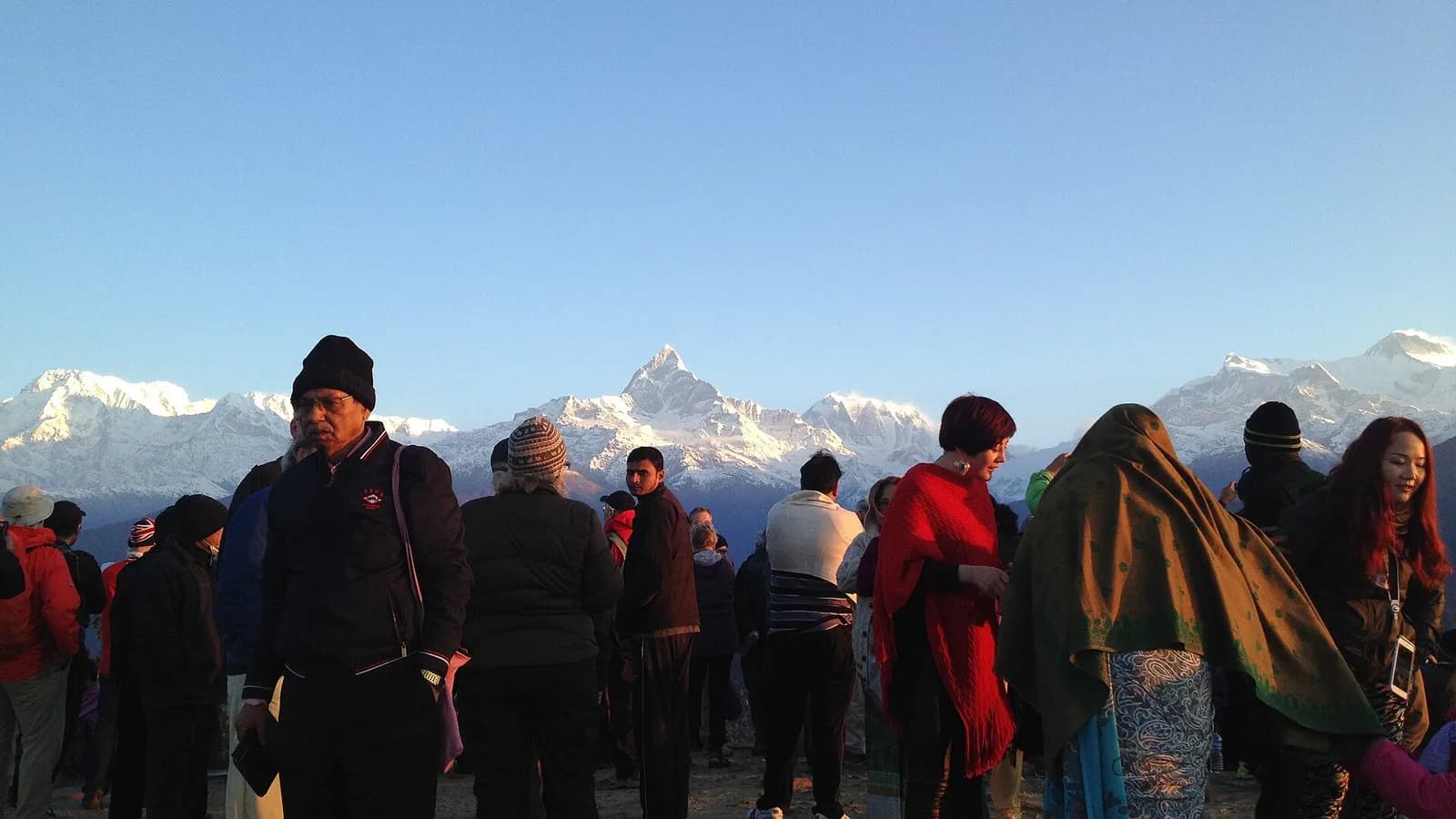
The Ghorepani Poon Hill trek is the classic introduction to Himalayan trekking in Nepal — a short, scenic loop in the Annapurna foothills that rewards a pre-dawn climb with one of the most famous mountain sunrises in the country. From the viewpoint at Poon Hill (about 3,210 m), a whole horizon of Annapurna, Dhaulagiri and the fishtail spire of Machhapuchhre turns gold as the sun comes up. Because the altitude stays moderate and you sleep in cosy teahouses rather than tents, it is a favourite for fit beginners, families and anyone short on time. This guide covers the route and itinerary, permits and rules, costs, the best season, and how the trek links into the wider Annapurna trails.
It shares the same southern Annapurna country as the Annapurna Base Camp trek, and many of its villages — including the Gurung hub of Ghandruk — sit on both routes.
Key takeaways
- Poon Hill (around 3,210 m) delivers a sunrise panorama of Annapurna, Dhaulagiri and Machhapuchhre — the trek's signature moment.
- Most trekkers complete the loop in four to five days from Pokhara, including the drives to and from the trailhead.
- Altitude is modest, so the trek is rated easy to moderate; the toughest stretch is the long stone staircase up to Ulleri.
- You need an ACAP entry permit (NPR 3,000 for foreigners as of June 2026), and since 2023 foreign trekkers must walk with a licensed guide rather than solo.
- Spring and autumn give the clearest skies; spring also brings the rhododendron blooms the trail is known for.
Why Poon Hill is so popular
Poon Hill earns its reputation honestly. Within a few days' walk of Pokhara, it stacks a genuine high-mountain sunrise, terraced hill villages, oak and rhododendron forest, and warm teahouse hospitality into a trip that almost anyone reasonably fit can manage. There is no technical climbing, no glacier travel and no extreme altitude — just a steady walk through some of the most photogenic foothill scenery in the Himalaya.
The headline view comes from the Poon Hill viewpoint itself, perched just above Ghorepani village. On a clear morning the panorama runs across the Annapurna massif and over to Dhaulagiri (8,167 m), one of the world's highest mountains, with the unmistakable fishtail outline of Machhapuchhre anchoring the scene. Skies are typically clearest at first light, which is why trekkers set off in the dark to be standing on top as the sun rises.
The trail also passes through living Gurung and Magar villages, where stone houses and slate roofs climb the hillsides. To understand who lives in these hills, see our background on the Gurung people.
Route and elevation
The trek is usually walked as a loop from Pokhara, with road transfers at each end to a trailhead such as Nayapul or Hile. From there the path follows the Modi Khola valley, climbs the famous stone steps to Ulleri, continues up through forest to Ghorepani, summits Poon Hill for sunrise, then descends via Tadapani and Ghandruk back to the road.
Key elevations
| Point | Approx. elevation | Notes | |---|---|---| | Pokhara (start) | ~820 m | Lakeside town and trek hub | | Tikhedhunga / Hile | ~1,500–1,570 m | Lower valley overnight | | Ulleri | ~1,960 m | Top of the long stone staircase | | Ghorepani | ~2,860 m | Highest overnight village | | Poon Hill viewpoint | ~3,210 m | Sunrise high point | | Ghandruk | ~1,940 m | Gurung village on the descent |
Elevations are approximate and vary slightly between operators and maps. The single most demanding section is the climb to Ulleri — a long staircase of stone steps that is a real test of stamina, though entirely non-technical.
Suggested itinerary
There is no one fixed schedule; operators flex the route by a day depending on where you start and whether you add side trips. A common, comfortable four to five day plan looks like this.
| Day | Route | Walking time (approx.) | Overnight | |---|---|---|---| | 1 | Drive Pokhara to trailhead, trek to Tikhedhunga/Hile | 3–4 hrs walk | Tikhedhunga area | | 2 | Trek up the Ulleri steps to Ghorepani | 6–7 hrs | Ghorepani (~2,860 m) | | 3 | Pre-dawn climb to Poon Hill for sunrise, then trek to Tadapani | 6–7 hrs | Tadapani | | 4 | Trek to Ghandruk, drive back to Pokhara | 3–4 hrs walk | Pokhara |
The climb from Ghorepani up to Poon Hill itself is short — many trekkers do it in around 45 minutes in the dark, head-torch on, so they reach the top before first light. Shorter two to three day versions skip the lower valley by starting higher at Ulleri, while longer trips fold in extra nights or connect onward to other trails.
Permits, rules and guides
The whole trek lies inside the Annapurna Conservation Area, managed by the Annapurna Conservation Area Project (ACAP), so a few rules apply.
ACAP entry permit
Every trekker needs the ACAP entry permit. As of June 2026 it costs NPR 3,000 for foreign nationals and NPR 1,000 for SAARC nationals, with children under 10 generally exempt. Checkpoints along the trail verify this permit, so keep it accessible.
TIMS card
The Trekkers' Information Management System (TIMS) card is listed by the Nepal Tourism Board for Annapurna routes, including the Poon Hill–ABC trails. The system moved to online issuance through registered agencies, and the old "green" independent card for solo trekkers no longer exists. In practice your agency arranges the TIMS card alongside the ACAP permit.
Guides and solo trekking
Since 2023, Nepal requires foreign trekkers in its national parks and conservation areas — Annapurna included — to walk with a licensed guide or porter-guide rather than solo. A guide also handles permits, lodge bookings and route-finding, and is the safest, most rule-compliant way to do the trek. Many agencies also note that valid travel insurance covering mountain emergencies is expected before a permit is issued, so arrange cover before you arrive. For more on cover, see our guide to trekking insurance and helicopter evacuation.
Permits and a guide are arranged through a registered agency in Pokhara or Kathmandu; our notes on choosing a trekking agency can help you compare.
Costs and budgeting
Trek costs vary widely with group size, season, standard of lodge and how you arrange transport, so treat any single quoted price with caution. Rather than a fixed figure, plan around these building blocks:
- ACAP permit — NPR 3,000 per foreign trekker (as of June 2026).
- Guide and/or porter — a daily rate that depends on the operator and the season.
- Teahouse food and lodging — paid per night and per meal on the trail.
- Transport — the road transfers between Pokhara and the trailheads at each end.
Crucially, carry enough Nepali rupees in cash. Card payment and ATMs are essentially unavailable once you leave Pokhara, and lodges, snacks and the odd hot shower all need cash. It is also customary to tip guides and porters at the end; our guide to tipping trekking guides and porters explains the norms.
Best time to go
Two windows stand out for the clearest skies and the best mountain views.
| Season | Months | What to expect | |---|---|---| | Spring | March–May | Clear views plus rhododendron blooms along the trail | | Autumn | Late Sept–Nov | Crisp, stable weather and excellent visibility | | Monsoon | June–early Sept | Green and lush but cloudy, wet and leech-prone | | Winter | Dec–Feb | Cold, quiet, can be crisp and clear, snow possible at Ghorepani |
Spring is especially associated with this trek because the hillsides around Ghorepani turn red and pink with rhododendron — Nepal's national flower — in bloom. Autumn brings the most reliably stable weather. In both shoulder seasons, mornings are clearest before cloud builds over the peaks, which suits the early Poon Hill start perfectly.
What it is like to walk
Expect a mix of stone staircases, forest paths and village lanes rather than wild, exposed trail. You sleep and eat in teahouses — simple family-run lodges that serve hot meals, most famously dal bhat, the lentil-and-rice plate that powers Nepal's trekkers. If teahouse trekking is new to you, our overview of teahouse trekking in Nepal explains how the lodges and meals work.
Because the trek is short and the altitude moderate, it pairs naturally with time in Pokhara at either end. You can recover by Phewa Lake, catch another sunrise from Sarangkot, or add a paraglide; see our roundup of things to do in Pokhara. The Poon Hill loop also slots neatly into a wider Annapurna trip — many trekkers extend it toward Annapurna Base Camp, or compare it with the nearby Mardi Himal trek and the quieter Khopra Ridge trek when deciding which short Annapurna route to walk.
A few practical pointers make the walk more comfortable:
- Footwear and poles. Broken-in boots and trekking poles take the sting out of the Ulleri steps and the long descents.
- Layers. Ghorepani is cool and the pre-dawn summit is cold, even in spring; bring warm layers, a hat and gloves for sunrise.
- Pace and water. The altitude is modest but the climbs are steep — walk steadily, drink plenty, and treat or filter your water.
- Start early. Cloud tends to build over the peaks by mid-morning, so early starts mean better views all day.
Final thoughts
The Ghorepani Poon Hill trek packs an outsized reward into a small number of days: a world-class sunrise over Annapurna and Dhaulagiri, rhododendron forests, and genuine hill-village life, all without the extreme altitude or technical demands of Nepal's bigger routes. Sort your ACAP permit, walk with a licensed guide, pick a spring or autumn window, carry enough cash, and you have one of the most accessible great mountain experiences in the Himalaya.
Sources
- Nepal Tourism Board — TIMS Card
- Annapurna Trek Permits (2025): TIMS & ACAP Explained — Shikhar Adventure
- Annapurna Circuit Trek Permits: Guide, Costs and Rules — Magical Nepal
- Poon Hill — Annapurna View Point — Adventure Great Himalaya
- Ghorepani Poon Hill Trek Itinerary and Cost — About Nepal Treks
- 4 Days Ghorepani Poon Hill Trek — Himalaya Trip
- Nepal Bans Solo Trekkers: Licensed Guides Mandatory — Bold Adventures Nepal
- Nepal 2025 Trekking Rule: Travel Insurance Now Mandatory — Top of the World Adventure
Frequently asked questions
- How many days does the Ghorepani Poon Hill trek take?
- Most people walk it in four to five days starting and finishing in Pokhara, including the drives to and from the trailhead. Shorter two to three day versions exist by starting higher at Ulleri, and longer loops add Ghandruk or Mardi Himal. Four or five days is the comfortable, popular choice for first-timers.
- How high is Poon Hill and is altitude sickness a risk?
- Poon Hill stands at about 3,210 metres, and Ghorepani village sits near 2,860 metres. These heights are modest by Himalayan standards, so serious altitude sickness is uncommon on this trek. You still climb steeply, so walk at a steady pace, drink plenty of water, and tell your guide if you feel unwell.
- Is the Ghorepani Poon Hill trek hard?
- It is rated easy to moderate and suits fit beginners and families. The main challenge is the long stone staircase up to Ulleri, which is a real test of the legs but involves no technical climbing. Good fitness, broken-in boots and trekking poles make the ups and downs much more comfortable.
- What permits do I need for the Poon Hill trek?
- The trek lies inside the Annapurna Conservation Area, so you need the ACAP entry permit, which costs NPR 3,000 for foreign nationals and NPR 1,000 for SAARC nationals as of June 2026. A TIMS card is also listed for Annapurna routes. A registered agency in Pokhara or Kathmandu arranges both for you.
- Do I need a guide for the Poon Hill trek?
- Yes. Since 2023 Nepal requires foreign trekkers in national parks and conservation areas, including Annapurna, to walk with a licensed guide or porter-guide rather than solo. A guide also handles permits, lodge bookings and navigation, and it is the safest and most rule-compliant way to do the trek.
- What is the best time of year for the Poon Hill trek?
- Spring, roughly March to May, and autumn, roughly late September to November, bring the clearest skies and best mountain views. Spring adds rhododendron blooms along the trail, which the area is famous for. The summer monsoon is green but cloudy and wet, while winter is cold and can bring snow at Ghorepani.
- Where does the Poon Hill trek start and how do I get there?
- It starts from Pokhara, with a drive of a few hours to a trailhead such as Nayapul or Hile before you begin walking. Many trekkers reach Pokhara from Kathmandu by tourist bus or a short domestic flight, then join their guide and group there. The drive to the trailhead is bumpy but scenic.
- How much does the Ghorepani Poon Hill trek cost?
- Costs vary with group size, season and standard, so treat any single figure with caution. Your main expenses are the ACAP permit, your guide or porter, teahouse food and lodging, and transport to and from the trailhead. Carrying enough Nepali rupees in cash is essential, as card payment is rare on the trail.
- Will I see Annapurna and Dhaulagiri from Poon Hill?
- On a clear morning, yes. Poon Hill is famous for its sunrise panorama taking in the Annapurna range, Dhaulagiri and the fishtail peak of Machhapuchhre. Skies are usually clearest at dawn before cloud builds over the peaks, which is exactly why trekkers climb up in the dark to be there for first light.
Related posts
Annapurna 100: Nepal's Oldest Ultra Trail Race
A traveller's guide to the Annapurna 100, Nepal's original mountain ultra — its history, the route from Annapurna Base Camp to Pokhara, and what to expect.
Read postAnnapurna Base Camp Helicopter Tour: Which Option?
An Annapurna Base Camp helicopter tour can be a seat-in landing flight, a private charter, or a trek-up fly-down combo. Here is how to pick the right one.
Read postKhopra Ridge Trek (Khopra Danda): Quiet Annapurna Balcony
A community-run, low-crowd alternative in the Annapurna region — ridge-top Dhaulagiri views, Khayer Lake, and village lodges that fund local schools.
Read post