Lumbini: Birthplace of Buddha in Nepal
Lumbini, the birthplace of Buddha in southern Nepal, holds the Maya Devi Temple, Ashoka's pillar, and a UNESCO-listed sacred garden. Here's the full story.
A sandstone pillar planted 23 centuries ago still says, in stone: the Buddha was born here.
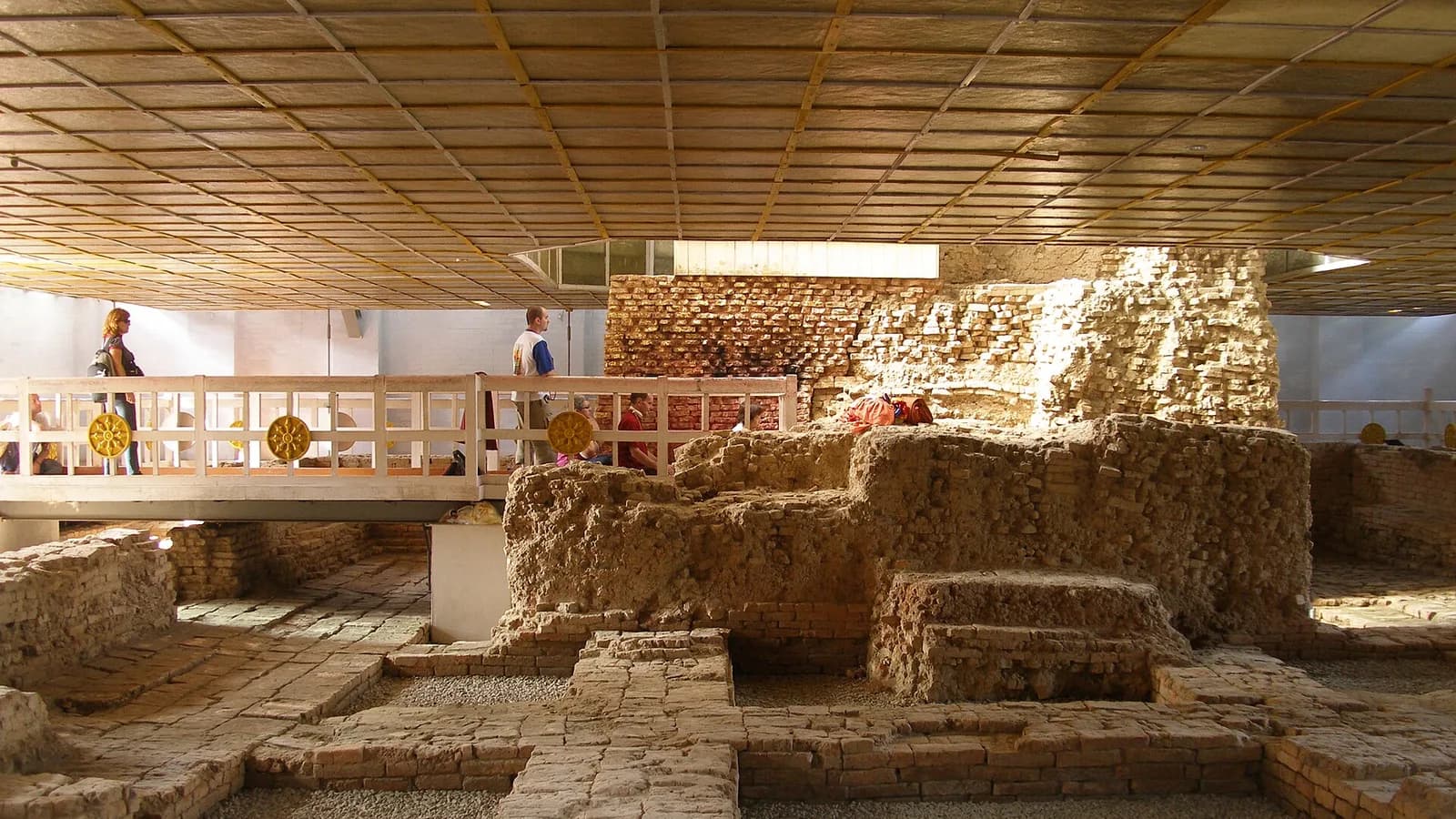
Lumbini, the birthplace of Buddha, sits in the flat Terai plains of southern Nepal, a world away from the country's famous mountains. This is where Siddhartha Gautama, the historical Buddha, was born to a Shakya-clan family more than two and a half thousand years ago. Today the spot is a quiet, UNESCO-listed sacred garden anchored by the Maya Devi Temple, a weathered stone pillar planted by an emperor, and a sprawling park of monasteries built by Buddhist nations around the world. This guide focuses on the history, the evidence, and what actually stands at the birthplace of Buddha so you understand what you are looking at when you arrive.
Key takeaways
- Lumbini, in Nepal's Rupandehi district, is traditionally accepted as the birthplace of the Buddha and was inscribed as a UNESCO World Heritage Site in 1997.
- The Ashoka pillar, erected around 249 BCE, carries a Brahmi inscription declaring this the Buddha's birthplace, making it one of the oldest pieces of physical evidence for his life.
- The Maya Devi Temple houses the marker stone that pinpoints the birth spot and a nativity sculpture of the birth scene.
- Excavations published in 2013 found a sixth-century-BCE timber shrine beneath the temple, with occupation traces stretching back even earlier.
- The site is organised by the Kenzo Tange Master Plan of 1978 into a Sacred Garden, a Monastic Zone, and a New Lumbini Village, though the plan remains unfinished.
- Lumbini is one of Buddhism's four great pilgrimage sites, alongside Bodh Gaya, Sarnath, and Kushinagar.
Why Lumbini matters
For roughly 500 million Buddhists worldwide, Lumbini is the first of four cornerstones in the life of the Buddha. Tradition holds that Queen Maya Devi, travelling toward her parents' home, paused in a garden at Lumbini and gave birth to a son who would become the Buddha. Buddhist sources describe him as born into the Shakya clan, an aristocratic warrior (Kshatriya) family whose capital was Kapilavastu, near the modern Nepal-India border.
Lumbini's importance is not only spiritual but historical. Unlike many ancient sacred sites where location is guesswork, Lumbini's identity is supported by an unbroken thread of inscriptions, pilgrim accounts, and modern archaeology. That combination is what earned it World Heritage status and what makes it meaningful even to non-Buddhist visitors interested in the ancient world.
The four pilgrimage sites
Buddhist tradition recognises four places tied to key moments in the Buddha's life. Lumbini is where the journey begins.
| Site | Country | Significance | |------|---------|--------------| | Lumbini | Nepal | Birth of the Buddha | | Bodh Gaya | India | Enlightenment | | Sarnath | India | First sermon | | Kushinagar | India | Parinirvana (passing) |
Many pilgrims travel the full circuit, which is one reason Lumbini sits naturally on routes crossing into India. If you are planning that kind of trip, our guide to Buddhism in Nepal gives the wider religious context.
Was the Buddha born in Nepal or India?
This is the single most common question about Lumbini, and the answer is clear: the birthplace lies inside present-day Nepal. The confusion is understandable. The Buddha spent most of his teaching life in what is now northern India, and the broader cultural region straddled the modern border, which did not exist in his lifetime.
The decisive evidence is the Ashoka pillar's inscription, which marks this exact spot as the birthplace. Archaeological work has also placed Kapilavastu, the Shakya capital, within Nepal's territory. Scholars using inscriptions and excavated remains have identified Tilaurakot, about 25 kilometres west of Lumbini, as a strong candidate for ancient Kapilavastu, with a separate site at Niglihawa carrying another Ashokan pillar inscription that supports the identification. In short, both the birthplace and the childhood capital fall within modern Nepal.
The Ashoka pillar: stone evidence from 249 BCE
The most remarkable object at Lumbini is also the plainest looking. The Ashoka pillar is a roughly 6-metre sandstone column raised by the Mauryan emperor Ashoka around 249 BCE, when he made a pilgrimage to the site. After his conversion to Buddhism, Ashoka travelled to places associated with the Buddha and marked several of them with inscribed pillars.
The Lumbini inscription, written in the Brahmi script, records that Ashoka came in person, worshipped here because "the Buddha was born here," and reduced the local tax burden in honour of the site. That makes the pillar a near-contemporary administrative record pointing directly at the birthplace, planted only a couple of centuries after the Buddha's lifetime.
The pillar's modern story is its own piece of history. It was rediscovered in December 1896 by a team that included the Nepalese general Khadga Shamsher Jang Bahadur Rana and the archaeologist Alois Anton Führer. That rediscovery effectively pinned Lumbini back onto the map after centuries of obscurity and triggered the excavations that continue today.
The Maya Devi Temple and the marker stone
The white Maya Devi Temple is the heart of the Sacred Garden, built to shelter and display the most sensitive remains. Inside, protected behind glass and walkways, are two things worth slowing down for:
- The marker stone, a small conglomerate stone identified as pinpointing the exact location of the birth.
- The nativity sculpture, an old carved relief showing the birth scene. Maya Devi is depicted holding the branch of a tree, supported by an attendant figure, with the newborn standing on a lotus pedestal and celestial figures attending.
Adjacent to the temple is the Puskarini, the sacred pond where, by tradition, Maya Devi bathed before the birth and the infant received his first bath. Brick foundations of ancient stupas and monasteries (viharas) from later centuries spread out around the temple, layered remains of a site that was venerated and rebuilt for over a thousand years.
Photography is restricted inside the temple, and modest dress is expected, as at any active religious site. Our guide to temple etiquette in Nepal covers the basics so you do not get caught out.
What the 2013 excavations found
Between 2011 and 2013, a team led by archaeologists Robin Coningham and Kosh Prasad Acharya, working with Durham University, the Lumbini Development Trust, and Nepal's Department of Archaeology, dug beneath the temple. They reported a timber shrine dating to the sixth century BCE, arranged around what may have been an open space or tree, consistent with the traditional birth narrative and with the date long associated with the Buddha's life.
The same investigations pushed evidence of human occupation at the site back even further, with traces reaching toward the late Chalcolithic period more than a millennium before the Buddha. For visitors, the takeaway is simple: you are standing on one of the few places connected to the Buddha where the archaeology genuinely lines up with the tradition.
The Lumbini Master Plan and the monastic zone
What surrounds the Sacred Garden today is the product of an ambitious blueprint. In 1978, after six years of work, the celebrated Japanese architect Kenzo Tange designed a master plan to turn Lumbini into a global centre of peace and pilgrimage. The Government of Nepal approved it the same year. The design organises a roughly three-square-mile area into three linked zones representing a path toward enlightenment.
| Zone | What it is | |------|-----------| | Sacred Garden | The birthplace itself: Maya Devi Temple, Ashoka pillar, sacred pond, ancient ruins | | Monastic Zone | Plots allotted to Buddhist countries to build monasteries, split into Theravada (east) and Mahayana (west) sides | | New Lumbini Village | Visitor and support facilities, accommodation, and services |
The Monastic Zone is the most visually striking part for most travellers. A central canal and a 1.6-kilometre pedestrian walkway divide it in two. On the eastern side, plots are reserved for Theravada (the older "Hinayana" school) monasteries; on the western side, plots go to Mahayana traditions. Nations including Germany, Thailand, Myanmar, China, South Korea, Japan, and Sri Lanka have built temples here, each in its own national style, which is why you can walk from a golden Thai roofline to a stark white Japanese stupa within minutes.
Notable monuments tie the zone together: a statue of the standing Baby Buddha, the Peace Bell, and the Eternal Peace Flame, which was lit in 1986 during the International Year of Peace and has burned continuously since as a symbol of nonviolence.
A plan still unfinished
Honesty matters here. Tange's plan was meant to be completed in about 17 years; both the 1985 and 1995 targets passed. Reporting in 2026 noted that, nearly five decades on, the plan remained incomplete, with officials claiming more than 88 percent completion while elements such as an auditorium, several circular buildings, river management, and various visitor facilities were still outstanding. The core sacred monuments and many monasteries are finished, so the site functions well for pilgrims and visitors, but you may notice construction and gaps as you explore.
Visiting the birthplace today
Lumbini is a place for quiet reflection rather than spectacle, and going in with the right expectations makes all the difference. We have a dedicated, candid take in Lumbini: is it worth visiting?, but here are the essentials tied to the birthplace itself.
Practical basics
| Detail | What to expect | |--------|----------------| | Location | Rupandehi district, Lumbini Province, southern Nepal | | Opening hours | Sacred garden generally open daily, roughly 6 AM to 6 PM | | Entry fee | Around NPR 500 for foreign visitors (as of June 2026); less or free for Nepali citizens | | Best time of day | Early morning, before the Terai heat and tour groups arrive | | Best season | October to February, the cool dry months | | Getting around | The monastic zone is large; bicycle or e-rickshaw rental saves a lot of walking |
The Terai is hot for much of the year and can climb well above 35°C in the pre-monsoon months, so plan visits for early morning or late afternoon outside winter. For the journey itself, see our breakdown of getting from Kathmandu to Lumbini by road and air.
Pairing Lumbini with a festival
If your timing is flexible, visiting around Buddha Jayanti (the celebration of the Buddha's birth, enlightenment, and passing) brings the site to life with pilgrims, chanting, and ritual. Read our guide to Buddha Jayanti to understand the celebration and when it falls.
How Lumbini fits Nepal's heritage
Lumbini is one of several places in Nepal recognised for outstanding universal value. It stands apart from the others because it is the only natural-plains, single-purpose pilgrimage site among them, most of the rest cluster around the Kathmandu Valley's temples and palaces. If you are mapping a heritage-focused trip, our overview of Nepal's UNESCO World Heritage Sites shows how Lumbini connects to the wider list and how to sequence visits across the country.
For travellers, the most rewarding way to understand Lumbini is to read its layers in order: the Ashoka pillar for the oldest written claim, the marker stone and excavations for the physical evidence, and the monastic zone for how living Buddhist traditions from across Asia have gathered around a single garden. Seen that way, the birthplace of Buddha is less a single monument than a 2,300-year conversation, still going on, about where one of history's most influential lives began.
Sources
- Lumbini, the Birthplace of the Lord Buddha — UNESCO World Heritage Centre
- Maya Devi Temple, Lumbini — Wikipedia
- Lumbini — Wikipedia
- Lumbini pillar inscription — Wikipedia
- The Buddha — Wikipedia
- The lesser known Lumbini marker stone that pinpoints Buddha's birthplace — The Kathmandu Post
- Lumbini master plan remains unfinished after 48 years — The Kathmandu Post
- The Lumbini Master Plan — Lumbini Development Trust
- Lumbini, the Birthplace of the Buddha — Facts and Details
Frequently asked questions
- Where exactly is the birthplace of Buddha?
- The Buddha was born in Lumbini, in the Rupandehi district of southern Nepal's Terai plains, close to the Indian border. The Maya Devi Temple marks the precise spot.
- Was Buddha born in Nepal or India?
- He was born in Lumbini, which lies inside present-day Nepal. He later taught across northern India, but the birthplace itself is in Nepal, confirmed by Ashoka's pillar and excavations.
- What is the Ashoka pillar at Lumbini?
- It is a sandstone column the Mauryan emperor Ashoka erected around 249 BCE during his pilgrimage, with a Brahmi inscription stating that the Buddha was born at this spot.
- When was Lumbini made a UNESCO World Heritage Site?
- Lumbini was inscribed on the UNESCO World Heritage List in 1997 as the birthplace of the Lord Buddha and an important Buddhist pilgrimage centre.
- How much does it cost to enter the Maya Devi Temple area?
- Foreign visitors typically pay an entry fee of about NPR 500 (as of June 2026) for the sacred garden; Nepali citizens usually pay much less or nothing. Confirm at the gate.
- What are the four main Buddhist pilgrimage sites?
- Lumbini (birth), Bodh Gaya (enlightenment), Sarnath (first sermon) and Kushinagar (parinirvana) form the core pilgrimage circuit of Buddhism.
- Is the Lumbini Master Plan finished?
- No. The Kenzo Tange Master Plan from 1978 was meant to take 17 years but remains incomplete after nearly five decades, though most core monuments and many monasteries are built.
- What time does the Maya Devi Temple open?
- The sacred garden and temple are generally open daily from around 6 AM to 6 PM; early morning before the heat and crowds is the calmest time to visit.
Related posts
Lumbini Monasteries: A Guide to the Monastic Zone
A guide to the Lumbini monasteries: the East and West Monastic Zones, which countries built what, and how to actually see them in a day.
Read postLumbini: Buddha's Birthplace Travel Guide (2026)
A complete first-timer's guide to Lumbini, the birthplace of Buddha in Nepal — the Sacred Garden, Maya Devi Temple, monastic zone, fees, and how to plan a visit.
Read postLumbini — Is It Worth Visiting? An Honest Answer
The birthplace of Buddha is sacred. It's also remote, hot, and not what most tourists expect. Here's who should go and who shouldn't bother.
Read post