Nepal–India Border Crossing: A Practical 2026 Guide
How the Nepal–India border crossing works for tourists and Indians: open border rules, the six visa-on-arrival points, fees, and documents you need.
It's one of the most open land borders on earth — but only if you bring the right piece of paper.
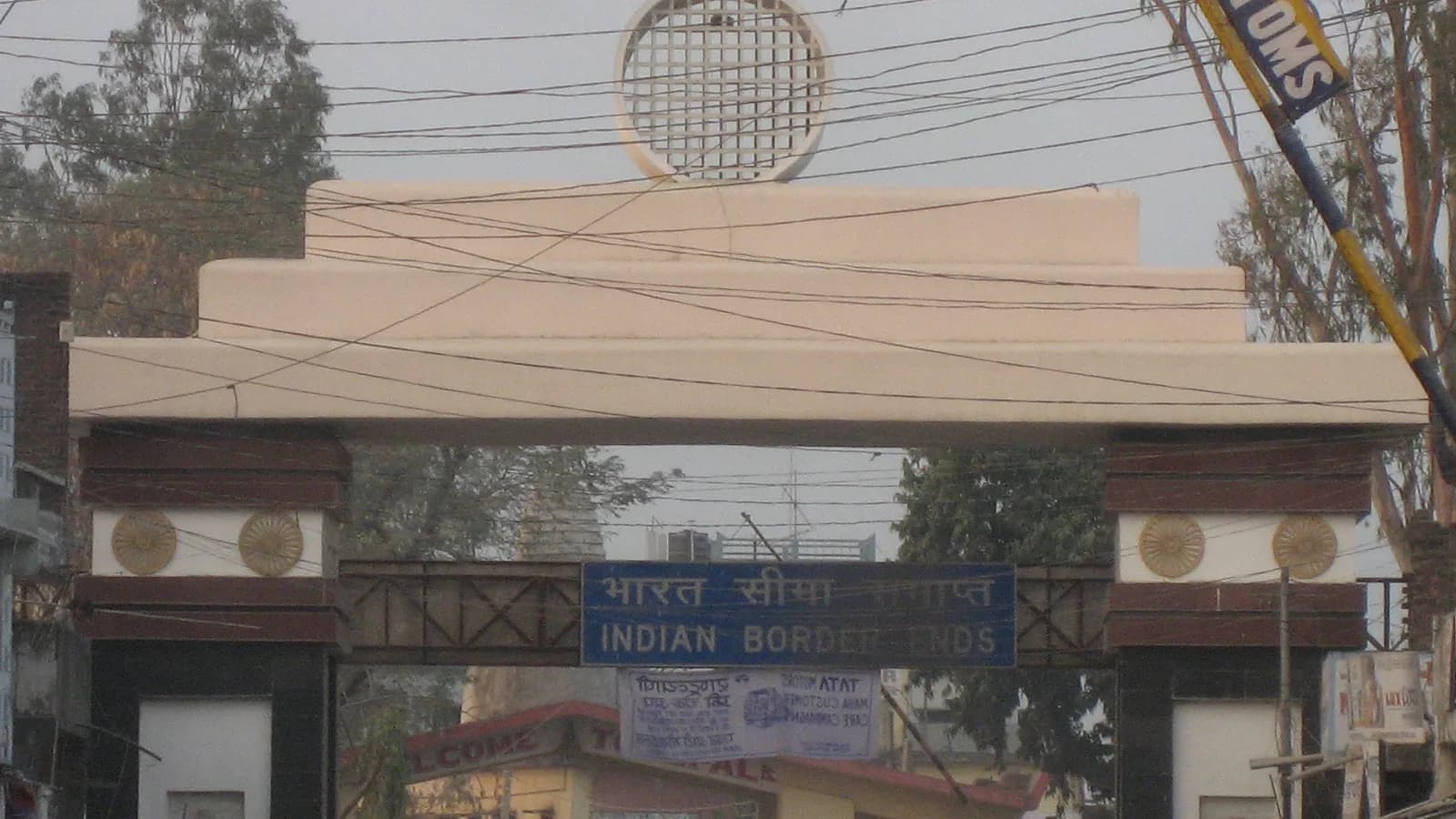
The Nepal–India border crossing is one of the easiest international land borders in Asia to use — and one of the most misunderstood. People with two completely different sets of rules pass through the same gates: Indian citizens, who move almost freely under a 1950 treaty, and everyone else, who needs a tourist visa. If you arrive without understanding which set applies to you, a 20-minute formality can turn into a wasted afternoon and a missed bus.
This guide explains how the crossing actually works in 2026 — the open-border arrangement, the official entry points, what each kind of traveler must carry, and the small mistakes that send people back across the line.
Key takeaways
- The Nepal–India border is "open": Indian and Nepali citizens cross without visas, but foreign tourists still need a Nepal visa, which is available on arrival at major land points.
- Six land borders issue on-arrival tourist visas — Kakarvitta, Biratnagar, Birgunj, Belahiya (Bhairahawa, near Sunauli), Gadda Chauki, and Timure.
- Tourist visa fees (as of June 2026) are USD 30 / 50 / 125 for 15 / 30 / 90 days; bring clean USD cash.
- Indians need a passport or an original voter ID — an Aadhaar card is not accepted as a travel document.
- Sunauli–Belahiya is the busiest and most foreigner-friendly road crossing; it links to Lumbini and Pokhara.
- Your passport must have at least six months of validity, or you can be refused entry.
What "open border" really means
Nepal and India share a roughly 1,750-kilometre border that, for citizens of the two countries, has no visa requirement and no permit. This stems from the 1950 Indo-Nepal Treaty of Peace and Friendship, which guarantees free movement of people between the two nations. In practice it means Nepalis and Indians can walk, drive, or ride a rickshaw across the line and continue on their way.
The crucial point for visitors: "open" applies to people, not to the formalities. The border is open in the sense that Indians and Nepalis do not need visas. It is not open in the sense that a third-country tourist can stroll through unchecked. If you hold a passport from anywhere other than India, you must clear Nepali immigration and hold a valid visa — the same as if you had flown in. Plenty of travelers have been turned back for assuming the open border meant "no paperwork for anyone."
For context on how the two countries compare as destinations, see our pieces on Nepal vs India for travel and the cross-cultural differences in Holi celebrations.
The official entry and exit points
Nepal's Department of Immigration designates specific land border posts where foreign nationals can both enter and exit and obtain a visa on arrival. As of 2026 these are:
| Border post | Nepali district | Region | Nearest Indian side | |---|---|---|---| | Kakarvitta | Jhapa | East | Panitanki (near Siliguri) | | Biratnagar | Morang | Southeast | Jogbani | | Birgunj | Parsa | Central | Raxaul | | Belahiya / Bhairahawa | Rupandehi | South | Sunauli | | Gadda Chauki | Kanchanpur | Far West | Banbasa | | Timure | Rasuwa | North (China border) | — |
A few of these are the workhorses for tourists:
Sunauli–Belahiya (Bhairahawa)
This is the busiest crossing and the default choice for most overland travelers. The Nepali immigration office operates around the clock, and from here it is a short hop to Lumbini, the birthplace of the Buddha, and a comfortable onward journey to Pokhara or Kathmandu. If you are heading to Lumbini or planning the classic Kathmandu-to-Pokhara route, this is your gateway.
Kakarvitta (Panitanki)
The eastern entry point, useful if you are arriving from West Bengal — it connects to Siliguri, Darjeeling, and the Ilam tea hills. Note that operating hours for foreign passport holders at some posts are limited (commonly daytime only), so avoid arriving late at night.
Birgunj–Raxaul
The central crossing opposite Raxaul in Bihar, well connected by rail on the Indian side. Reports from travelers and Indian immigration officials suggest that on the Indian side, foreigners are sometimes channeled primarily through Sunauli and Raxaul for exit formalities, so these two tend to be the smoothest for non-Indian tourists.
Rules for foreign tourists
If you are not an Indian citizen, the process mirrors an airport arrival, just with a road queue instead of a terminal.
The visa and its cost
Nepal issues tourist visas in three tiers. These are the Department of Immigration rates as of June 2026:
| Duration | Fee (USD) | Typical use | |---|---|---| | 15 days | 30 | A short trip or single region | | 30 days | 50 | The standard tourist stay | | 90 days | 125 | Long treks or multi-region trips |
Fees are payable in cash. USD is the cleanest option, though EUR, GBP, AUD, JPY and Nepalese rupees are also accepted at major posts. Carry small, clean notes — torn or heavily marked bills are frequently rejected. For a deeper breakdown of the process and exemptions, see our Nepal visa on arrival guide and the tourist visa fee overview.
What you need to bring
- A passport valid for at least six months beyond your entry date — less than that and you can be refused.
- A passport-size photo (some posts have a camera, but bringing one or two avoids delay).
- The visa fee in clean cash.
- A completed arrival form (often available online in advance or at the post).
A small number of nationalities cannot use visa on arrival and must apply at a Nepali embassy first; confirm the current exclusion list with the Department of Immigration before you set out.
Extensions and the annual limit
A land-border visa behaves exactly like an airport one. You can extend it at the Department of Immigration in Kathmandu or Pokhara, but the total stay on tourist visas is capped at 150 days per calendar year. If you think you'll need more time, read our visa extension guide before the clock runs down.
Rules for Indian citizens
Indians enjoy a genuinely rare privilege here: no visa, no fee. But "no visa" is not the same as "no documents."
Accepted identity documents
According to the Embassy of India in Kathmandu and Nepal's immigration authorities, Indian nationals may enter Nepal on:
- A valid Indian passport, or
- An original voter ID card (with photograph) issued by the Election Commission of India.
Other government-issued photo identity cards (such as those issued by central or state governments to their employees) and an Emergency Certificate issued by the Embassy of India in Kathmandu are also accepted in defined circumstances.
What is NOT accepted
This trips up many travelers: an Aadhaar (UID) card is not a valid travel document for Nepal. Neither is a downloaded or printed copy of a voter ID — it must be the original card. Driving licences and PAN cards are likewise not recognised for the crossing. If you only carry an Aadhaar card, you risk being stopped, so plan ahead.
Children and minors
Indian minors without a passport may be allowed to enter using a birth registration certificate, but documentation rules for children can change, so verify the current requirement before travelling with kids.
Flying onward from Nepal
One often-missed rule: an Indian passport holder who plans to fly from Nepal to a third country (anywhere other than India) must first obtain a No Objection Certificate (NOC) from the Embassy of India in Kathmandu. If your itinerary involves leaving Nepal by air to a destination beyond India, build this step into your plans.
A smooth crossing, step by step
- Time your arrival for daylight. Several posts process foreigners only during the day, and onward transport thins out after dark. Sunauli's office is 24-hour, but most travelers still prefer to cross with daylight ahead of them.
- Get your Indian exit stamp first. You clear Indian immigration on the India side, then walk or ride the short distance to the Nepali office. The two offices are separate buildings — do not skip the Indian exit formality.
- Complete Nepali immigration. Tourists fill the arrival form, pay the visa fee, and receive the visa sticker. Indians present their passport or voter ID.
- Change money sensibly. The Indian rupee and Nepalese rupee are different currencies (the rate is broadly fixed, but check before you exchange). Use the bank or an authorised counter rather than the first tout. Our currency guide explains the basics.
- Buy onward transport on the Nepali side. Shared jeeps, microbuses and tourist coaches run from each crossing. From Sunauli you can reach Lumbini in under an hour and Pokhara or Kathmandu the same day.
Quick comparison: who needs what
| Traveler | Visa required? | Key document | Watch out for | |---|---|---|---| | Foreign tourist | Yes (on arrival) | Passport (6+ months) + cash | Daytime-only posts; clean notes | | Indian citizen | No | Passport or original voter ID | Aadhaar not accepted; NOC for onward flights | | Indian minor | No | Birth certificate (if no passport) | Confirm current rules first |
Common mistakes to avoid
- Assuming "open border" means no checks for everyone. It doesn't — only Indians and Nepalis skip the visa.
- Carrying only an Aadhaar card as an Indian traveler. Bring a passport or original voter ID.
- Skipping the Indian exit stamp. Leaving India without it can cause problems later; the offices are separate.
- Bringing torn or low-denomination foreign notes. Visa booths reject damaged bills.
- Arriving at night at a daytime-only post and getting stranded.
- Forgetting the six-month passport rule — a near-expiry passport means refused entry.
If you're still weighing whether to come overland at all, our broader Nepal travel advisory and is Nepal safe for tourists posts give current context.
Sources
- Nepal Department of Immigration — Visa on Arrival
- Nepal Department of Immigration — Tourist Visa
- Nepal Department of Immigration — Information for Indian Nationals
- Nepal Immigration (TIA) — Acceptable identification for Indian citizens
- Embassy of India, Kathmandu — Valid Travel Documents
- U.S. Department of State — Nepal Travel Advisory
- India–Nepal border — Wikipedia
Frequently asked questions
- Can foreign tourists enter Nepal by land from India?
- Yes. Foreign passport holders can get a visa on arrival at land points including Belahiya/Bhairahawa (near Sunauli), Birgunj, Kakarvitta, Biratnagar and Gadda Chauki, though some Indian-side exit posts route foreigners mainly through Sunauli and Raxaul.
- Do Indian citizens need a visa or passport for Nepal?
- No visa is required. Indians can enter on a valid passport or an original Election Commission voter ID card under the 1950 Peace and Friendship Treaty, but should still carry photo ID.
- Is an Aadhaar card accepted to cross into Nepal?
- No. The Embassy of India in Kathmandu lists Aadhaar (UID) as not valid for travel to Nepal; carry a passport or an original photo voter ID instead.
- How much does the Nepal tourist visa on arrival cost in 2026?
- Department of Immigration rates are USD 30 for 15 days, USD 50 for 30 days and USD 125 for 90 days (as of June 2026); pay in clean foreign cash, with USD the easiest option.
- Which is the busiest Nepal–India border crossing?
- Sunauli–Belahiya near Bhairahawa is the busiest road crossing, with a 24-hour Nepali immigration office and onward routes to Lumbini, Pokhara and Kathmandu.
- Can children without a passport cross from India into Nepal?
- Indian minors without a passport may be permitted entry using a birth registration certificate, but rules can vary so confirm current requirements before you travel.
- Do Indians flying onward from Nepal need extra paperwork?
- Yes. Indian passport holders flying from Nepal to a third country must obtain a No Objection Certificate from the Embassy of India in Kathmandu first.
- Can I extend a visa I got at the land border?
- Yes. A visa-on-arrival can be extended at the Department of Immigration in Kathmandu or Pokhara, up to a total stay of 150 days in one calendar year.
Related posts
Do I Need a Visa for Nepal? 2026 Answer by Nationality
Do I need a visa for Nepal? Who needs one, who doesn't, who must apply at an embassy, plus 2026 fees and documents — sorted by your passport.
Read postNepal 15 Day Visa: Cost, Rules, and When to Pick It
The Nepal 15 day visa costs USD 30, is multiple-entry, and suits short trips. Who it fits, who should size up, and how to extend it if plans change.
Read postNepal 30 Day Visa: Cost, Rules, and Who It Suits
A focused guide to the Nepal 30 day visa — the USD 50 fee, multiple-entry rules, when to pick it over 15 or 90 days, and how to extend.
Read post