Nepal Tourist Visa Fee 2026 — Costs by Duration
The Nepal tourist visa fee for 15, 30 and 90 days, who pays nothing, extension costs and overstay fines — all in clear USD figures.
The visa is one of the cheapest line items of your whole Nepal trip.
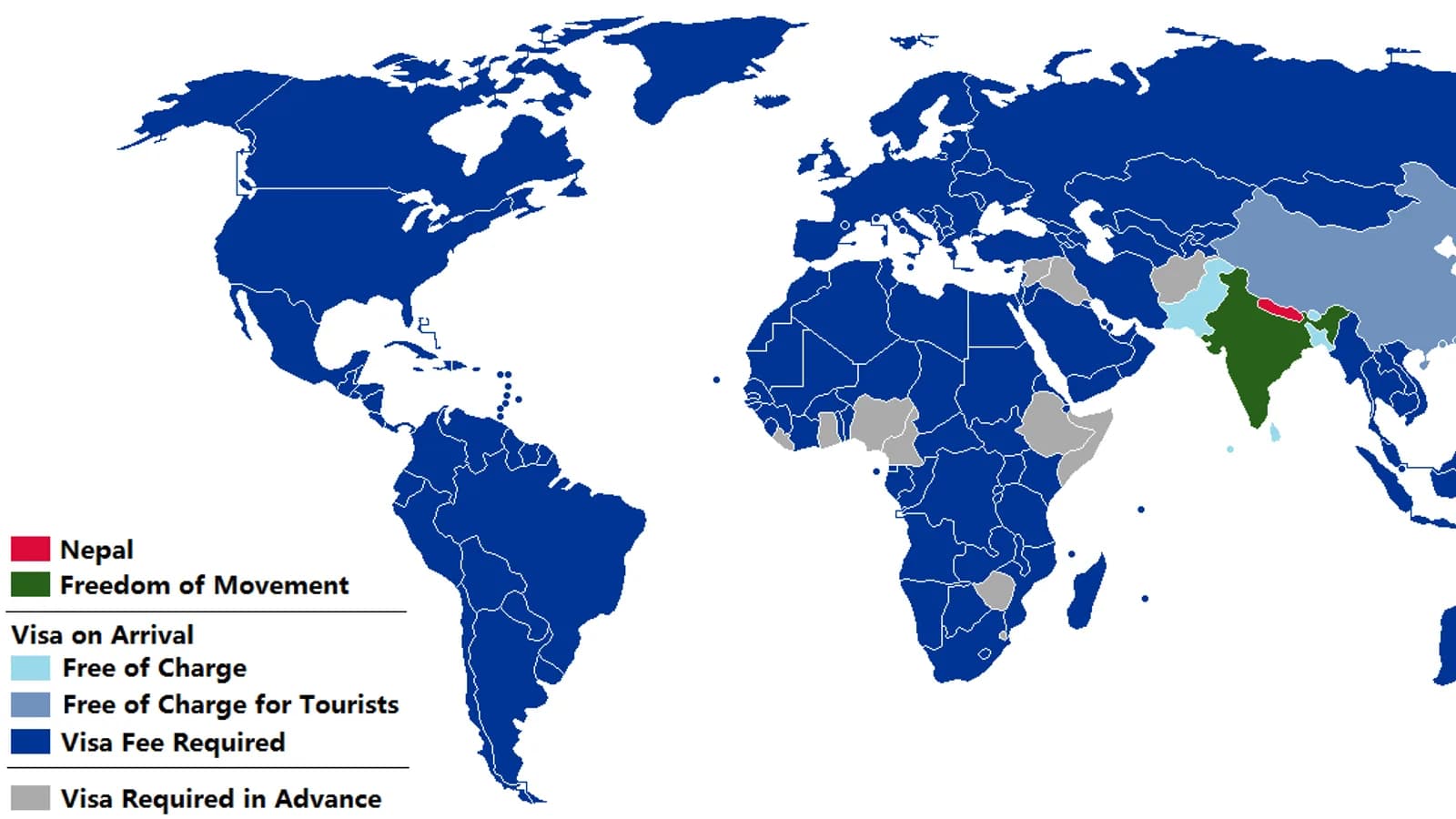
The Nepal tourist visa fee is refreshingly simple: a flat price tied only to how many days you want, paid in cash, with no income tests or sliding scales. Most visitors pay it on arrival at Kathmandu's airport in a few minutes. This guide breaks down exactly what you pay for 15, 30 and 90 days, who gets in free, what extensions and overstays cost, and how to budget the visa as part of your wider Nepal trip — with every figure traceable to an official or reputable source.
If you want the full airport walkthrough rather than just the prices, pair this with our Nepal visa on arrival guide.
Key takeaways
- The on-arrival tourist visa fee is USD 30 / 15 days, USD 50 / 30 days, USD 125 / 90 days (as of June 2026), each multiple-entry.
- Pay in cash — USD or another convertible currency — and carry clean, near-exact-change notes.
- Children under 10 are free (except on a US passport), SAARC nationals get a free first 30 days, Chinese nationals are fee-exempt, and Indians need no visa.
- Extensions cost USD 45 for the first 15 days, then USD 3/day, up to a 150-day annual maximum.
- Overstaying typically runs about USD 8/day and must be cleared before departure.
- A 6-month-valid passport is required; the visa fee is one of the smallest costs in a Nepal budget.
Nepal tourist visa fee by duration
Nepal issues the tourist visa in three fixed lengths. You pick the tier that covers your trip; there is no per-day pricing for the initial visa.
| Visa length | Fee (as of June 2026) | Best for | |---|---|---| | 15 days | USD 30 | A short Kathmandu Valley trip plus one quick region | | 30 days | USD 50 | The standard tourist stay — most travellers choose this | | 90 days | USD 125 | Long or multiple treks, slow travel, or festival-hopping across months |
All three tiers carry multiple-entry rights, so a side trip across a land border and back to Nepal costs nothing extra on the visa. These are the rates published by Nepal's Department of Immigration and echoed by the Nepal Tourism Board.
Which tier should you buy?
The 30-day visa is the sweet spot for typical itineraries — a couple of weeks trekking plus Kathmandu, Pokhara and Chitwan fits comfortably. If you are unsure whether you will run long, note that extending is more expensive per day than buying up front: a 90-day visa is USD 125, while extending a 30-day visa by 60 days would cost far more (see the extension maths below). When in doubt and you suspect a long stay, the 90-day tier is often the cheaper, simpler choice.
How to pay the visa fee
The fee is collected at a bank counter inside the arrivals hall, after you fill in the application at a self-service kiosk.
- Currency: USD is cleanest. Counters also accept other convertible currencies such as EUR, GBP, AUD and JPY, but rates and acceptance vary, so USD avoids friction.
- Form: cash. Card machines exist but are slow and unreliable; do not count on plastic.
- Notes: bring clean, undamaged bills and as close to exact change as you can. Torn or heavily marked notes can be refused.
A practical move: carry the exact fee for your chosen tier in a separate pocket — for example two USD 20 notes and a USD 10 for the 15-day visa — so you are not fishing through a wallet at the counter.
Who pays nothing: gratis and exempt categories
A meaningful share of arrivals pay no visa fee at all. The main free or exempt categories are below — confirm your own case on the Department of Immigration site before you fly, as policy details can change.
| Category | Fee status | |---|---| | Children under 10 | Gratis (free), except children on a US passport | | SAARC nationals (except Afghanistan) | Free for the first 30 days, once per visa year | | Chinese nationals | Exempt from the tourist visa fee | | Indian nationals | No visa required at all |
The children-under-10 rule
A child under 10 normally receives a gratis tourist visa; you simply show proof of age such as a passport or birth certificate. The widely reported exception is that children travelling on a United States passport are not granted the under-10 waiver and pay the standard fee. If your family includes a US-passport child, budget the normal visa cost for them.
SAARC nationals
Citizens of SAARC member states — Bangladesh, Bhutan, the Maldives, Pakistan and Sri Lanka — receive a free 30-day tourist visa for their first visit in a given visa year (January to December). Afghanistan is excluded from this concession. Subsequent visits in the same year follow the standard fee schedule.
Indian and Chinese nationals
Indian citizens do not need a visa to enter Nepal at all, a long-standing arrangement under the 1950 Indo-Nepal Treaty of Peace and Friendship. Chinese nationals are specifically exempted from the tourist visa fee, so the visa itself is free for them even though it is still issued.
Extension fees: paying for more time
If your trip grows, you extend at the Department of Immigration in Kathmandu (Kalikasthan) or the smaller office in Pokhara. Extensions are priced per day with a 15-day floor.
| What you extend | Cost (as of June 2026) | |---|---| | Minimum extension (15 days) | USD 45 | | Each day beyond 15 | + USD 3/day | | Annual cap | 150 days total per calendar year |
So a 30-day extension costs roughly USD 45 + (15 × USD 3) = USD 90. Because the minimum is USD 45 regardless, extending in larger blocks is more cost-effective than topping up a few days at a time. The hard ceiling is 150 days of tourist stay per calendar year, after which you must leave the country and return in a new visa year. Our visa extension guide covers the office, hours and queue tactics in detail.
Single to multiple entry
The on-arrival tourist visa already includes multiple-entry, so most travellers never deal with this. Historically, converting a single-entry visa to multiple-entry at the immigration office carried a separate fee in the region of USD 20-25; if your visa was issued elsewhere as single-entry, check the current conversion charge directly with the Department.
Overstay fines: the cost of staying too late
Overstaying is the one area where a small visa cost can balloon, so it is worth understanding the maths.
- For short overstays (under 150 days), the typical charge is a USD 3/day extension fee plus a USD 5/day penalty, totalling about USD 8 per day.
- Larger or long overstays can attract higher discretionary fines decided by immigration officials.
- All overstay charges must be settled before you leave Nepal; non-payment can lead to serious consequences including deportation and being barred from future entry.
The lesson is simple: extend in advance. A planned extension at USD 3/day is far cheaper and calmer than an USD 8/day fine sorted out at the departure gate. If your dates are slipping, visit immigration while your current visa is still valid.
How the visa fee fits your Nepal budget
In the context of a full trip, the visa is minor. To put USD 50 in perspective against other common costs travellers research:
- It is a fraction of national-park and trekking permit fees — see our Nepal trekking permits overview.
- It is dwarfed by a single domestic mountain flight; compare with Kathmandu to Pokhara flight pricing.
- It sits comfortably within a normal day or two of mid-range spending outlined in our Nepal travel budget breakdown.
Treat the visa as a fixed entry cost, pick the duration generously enough to avoid extensions, and move your planning energy to the line items that actually move your budget — flights, treks and permits.
Common mistakes that cost money or time
- Buying too short, then extending. Two short extensions can cost more than simply buying the 90-day visa once.
- Arriving with only large or worn notes. Counters may refuse damaged bills and change can be slow; clean, near-exact USD is king.
- Assuming you can pay by card. Treat card payment as a maybe, never a plan.
- Ignoring the 150-day cap. It is a hard annual limit; build a border exit into very long trips rather than hoping to extend past it.
- Letting the visa lapse. Overstay at roughly USD 8/day is pure avoidable cost.
Before you go: a quick fee checklist
- Choose your tier — 15, 30 or 90 days — and lean longer if a long stay is plausible.
- Set aside the exact USD fee in clean notes, in a dedicated pocket.
- Confirm whether anyone in your party qualifies as gratis (under 10, SAARC, Chinese national) or visa-free (Indian).
- Check your passport has at least 6 months validity from arrival and a blank visa page.
- Note the extension and overstay rates so a change of plans never surprises you.
A warm namaste at the counter does not change the price, but it does set the tone — and after a short queue, Nepal's cheapest formality is behind you. For the step-by-step arrival flow, head to the visa on arrival walkthrough.
Sources
- Nepal Department of Immigration — Tourist Visa
- Nepal Department of Immigration — Visa on Arrival
- Nepal Department of Immigration — Visa Fee and Documents
- Nepal Tourism Board — Tourist Visa Information
- Visa policy of Nepal — Wikipedia
- U.S. Department of State — Nepal Travel Advisory and Entry Requirements
Frequently asked questions
- How much is the Nepal tourist visa fee in 2026?
- The on-arrival tourist visa costs USD 30 for 15 days, USD 50 for 30 days and USD 125 for 90 days (as of June 2026), all multiple-entry.
- Can I pay the Nepal visa fee with a card?
- Cash in USD or another convertible currency is the reliable option; card terminals exist at the airport but are slow and not dependable, so bring clean exact-change notes.
- Is the Nepal visa free for children?
- Children under 10 get a gratis (free) tourist visa, with one exception — children travelling on a United States passport are not exempt and pay the normal fee.
- Do Indian citizens pay a Nepal tourist visa fee?
- No, Indian nationals do not need a visa to enter Nepal at all under the 1950 Indo-Nepal friendship treaty, so there is no fee.
- How much does it cost to extend a Nepal tourist visa?
- Extensions cost USD 45 for a minimum of 15 days, then USD 3 for each additional day, up to a maximum stay of 150 days per calendar year.
- What is the fine for overstaying a Nepal tourist visa?
- Short overstays generally cost about USD 8 per day — a USD 3 per day extension charge plus a USD 5 per day penalty — paid before you leave the country.
- Does the visa fee buy single or multiple entry?
- All three on-arrival tourist visa tiers include multiple-entry, so you can leave to India or elsewhere and return within the validity period at no extra cost.
- Do I need a photo to pay for the visa on arrival?
- The airport kiosks now capture your photo automatically, but carrying one spare passport-size photo is sensible in case a machine is out of service.
Related posts
Nepal Visa Cost in 2026: Fees, Extensions, and Free Cases
A clear breakdown of Nepal visa cost in 2026 — the 15/30/90-day tourist fees, extension and overstay charges, and who pays nothing.
Read postDo I Need a Visa for Nepal? 2026 Answer by Nationality
Do I need a visa for Nepal? Who needs one, who doesn't, who must apply at an embassy, plus 2026 fees and documents — sorted by your passport.
Read postNepal 15 Day Visa: Cost, Rules, and When to Pick It
The Nepal 15 day visa costs USD 30, is multiple-entry, and suits short trips. Who it fits, who should size up, and how to extend it if plans change.
Read post