Mount Everest: A Traveller's Guide to the Tallest Peak
Mount Everest explained for travellers - its height, names, first ascent, 2025 permit rules, Sherpa records, and how to see Sagarmatha without climbing it.
You do not have to climb the highest mountain on Earth to stand in its shadow - and most travellers never should.
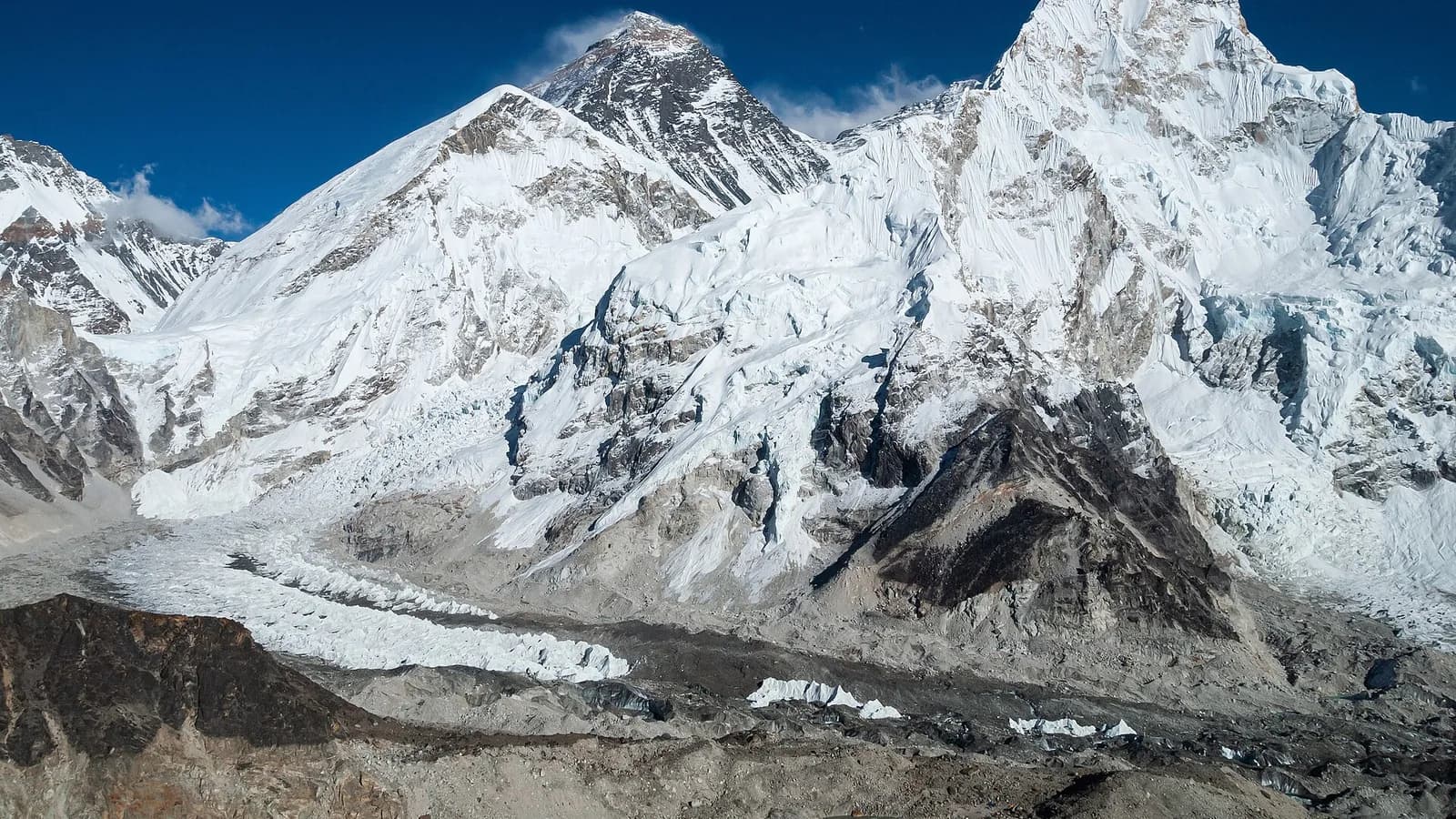
Mount Everest is the highest point on Earth, rising 8,848.86 metres (29,031.7 ft) on the border between Nepal and Tibet. For climbers it is the ultimate prize; for the far larger number of travellers who come to look rather than climb, it is the centrepiece of one of the world's great trekking regions. This guide is the traveller's overview: what the mountain is, what it is called, who first stood on top, what it now costs to attempt, and - most usefully for most readers - how to see it without ever roping up.
If you only remember one thing, let it be this: the vast majority of people who travel to Everest never set foot on the climb itself. They walk to its base, fly past its summit, or admire it from a ridge, and they go home thrilled. The deeper deep-dives on each topic are linked throughout, so treat this as your map to the rest.
Key takeaways
- Everest's official height is 8,848.86 m (29,031.7 ft), agreed by Nepal and China in December 2020.
- It is called Sagarmatha in Nepal and Chomolungma in Tibet; the English name honours surveyor Sir George Everest.
- The first confirmed ascent was by Edmund Hillary and Tenzing Norgay on 29 May 1953.
- Nepal's spring climbing permit rose to 15,000 US dollars per person (as of September 2025), the first increase in roughly a decade.
- Kami Rita Sherpa holds the record for the most ascents, with his 31st summit (27 May 2025) certified by Guinness World Records.
- Most travellers experience Everest through trekking or a mountain flight, not climbing.
Where Everest is and what to call it
Mount Everest straddles the frontier between Nepal and the Tibet Autonomous Region of China. The Nepali southern side - the one most foreign travellers visit - lies in the Solu-Khumbu district inside Sagarmatha National Park, a UNESCO World Heritage Site inscribed in 1979. The park spans roughly 1,244 square kilometres and shelters rare wildlife such as the snow leopard and the red panda, alongside the Sherpa communities who have lived in its valleys for centuries.
The mountain carries three names worth knowing:
- Sagarmatha (Nepali) - often translated as "the head in the great blue sky."
- Chomolungma / Qomolangma (Tibetan) - usually rendered "holy mother."
- Everest (English) - named in the nineteenth century after Sir George Everest, a former Surveyor General of India, who reportedly objected to the honour and never saw the peak.
The number itself
The headline figure of 8,848.86 m was jointly announced by Nepal and China on 8 December 2020, settling decades of mild disagreement between the two governments. The full story of how surveyors pinned that figure to the centimetre - with satellites, a gravity meter and radar fired through the summit snow - is its own rabbit hole, told in detail in our piece on Mount Everest's height. It is also, by some margin, the highest mountain in Nepal.
A short history: the 1953 first ascent
Dozens of expeditions tried and failed to reach the summit in the early twentieth century. The breakthrough came on 29 May 1953, when Edmund Hillary, a New Zealand mountaineer, and Tenzing Norgay, a Sherpa from the Everest region, reached the top via the South Col route on a British expedition led by Colonel John Hunt. They paused only long enough to take photographs and bury a few small offerings in the snow before descending.
The timing turned the climb into a global sensation: news broke on 2 June 1953, the day of Queen Elizabeth II's coronation. Hillary was knighted; Tenzing received the George Medal and became a national hero across the Himalaya. Their ascent remains the moment the mountain entered the popular imagination - and it is why the Sherpa role in Himalayan climbing is so central, a story we tell in who are the Sherpas.
What it costs - and what the 2025 rules changed
Climbing Everest is expensive, and in 2025 it became more so. On 1 September 2025, Nepal raised its mountaineering royalties for the first time in about a decade.
| Season | Old permit fee (USD) | New permit fee (USD, as of Sept 2025) | |---|---|---| | Spring (Mar-May) | 11,000 | 15,000 | | Autumn (Sep-Nov) | 5,500 | 7,500 | | Winter & monsoon | 2,750 | 3,750 |
These figures are the government royalty per climber only. A realistic full expedition - guides, oxygen, Sherpa support, camps, insurance and logistics - costs far more, frequently tens of thousands of dollars on top of the permit, as we break down in how much it costs to climb Mount Everest and Everest expedition cost.
New rules climbers should know
Alongside the fee rise, Nepal tightened several rules. Permits now run for a shorter window of 55 days rather than the previous 75, and regulations require at least one Sherpa or guide for every two foreign climbers. The stated aims include better waste management and improved social security for the high-altitude workers who make the climbs possible. A separate, widely discussed proposal would require Everest applicants to have first summited a 7,000-metre peak in Nepal, but at the time of writing that requirement is still under discussion rather than fully enforced. We track the moving picture in new Everest climbing rules and the current Everest permit price for 2026.
The records and the risks
Everest is as much a stage for human extremes as a geographical feature.
Most ascents
Nepali mountain guide Kami Rita Sherpa holds the record for the most Everest summits of anyone. Guinness World Records recognised his 31st ascent, reached on 27 May 2025, as the most of all time; he has since continued to extend his own record. His tally is a reminder that the people who climb Everest most often are not the foreign clients but the Sherpa guides who lead them.
The dangers
Everest is dangerous in ways that have nothing to do with the permit price. Above roughly 8,000 metres lies the so-called death zone, where the air holds too little oxygen to sustain human life for long. Altitude sickness, frostbite, avalanche, crowding on the fixed lines, and sudden weather are all real hazards. We cover the sobering statistics honestly in how many people die on Everest. For most travellers, the sensible takeaway is the next section.
How to see Everest without climbing it
Here is the good news that this guide keeps returning to: you do not need to be a mountaineer to experience Everest. There is a whole spectrum of options, from multi-week treks to a single morning flight.
Trek to Base Camp
The classic choice is the Everest Base Camp trek, which walks you through Sherpa villages and rhododendron forest to the foot of the mountain at around 5,364 m - no climbing skills required, just fitness and time. Start with our Everest Base Camp trek overview, then plan around the best time for the trek and the realistic trek cost for 2026.
Shorter and gentler alternatives
Not everyone has two-plus weeks or wants to reach 5,000-plus metres. The shorter Everest View trek delivers superb summit panoramas in far less time, and the viewpoints of Kala Patthar and the Gokyo Lakes offer some of the finest angles on the peak.
See it from the air
If you have only a day, a scenic Everest mountain flight from Kathmandu cruises along the Himalayan wall and brings the summit close to your window. For a faster taste of the high country, an Everest Base Camp helicopter tour lands you near the mountains and back within hours.
A quick comparison
| Option | Rough duration | Climbing skill needed | |---|---|---| | Everest Base Camp trek | About 12-14 days | None (fitness and acclimatisation) | | Everest View trek | About 5-7 days | None | | Mountain flight | A few hours | None | | Helicopter tour | A half to full day | None | | Full summit expedition | About 6-8 weeks | Extensive |
Practical notes for visitors
A few things smooth any Everest-region trip. Acclimatisation is non-negotiable on foot: read up on altitude sickness in Nepal before you go, and never rush the height gain. Comprehensive travel insurance for trekking that covers high altitude and helicopter evacuation is essential. Learning a few Nepali phrases every trekker should know goes a long way with the teahouse hosts and guides who make the region run.
Finally, treat the mountain and its people with respect. Everest is a sacred peak, a fragile high-altitude environment, and the livelihood of the Sherpa communities who share it. Pack out your rubbish, hire local guides, and remember that the best Everest experience for the overwhelming majority of travellers is to stand in its shadow, take the photograph, and walk back down.
Sources
- Kathmandu Post - 8,848.86 metres: It's official, Mount Everest is taller (8 Dec 2020): https://kathmandupost.com/national/2020/12/08/it-s-official-mount-everest-is-8-848-86-metres-tall
- CNN - Mount Everest: China and Nepal agree on height after years of dispute: https://www.cnn.com/travel/article/mount-everest-height-intl-hnk-scli
- Britannica - Mount Everest, The historic ascent of 1953: https://www.britannica.com/place/Mount-Everest/The-historic-ascent-of-1953
- History.com - Hillary and Tenzing reach Everest summit, 29 May 1953: https://www.history.com/this-day-in-history/may-29/hillary-and-tenzing-reach-everest-summit
- Kathmandu Post - New Everest permit fee of $15,000 takes effect (2 Sep 2025): https://kathmandupost.com/money/2025/09/02/new-everest-permit-fee-of-15-000-takes-effect
- Seven Summit Treks - Permit fees of mountains under the Government of Nepal, effective 1 September 2025: https://sevensummittreks.com/info/permit-garbage-fees/permit-fees-of-mountains-under-the-government-of-nepal-effective-from-1-september-2025
- Guinness World Records - Kami Rita makes history with 31st summit of Everest (June 2025): https://www.guinnessworldrecords.com/news/2025/6/nepali-sherpa-kami-rita-makes-history-with-31st-summit-of-mt-everest-most-of-all-time
- UNESCO World Heritage Centre - Sagarmatha National Park: https://whc.unesco.org/en/list/120/
- Wikipedia - Mount Everest: https://en.wikipedia.org/wiki/Mount_Everest
Frequently asked questions
- How tall is Mount Everest?
- Mount Everest's official height is 8,848.86 metres, about 29,031.7 feet or roughly 8.85 kilometres above sea level. Nepal and China jointly announced this figure on 8 December 2020 after a coordinated survey, and both countries now use it.
- What is Mount Everest called in Nepal and Tibet?
- In Nepal the mountain is Sagarmatha, often glossed as the head in the great blue sky. In Tibet it is Chomolungma or Qomolangma, usually translated as holy mother. The English name honours Sir George Everest, a former Surveyor General of India.
- Who climbed Mount Everest first?
- New Zealander Edmund Hillary and Sherpa Tenzing Norgay made the first confirmed ascent on 29 May 1953, climbing the South Col route on a British expedition led by John Hunt. News reached the world on 2 June 1953, the day of Queen Elizabeth II's coronation.
- How much does it cost to climb Mount Everest?
- Nepal's per-person royalty for the standard spring route rose to 15,000 US dollars (as of September 2025), and that is only the government permit. A full guided expedition with logistics, oxygen and Sherpa support typically costs far more, often tens of thousands of dollars on top of the permit.
- Do I have to climb Everest to see it?
- No. Most visitors never climb. You can view the peak on the Everest Base Camp trek, the shorter Everest View trek, from Kala Patthar or Gokyo, or from a scenic mountain flight that brings the summit to your window without any climbing at all.
- Where is Mount Everest located?
- Mount Everest straddles the border between Nepal and the Tibet Autonomous Region of China. The Nepali side sits inside Sagarmatha National Park in the Solu-Khumbu district, a UNESCO World Heritage Site inscribed in 1979.
- Who has climbed Everest the most times?
- Nepali mountain guide Kami Rita Sherpa holds the record for the most Everest ascents, having summited well over thirty times. Guinness World Records recognised his 31st summit, reached on 27 May 2025, as the most of all time.
- Is Mount Everest the tallest mountain in the world?
- Everest is the highest mountain above sea level, which is the standard most people mean by tallest. Measured base to summit, Hawaii's Mauna Kea is taller, and measured from the Earth's centre, Ecuador's Chimborazo wins because of the equatorial bulge.
Related posts
Everest Base Camp Tour: How to Choose in 2026
An Everest Base Camp tour can mean a two-week trek, a luxury trip or a half-day helicopter flight. How to pick the right style and what it costs.
Read postEverest: A Traveller's Guide to the World's Highest Peak
A plain-language Everest guide for travellers: the height, names, first ascent, 2025 climbing rules and fees, plus how trekkers can see it without climbing.
Read postHighest Mountain in Nepal: Everest, and the 8000ers
The highest mountain in Nepal is Everest at 8,848.86 m — the world's highest peak. Plus Nepal's other seven eight-thousanders, names and how to see them.
Read post