The Everest Death Zone Above 8,000m, Explained
What the Everest death zone is, why the body starts to fail above 8,000m, the oxygen and pressure science, HACE and HAPE, and how climbers survive it.
Above 8,000 metres the body can no longer adapt — it can only slowly decline. The clock starts the moment you arrive.
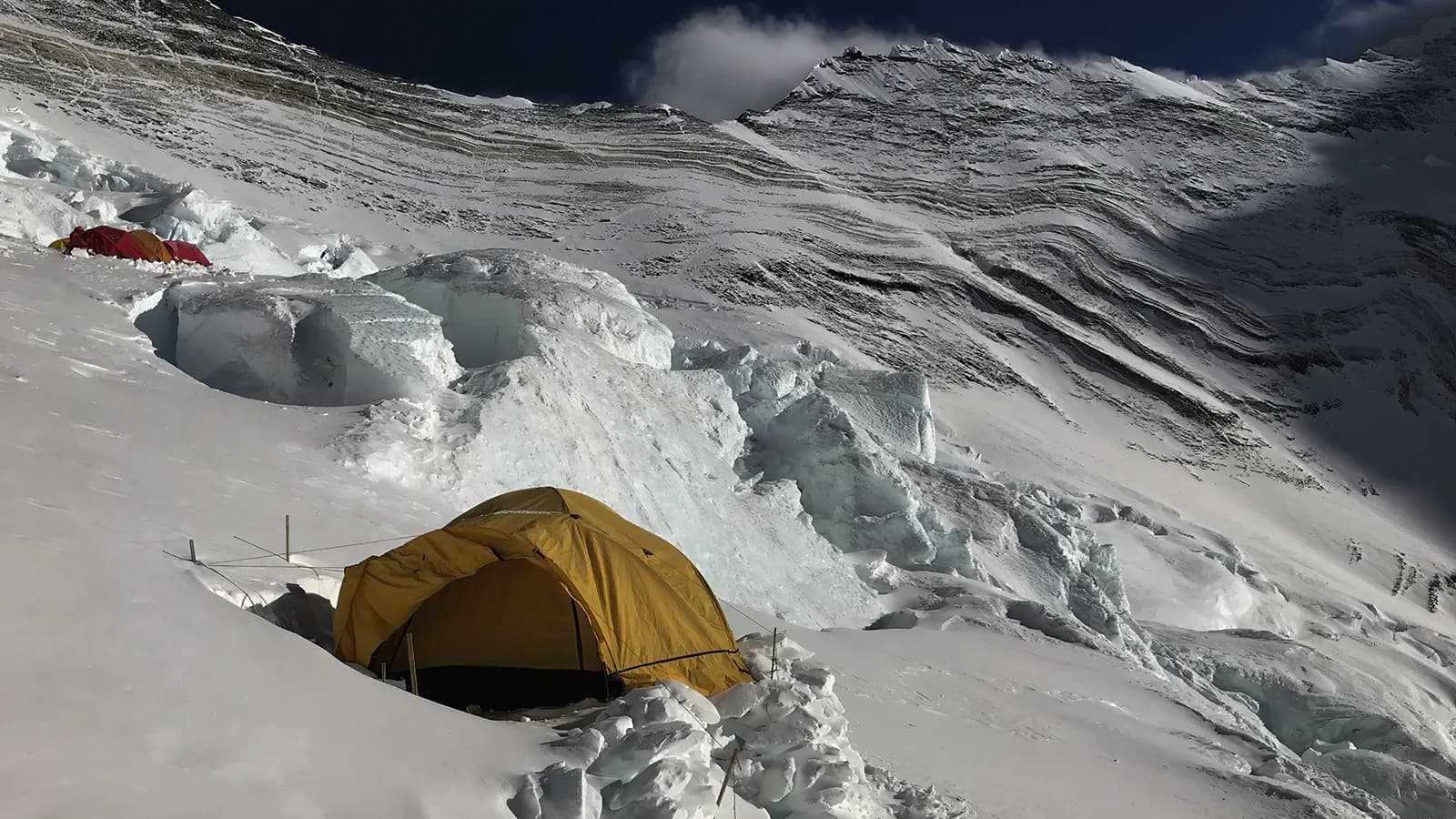
The Everest death zone is the stretch of the mountain above roughly 8,000 metres where the human body can no longer adapt to the thin air and instead begins a slow, steady decline. It is not a dramatic line painted across the snow but a physiological reality: above this altitude, every hour costs the body more than it can recover, which is exactly why climbers and doctors have used the stark name for more than 70 years. This guide explains what the death zone actually is, the oxygen and pressure science behind its danger, what it does to the brain and lungs, and how climbers manage to pass through it at all — all grounded in physiology rather than sensationalism.
It pairs with our companion pieces on the Everest summit success rate and how many people die on Everest, and with the trekker-focused altitude sickness guide for the milder altitudes most travellers reach.
Key takeaways
- The "death zone" is everywhere above ~8,000 metres; the term was coined by Swiss doctor Edouard Wyss-Dunant in 1952.
- The danger is driven by low air pressure, not a lower oxygen percentage — the air is still ~21 percent oxygen.
- Summit barometric pressure is about 253 mmHg, roughly a third of sea level's ~760 mmHg, so only about a third of the usable oxygen is available.
- Blood oxygen saturation can fall to levels that would be a hospital emergency anywhere else, starving every organ at once.
- The body cannot acclimatise above 8,000 m; it can only slowly deteriorate, so time in the zone must be minimised.
- HACE (brain swelling) and HAPE (fluid in the lungs) are the severe, fast-moving altitude illnesses, and descent is the only true treatment.
What the death zone is — and where the name came from
The phrase "death zone" entered mountaineering through Swiss physician Edouard Wyss-Dunant, who took part in the 1952 Swiss expedition to Everest. He described everything above 8,000 metres as the lethal zone — the altitude at which, in his words, the body cannot adapt further to the lack of oxygen and begins to fail. Over the following decades "lethal zone" softened in everyday language into "death zone," but the meaning is the same.
The 8,000-metre figure is a convention rather than a precise physiological cliff. There is no exact altitude where a switch flips; the boundary shifts a little with weather, conditions and the individual. But it is a useful and widely accepted marker, and it applies to all fourteen of the world's peaks that rise above 8,000 metres. Everest, at 8,849 metres, has the most extreme death-zone environment of any of them.
The real problem: pressure, not percentage
The most common misconception about high altitude is that "there is less oxygen in the air." Strictly, that is not true. The air at the summit of Everest is still about 21 percent oxygen, exactly as it is at sea level. What changes is the atmospheric pressure pushing that oxygen into your lungs and across into your blood.
The barometric pressure numbers
At sea level, atmospheric pressure is around 760 millimetres of mercury (mmHg). The first direct measurement of pressure on Everest's summit was made by Dr. Christopher Pizzo during the American Medical Research Expedition to Everest in 1981, and reported in the Journal of Applied Physiology — about 253 mmHg, roughly one-third of the sea-level value.
Because the amount of oxygen your body can extract depends on that pressure, only about a third of the oxygen available at sea level can actually be used at the summit. The air is not "thinner on oxygen"; it is thinner on pressure, and the effect on the body is the same — profound oxygen starvation, known as hypoxia.
| Location | Approx. barometric pressure | Usable oxygen vs sea level | |---|---|---| | Sea level | ~760 mmHg | 100% | | Everest Base Camp (~5,364 m) | ~half of sea level | ~50% | | Everest summit (8,849 m) | ~253 mmHg | ~33% |
What it does to the blood
The clearest way to grasp the severity is blood oxygen saturation (SpO2) — the percentage of haemoglobin carrying oxygen, the same reading a pulse oximeter gives at the doctor's office. At sea level a healthy reading is 95–100 percent. High in the death zone, climbers' saturation can fall into the 50–60 percent range. At sea level a reading that low would trigger emergency hospitalisation. On Everest it is simply the price of being there.
Physiological research led by figures such as John B. West found that summit climbers survive only through an extraordinary degree of hyperventilation, breathing so hard that it keeps the oxygen pressure inside the lungs at a barely viable level. The body is operating at the very edge of what is compatible with consciousness.
Why the body cannot adapt
Lower on a mountain, the body acclimatises: given days and weeks, it produces more red blood cells, adjusts its breathing and chemistry, and gradually copes with thinner air. This is the slow process trekkers respect on the way to Everest Base Camp, and rushing it is what causes altitude sickness.
Above roughly 8,000 metres, that adaptation stops working. The oxygen deficit is simply too large for the body's compensations to close. Instead of adjusting, the body enters a state of steady decline — burning through reserves, losing strength, and accumulating damage. This is the defining feature of the death zone: it is not a place you get used to, only a place you deteriorate in. That is why survival time without supplemental oxygen is measured in hours to a day or two for even elite climbers, and why the universal strategy is to spend as little time up there as possible.
What hypoxia does to the body
Severe oxygen starvation affects every system at once. The effects most relevant to survival are:
The brain
The brain is an oxygen-hungry organ, using around 20 to 25 percent of the body's oxygen supply under normal conditions. When that supply is cut by two-thirds, cognition suffers fast: judgment fades, simple decisions become hard, memory slips, and in severe cases climbers experience confusion or hallucinations. Impaired thinking is itself a major hazard, because it undermines the very decisions — turn around, descend, check the oxygen — that keep a climber alive.
High-altitude cerebral oedema (HACE)
HACE is dangerous swelling of the brain caused by extreme altitude. An early warning sign is often the loss of the ability to walk a straight line (ataxia), progressing to drowsiness, confusion and, if untreated, loss of consciousness. It can become life-threatening within hours.
High-altitude pulmonary oedema (HAPE)
HAPE is a build-up of fluid in the lungs. It typically begins with breathlessness on exertion and a dry cough, advancing to severe breathing difficulty even at rest. Because it directly worsens the body's ability to take in oxygen, it can spiral quickly.
For both HACE and HAPE, the single effective treatment is the same: descent. Supplemental oxygen and medication can buy time, but going down to thicker air is what actually reverses them. Our altitude sickness guide covers the milder, more common forms of altitude illness that affect ordinary trekkers far below this zone.
The heart and the rest of the body
To compensate for low oxygen, heart rate climbs and the cardiovascular system works overtime, raising strain. The extreme cold and very dry air also drive rapid fluid loss and frostbite risk. Appetite vanishes, sleep is broken, and the body struggles to maintain itself — all while doing the hardest physical work of the climb.
How climbers survive it
Given all of that, how does anyone pass through the death zone and return? The answer is not that they overcome it but that they minimise their exposure and stack the odds:
- Supplemental oxygen. Bottled oxygen effectively "lowers" the mountain by several thousand metres for the body. As covered in our summit success rate article, climbers using oxygen are vastly more likely to summit and survive — only about 1.7 percent of all Everest summits have ever been done without it.
- Speed and timing. Climbers move during narrow good-weather windows and aim to be in the death zone for the shortest time possible, ideally summiting and descending within a single push.
- Turnaround times. A strict cut-off hour forces descent whether or not the summit is reached, because the descent is where exhaustion and depleted reserves are most dangerous.
- Fixed ropes and Sherpa support. Pre-fixed ropes, stocked camps and experienced Sherpa teams reduce the time and energy each climber must spend up high.
The mindset that keeps climbers alive is humility: the death zone is not conquered, only crossed quickly, and the mountain sets the terms.
Why this matters even if you never climb
The overwhelming majority of visitors to the Everest region are trekkers, not climbers, and they never enter the death zone. A trek to Everest Base Camp tops out thousands of metres below 8,000, in terrain where careful acclimatisation makes altitude illness manageable. Understanding the death zone still matters, though, because it explains why the rules of altitude are so strict lower down: the same physics that makes 8,000 metres lethal is what makes a sensible ascent profile and the willingness to descend so important at every height. Respect the science low on the mountain, and the high mountain's lessons never have to apply to you.
The bottom line
The Everest death zone is a precise idea wearing a dramatic name: above about 8,000 metres, low air pressure cuts usable oxygen to roughly a third of sea level, the body can no longer acclimatise, and every system is starved at once. Climbers survive not by adapting but by carrying oxygen, moving fast through narrow weather windows, and turning around in time. It is one of the most genuinely hostile environments humans deliberately enter — and understanding the physiology, rather than the mythology, is the most respectful way to make sense of it.
Sources
- Edouard Wyss-Dunant (origin of the term) — Wikipedia: https://en.wikipedia.org/wiki/Edouard_Wyss-Dunant
- Death zone — Wikipedia: https://en.wikipedia.org/wiki/Death_zone
- West, J.B. et al. — "Barometric pressures at extreme altitudes on Mt. Everest: physiological significance," Journal of Applied Physiology (1983): https://journals.physiology.org/doi/pdf/10.1152/jappl.1983.54.5.1188
- "Into Thick(er) Air? Oxygen Availability at Humans' Physiological Frontier on Mount Everest," iScience / PMC: https://pmc.ncbi.nlm.nih.gov/articles/PMC7756134/
- Biology Insights — What Is Everest's Death Zone and Why Is It Deadly: https://biologyinsights.com/what-is-everests-death-zone-and-why-is-it-deadly/
- Mount Everest — Wikipedia (altitude and pressure figures): https://en.wikipedia.org/wiki/Mount_Everest
Frequently asked questions
- What is the death zone on Everest?
- The death zone is the name climbers give to all terrain above roughly 8,000 metres, where the air is so thin that the human body cannot acclimatise and instead slowly deteriorates no matter how fit or experienced the person is. The term was coined by Swiss physician Edouard Wyss-Dunant during the 1952 Swiss Everest expedition, who originally called it the lethal zone.
- Why is the death zone so dangerous?
- The core problem is low atmospheric pressure rather than a lack of oxygen in the air itself. At 8,000 metres the pressure is only about a third of sea level, so each breath delivers roughly a third of the usable oxygen even though the air is still 21 percent oxygen. Blood oxygen saturation falls to levels that would be a medical emergency anywhere else, and every organ is starved at once.
- How much oxygen is there in the death zone?
- The percentage of oxygen in the air does not change with altitude, it is still about 21 percent. What changes is the pressure pushing that oxygen into your lungs and blood. At the summit of Everest the barometric pressure is around 253 millimetres of mercury, about a third of the roughly 760 at sea level, so only about a third as much oxygen is actually available to breathe.
- How long can a person survive in the death zone?
- Without supplemental oxygen the window is short and individual, commonly cited as a day or two at most for elite climbers, with some enduring longer in rare cases. The body is using up reserves faster than it can replace them, so the practical rule for climbers is to spend as little time above 8,000 metres as possible and never to linger.
- What are HACE and HAPE?
- HACE is high-altitude cerebral oedema, a dangerous swelling of the brain whose early sign is often an inability to walk in a straight line, progressing to confusion and loss of consciousness. HAPE is high-altitude pulmonary oedema, a build-up of fluid in the lungs that causes breathlessness and a cough. Both can be fatal within hours, and descent is the only definitive treatment.
- Can the body acclimatise to the death zone?
- No. Acclimatisation works lower down, where the body can gradually make more red blood cells and adjust over days and weeks, but above about 8,000 metres no human can adapt fully. Beyond that altitude the body is in steady decline and can only buy time, which is exactly why the zone earned its name.
- How do climbers survive the death zone at all?
- They minimise their exposure and lean heavily on supplemental oxygen, which effectively lowers the felt altitude by thousands of metres. They move during narrow good-weather windows, use fixed ropes and Sherpa support, and set strict turnaround times so they are heading down before reserves run out. The strategy is not to beat the death zone but to pass through it quickly.
- Is the death zone the same on every mountain?
- The 8,000-metre threshold is a rough, widely used convention rather than a precise line, and it applies to all of the world's fourteen mountains that rise above that height. The exact altitude at which the body crosses into serious danger varies slightly with conditions, weather and the individual, but Everest, as the highest peak, has the most extreme death-zone environment of all.
Related posts
Everest Base Camp Trek Difficulty: How Hard Is It?
An honest look at Everest Base Camp trek difficulty — altitude, daily hours, the up-and-down trail, fitness needed, and why slow beats strong.
Read postEverest Three High Passes: Pass-Day Survival Guide
A field guide to the Everest Three High Passes — what Kongma La, Cho La and Renjo La pass days really demand, plus fitness, gear and turnaround calls.
Read postEverest vs Annapurna Difficulty: An Honest Compare
Everest vs Annapurna difficulty compared by altitude, days, terrain and risk — across base camps, passes and easy treks, so you pick the right trail.
Read post