Kathmandu Sightseeing: A Sights-First Guide (2026)
A sights-first guide to Kathmandu sightseeing — the UNESCO temples, old city, viewpoints and museums worth your time, with entry fees and timing.
Kathmandu rewards the slow looker — a single carved strut or a circling line of prayer wheels can hold more than a whole rushed afternoon.
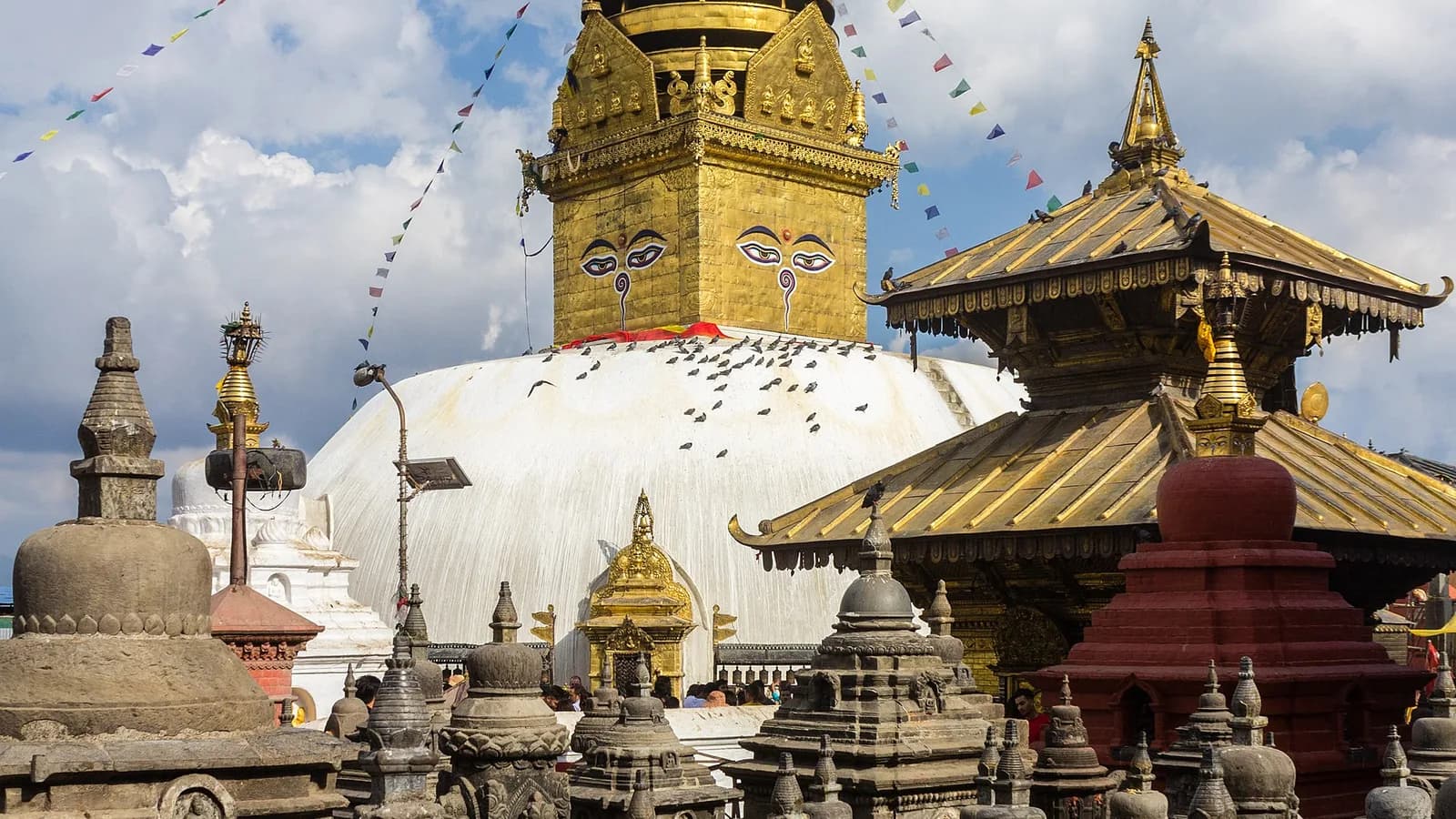
If you want a Kathmandu sightseeing plan built around the sights themselves — what to see, how the city is laid out, and which places reward your limited hours — this is that guide. The Kathmandu Valley holds one of the densest concentrations of living heritage in Asia: seven UNESCO-listed monument zones, gilded pagoda temples, vast white stupas ringed by prayer wheels, and medieval palace squares where artisans still carve and trade. This article is about the places, organised the way you actually experience them. For the booking side — private versus group tours, hiring a guide and not overpaying — see our companion Kathmandu day tours guide, which we link back to throughout.
Key takeaways
- The valley's UNESCO listing covers seven monument zones; most first-timers see four headline sites well in a single day — Swayambhunath, Boudhanath, Pashupatinath and Kathmandu Durbar Square.
- The old city on foot — Durbar Square, the Newar lanes and Thamel — is the most atmospheric part of Kathmandu sightseeing and the part guides often rush.
- Entry fees are charged per site and revised periodically; treat any figure as directional and reconfirm, because they add up across a full day.
- Two to three days turns a checklist into an experience: one city day, one day trip to Patan or Bhaktapur, and time to slow down.
- Autumn and spring are the most comfortable seasons; for mountain views you leave the city for the valley rim, weather permitting.
How Kathmandu's sights are laid out
Kathmandu sightseeing makes far more sense once you picture the geography. The valley is small — most visitor sites sit within roughly an 8 km radius of the centre — but traffic makes it feel larger, so grouping sights by area saves hours.
Think of four clusters:
- The old city core — Kathmandu Durbar Square, the surrounding Newar lanes and nearby Thamel — walkable and dense.
- The stupa sites — Swayambhunath to the west, Boudhanath to the northeast — each a short drive out.
- Pashupatinath — the great Hindu temple complex on the Bagmati, near Boudhanath on the city's east side.
- The sister cities and the rim — Patan just across the river, Bhaktapur further east, and the hill viewpoints beyond.
A sensible plan strings nearby clusters together so you are not crossing the city twice. Our getting around Kathmandu guide covers ride apps, taxis and walking, and the Kathmandu taxi fare guide helps you avoid overpaying between sites.
The seven UNESCO monument zones, briefly
When people talk about the Kathmandu Valley World Heritage Site — inscribed by UNESCO in 1979 — they mean seven distinct "monument zones" that together capture the artistic peak of the Malla period. Knowing them helps you read any itinerary:
- Kathmandu Durbar Square — the old royal palace complex, home to the living goddess Kumari, Hanuman Dhoka and the Kasthamandap.
- Patan Durbar Square — across the river in Lalitpur, often called the finest concentration of Newar architecture in the valley.
- Bhaktapur Durbar Square — a remarkably preserved medieval city and the centrepiece of the most atmospheric day trip.
- Swayambhunath — the hilltop "Monkey Temple," one of Nepal's oldest religious sites, with sweeping valley views.
- Boudhanath — among the largest stupas in the world and the heart of Tibetan Buddhist life in Kathmandu.
- Pashupatinath — the holiest Hindu temple complex in Nepal, on the banks of the sacred Bagmati.
- Changu Narayan — an ancient hilltop temple, considered the oldest in the valley, often paired with Bhaktapur or Nagarkot.
We go deeper on the individual sites in dedicated guides to Kathmandu Durbar Square, Boudhanath Stupa, Swayambhunath, Pashupatinath and the Patan / Lalitpur old city.
The four headline sights
If your time is tight, these four are the spine of Kathmandu sightseeing. Together they span the valley's whole story — ancient stupa, Tibetan-Buddhist hub, Hindu cremation ghats and royal palace square — and they are what most one-day itineraries cover.
Swayambhunath (the Monkey Temple)
A whitewashed dome topped by the painted eyes of the Buddha, reached by a long stone stairway (or an easier road approach from the back). The hilltop gives the best in-city panorama over the valley, and the resident monkeys give the site its nickname. Go early for calm and clearer light.
Boudhanath
One of the largest stupas anywhere, and the centre of Tibetan-Buddhist Kathmandu. The pleasure here is simply to join the clockwise circuit of the great dome among pilgrims spinning prayer wheels, then watch the plaza from a rooftop cafe. Late afternoon, as butter lamps are lit, is the most atmospheric hour.
Pashupatinath
The holiest Hindu temple in Nepal, set along the Bagmati with cremation ghats where open-air funeral rites take place. Only Hindus may enter the inner sanctum, but the riverside terraces, shrines and sadhus make a powerful, sometimes sombre visit. Approach it respectfully — our temple etiquette guide explains the basics.
Kathmandu Durbar Square
The medieval royal heart of the city: palace courtyards, the towering temples of the square, and the Kumari Ghar, home of the living goddess. It anchors the old city and flows straight into the walkable lanes around it, which is why we treat it as the start of any on-foot exploration below.
Sightseeing on foot: the old city
Here is the part many guided days skim, and the part independent visitors most enjoy. The web of Newar lanes between Kathmandu Durbar Square and Thamel is a living museum: hidden courtyard shrines, brass and singing-bowl workshops, vegetable markets and centuries-old water spouts, all packed into a few walkable blocks.
A simple half-day on foot might run from Durbar Square north through the old trading streets toward Thamel, pausing at courtyard temples and craft shops along the way. It costs nothing beyond the Durbar Square ticket, and it is where Kathmandu feels least like a checklist. If shopping tempts you, our guides to what to buy in Nepal and pashmina help you tell quality from tourist tat.
Beyond the city: sister cities and viewpoints
Some of the best days of Kathmandu sightseeing involve leaving the immediate centre for the valley's other old cities and its hill rim.
Patan and Bhaktapur
The two sister cities are the natural next step. Patan, just across the river in Lalitpur, packs an extraordinary density of temples and museums into a walkable old core, and its Patan Museum is among the finest in the country. Bhaktapur, a short drive east, is the most intact medieval townscape in the valley — famous for its Durbar Square, pottery square and Newari food. Our Bhaktapur day trip guide covers it in full.
Hill viewpoints for mountain views
The city itself does not give big Himalayan views; for those you go to the rim. Nagarkot is the classic sunrise viewpoint over the high peaks, though we weigh up the hype in is Nagarkot sunrise worth it. Chandragiri Hills, reached by a short cable-car ride, delivers a ridge-top panorama with little effort — see our Chandragiri cable car guide. Quieter Dhulikhel offers a relaxed Newar town and gentle walks. The honest caveat with all three: they depend entirely on clear, haze-free weather, so save them for the best days.
Entry fees: what they really cost
This is where many visitors get caught out, because entrance fees are charged separately at each monument and are revised from time to time. They are not trivial across a full day, so it pays to know roughly what to expect and to confirm whether any tour quote includes them.
A few reference points from the official Nepal Tourism Board listing, which you should reconfirm at the time of travel:
| Site | Foreign (non-SAARC) entry fee context (as of mid-2025) | |---|---| | Bhaktapur Durbar Square | Raised to USD 15 / about NPR 2,000 from 17 July 2025 — the most expensive single site | | Kathmandu Durbar Square | Around NPR 1,000 | | Patan Durbar Square | Around NPR 1,000 | | Pashupatinath | Around NPR 1,000 per entry | | Boudhanath | Around NPR 400 | | Changu Narayan | Around NPR 300 | | Swayambhunath | Around NPR 200 |
Treat these figures as directional rather than exact: the Nepal Tourism Board and individual municipalities adjust them periodically, some operators and listings quote higher revised rates, and the SAARC-national rate is lower than the general foreign rate. The official Nepal Tourism Board heritage-fee page is the authority to check before you go. The practical rule: budget for several hundred rupees of tickets per site, carry some cash, and if you book a tour, ask in writing whether the price includes entrance fees.
How long you need, and when to go
For the city's headline sights, one full day covers four UNESCO monuments at a steady pace. Two days lets you add Patan or Bhaktapur without rushing, and three days lets you slow down, walk the old city and fit in a viewpoint or a museum. If you have only a single day, our Kathmandu day tours guide includes a balanced one-day route.
On timing, autumn — roughly late September to November — brings the clearest skies and the most comfortable temperatures for walking the squares, and it coincides with the big festivals of Dashain and Tihar. Spring (around March to May) is the warm runner-up, with rhododendrons in the hills. The monsoon keeps the valley lush but often clouds the rim, while winter mornings are cold yet frequently crystal clear. Our best time to visit Nepal guide breaks the year down month by month, and the best places to visit in Nepal guide shows how the valley fits a wider trip.
A balanced two-day sightseeing plan
If you want a ready-made shape for your visit, this avoids the rush while still hitting the essentials:
- Day 1 (city): Swayambhunath at a quieter hour for the views, then Boudhanath for a slow circuit of the great stupa and a rooftop lunch, then Pashupatinath in the afternoon, finishing on foot around Kathmandu Durbar Square and the old-city lanes as the light softens.
- Day 2 (a sister city): Bhaktapur for the morning — its Durbar Square, pottery square and back streets — and Patan or Changu Narayan in the afternoon, or swap in a hill viewpoint if the sky is clear.
However you build it, the best Kathmandu sightseeing is paced to the place. The valley rewards the slow looker far more than the fast collector of monuments — give a single carved strut, a circling line of prayer wheels or a quiet courtyard shrine the few extra minutes it deserves, and the city opens up.
Sources
- Kathmandu Valley — UNESCO World Heritage Centre
- Heritage site entry fees — Nepal Tourism Board
- Tourist Entry Fee — Info Bhaktapur (Heritage Tourism)
- Bhaktapur Municipality increases entry fee for Non-SAARC tourists — The Tourism Times
- Entrance Fees for Kathmandu UNESCO Sites (2026 Guide) — Third Eye Adventure
- More than 1.1 million foreign visitors arrived in Nepal in 2025 — The Himalayan Times
Frequently asked questions
- What are the must-see sights for Kathmandu sightseeing?
- The headline sights are the four most-visited UNESCO monuments — Swayambhunath, Boudhanath, Pashupatinath and Kathmandu Durbar Square — plus the old city's temple-packed lanes around Durbar Square and Thamel. With more time, Patan and Bhaktapur add two more medieval cities and Changu Narayan adds the valley's oldest temple.
- How many days do you need for Kathmandu sightseeing?
- One full day covers the four headline UNESCO sites at a steady pace. Two days lets you add Patan or Bhaktapur without rushing, and three days lets you slow down, wander the old city on foot and fit a viewpoint or museum. Most first-timers find two days a comfortable minimum for the valley.
- How much are Kathmandu sightseeing entry fees?
- Fees are charged separately at each monument and revised periodically. As of mid-2025 the Nepal Tourism Board listed roughly NPR 1,000 for Kathmandu and Patan Durbar Squares, NPR 1,000 per entry at Pashupatinath, NPR 400 at Boudhanath and NPR 200 at Swayambhunath for foreign visitors, while Bhaktapur rose to USD 15 (about NPR 2,000) from 17 July 2025. Always reconfirm before you go.
- Can you do Kathmandu sightseeing on foot?
- The old city around Kathmandu Durbar Square, Thamel and the Newar lanes between them is best explored on foot, and it is the most atmospheric part of any visit. Sites that sit apart — Swayambhunath, Boudhanath, Pashupatinath and the day-trip cities — are better reached by taxi, a ride app or a hired car.
- What is the best time of year for Kathmandu sightseeing?
- Autumn (roughly late September to November) brings the clearest skies and most comfortable temperatures, followed by spring (around March to May). The monsoon from June to August keeps the valley green but often hides the surrounding hills, and winter mornings can be cold but very clear.
- Do you need a guide for Kathmandu sightseeing?
- A guide is not legally required for valley sightseeing the way it is for many treks, but a licensed guide adds context to temples and squares whose meaning is easy to miss. Independent visitors can self-guide by taxi and reading, while a guide suits anyone who wants the history explained on the spot.
- Which Kathmandu sights are good for sunrise or mountain views?
- Within the city, Swayambhunath gives a fine panorama over the valley rather than the high peaks. For Himalayan views you head to the valley rim — Nagarkot for a classic sunrise, Chandragiri by cable car, or Dhulikhel on the quieter eastern edge — and all of them depend on clear, haze-free weather.
- Is Kathmandu sightseeing suitable for families with children?
- Yes, with some planning. Stupas with open plazas like Boudhanath and Swayambhunath, and the open squares of Patan and Bhaktapur, give children room to move, while Pashupatinath's cremation ghats are a more solemn place to judge by your family's comfort. Traffic and uneven steps mean keeping young children close.
Related posts
Boudhanath Stupa: Architecture & Symbolism Guide
How to read the Boudhanath stupa — its mandala shape, the Buddha eyes, the 13 golden steps, and the meaning behind the clockwise kora walk.
Read postMonkey Temple Kathmandu: History, Myth & Meaning
The story behind the Monkey Temple in Kathmandu (Swayambhunath): its self-arisen legend, 5th-century roots, UNESCO status, and why it matters.
Read postPatan Durbar Square: A Visitor's Guide to Lalitpur
Patan Durbar Square is Lalitpur's UNESCO-listed palace plaza of Newari temples, courtyards and bronze art. History, monuments, fees and tips.
Read post