Snow Leopard Trek Dolpo: A Realistic Guide
Plan a snow leopard trek in Dolpo, Nepal: where the cats live, real odds of a sighting, Shey Phoksundo permits, best season and ethics.
In Dolpo the snow leopard is less an animal you see than a presence you walk inside of.
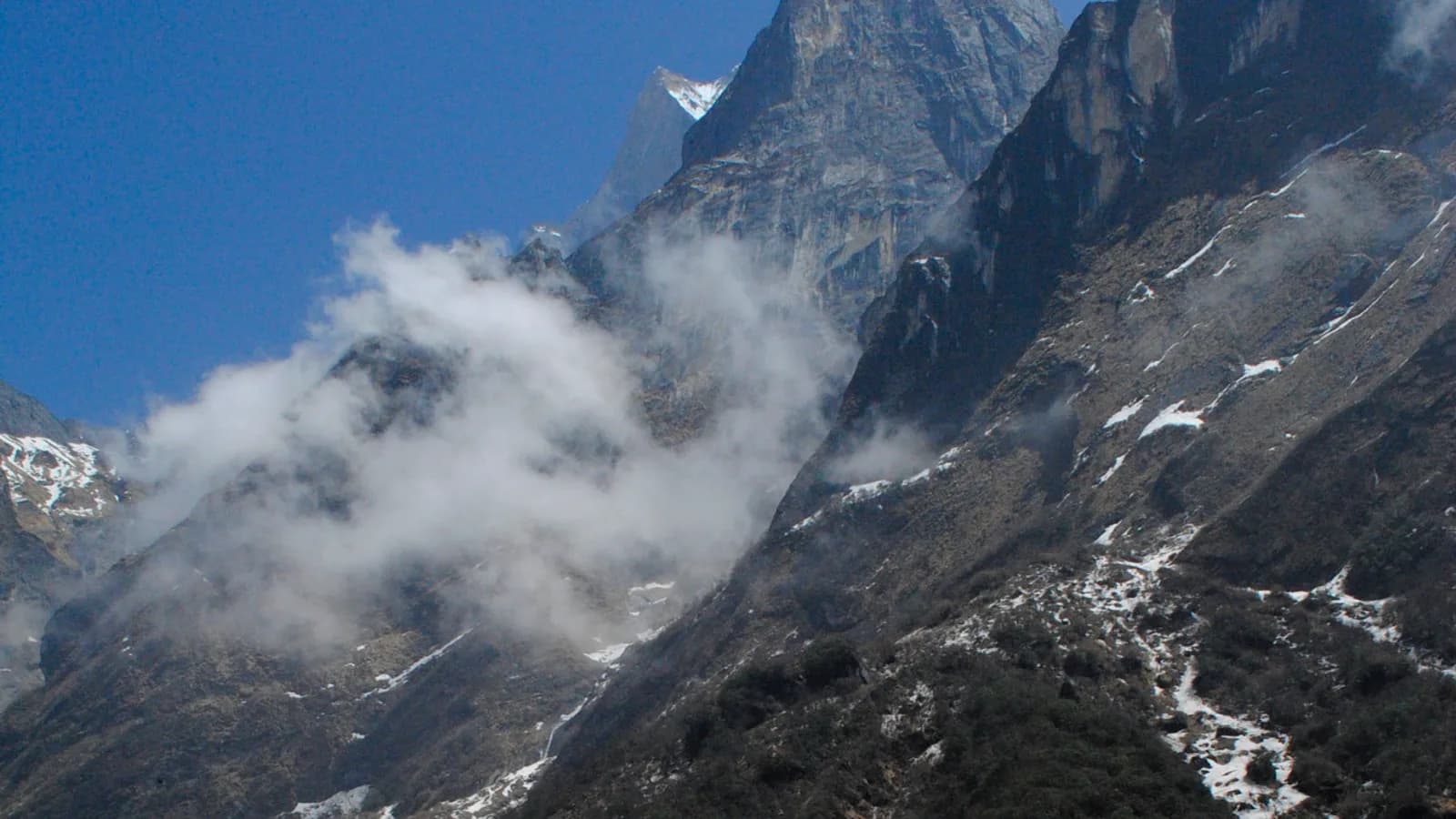
The snow leopard trek in Dolpo is one of the most romantic ideas in Himalayan travel and one of the most misunderstood. People picture the cat appearing on a ridge at golden hour; the reality is weeks of walking through Nepal's wildest trans-Himalayan desert, scanning scree slopes through a scope, and counting yourself lucky to find fresh tracks. Dolpa district, in far-west Nepal, holds the country's densest snow leopard population, so if you are going to chase this ghost anywhere, this is the place. But a snow leopard trek in Dolpo is really a high-altitude expedition with a wildlife dream attached, and going in with clear expectations is the difference between a profound trip and a disappointed one.
This guide covers where the cats actually live, what the latest population numbers say, your honest odds of a sighting, the permits and logistics, the best season, and how to do it ethically. For the broader picture of the region, pair this with our main Dolpo trek guide and the dedicated Upper Dolpo overview.
Key takeaways
- Dolpa holds Nepal's largest snow leopard concentration, centred on Shey Phoksundo National Park and the surrounding restricted valleys.
- Nepal's first national estimate (April 2025) put the population at about 397, with a range of roughly 331 to 476; a 2024 survey in eastern Dolpa found about 30 cats outside the park.
- Sightings are rare; plan for tracks, scat and blue sheep rather than a guaranteed leopard, and treat any glimpse as a gift.
- Winter (roughly December to February) offers the best wildlife odds but the harshest conditions; late autumn and early spring trade odds for comfort.
- Permits are mandatory and guided only: a Shey Phoksundo National Park entry permit plus a restricted-area permit through a registered agency.
- The region is the setting of Peter Matthiessen's The Snow Leopard and George Schaller's blue sheep fieldwork, which is why the cat looms so large here.
Why Dolpo is snow leopard country
Snow leopards need three things: rugged, broken terrain they can stalk and hide in, a reliable prey base, and few people. Dolpo delivers all three. Sitting in the rain shadow behind the Dhaulagiri massif, it is a cold high desert of ochre cliffs, side valleys and ridgelines above 4,000 metres, threaded by walled Tibetan-Buddhist and Bon villages that have shared this landscape with predators for centuries.
The keystone is the Himalayan blue sheep, or bharal, the snow leopard's principal prey across much of its range. Where blue sheep herds are healthy, leopards follow. Dolpo's blue sheep populations are strong enough that they were the original scientific draw here: in 1973 the biologist George Schaller travelled to inner Dolpo to study bharal mating behaviour, and the writer Peter Matthiessen went with him hoping to glimpse the cat. Neither saw a snow leopard, and that absence became the heart of Matthiessen's 1978 book.
The protected core: Shey Phoksundo
Most of the prime habitat lies within or beside Shey Phoksundo National Park, Nepal's largest national park, which spans Dolpa and Mugu districts and protects an enormous sweep of trans-Himalayan terrain. The park's centrepiece for trekkers is the turquoise Phoksundo Lake, but for wildlife the value is the protected prey base and the corridors of cliff and valley that snow leopards use. The park also shelters Himalayan wolves, musk deer, and a rich community of high-altitude birds, so even a leopard-free trip is full of life if you watch carefully.
How many snow leopards are there?
For decades, snow leopard numbers in Nepal were guesswork. That changed in April 2025, when the government released the country's first consolidated national estimate of about 397 snow leopards, with a credible range of roughly 331 to 476. The figure synthesised studies carried out between 2015 and 2024 using camera traps and genetic analysis of scat, following internationally recognised survey guidelines, under the leadership of Nepal's Department of National Parks and Wildlife Conservation with support from WWF Nepal.
Dolpa is central to that total. A systematic camera-trap survey reported in 2024 covered parts of eastern Dolpa outside Shey Phoksundo National Park and estimated about 30 snow leopards at a density near 1.5 cats per 100 square kilometres across municipalities including Chharka Tangsong, Kaike and Dolpo Buddha. Because that figure is only for areas outside the park, the district as a whole clearly supports a substantial population, which is why Dolpo is consistently described as Nepal's snow leopard stronghold.
| Snow leopard numbers | Estimate | Note | | --- | --- | --- | | Nepal national estimate (2025) | ~397 (range ~331-476) | First consolidated national figure | | Eastern Dolpa, outside the park (2024) | ~30 | Camera-trap survey, density ~1.5 per 100 km2 | | Global share held by Nepal | a single-digit percentage | Small country, outsized importance |
All figures are point estimates from population assessments and carry uncertainty; treat them as the best current science rather than exact counts.
What are your real odds of a sighting?
Be honest with yourself before you book: most trekkers do not see a snow leopard, and that is normal. The cat is solitary, mostly active at dawn and dusk, and so well camouflaged against grey rock that experienced guides can lose one in seconds. Researchers themselves rely overwhelmingly on remote camera traps precisely because direct sightings are so uncommon. Matthiessen walked for two months and never saw his.
What you can realistically expect on a good trip is a rich trail of evidence: pugmarks in snow or dust, scrapes, scent marks, kills, and scat, plus the blue sheep that prove the predator is near. Dedicated winter wildlife trips, led by local spotters who know individual valleys and glass the slopes for hours with high-powered scopes, do produce sightings, but they are the exception rather than the rule. Go for the landscape, the culture and the chance; if the cat appears, it is a memory for life.
How to improve your chances
- Go in winter when snow concentrates blue sheep, and the leopards that hunt them, on more watchable ground.
- Hire local spotters and budget extra days to sit and scan rather than racing between camps.
- Bring or rent good optics — a spotting scope and binoculars matter far more than a long camera lens for actually finding the animal.
- Move slowly and quietly, watch the blue sheep, and let the prey lead you to the predator's likely ground.
Permits, access and logistics
A snow leopard trek in Dolpo is a restricted-area expedition, so the paperwork is non-negotiable. You will need a Shey Phoksundo National Park entry permit plus a restricted-area permit, both arranged through a registered Nepali trekking agency with a licensed guide. Independent, unguided trekking is not permitted in these zones, and the restricted-area permit cannot be bought as a lone walker.
Costs differ sharply between Lower Dolpo, which uses a far cheaper restricted-area permit and centres on Phoksundo Lake and the Tarap valley, and Upper Dolpo, which pushes north toward Shey Gompa and the Tibetan border on a longer, much more expensive permit (USD 500 for the first 10 days, then USD 50 per day, as of mid-2026). The Shey Phoksundo park entry fee is separate and modest by comparison (around NPR 3,000 plus VAT for foreign visitors, as of 2026). Fees change frequently, so confirm current rates with your operator and the Nepal Tourism Board. For the wider rules, see our guide to Nepal trekking permits.
Access is by air: most groups fly Kathmandu to Nepalgunj, then take a short mountain flight to the Juphal airstrip in Dolpa, where the walking begins. A rough road now reaches the Dunai and Juphal area as a weather backup, but flights remain the norm and can be delayed by cloud, especially in winter.
| Logistics snapshot | Detail | | --- | --- | | District / region | Dolpa, Karnali Province, far-west Nepal | | Core protected area | Shey Phoksundo National Park | | Guiding | Licensed guide and registered agency mandatory | | Main access | Kathmandu - Nepalgunj - Juphal flight | | Best wildlife window | Roughly December to February | | Difficulty | High; remote, passes above 5,000 m, basic camping |
Best season for wildlife versus comfort
This is the central trade-off of a snow leopard trip. The classic trekking seasons in Dolpo are spring and autumn, when the weather is most stable and the flights into Juphal most reliable — the same logic that governs trekking seasons across Nepal. For scenery and comfort, those shoulder seasons are ideal.
For wildlife, however, the cold heart of winter is widely considered the best window, because heavy snow at altitude pushes blue sheep down to lower, more concentrated ground and the snow leopards follow. Winter also means tracks show beautifully in fresh snow. The costs are real: bitter cold, short daylight, genuine risk of being weathered in at Juphal, and camping in sub-zero conditions. Many travellers split the difference with late autumn or very early spring, accepting lower odds in exchange for a safer, warmer trip.
Conservation and trekking ethically
Snow leopards survive in Dolpo partly because local communities tolerate a predator that occasionally kills their livestock. That balance is fragile. Nepal adopted a national Snow Leopard Action Plan covering 2024 to 2030, with priorities including community engagement, habitat protection and reducing human-wildlife conflict — for example through predator-proof livestock corrals and compensation schemes. Tourism, done right, can support that work; done badly, it adds pressure.
Trek ethically by choosing operators who:
- Keep their distance and never bait, feed, chase or crowd any animal for a photo.
- Employ and pay local people as spotters, guides and porters, keeping money in Dolpo.
- Support conservation and livestock-protection initiatives rather than treating wildlife as a paid-for spectacle.
- Respect the cultural landscape of Dolpo's Bon and Buddhist villages and sacred sites.
Snow leopards are not the only Himalayan predator under pressure, and the same care applies elsewhere — the cat also ranges through high parks like Sagarmatha National Park in the Everest region. If your Dolpo plans don't work out, far-western Rara Lake offers another remote, wildlife-rich corner of Karnali, and you should not set out for any of these without proper high-altitude trekking insurance.
Is the snow leopard trek right for you?
Choose this trek if you are a fit, experienced trekker who finds meaning in remoteness, wildness and the chance of an encounter rather than the certainty of one. It rewards patience, humility and a love of landscape over a tick-list mentality. It is a poor fit if you need comfortable lodges, short days, reliable connectivity or a guaranteed wildlife photo — and it is genuinely unsuitable for anyone without solid high-altitude experience, especially in winter.
Walk into Dolpo for the silence, the blue sheep on the cliffs, the painted monasteries and the deep quiet of a Tibetan world the rest of the Himalaya forgot. If the snow leopard chooses to show itself, that is the rarest of gifts. If it stays hidden, you will still have walked through one of the last great wild places on earth — which, as Matthiessen understood, was always the point.
Sources
- Nepal announces its snow leopard population after first-of-its-kind assessment - Mongabay
- Nepal estimates snow leopard population at 397 - B360 Nepal
- Nepal Reports Stable Snow Leopard Population - WWF (World Wildlife Fund)
- Snow leopard population outside Protected Area of Dolpa unveiled - WWF Nepal
- In 2024, Nepal's elusive snow leopards pounce into spotlight - Mongabay
- Trekking to save Nepal's snow leopards - Nepali Times
- The Snow Leopard (Peter Matthiessen) - Wikipedia
- Shey Phoksundo permit details - Phoksundo.com
- Permits required for the Dolpo trek - Magical Nepal
Frequently asked questions
- What are my real chances of seeing a snow leopard in Dolpo?
- Low, and you should book the trip expecting not to see one. Snow leopards are solitary, superbly camouflaged and thinly spread, so most trekkers come home with tracks, scrapes and scat rather than a sighting. Winter trips with patient local spotters and scopes improve the odds, but even researchers rely mostly on camera traps.
- Is Dolpo really the best place in Nepal for snow leopards?
- Yes, by most accounts Dolpa district holds Nepal's largest snow leopard concentration, centred on Shey Phoksundo National Park and the surrounding trans-Himalayan valleys. The combination of healthy blue sheep numbers, rugged terrain and low human density makes it the country's core habitat for the cat.
- How many snow leopards are there in Nepal and in Dolpo?
- Nepal published its first national estimate in April 2025 at roughly 397 snow leopards, with a plausible range of about 331 to 476. A 2024 camera-trap survey in eastern Dolpa outside the national park recorded about 30 individuals at a density near 1.5 cats per 100 square kilometres, so Dolpa as a whole holds a meaningful share of the national total.
- When is the best time to trek Dolpo for snow leopards?
- For wildlife the cold months from roughly December to February give the best odds, because deep snow can push blue sheep and the leopards that hunt them to lower, more watchable ground. The trade-off is brutal cold, short days and unreliable flights, so many trekkers compromise with late autumn or early spring for comfort and scenery.
- What permits do I need for a Dolpo snow leopard trek?
- You need a Shey Phoksundo National Park entry permit plus a restricted-area permit, and both must be arranged through a registered Nepali agency with a licensed guide. Upper Dolpo costs far more than Lower Dolpo, and fees change, so confirm current rates with your operator and the Nepal Tourism Board before you commit.
- Can I do a snow leopard trek in Dolpo independently?
- No. Dolpo is a restricted area, so a licensed guide and a registered trekking agency are mandatory even after Nepal relaxed the old two-person minimum rule in 2026. You cannot legally buy the restricted-area permit as a fully independent solo walker.
- Is it ethical to go looking for snow leopards?
- It can be, if done well. Responsible operators keep distance, never bait or chase animals, hire local spotters and channel money into communities that share the landscape with predators. Choose an agency that supports conservation and livestock-protection work, and treat any sighting as a privilege rather than a guarantee you paid for.
- What other wildlife might I see in Dolpo?
- Blue sheep are the headline supporting act and the snow leopard's main prey, and you may also see Himalayan wolves, foxes, marmots, musk deer and a strong cast of high-altitude birds such as lammergeiers and Himalayan griffons. Healthy blue sheep herds are the surest sign you are in good leopard country.
- How fit do I need to be for this trek?
- Very fit. Dolpo routes are long, remote and high, often crossing passes above 5,000 metres with basic camping and several days from any road or hospital. Add winter conditions for a wildlife-focused trip and you need solid trekking experience, careful acclimatisation and comprehensive high-altitude insurance.
Related posts
Blue Sheep of Nepal: The Bharal and Where to See It
A trekker's guide to the blue sheep (bharal) of Nepal: habitat, snow leopard link, behaviour, and the best regions to spot this Himalayan caprine.
Read postSnow Leopard in Nepal: Where the Ghost Cat Lives
A traveller's guide to the snow leopard in Nepal: the 397 national estimate, where they live, tracking treks in Dolpo and Kanchenjunga, and realistic sighting odds.
Read postCustomized Trekking Tours Annapurna: Plan It Right
How to plan customized trekking tours in the Annapurna region — routes, permits, the guide rule, seasons and what makes a private itinerary worth it.
Read post