Upper Dolpo Trek 2026: Permits, Route & Crystal Mountain
A factual Upper Dolpo guide for trekkers: the restricted-area permit, the Shey Phoksundo route, season, difficulty, and why this corner of Nepal stays remote.
Behind the Dhaulagiri wall lies a high desert where salt caravans and Bon monasteries still keep Tibetan time.
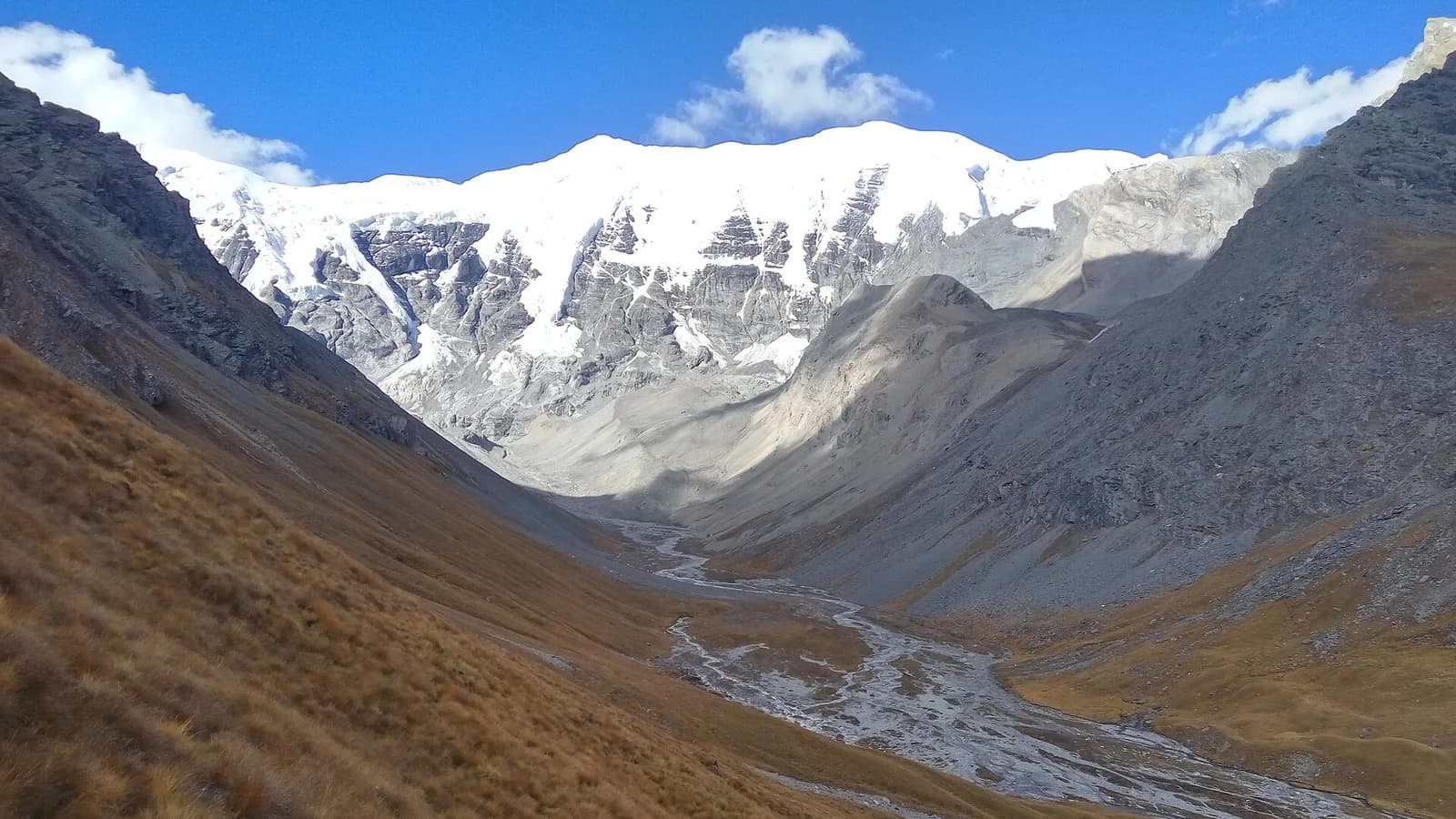
Upper Dolpo is one of the most remote and least-trekked corners of Nepal, a high-altitude desert tucked behind the Dhaulagiri range in the country's far northwest. Cut off from the monsoon by a wall of peaks, it preserves a trans-Himalayan world of Tibetan Buddhist and Bon monasteries, walled fields of barley, and yak caravans that still move along centuries-old salt routes. An Upper Dolpo trek is a serious, multi-week commitment through restricted territory — and that difficulty is exactly why it has stayed so quiet.
This guide lays out what is verified: the permits and fees, how to reach the trailhead, the classic Shey Phoksundo route, the season and difficulty, and the culture you will pass through. For prices and fees, figures are stamped with currency and date, and anything we could not confirm is described qualitatively rather than invented.
Key takeaways
- Upper Dolpo is a restricted area: foreign trekkers need a Restricted Area Permit of USD 50 per person per day (as of June 2026), plus a separate Shey Phoksundo National Park entry permit.
- You cannot trek it solo or arrange the permit yourself — a Nepal-registered agency with a licensed guide must apply on your behalf.
- Plan for a long trip: most itineraries run roughly 24–28 days including flights and rest days, crossing passes above 5,000 m.
- Access is by air: Kathmandu to Nepalgunj, then a short flight to Juphal in Dolpa; these flights are weather-dependent.
- Highlights include Phoksundo Lake (Nepal's deepest), Shey Gompa below sacred Crystal Mountain, and a living Bon and Tibetan Buddhist culture.
- Best seasons are spring (mid-April–May) and autumn (September–October); the desert climate also allows monsoon-season trekking.
Where Upper Dolpo is and why it feels like Tibet
Dolpo lies in Dolpa District in Karnali Province, in Nepal's northwestern corner, hard against the border with the Tibet Autonomous Region. Because the high Himalaya block most of the rain, the landscape is arid and almost lunar — brown ridges, blue rivers, and sudden patches of green where villages irrigate barley and buckwheat. Settlements here sit at some of the highest permanently inhabited elevations on Earth.
The cultural texture is unmistakably Tibetan. The film Himalaya (also released as Caravan), directed by Éric Valli and shot on location in Dolpo over many months, was the first Nepalese film nominated for the Best Foreign Language Film Oscar at the 2000 Academy Awards. It dramatised the yak-and-salt caravans that have crossed between Tibet and Dolpo for centuries, using local villagers, lamas, and chiefs as its cast. That isolation is also why the pre-Buddhist Bon tradition has survived here alongside Tibetan Buddhism.
If you are drawn to this kind of preserved high-Tibetan culture, the nearby Upper Mustang trek — another former forbidden kingdom behind the Himalayan rain shadow — makes a natural companion read.
Shey Phoksundo National Park: the trans-Himalayan core
Most of Upper Dolpo sits inside Shey Phoksundo National Park, the largest national park in Nepal and the only one that straddles the trans-Himalayan zone. Key verified facts:
| Feature | Detail | | --- | --- | | Established | 1984 | | Area | 3,555 km² across Dolpa and Mugu districts | | Elevation range | roughly 2,130 m to 6,885 m | | Phoksundo Lake depth | up to about 145 m (deepest in Nepal) | | Ramsar status | designated a Ramsar wetland in September 2007 | | Notable wildlife | snow leopard, blue sheep (bharal), grey wolf, musk deer |
The park is one of the better strongholds for the snow leopard; a published survey documented a notable density of the cat within its boundaries, drawn by healthy populations of blue sheep. You are extremely unlikely to see a snow leopard, but the habitat that supports it is the whole point. For a wider view of Nepal's protected areas, see our overview of Nepal's national parks.
Phoksundo Lake
The turquoise Phoksundo Lake, near Ringmo village at roughly 3,600 m, is the visual signature of the region and usually the first major landmark on the trek. Its colour comes from mineral content and the lack of aquatic life that would otherwise cloud the water. A tall waterfall drains the lake's outlet — among the higher falls in Nepal — and the trail clings to a cliff path above the shore as it heads deeper into the park.
The permits: what Upper Dolpo costs
Upper Dolpo is a controlled, restricted area managed by Nepal's Department of Immigration. Two permits stack together, and a third card may apply on the lower approach.
Restricted Area Permit (the main fee)
For Upper Dolpa, the official restricted-area fee is USD 50 per person per day (as of June 2026), payable in Nepalese rupees through a registered agency. There is no cheaper weekly option for the upper zone — it is a straight daily rate, so a long itinerary adds up quickly. Lower Dolpo, by contrast, is charged at USD 20 per person for the first week and USD 5 per person per week thereafter (as of June 2026), which is why budget-minded trekkers often stop at the Phoksundo Lake loop.
National park entry
Everyone entering Shey Phoksundo National Park also needs a national park entry permit. Published guidance puts the foreign-national fee in the region of USD 25–30 (as of June 2026); confirm the exact current amount with your agency, as park fees are usually paid in rupees and adjusted from time to time.
How the rules work
- Individual trekkers cannot apply directly for the restricted-area permit; only a Nepal-registered trekking agency can lodge the paperwork with the Department of Immigration.
- A licensed guide hired through a registered agency is required for restricted-area trekking, even after a 2026 rule change that eased some solo-trekking restrictions elsewhere — so treat Upper Dolpo as a guided trek.
- Visitor numbers to Upper Dolpo are low by design, keeping it among the more exclusive trekking regions in the country.
The total trip cost is well above a teahouse classic, mostly because of the daily permit, the internal flights, and the camping-style logistics (much of Upper Dolpo has little to no teahouse infrastructure, so food, tents, and staff are carried). Build a realistic budget with your operator rather than relying on a single headline number — the same approach we suggest in how to choose a trekking agency in Nepal.
Getting there: the Juphal approach
There is no road shortcut into Dolpo for most trekkers. The standard chain is:
- Kathmandu to Nepalgunj by flight (Nepalgunj sits in the lowland Terai near the Indian border).
- Nepalgunj to Juphal on a short mountain flight into Dolpa District.
- Begin trekking from Juphal, typically descending first to Dunai and then up the Phoksundo valley.
The Juphal leg is the weak link: small aircraft, a mountain airstrip, and weather that can ground flights for a day or more. Build buffer days into your plan at both ends so a cancellation does not wreck the rest of your trip. Our piece on domestic flights in Nepal explains why these schedules slip and how to plan around them.
A classic Upper Dolpo itinerary
Exact day counts vary by operator and acclimatisation needs, but a representative Shey Phoksundo circuit looks roughly like this:
| Stage | Rough route | | --- | --- | | Access | Kathmandu - Nepalgunj - Juphal, trek to Dunai | | Into the park | Dunai up the valley via Chhepka toward Ringmo | | Phoksundo Lake | Ringmo and Phoksundo Lake, with an acclimatisation day | | First high pass | Cross Kang La (about 5,190 m) toward Shey Gompa | | Crystal Mountain | Shey Gompa beneath Crystal Mountain, exploration day | | Inner Dolpo | Onward to Namgung, Saldang and the Nangkhong valley villages | | High crossings | Further passes above 5,000 m linking the inner valleys | | Exit | Return toward Juphal for the flight out |
Total time on a full traverse commonly lands in the 24–28 day range. Shorter "Upper Dolpo" trips usually mean less of the inner region; if your schedule is tight, the Lower Dolpo / Phoksundo Lake trek is the abbreviated alternative.
Passes and altitude
Multiple passes on the route exceed 5,000 m, and you will sleep several nights above 4,000 m. The maximum elevation on longer variants can approach 5,500 m on the highest crossings. This is high, sustained altitude — far more demanding than a single pass-and-descend day trek.
Difficulty, fitness and acclimatisation
Upper Dolpo is rated strenuous to challenging. The hard parts are not technical climbing; they are duration, remoteness, thin air, and the lack of comfort infrastructure. Expect long walking days, cold nights, and basic facilities.
Because the average camp elevation hovers around 4,000 m, acclimatisation is non-negotiable. Keep the schedule flexible, take the built-in rest days seriously, and know the warning signs of altitude illness. Our altitude sickness guide for Nepal trekking covers prevention, symptoms, and when to descend.
Two more practical points:
- Remoteness cuts both ways. Help is far away, so comprehensive trekking insurance that includes helicopter evacuation is essential for a region this isolated.
- Self-sufficiency. Much of Upper Dolpo is camping-style, so your group carries supplies; this is part of why permits, staff, and logistics make it pricier than teahouse routes.
When to go
The trans-Himalayan position gives Dolpo an unusual season profile compared with the rest of Nepal:
- Spring (mid-April to May): stable, increasingly warm, and a popular window as snow clears from the high passes.
- Autumn (September to October): clear skies after the monsoon and generally settled weather; many operators advise finishing by late October before the cold deepens.
- Monsoon (summer): because Dolpo sits in a rain shadow behind Dhaulagiri, it stays far drier than the rest of the country, so it is one of the few Nepal regions that can be trekked through the monsoon months.
High passes can be cold even in the good seasons, with sub-zero temperatures at altitude and milder air lower down. For the bigger picture of how conditions shift across the country, see Nepal weather by month.
Culture: Bon, Buddhism and the Shey pilgrimage
Dolpo's monasteries belong to both Tibetan Buddhist schools and the older Bon tradition, which has endured here thanks to centuries of isolation and emphasises a close, ritual relationship with the natural world. You will pass chortens, mani walls, and gompas perched above the villages, and in places the daily rhythm of herding and trade looks much as it did generations ago.
The spiritual centrepiece is Shey Gompa, a monastery beneath Crystal Mountain that pilgrims circumambulate (a kora). The famous Shey Festival is held only in the Year of the Dragon on the Tibetan calendar — the most recent gathering took place in 2024, with the next expected around 2036. If your visit does not coincide with the festival, the kora route and the monastery remain a profound stop in any year.
Wherever you walk in Dolpo, treat monasteries, chortens, and prayer flags with care — our temple and monastery etiquette tips apply just as much in these remote valleys as in Kathmandu.
Is Upper Dolpo right for you?
Choose Upper Dolpo if you want genuine remoteness, are comfortable with camping-style trekking, can spare three-plus weeks, and accept a premium budget driven by the daily permit and flights. If you have less time or money, the Lower Dolpo / Phoksundo Lake trek delivers the lake and a taste of the culture for far less. And if you simply love the idea of Nepal beyond the famous trails, browse more options in our guide to off-the-beaten-path Nepal.
Sources
- Shey Phoksundo National Park — Wikipedia
- Trekking Permit — Nepal Tourism Board
- Trekking Route and Permit Fee — Department of Immigration, Nepal
- Nepal Restricted Area Permit Fees for 2026 — Mosaic Adventure
- Himalaya (film) — Wikipedia
- Himalaya by Éric Valli — Tricycle: The Buddhist Review
- Shey Gompa Festival held once every 12 years — Nepal Independent Guide
- Best time for Upper Dolpo Trek — Nepal Gateway Trekking
Frequently asked questions
- Do I need a permit for the Upper Dolpo trek?
- Yes. Upper Dolpo is a restricted area, so you need a Restricted Area Permit charged at USD 50 per person per day, plus a Shey Phoksundo National Park entry permit on top.
- Can I trek Upper Dolpo solo or without a guide?
- No. Restricted-area rules require you to go through a Nepal-registered trekking agency with a licensed guide; agencies handle the immigration paperwork, since individuals cannot apply directly.
- How many days does the Upper Dolpo trek take?
- Most full Upper Dolpo itineraries run roughly 24 to 28 days including flights and acclimatisation, because the region is remote and several passes climb above 5,000 metres.
- When is the best time to trek Upper Dolpo?
- Spring from about mid-April to May and autumn from September into October are the prime windows; the trans-Himalayan desert stays drier than most of Nepal, so it can be walked in the monsoon months too.
- How hard is the Upper Dolpo trek?
- It is strenuous: long days, basic facilities, high passes over 5,000 metres, and many nights above 4,000 metres, so good fitness and careful acclimatisation matter.
- How do I get to the Upper Dolpo trailhead?
- Most trekkers fly Kathmandu to Nepalgunj, then take a short mountain flight to Juphal in Dolpa and begin walking; these flights are weather-sensitive and can be delayed.
- What is the Shey Festival in Dolpo?
- It is a Tibetan Buddhist pilgrimage held at Shey Gompa beneath Crystal Mountain, observed in the Year of the Dragon; the last one was in 2024 and the next is expected in 2036.
- Is Upper Dolpo the same as Lower Dolpo?
- No. Lower Dolpo around Phoksundo Lake is cheaper and shorter, while Upper Dolpo reaches the inner valleys near the Tibet frontier and carries the higher USD 50 per day permit.
Related posts
Dolpo Trek: Nepal's Wild Trans-Himalayan Frontier
A guide to the Dolpo trek in far-west Nepal: Upper vs Lower Dolpo, Phoksundo Lake, restricted-area permits, the 2026 rules, best season and access.
Read postUpper Mustang Trek 2026 — The $500 Restricted Area Permit, Explained
Why Upper Mustang costs more, what the permit covers, what you actually see, and why it's worth the price for the right trekker.
Read postManaslu Trek Permit Cost 2026: Fees & Rules
A clear 2026 breakdown of the Manaslu trek permit cost — RAP, MCAP, ACAP and local fees, the new solo rule, and how to budget per person.
Read post