Nepal Trekking Permits 2026: The Complete Guide
Every Nepal trekking permit explained for 2026 — TIMS, national park and conservation fees, restricted-area permits, costs, and where you pay.
The paperwork is cheap, the checkpoints are real, and the rules changed again this year.
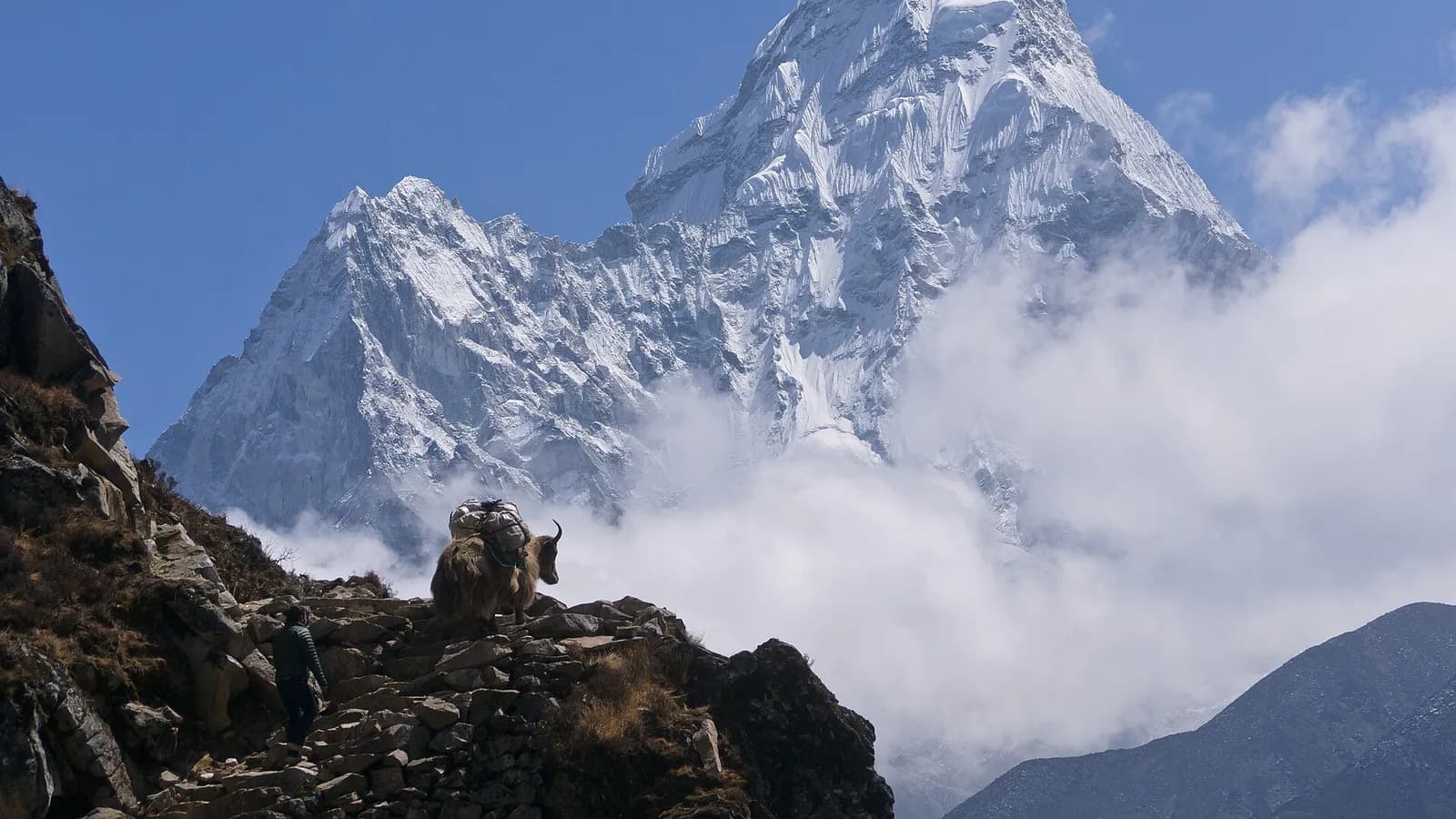
If you are planning a Himalayan trek, the Nepal trekking permits system is the first piece of admin to get right — and in 2026 it is both simpler and more fluid than the old blogs suggest. Two of the biggest rules changed in the past year: solo trekkers can now apply for restricted-area permits, and Upper Mustang switched from a flat fee to a daily rate. At the same time, a handful of out-of-date guides still tell you to buy permits that were scrapped years ago.
This guide pulls the whole picture together: which permit each region needs, what it costs for foreigners, where you pay, and the recent rule changes that actually affect your budget and planning. For deep dives on specific trails, we link out to our region-by-region permit guides as we go.
Key takeaways
- Most treks need two things: an entry permit for the national park or conservation area (commonly NPR 3,000 for foreigners) and, in many regions, a TIMS card (NPR 2,000 for foreigners) — all figures as of June 2026.
- Restricted areas (Manaslu, Upper Mustang, Dolpo, Kanchenjunga and more) need a special permit issued only through a registered agency, plus a licensed guide.
- A licensed guide is legally required inside protected areas under the April 2023 rule, still on the books in 2026.
- From 22 March 2026, a single trekker can get a restricted-area permit without finding a partner; a group cap of seven now applies.
- Upper Mustang moved from a flat USD 500 / 10 days to roughly USD 50 per person per day (gazetted late 2025).
- Carry cash in Nepali rupees — entry fees on the trail are not paid by card.
The three layers of Nepal's permit system
Nepal's permits sound complicated because there are several names, but they fall into just three buckets. Almost every trek is some combination of these.
1. Entry permits (national park or conservation area)
Every major trekking region sits inside a protected area, and you pay a one-time entry fee to walk into it. The Nepal Tourism Board sets the standard foreigner rate at NPR 3,000 per person per entry for the big trekking parks — Sagarmatha (Everest), Annapurna (ACAP), Langtang and the Manaslu Conservation Area (MCAP) are all NPR 3,000 for non-SAARC foreigners as of June 2026. SAARC nationals pay less, and children under 10 are admitted free.
This permit is the non-negotiable one. It is checked at staffed entry points and funds the park itself — the trails, bridges and ranger posts you rely on.
2. TIMS card (trekker registration)
The Trekkers' Information Management System (TIMS) is a registration database meant for safety and search-and-rescue. The Nepal Tourism Board lists it at NPR 1,000 for SAARC nationals and NPR 2,000 for other foreigners, paid online through services such as ConnectIPS or nepalpay, with an electronic QR-coded card generated on payment (as of June 2026).
TIMS still applies to most general trekking regions, including Annapurna and Langtang. It does not apply everywhere, though — the Everest region dropped it in favour of a local municipality permit (more below).
3. Restricted-area permits (RAP)
Some border-sensitive regions — Upper Mustang, Manaslu, Dolpo, Kanchenjunga, Nar Phu, Tsum Valley, Humla and others — require a special Restricted Area Permit. These are pricier, priced in US dollars, and can only be issued through a government-registered trekking agency that applies to the Department of Immigration on your behalf. You cannot buy one as a walk-in individual.
Permit costs by region (2026)
Here is the at-a-glance picture for the most-walked regions. Restricted-area figures are the special permit only and exclude conservation-area entry, TIMS where applicable, and your guide.
| Region | Entry / conservation fee (foreigner) | TIMS needed? | Restricted permit? | | --- | --- | --- | --- | | Everest (Sagarmatha) | NPR 3,000 + local municipality permit | No | No | | Annapurna (ACAP) | NPR 3,000 | Yes (NPR 2,000) | No | | Langtang | NPR 3,000 | Yes (NPR 2,000) | No | | Manaslu Circuit | NPR 3,000 (MCAP) + NPR 3,000 (ACAP) | No | Yes (USD, seasonal) | | Upper Mustang | NPR 3,000 (ACAP) | No | Yes (~USD 50/day) | | Chitwan (wildlife) | NPR 2,000 per entry | No | No |
All NPR and USD figures are as of June 2026 and exclude agency, guide and porter costs. For the full Everest breakdown see our Everest Base Camp permits 2026 guide; for the Manaslu numbers see Manaslu trek permit cost.
The Everest exception: no TIMS
If you have read older guides, you may expect to buy a TIMS card for Everest Base Camp. You don't. The Khumbu region replaced TIMS years ago with a Khumbu Pasang Lhamu Rural Municipality entry permit, collected locally and used alongside the Sagarmatha National Park entry permit. Both are paid in cash at checkpoints on the trail — the national park fee at Monjo, the municipality fee at Lukla.
So the Everest "permit stack" is two local entry permits, not the TIMS-plus-park combination you still see quoted elsewhere. Our EBC permits guide walks through exactly where each one is checked.
Restricted areas: the two big 2026 changes
Restricted regions saw the most movement this year, and both changes are worth understanding before you book.
Solo trekkers can now apply (from 22 March 2026)
For years, a restricted-area permit required a minimum of two trekkers, which forced solo travellers to find a partner through forums or pay an agency to add a "ghost" second person. Effective 22 March 2026, Nepal's Department of Immigration revised the policy so a single foreigner can obtain a restricted-area permit without a second trekker. A group cap of seven now applies across restricted zones.
One important caveat: this changes who can apply, not whether you walk alone. A licensed guide arranged through a registered agency is still mandatory in restricted areas and is checked at posts along the route. Our solo trekking in Nepal guide explains the distinction in detail.
Upper Mustang switched to a daily rate
Upper Mustang long carried a flat USD 500 for the first 10 days, then USD 50 per extra day. Gazetted in late 2025, that flat structure was replaced with a per-day rate of roughly USD 50 per person per day. A full 10-day trek still lands near USD 500, but shorter trips — a few days for the Tiji festival, or a jeep tour to Lo Manthang — now cost proportionally less than before. The restricted permit is separate from the ACAP entry fee and your guide. See our Upper Mustang permit guide for the route context.
Do you still need a guide?
A rule effective 1 April 2023 requires foreign trekkers to be accompanied by a licensed guide inside national parks, conservation areas and restricted areas. It remains on the books in 2026.
Enforcement is uneven. In restricted regions — Manaslu, Upper Mustang, Nar Phu — it is enforced strictly, with guide licences checked at posts. In some general regions, trekkers have reported picking up permits and walking sections without being asked about a guide. We do not recommend relying on lax enforcement: a checkpoint can turn you back, and a guide adds real safety at altitude. Our do I need a guide to trek in Nepal guide covers the regional reality.
Where to get your permits
You have a few options depending on the permit type.
- Nepal Tourism Board offices in Kathmandu (Bhrikutimandap) and Pokhara issue national-park, conservation-area and TIMS permits. Bring your passport, photos and cash.
- Trail checkpoints collect some entry permits directly — the Sagarmatha fee at Monjo, ACAP at Besisahar, Langtang entry at Dhunche.
- Registered trekking agencies are the only route for restricted-area permits, since the application goes to the Department of Immigration.
The site's Nepal permit reference lays out every permit — including visas — in one table, with fees, where to get them, and what to bring.
What to bring
For any permit, have these ready:
- Passport valid at least six months, plus your Nepal visa (or visa application ID for advance restricted-area applications).
- Two passport-sized photos — keep spares; they get used up fast.
- Travel insurance details covering high-altitude trekking and, ideally, helicopter evacuation.
- Cash in Nepali rupees for on-trail entry fees. Exchange in Kathmandu, where rates beat the checkpoints.
Budgeting and a few practical notes
For a typical Annapurna or Langtang trek, the government permits are modest — figure NPR 5,000 (ACAP plus TIMS), around USD 37 as of June 2026, before guide and food. Restricted treks are a different scale: the special permit alone can run well over USD 100 per person depending on region and season, which is why Manaslu and Mustang feel like a bigger line in the budget.
A few things that trip people up:
- Keep every receipt. You will be asked to show entry permits at random posts further up the trail.
- Don't pay for permits you don't need. If an invoice lists a TIMS card for Everest, that is a charge for nothing.
- Permits are per-person and usually non-transferable. Names must match your passport.
If you are still mapping out the wider trip, our general Nepal trekking guide and Nepal visa on arrival 2026 guide cover the steps that sit either side of the permit process.
Sources
- Nepal Tourism Board — National Park Entry Fees
- Nepal Tourism Board — TIMS Card
- U.S. Embassy in Nepal — New Requirements For Use of Trekking Guides/Porters (April 1, 2023)
- Sherpa Expedition & Trekking — Solo Trekking in Nepal's Restricted Areas Now Allowed (March 2026)
- Rugged Trails Nepal — Upper Mustang Permit Fee: 2026 New $50 Daily Rate
- The Longest Way Home — Trekking Permits in Nepal 2026
Frequently asked questions
- What permits do I need to trek in Nepal in 2026?
- Most trekkers need an entry permit for the national park or conservation area they walk through (commonly NPR 3,000 for foreigners) and, for many regions, a TIMS card at NPR 2,000. Restricted areas such as Manaslu, Upper Mustang and Dolpo also need a special permit arranged through a registered agency. All figures are as of June 2026.
- How much does the TIMS card cost?
- The Nepal Tourism Board lists the TIMS card at NPR 1,000 for SAARC nationals and NPR 2,000 for other foreigners, paid online through services like ConnectIPS or nepalpay (as of June 2026). It is separate from national-park and conservation-area entry fees.
- Do I still need a TIMS card for Everest Base Camp?
- No. The Khumbu region replaced TIMS with a local Khumbu Pasang Lhamu Rural Municipality entry permit, used alongside the Sagarmatha National Park entry permit. Other regions like Annapurna and Langtang still use the TIMS system.
- Do I need a guide to trek in Nepal?
- A rule effective 1 April 2023 requires foreigners to trek with a licensed guide inside national parks, conservation areas and restricted areas. Enforcement is strict in restricted zones and looser in some general areas, but the rule remains on the books in 2026. Day hikes outside protected areas do not need a guide.
- How much is the Upper Mustang permit now?
- Nepal replaced the old flat USD 500 for 10 days with a per-day rate of about USD 50 per person per day, gazetted in late 2025. A 10-day trip still works out near USD 500, but a shorter visit now costs less. This is the restricted-area permit only and excludes ACAP and your guide (as of June 2026).
- Can a solo trekker get a restricted-area permit in 2026?
- Yes. Nepal's Department of Immigration changed the rule effective 22 March 2026 so a single foreigner can obtain a restricted-area permit without a second trekker. You must still trek with a licensed guide arranged through a registered agency, and a group cap of seven applies.
- Where do I buy Nepal trekking permits?
- National-park, conservation-area and TIMS permits can be arranged at the Nepal Tourism Board offices in Kathmandu and Pokhara, or at trail checkpoints for some entry permits. Restricted-area permits can only be issued through a government-registered trekking agency, never directly to an individual.
- What should I bring to get a trekking permit issued?
- Carry your passport with at least six months validity, your Nepal visa, two passport-sized photos and your travel-insurance details. Bring cash in Nepali rupees for entry fees collected on the trail, since card payment is rarely possible at checkpoints.
Related posts
Nepal Trekking: A First-Timer's Guide to the Himalaya
Nepal trekking explained for beginners: best seasons, permits, the guide rule, top routes, costs, altitude safety, and how to plan a first trek.
Read postABC Trek: A Plain-English Guide to Annapurna Base Camp
The ABC trek (Annapurna Base Camp) explained — the route, how many days it takes, difficulty, the best seasons, and what daily trail life is really like.
Read postAnnapurna Circuit Trek: Route, Permits & Thorong La Guide
A practical Annapurna Circuit trek guide — the full route, Thorong La pass, 2026 ACAP permit and guide rules, costs, road impact and best season.
Read post