Customized Trekking Tours Annapurna: Plan It Right
How to plan customized trekking tours in the Annapurna region — routes, permits, the guide rule, seasons and what makes a private itinerary worth it.
The Annapurna trails are fixed; how you walk them is entirely up to you.
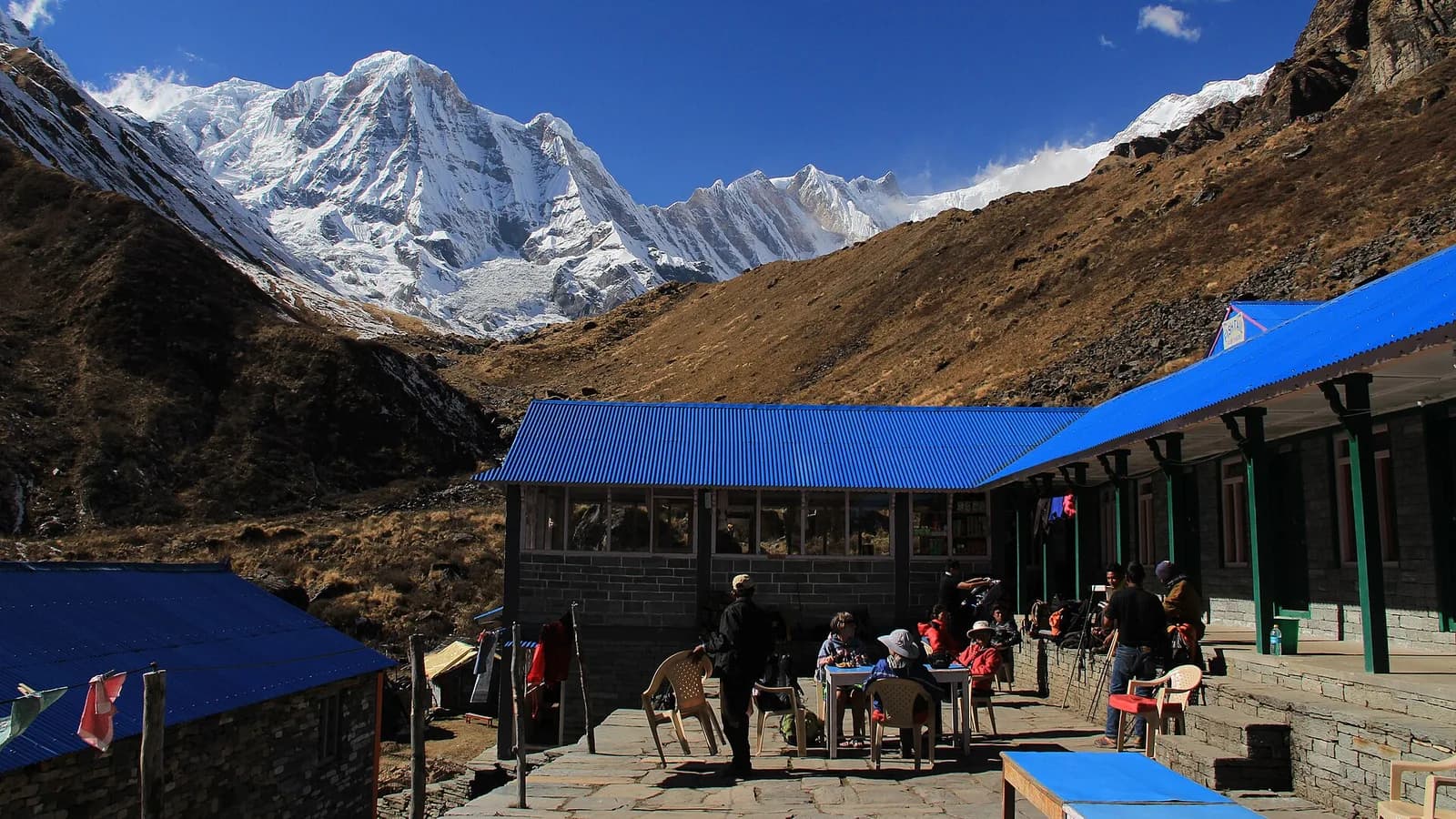
The phrase customized trekking tours Annapurna covers a simple idea with a lot of moving parts: instead of joining a fixed group on a set route, you build a private itinerary around your own dates, fitness, budget and curiosity. The Annapurna region is unusually well suited to this. It holds everything from gentle ridge walks with sunrise viewpoints to a high glacial amphitheatre and a 5,416 m pass, all reachable from a single hub city. This guide explains the routes worth customising, the permits and the guide rule you cannot skip, the seasons that make or break the trip, and how to judge whether a tailor-made plan is worth the extra cost.
Key takeaways
- A customized trek is a private itinerary — your route, pace, rest days and lodging standard — rather than a fixed group departure.
- A licensed guide is mandatory for foreign trekkers across Nepal's conservation areas, including all of Annapurna, so private trips bundle one by default.
- Almost every Annapurna trek needs the Annapurna Conservation Area Permit (ACAP); restricted zones like Upper Mustang add a separate, costlier permit.
- The region scales from week-long viewpoint walks to the full Annapurna Circuit with Thorong La (5,416 m) — pick the route, then build the days around it.
- Autumn (Sep–Nov) and spring (Mar–May) give the clearest views and the most reliable flying weather for optional helicopter legs.
- Comfort and a slower pace help, but altitude sickness ignores your itinerary, so sensible ascent rates and evacuation insurance stay essential.
What "customized" really changes
A fixed-departure group trek sets the route, the dates, the daily distances and the company in advance. A customized — or tailor-made — trip flips that: the trail is the same, but the trip is shaped around you. In practice the levers you control are the route and any side trips, the length and where you place rest days, the daily pace, the standard of lodging from basic teahouse to upgraded lodge, and the start dates that fit your flights rather than a fixed calendar.
The trade-off is straightforward. A private trip gives flexibility and individual attention, but you are not splitting guide and logistics costs across a large group, so the per-person price is usually higher than a big fixed departure. That is the single biggest thing to weigh, and it is covered in the cost section below.
If you are still deciding between styles, our notes on a private guide in Nepal and on luxury trekking in Nepal lay out what changes as you move up from a basic shared trek.
The Annapurna routes worth building a trip around
The strength of the Annapurna region is range. You can customise something gentle and short, or something long and demanding, without leaving the same conservation area.
Shorter and moderate options
These suit first-time Himalayan trekkers, families and anyone short on time:
- Ghorepani Poon Hill — a classic short loop famous for its sunrise viewpoint over the Annapurna and Dhaulagiri peaks, with rhododendron forest that is especially vivid in spring. See our Ghorepani Poon Hill trek guide.
- Mardi Himal — a quieter ridge trek that climbs to a high viewpoint beneath Machapuchare, popular as a less-crowded alternative. More in our Mardi Himal trek write-up.
- Annapurna Base Camp (ABC) — the signature objective, ending in a glacial bowl ringed by giants at about 4,130 m. It commonly takes 7–12 days, and adding the Ghorepani Poon Hill section is a popular way to lengthen it and aid acclimatisation.
Longer and high-altitude options
These are bigger commitments that need more days and stricter acclimatisation:
- Annapurna Circuit — the long route around the massif, crossing Thorong La pass at 5,416 m, its highest point. With side trips it can run to roughly two weeks or more.
- Upper Mustang — a restricted, semi-arid valley north of the main range with its own permit and rules (see permits below).
For a head-to-head on the two flagship walks, our Annapurna Circuit vs Base Camp comparison is a useful starting point when you sketch a custom plan.
Permits and the mandatory guide rule
Two non-negotiables shape any Annapurna itinerary: the conservation-area permit and the guide requirement. A good agency handles both, but you should understand what you are paying for.
ACAP and restricted-area permits
The Annapurna Conservation Area Permit (ACAP), issued under the National Trust for Nature Conservation, is required for essentially all trekking in the region. Multiple 2026 operator guides list the foreigner ACAP fee at NPR 3,000 (as of June 2026); always confirm the current figure, as conservation fees are periodically revised. Reporting on whether a separate TIMS card is enforced for Annapurna has been inconsistent recently, so treat TIMS as something your agency will confirm at the time of booking rather than a fixed certainty.
Restricted zones cost more. Upper Mustang moved in 2026 to a USD 50 per person, per day model, charged only for the days you are physically inside the restricted area (so a 10-day stay is about USD 500, as of June 2026), and you still need ACAP on top of it. Nepal's Department of Immigration publishes the official restricted-area route and permit fees, which is the authoritative reference to check before you commit.
The guide requirement
Since 2023, Nepal has required foreign trekkers to be accompanied by a licensed guide in national parks and conservation areas — a rule that effectively ended solo trekking for foreigners on the main protected routes, Annapurna included. A solo traveller is still welcome; you simply trek with a guide rather than alone. In March 2026, Nepal eased the rules for restricted areas so that solo travellers can apply for those permits without a second person, but a registered agency and a licensed guide are still required.
The practical upshot: a customized Annapurna trip already includes a guide by design, so the rule rarely changes your plans — it just means a do-it-yourself permit-only trek is not an option here. Our guides on whether you need a guide to trek in Nepal and on Nepal trekking permits go deeper if you want the full picture.
| Route | Typical length | High point | Key permit(s) | | --- | --- | --- | --- | | Ghorepani Poon Hill | ~4–5 days | ~3,210 m (Poon Hill) | ACAP | | Mardi Himal | ~5–7 days | ~4,500 m (viewpoint) | ACAP | | Annapurna Base Camp | ~7–12 days | ~4,130 m | ACAP | | Annapurna Circuit | ~12–16+ days | 5,416 m (Thorong La) | ACAP | | Upper Mustang | ~10+ days | varies | ACAP + restricted-area permit |
Lengths are typical ranges from operator itineraries and vary with your custom plan; confirm permit fees at booking.
Choosing your season
Timing is one of the biggest levers in a custom plan, because it drives both mountain visibility and the reliability of any flights.
- Autumn (Sep–Nov) — widely regarded as the prime window, with clear skies and stable conditions; October is a classic favourite for views.
- Spring (Mar–May) — the second strong season, with warming temperatures and rhododendron in bloom at lower elevations.
- Monsoon (roughly Jun–Aug) and deep winter are trickier: cloud, rain and snow reduce views and can close high passes, though some drier rain-shadow areas behave differently.
If you are weighing months, our best season to trek in Nepal overview pairs well with a custom itinerary discussion.
Building the itinerary: pace, comfort and add-ons
Once the route and season are set, the customizing happens in the details.
Pace and acclimatisation
The most valuable thing a private itinerary buys is the freedom to walk at a sensible rate and add rest days where the altitude profile demands them. On ABC and the circuit, building in acclimatisation — and lengthening the trek via Ghorepani rather than rushing — is a recognised way to reduce altitude risk. No amount of comfort overrides physiology, so plan conservative ascent days and carry travel insurance that covers helicopter evacuation. Our altitude sickness guide for Nepal trekking explains the warning signs to brief your group on.
Comfort level
You can dial lodging up from standard teahouses to upgraded lodges in the more developed parts of the region, and choose private rooms, better food and a lighter daily load. This is where "tailor-made" and "luxury" overlap, though they are not the same thing — comfort is one variable among many.
Helicopter and other add-ons
A popular customization is to trek up and fly back by helicopter from a point such as ABC, which removes repeat descent days. It is genuinely useful but entirely weather dependent, so treat it as a hoped-for option rather than a guarantee, and keep buffer days. Our Annapurna Base Camp helicopter tour guide covers how these legs work.
What it costs and how to compare quotes
There is no single price for a customized Annapurna trek, because the total depends on the route, length, comfort level, group size and any add-ons. Rather than chase a headline figure, compare quotes on a like-for-like basis. When you read an itinerary, check exactly what is bundled: permits and ACAP, the licensed guide and any porters, accommodation standard, which meals are included, transport to and from the trailhead, and whether a helicopter leg is included or merely offered. The single most common reason two quotes look wildly different is that one excludes items the other includes.
Because a private trip does not spread fixed costs across a big group, expect it to sit above a large fixed-departure tour per person — that premium buys flexibility and individual attention. For wider context on trip budgets, see how much a trip to Nepal costs.
Putting it together
A well-built Annapurna trip is mostly about sequencing decisions in the right order: pick the route that matches your ambition and time, choose a season that gives you views and reliable flights, set a pace with honest acclimatisation, decide your comfort level, and only then weigh add-ons like a helicopter return. The permits and the licensed guide are fixed costs you build around rather than choices to debate. Get that order right and the customizing becomes the easy part — the Annapurna trails do the rest.
Sources
- Nepal Tourism Directory — Annapurna Circuit Trek, Thorong La & 2026 costs
- Department of Immigration, Nepal — Trekking Route and Permit Fee
- Nepal Hiking Team — Annapurna Trekking Permits 2026: ACAP, TIMS & RAP
- Follow Alice — Nepal trekking permits and fees (2026)
- Rugged Trails Nepal — Upper Mustang Permit Fee: 2026 USD 50/day update
- Magical Nepal — Annapurna Base Camp Trek 2026 itinerary
- Rugged Trails Nepal — Best Time To Do Annapurna Base Camp Trek
- Himalayan Hero — Nepal Trekking Permit Rules 2026 (mandatory guide & March 2026 update)
Frequently asked questions
- What does a customized Annapurna trek actually mean?
- It is a private itinerary built around your dates, fitness, budget and interests, rather than a fixed group departure, so you choose the route, the daily pace, the rest days and the standard of lodging.
- Do I need a guide for a customized Annapurna trek?
- Yes, since 2023 foreign trekkers must be accompanied by a licensed guide in Nepal's national parks and conservation areas, and that rule applies across the Annapurna Conservation Area, so a private trip includes a registered guide by default.
- Which Annapurna route should I customize first?
- Annapurna Base Camp and the shorter Ghorepani Poon Hill and Mardi Himal trails suit most first-timers, while the longer Annapurna Circuit with Thorong La pass and restricted Upper Mustang are bigger commitments to build a trip around.
- What permits will a customized Annapurna trip need?
- Almost every Annapurna trek needs the Annapurna Conservation Area Permit, and restricted zones such as Upper Mustang require an extra restricted-area permit on top of it, which your agency arranges as part of the package.
- When is the best time for a tailor-made Annapurna trek?
- Autumn from roughly September to November and spring from March to May give the clearest mountain views and the most stable weather, which also makes any helicopter legs more reliable.
- Can I add a helicopter leg to a customized itinerary?
- Yes, flying out from a point such as Annapurna Base Camp is a common way to trim repeat descent days, but every mountain flight depends entirely on the weather and can be delayed or cancelled.
- Is a private trek much more expensive than a group tour?
- A private trip usually costs more per person than a large fixed-departure group because you are not splitting guide and logistics costs across many people, so always confirm exactly what each quote includes before comparing.
- How many days should I set aside?
- Short Annapurna options can run about a week, Annapurna Base Camp commonly takes seven to twelve days, and the full circuit with side trips can stretch to roughly two weeks or more, so match the length to your route and acclimatisation needs.
Related posts
Annapurna Trek Package: How to Choose One in 2026
A practical guide to picking an Annapurna trek package in 2026 — durations, what is included and excluded, permits, the guide rule, and how to compare quotes.
Read postACAP Permit 2026: Annapurna Trekking Fees & Rules
The ACAP permit is mandatory for every Annapurna trek. Here are the fees, where to buy it, what to bring, and the checkpoint rules trekkers miss.
Read postAnnapurna Base Camp Trek: A Complete 2026 Guide
Plan an Annapurna Base Camp trek with up-to-date facts on permits, the route, altitude, seasons, and safety for first-time Himalayan trekkers.
Read post