Snow Leopard in Nepal: Where the Ghost Cat Lives
A traveller's guide to the snow leopard in Nepal: the 397 national estimate, where they live, tracking treks in Dolpo and Kanchenjunga, and realistic sighting odds.
They call it the ghost of the mountains for a reason: a cat that watches a thousand trekkers and is seen by almost none of them.
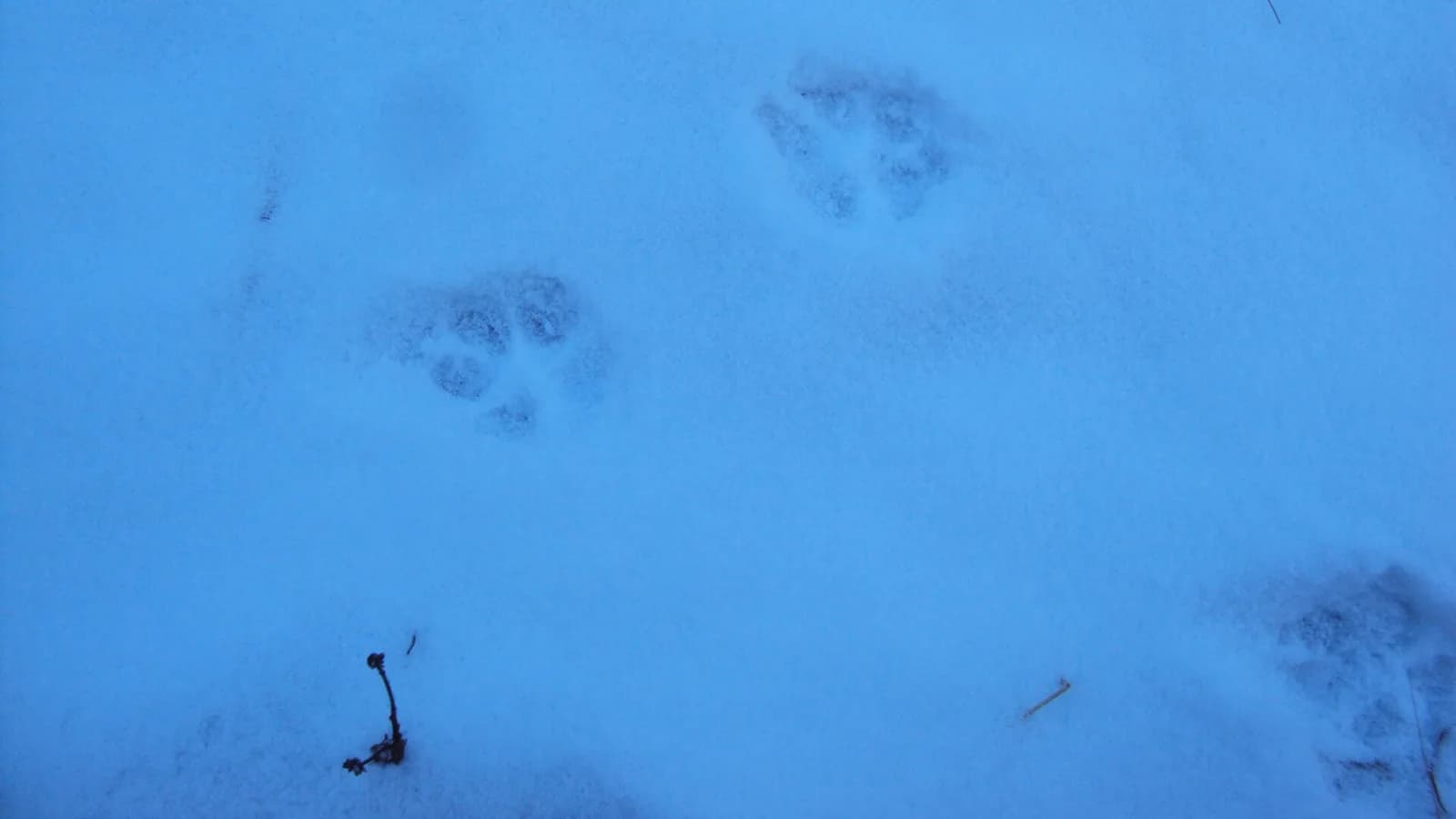
Nepal is famous for what you can see: the white wall of the Himalaya, rhinos in the Terai grass, prayer flags snapping over a pass. The snow leopard in Nepal is the country's great unseen icon. It lives in the highest, emptiest valleys along the Tibetan border, hunts blue sheep across cliffs the colour of its own coat, and slips past more trekkers in a season than it is ever seen by. Herders and conservationists alike call it the ghost of the mountains. This guide covers what is actually known about Nepal's snow leopards, where they live, how the rare tracking treks work, and the honest odds of glimpsing one.
Key takeaways
- Nepal's first national estimate is about 397 snow leopards (plausible range roughly 331 to 476), based on studies from 2015 to 2024 covering only part of the country's habitat.
- Nepal punches far above its weight: around 2 percent of the world's suitable habitat but close to 10 percent of all snow leopards, the fourth-largest national population.
- The cats live high and remote, mostly between about 3,000 and 5,500 metres along the northern border, strongest in Dolpa, Humla, Mugu, Manang, Mustang, and Myagdi.
- Tracking treks into Upper Dolpo or Kanchenjunga in winter give the best realistic odds, but sightings are never guaranteed.
- Main prey are blue sheep and Himalayan tahr; losing livestock to snow leopards is the core driver of human-wildlife conflict.
- The species is Vulnerable globally and legally protected in Nepal; community-based conservation aims to make the cat worth more alive than dead.
How many snow leopards live in Nepal?
For decades Nepal had only rough guesses for its snow leopard numbers. That changed when the country published its first consolidated national estimate, announced in 2025: roughly 397 snow leopards. The work was led by the Department of National Parks and Wildlife Conservation with partners including WWF, the National Trust for Nature Conservation, and others, and it followed the international PAWS (Population Assessment of the World's Snow Leopards) methodology under the Global Snow Leopard and Ecosystem Protection Program.
The figure is not a simple count. It pulls together camera-trap photographs and DNA analysis of scat (droppings) gathered across seven study regions between 2015 and 2024, producing a mean density of about 1.56 cats per 100 square kilometres. Crucially, researchers stress the number is an estimate with a range of roughly 331 to 476, and it is built from only about 43 percent of Nepal's potential snow leopard habitat. Large areas such as Dhorpatan and Api-Nampa remain under-surveyed, so the true total could shift as more ground is covered.
Why the number matters globally
Nepal is small, mountainous, and squeezed between giants, yet it holds an outsized share of the world's snow leopards. According to WWF, Nepal contains only about 2 percent of the planet's suitable snow leopard habitat but is home to close to 10 percent of the global population, making it the fourth-largest national population. A relatively stable estimate is treated as cautiously good news for a species that is declining across much of its range.
| Snow leopard in Nepal | Figure (as of 2025) | | --- | --- | | National estimate | ~397 individuals | | Plausible range | ~331 to 476 | | Mean density | ~1.56 per 100 km2 | | Habitat surveyed | ~43% of potential range | | Share of global population | ~10% | | Share of global habitat | ~2% |
Where the ghost cat lives
Snow leopards in Nepal trace the country's northern spine, the high frontier with Tibet. Their core habitat sits mostly between about 3,000 and 5,500 metres, in the cold, rocky, treeless zone above where most farming and forest end, though they may wander even higher. This is rugged, broken terrain of cliffs, ridges, and scree where an ambush hunter can stalk unseen.
The strongest populations are in the west and far west. Wildlife authorities point to the districts of Dolpa, Humla, Mugu, Manang, Mustang, and Myagdi as holding the most cats. Eastern Nepal has snow leopards too, but in lower densities.
The seven protected areas
Snow leopards have been recorded across seven of Nepal's high-mountain protected areas:
- Shey Phoksundo National Park (Dolpo) — the largest national park, and prime snow leopard country.
- Annapurna Conservation Area — including Manang and Upper Mustang.
- Kanchenjunga Conservation Area — the remote far east.
- Manaslu Conservation Area.
- Langtang National Park.
- Makalu Barun National Park.
- Sagarmatha (Everest) National Park — home to the Everest region cats that feed heavily on Himalayan tahr.
An important caveat: only around a third of the cat's likely habitat in Nepal falls inside protected areas. The rest lies in community forests and open mountainsides, which is exactly why conservation here depends so much on local herders rather than park boundaries alone.
What snow leopards hunt
A snow leopard's life is dictated by its prey. These cats are solitary ambush predators built for steep ground, and in Nepal their diet centres on wild mountain ungulates, chiefly blue sheep (locally bharal) and Himalayan tahr, supplemented by smaller animals such as Himalayan marmots.
The exact menu varies by valley. Research in Sagarmatha National Park found Himalayan tahr to be the most frequent prey in both summer and winter. In lower Mustang and upper Manang, blue sheep dominate the winter diet, while in summer domestic yak and goats appear more often. That overlap with livestock is the hinge on which the whole human-wildlife relationship turns: where wild prey is scarce, snow leopards turn to herds, and conflict follows.
Can you actually see one? The honest answer
This is the question every wildlife-minded traveller asks, so here it is plainly: probably not, and that is normal. The snow leopard's camouflage, low density, vast territory, and shyness make it one of the hardest large animals on Earth to see. Most people who travel to Nepal specifically to find one come home without a sighting, and the trip is still worth it.
What dedicated tracking treks really offer is the pursuit: reading the landscape with local spotters, finding fresh tracks in snow, scat on a ridge, scrape marks under an overhang, and scanning distant slopes for blue sheep and, with luck, the cat that follows them. A genuine sighting is usually a far-off shape through a spotting scope at dawn, not a close encounter. Reputable operators say this clearly and never promise a guaranteed sighting; anyone who does should be treated with suspicion.
Best season
Winter, roughly late November to March, is the prime window. Deep snow at the highest elevations pushes blue sheep, and the snow leopards hunting them, down onto lower and more visible slopes, concentrating activity where trackers can work. Upper Mustang and Dolpo are especially associated with cold-season tracking. The price you pay is brutal cold, short daylight, and serious logistics in some of Nepal's most isolated terrain.
The tracking treks
Two regions stand out for snow leopard tracking, and they suit different travellers.
Upper Dolpo
Dolpo is Nepal's largest district by area and one of its most remote, sitting in the rain shadow behind the main Himalaya in a stark, Tibetan-flavoured landscape around turquoise Phoksundo Lake. It is widely regarded as the country's best bet for snow leopards simply because the densities are higher and the human footprint is light. A snow leopard tracking trek into Upper Dolpo is a serious expedition, commonly in the range of around 18 to 25 days, much of it camping at altitude. You trade comfort and infrastructure for the highest realistic odds and a feeling of true wilderness.
Kanchenjunga
At the opposite corner of Nepal, the Kanchenjunga region offers the deepest-wilderness alternative. The full circuit is roughly three weeks of high hiking through Limbu, Rai, Sherpa, and Gurung country before reaching the high tracking grounds near the north base camp at Pangpema (about 5,140 metres) or the southern approach at Oktang. Foot traffic is very low. Sighting probability may be lower than Dolpo, but for travellers who prize solitude and raw landscape, it is a compelling trade.
| Tracking region | Typical length | Character | | --- | --- | --- | | Upper Dolpo | ~18 to 25 days | Highest realistic odds, remote, camping, Tibetan landscape | | Kanchenjunga | ~3 weeks | Deepest wilderness, very low foot traffic, lower density |
Both demand strong fitness, acclimatisation, and patience. Read up on altitude sickness before committing, because these treks spend long stretches very high. Comprehensive trekking insurance with helicopter evacuation cover is essential given how far you are from any road or hospital.
Conservation and the herder's dilemma
The snow leopard is listed as Vulnerable on the IUCN Red List, with a global population thought to be fewer than 10,000 mature individuals and projected to keep declining. In Nepal it is legally protected, but laws alone do not keep a cat alive in a valley where it kills a family's livestock.
That is the central tension. In remote herding communities, a single snow leopard can sometimes kill several sheep, goats, or young yak in one raid on an unprotected pen, a devastating loss for a subsistence household. The natural response is retaliation, which is one of the species' biggest threats alongside habitat fragmentation, poaching, and a warming climate that is shifting where suitable high-altitude habitat exists.
The solutions that work are practical and community-led: building predator-proof corrals so livestock cannot be raided at night, running community-managed livestock-insurance schemes that compensate herders for verified losses, and channelling tourism and conservation income back to the people who share the mountains with the cat. Organisations including WWF Nepal, the National Trust for Nature Conservation, the Snow Leopard Conservation Committee, and the wider Snow Leopard Network all work along these lines. The goal is simple to state and hard to achieve: make a living snow leopard worth more to a community than a dead one.
This is where responsible visitors fit in. Choosing operators that hire local guides and spotters, respect protected-area rules, keep their distance, and support conservation turns a tracking trek into part of the solution. It is the same logic behind eco-trekking and sustainable tourism in Nepal: the wildlife survives when local people benefit from protecting it. If you are drawn to Nepal's rarer animals, the snow leopard sits alongside the red panda and other high-mountain species as a creature you support best by treading lightly and spending wisely.
Sources
- WWF: In Nepal, New Snow Leopard Numbers Show Stable Population
- WWF Nepal: Big Leap for Big Cats — Nepal Announces National Snow Leopard Population Estimate
- Mongabay: Nepal announces its snow leopard population after first-of-its-kind assessment
- Mongabay: As Nepal counts its snow leopards, even the best estimate is still a guess
- IFLScience: Nepal Now Has 397 Snow Leopards, New Landmark Population Survey Suggests
- The Kathmandu Post: Snow leopards in Nepal — Rare predators of high Himalayas
- The Himalayan Times: 397 snow leopards estimated across Nepal
- PLOS One: Diet and prey selection by snow leopards in the Nepalese Himalayas
- Wikipedia: Snow leopard (IUCN status and biology)
Frequently asked questions
- How many snow leopards are there in Nepal?
- Nepal announced its first consolidated national estimate in 2025, putting the figure at around 397 snow leopards, with a plausible range of roughly 331 to 476 animals. That central number comes from studies done between 2015 and 2024 and covers only about 43 percent of the country's potential snow leopard habitat, so it is a best scientific estimate rather than a head count. Despite holding only about 2 percent of the world's suitable habitat, Nepal is thought to host close to 10 percent of all snow leopards.
- Where do snow leopards live in Nepal?
- They live along the high northern border with Tibet, mainly between about 3,000 and 5,500 metres of elevation. The strongest populations are in the western and far-western mountains, especially the districts of Dolpa, Humla, Mugu, Manang, Mustang, and Myagdi. Snow leopards are recorded across seven mountain protected areas, including Shey Phoksundo National Park, the Annapurna and Kanchenjunga Conservation Areas, Manaslu, Langtang, Makalu Barun, and Sagarmatha (Everest).
- Can tourists actually see a snow leopard in Nepal?
- It is possible but never guaranteed, and most visitors who go specifically to look still do not see one. Dedicated tracking treks into Upper Dolpo or the Kanchenjunga region in winter give you the best realistic odds, often by spotting tracks, scat, scrapes, or a distant shape through a spotting scope rather than a close encounter. Honest operators are clear that sightings cannot be promised, so treat any actual glimpse as a rare bonus on top of an extraordinary wilderness trek.
- What is the best time of year to look for snow leopards?
- Winter, roughly late November through March, is widely considered the best window. Heavy snow at the highest elevations pushes both the cats and their wild prey down to lower, more accessible slopes, which improves the chance of detection in places like Upper Mustang and Dolpo. The trade-off is serious cold, short days, and demanding logistics in very remote terrain, so these are expedition-style trips that need good fitness, warm gear, and time.
- What do snow leopards eat?
- Snow leopards are ambush predators of the high mountains, and their diet is built around wild mountain ungulates. In Nepal their main natural prey are blue sheep (also called bharal) and Himalayan tahr, alongside other species such as Himalayan marmots. The balance shifts by region: studies in the Everest area found Himalayan tahr most common in the diet, while in parts of Mustang and Manang blue sheep dominate in winter and domestic yak and goats feature more in summer.
- Are snow leopards endangered?
- The snow leopard is listed as Vulnerable on the IUCN Red List, with a global population estimated at fewer than 10,000 mature individuals and a projected decline in the coming decades. In Nepal it is a legally protected species facing pressure from habitat fragmentation, a warming climate that is shifting suitable high-altitude habitat, retaliatory killing after livestock losses, and poaching. Conservation groups treat Nepal's relatively stable national estimate as encouraging but fragile.
- What is killed when a snow leopard takes livestock?
- In remote herding valleys a single snow leopard can occasionally kill multiple sheep, goats, or young yak in one night, which is a heavy blow to a subsistence family. This loss is the root of human-wildlife conflict and can trigger retaliatory killing of the cat. Programmes that build predator-proof corral pens, run community-managed livestock insurance, and share tourism income are designed to offset these losses so that herders gain rather than suffer from living alongside snow leopards.
- Is it ethical to go on a snow leopard trek?
- It can be, if done well. Well-run tracking trips employ local guides, spotters, and porters, route money into the same remote communities that bear the cost of living with predators, and keep a respectful distance using scopes rather than chasing animals. Choose operators that hire locally, follow protected-area rules, and support conservation, and avoid anyone promising guaranteed close-up sightings, which is both unrealistic and a red flag for disturbing wildlife.
Related posts
Blue Sheep of Nepal: The Bharal and Where to See It
A trekker's guide to the blue sheep (bharal) of Nepal: habitat, snow leopard link, behaviour, and the best regions to spot this Himalayan caprine.
Read postMusk Deer in Nepal: The Himalayas' Shy Tusked Ghost
A trekker's guide to the musk deer in Nepal: where it lives, why it has fangs, its endangered status, and how to spot one ethically in the high forests.
Read postSnow Leopard Trek Dolpo: A Realistic Guide
Plan a snow leopard trek in Dolpo, Nepal: where the cats live, real odds of a sighting, Shey Phoksundo permits, best season and ethics.
Read post