Nepali Food: A Region-by-Region Guide to the Cuisine
Understand Nepali food as a cuisine: how geography, religion and ethnicity shape it, from Terai plains cooking to Newari feasts and Himalayan trail food.
Nepali food is less a single cuisine than a map you can taste.
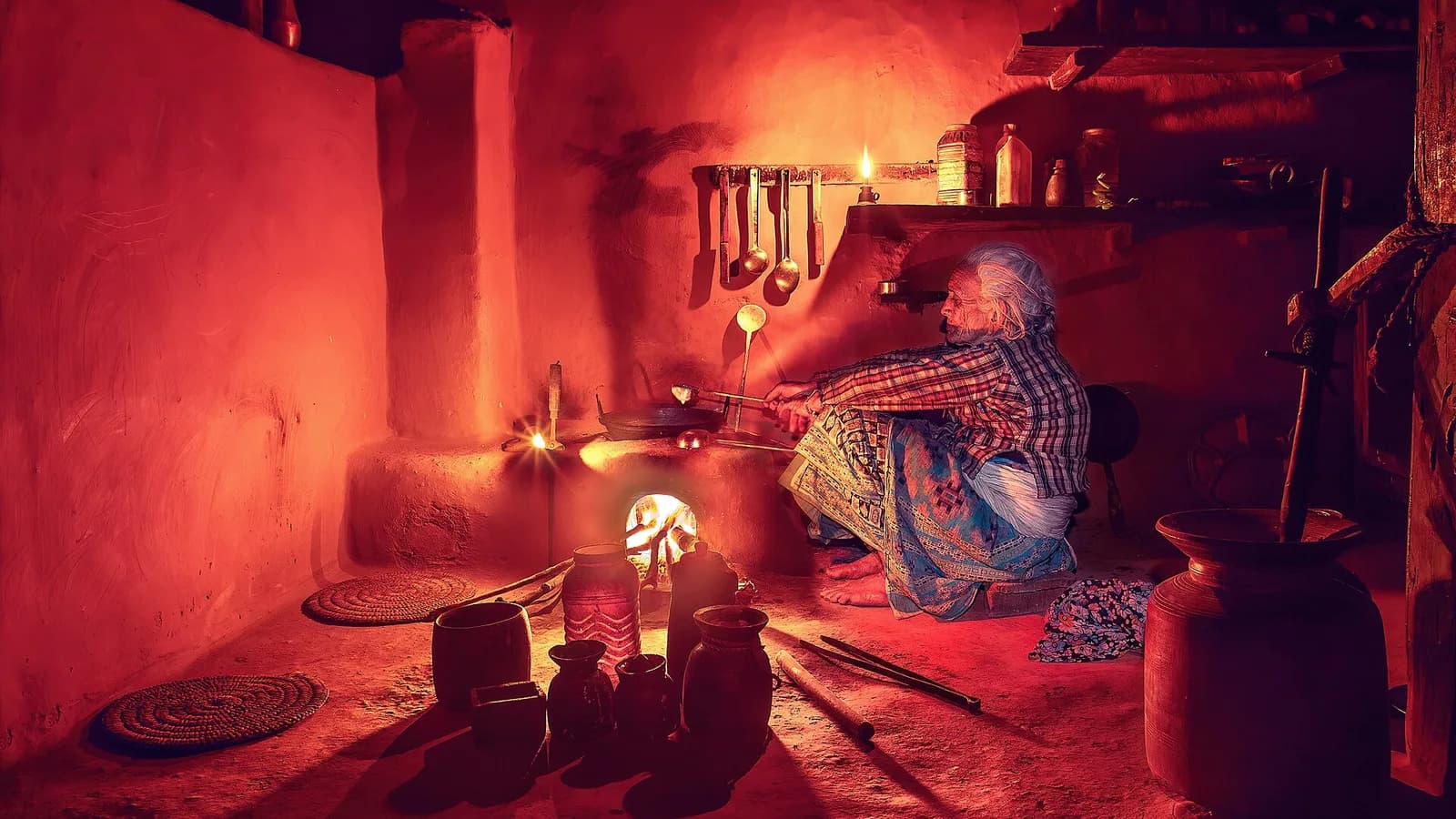
Ask what counts as Nepali food and you will get a different answer in the steamy southern plains, the terraced middle hills and a freezing teahouse near the snow line. The country packs an enormous range of climates and more than a hundred ethnic communities into a small area, and the kitchen reflects all of it. Rather than one fixed menu, Nepali cuisine is a set of regional and cultural traditions that share a backbone of rice, lentils, fermented greens and Himalayan spice.
This guide takes the wide view: how geography, religion and ethnicity shape what lands on the plate, and what actually defines the flavour of the food. If you want a straight checklist of dishes to order, our companion piece on what to eat in Nepal runs through fifteen of them. Here, the goal is to help you understand the cuisine as a whole, so the names on a menu start to make sense.
Key takeaways
- Nepali food is shaped by three geographic belts — the Terai plains, the middle hills, and the high Himalaya — each with different staple grains and styles.
- The unifying meal is dal bhat tarkari: rice, lentil soup, vegetable curry and pickle, eaten across the country, often twice a day.
- The cuisine sits between Indian and Tibetan worlds, borrowing spices and breads from the south and dumplings and noodle soups from the north.
- Fermentation and preservation — gundruk, sinki, sukuti, pickles — are central, born of seasons when fresh food was scarce.
- Distinct ethnic cuisines, especially Newari and Thakali, carry some of the country's most rewarding eating.
- Nepali food is very vegetarian-friendly and usually mild unless you add the chili-laden pickle.
A cuisine drawn on a map
Nepal rises from roughly 60 metres above sea level in the south to the highest mountains on Earth, all within about 200 kilometres. Geographers split it into three belts, and the food tracks them closely because what grows determines what is cooked.
| Region | Climate | Staple grains | Typical food character | |--------|---------|---------------|------------------------| | Terai (southern plains) | Tropical to subtropical | Rice, wheat, lentils | Closer to North Indian; more flatbreads, bolder spice | | Hills (middle belt) | Temperate | Rice, maize, millet | Classic dal bhat, gundruk, achar; the home cooking heartland | | Himalaya (high mountains) | Cold, alpine | Barley, buckwheat, millet | Tibetan-influenced; porridges, noodle soups, dried meat |
The Terai is the country's granary, a flat, fertile plain that produces a major share of its grain along with mangoes, litchi, bananas and jackfruit. Cooking here overlaps heavily with the North Indian plains: you will see more roti and puri, generous rice, and spice profiles that run hot and aromatic.
The middle hills, including the Kathmandu Valley and Pokhara, are where the meal most people picture as Nepali food took shape. The moderate climate suits potatoes, cauliflower, maize and millet, and it is here that dal bhat, fermented greens and tangy pickles came together into a complete daily routine.
The high Himalaya changes the rules. Above roughly 3,000 metres rice will not grow, so cold-tolerant barley, buckwheat and millet take over, often as the stiff porridge called dhido or as roasted flour. Meat leans toward yak, goat and sheep, and the Tibetan kitchen dominates with momo and thukpa. For a taste of how this plays out on a trek, see our guide to teahouse food on the way to Everest Base Camp.
Dal bhat: the thread that ties it together
Whatever the region, one plate appears almost everywhere: dal bhat tarkari. Dal is a soupy preparation of lentils, bhat is steamed rice (or another grain higher up), and tarkari is the seasonal vegetable curry. A pickle (achar) on the side supplies the punch, and greens, yogurt or meat may join depending on the household and budget.
Most Nepali families eat dal bhat twice a day, mid-morning and early evening, with the vegetables changing through the seasons while the format stays put. The rice-and-lentil pairing forms a complete protein, which is exactly why it sustains farmers, porters and trekkers through long days of physical work — and why "dal bhat power, 24 hour" is painted on so many teahouse walls. Our full dal bhat guide breaks down every item on the plate and how to eat it. The Thakali people of the Mustang region are widely credited with one of the most refined versions, the Thakali khana set, prized along the Annapurna trails.
Between India and Tibet: where the flavour comes from
Part of what makes Nepali food distinctive is its position between two culinary giants. From the Indian plains to the south come lentils, rice, flatbreads and a shared spice cabinet — cumin, coriander, turmeric, fenugreek, ginger, garlic and chili. From the Tibetan plateau to the north come dumplings (momo), noodle soups (thukpa) and steamed breads, along with the habit of warm, broth-based food suited to the cold.
That said, Nepali cooking is not simply a blend of the two. Compared with much North Indian food it tends to be lighter on oil, cream and heavy gravies, leaning instead on lentils, fresh vegetables and fermented greens. Compared with Tibetan food it is generally spicier and more pickle-forward. The result is a cuisine that feels familiar to anyone who knows South Asian food yet has a clearly Himalayan accent of its own.
Spice, but on your terms
A common surprise for visitors is that the base dishes are often mild. Much of the heat in a Nepali meal lives in the achar — the pickle or chutney served alongside — rather than in the dal or curry itself. That makes the spice level easy to control: go light on the pickle to keep things gentle, or pile it on if you like fire. A couple of words help, and our post on ordering food in Nepali covers them; kam piro means "less spicy."
Fermentation, drying and the food of lean seasons
Long before refrigeration, communities in the hills and mountains needed ways to store the harvest through winter, and that necessity became a defining flavour of Nepali food.
- Gundruk is leafy greens — typically mustard, radish or cauliflower leaves — wilted, packed tight, fermented naturally, then sun-dried into a tangy, sour ingredient. It is cooked into a warming soup (gundruk ko jhol) or tossed into a sharp salad, and it is rich in lactic acid and valued for digestion. The greens are mostly gathered in October and November and put up in large community batches.
- Sinki is a close cousin, made by fermenting radish taproots.
- Sukuti is air-dried, spiced buffalo or goat meat, chewy and intense, eaten as a snack or in a salad.
- Achar covers a huge family of pickles and chutneys, from fresh tomato-and-sesame blends to long-keeping fermented preserves.
These are not side notes; they are central to how the food tastes and how rural kitchens have always worked. Our dedicated gundruk and dhido guide goes deeper on the two dishes that best capture this older, pre-rice food culture.
The great ethnic cuisines: Newari and Thakali
Beyond the regional belts, individual communities maintain their own elaborate food traditions. Two stand out for travellers.
Newari food
The indigenous Newar people of the Kathmandu Valley have one of South Asia's most intricate cuisines, with a very large repertoire of dishes and a famous use of buffalo meat — Newar cooking is known for finding a use for nearly every edible part of the animal. Fermented ingredients, beaten rice (chiura) and bold pickles run through it. The centrepiece is the ceremonial platter known as samay baji or the Newari khaja set, a spread of many small components grazed slowly. Dishes like choila (spiced grilled meat) and chatamari (a rice-flour crepe nicknamed "Newari pizza") are good entry points. We cover where and how to eat all of it in our Newari food guide for Kathmandu.
Thakali food
The Thakali people of the Thak Khola valley in the Mustang region sit, both geographically and on the plate, between the highlands and the lowlands. Their cuisine is built for cold, high country — nourishing, warming and balanced — and the Thakali khana set of rice, lentil soup, pickles and a vegetable or meat curry is regarded as one of the best versions of the dal bhat format in the country. You will find Thakali kitchens prized along the Annapurna and Mustang routes.
How Nepalis eat: customs at the table
Understanding the cuisine also means understanding the manners around it. A few patterns hold across much of the country:
- Right hand, no cutlery (traditionally). Many Nepalis eat by mixing small amounts of dal, curry and pickle into the rice with the fingers of the right hand. Cutlery is widely offered in tourist areas, but the left hand is avoided for eating, as it is considered unclean.
- Refills are part of the deal. Order a dal bhat set in a teahouse or local eatery and staff will usually top up your rice, dal and vegetables until you are full, often at no extra charge. Say pugyo ("enough, I'm full") to stop.
- Two meals, plus tea. The traditional rhythm is two main meals a day, bridged by snacks and endless cups of chiya — milk tea, frequently spiced into masala chiya.
- Food and festival are linked. Specific dishes belong to specific occasions, from sel roti at Tihar and Dashain to celebratory feasts marking life events.
If you want to thank the cook, mitho chha ("it's delicious") goes a long way; our guide on how to say delicious in Nepali has the pronunciation.
Eating well, and safely, as a visitor
The reassuring news is that some of Nepal's most characteristic foods are also among the safest for travellers, because they are cooked fresh to order and served piping hot — dal bhat, momo and thukpa among them. To keep stomach trouble at bay, favour places that are busy with locals, make sure cooked dishes arrive steaming, be a little cautious with raw salads, pickles and unpeeled fruit, and drink only bottled, boiled or treated water. Our guide on whether the water is safe to drink in Nepal covers that in detail.
From there, the best way to learn the cuisine is to eat across it — a Terai thali one day, a Newari platter the next, a steaming bowl of thukpa on a cold trail — and let the map reveal itself one plate at a time. When you are ready to order, start with our full rundown of what to eat in Nepal.
Sources
Frequently asked questions
- What is Nepali food like?
- Nepali food is built on rice, lentils and Himalayan grains, seasoned with spices like cumin, coriander, turmeric, ginger and chili, and shaped by Indian influence to the south and Tibetan influence to the north. The everyday meal is dal bhat, a plate of rice and lentil soup with vegetable curry and pickle.
- What is the national dish of Nepal?
- Dal bhat is the meal most associated with Nepal and is widely called the national dish. Dhido, a thick porridge of millet or buckwheat flour eaten with fermented greens, is also frequently described as a national dish, especially in the hills.
- How does Nepali food differ by region?
- Nepal has three broad belts. The southern Terai plains lean toward North Indian style cooking with more flatbreads and bolder spice. The middle hills are the home of classic dal bhat, gundruk and achar. The high Himalaya rely on barley, buckwheat and millet with Tibetan style noodle soups and dumplings.
- Is Nepali food the same as Indian food?
- No, though they overlap and share many spices. Nepali cooking is generally lighter on oil and cream than much North Indian food, leans heavily on lentils and fermented greens, and includes Tibetan style dishes like thukpa and momo that you will not find in mainstream Indian cuisine.
- What is Newari food?
- Newari food is the elaborate cuisine of the indigenous Newar people of the Kathmandu Valley. It makes heavy use of buffalo meat, beaten rice and fermented ingredients, and is famous for ceremonial platters such as samay baji that bring together many small dishes at once.
- Is Nepali food good for vegetarians?
- Yes, Nepal is one of the easiest countries in Asia to eat vegetarian. The staple dal bhat is naturally vegetarian and often vegan, and vegetable momos, vegetable thukpa, paneer dishes and fermented greens are available almost everywhere.
- What are gundruk and dhido?
- Gundruk is leafy greens that have been fermented and sun-dried into a tangy ingredient cooked into soup or salad. Dhido is a thick porridge made by stirring millet, buckwheat or maize flour into boiling water. Together they represent the older, pre-rice food culture of Nepal's hills.
- How do Nepalis traditionally eat their food?
- Many Nepalis eat with the fingers of the right hand, mixing small amounts of dal, curry and pickle into the rice. Cutlery is common in tourist areas, but the left hand is traditionally avoided for eating, and refills of a dal bhat set are often free.
Related posts
Dal Bhat — Nepal's National Meal Explained for Travelers
What dal bhat is, what's on the plate, why trekkers live on it, and how to order Nepal's national meal like a local. A practical traveler's guide.
Read postDhido — Nepal's Hill-Country Porridge, Explained
What dhido is, the millet and buckwheat it is made from, how to eat the dhido thali by hand, and why this gluten-free Nepali staple is back in style.
Read postGundruk and Dhido — Nepal's Fermented Greens and Porridge
What gundruk (fermented leafy greens) and dhido are, how they are made and eaten, their health benefits, and why this hill-country pair is a national dish.
Read post