How to Say Delicious in Nepali — Mitho Chha (and Why It Matters)
The single phrase that earns extra dal bhat refills, warmer service, and the quiet respect of every Nepali cook. Plus the variations and context.
Mitho chha lands harder than dhanyabad. Use it.
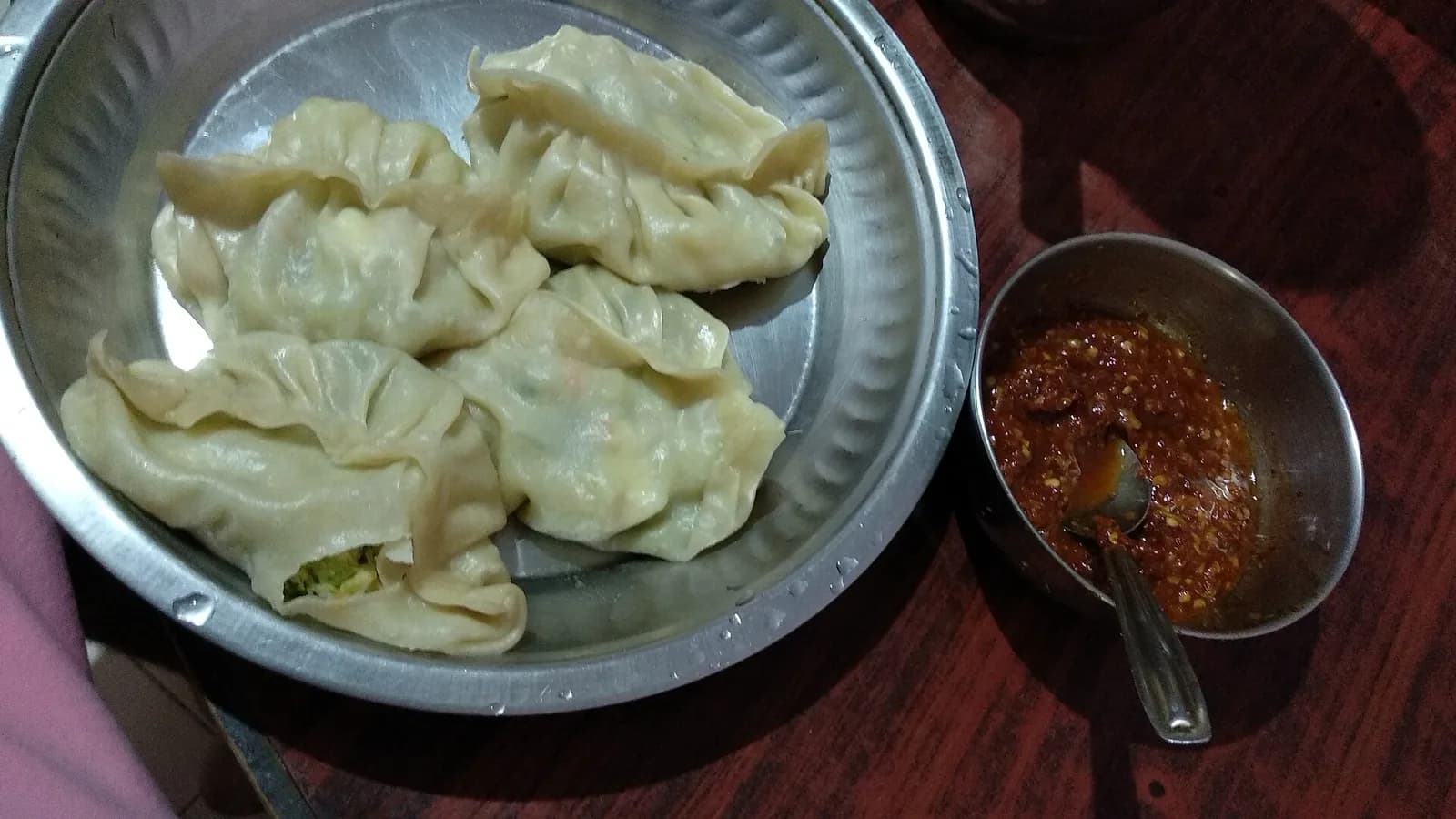
If you learn one Nepali phrase beyond namaste, learn this one.
Mitho chha — मिठो छ — "It's delicious."
It's three syllables. It's the easiest culturally meaningful phrase a foreigner can deploy in Nepal. And it works in every food context — trekking lodges, restaurants, family meals, street stalls — to a degree that surprises every traveler the first time they try it.
Here's why it matters more than its 3-syllable simplicity suggests, and the variations to know.
The pronunciation
Mitho chha breaks down phonetically as:
- Mi-tho — like "MEE-toe" but with a softer 't' (more dental than English)
- Chha — like "cha" but with a soft aspirated 'h' at the end
Approximate: MEE-toe cha
The full Devanagari: मिठो छ — see the Devanagari script roadmap for how to read it.
What it actually does
When you say mitho chha to a cook, lodge owner, or family member after a meal:
-
They smile. Genuinely. Nepali culture takes food hospitality very seriously, and a foreigner using the right phrase signals respect that English praise doesn't.
-
You get more food. Dal bhat refills come faster. Tea pots are kept full. Extra portions appear without asking.
-
The conversation opens. People want to talk to the foreigner who said the right thing. You'll learn more about the family, the recipe, the region in 30 seconds than you would in 30 minutes of nodding politely.
-
Your bill is sometimes lower. Rare but reported — lodge owners occasionally drop the price of a meal slightly when the guest has been respectful and warm.
The effect is real and consistent. Try it on day 1 of your trip and you'll feel the difference immediately.
When to use it
- After the first bite of any meal — say it while still chewing, with eye contact toward the cook or server. This is the most natural moment.
- When the cook comes to ask how the food is — they will, especially in family-run teahouses
- At the end of the meal — as a closing remark, often with dhanyabad (thank you) attached: Mitho chha, dhanyabad.
- When refusing a refill — Pugyo, mitho chha — "I'm full, it was delicious." See how to say I'm full.
The variations
For really delicious: Dherai mitho chha — "It's very delicious." The intensifier dherai (DEH-rai) means "very" or "a lot."
For describing specific food: Yo dal bhat mitho chha — "This dal bhat is delicious." The structure: subject + adjective + verb. Substitute the food you want to compliment.
When the cook is right there: Adding a small bow with palms together at chest level (the namaste gesture) while saying mitho chha elevates it from polite phrase to gesture of respect. Reserved for moments that warrant it.
When something is exceptional: Dherai dherai mitho chha — "It's extremely delicious." The repetition of dherai makes it stronger. Use sparingly — over-praising every meal makes the phrase lose its weight.
Past tense: Mitho thiyo — "It was delicious." Used after the meal is finished. Thiyo is the past form of chha (is).
What NOT to say instead
Don't say "Good food." It translates literally but doesn't carry the same warmth. Mitho chha is the culturally embedded phrase.
Don't say "Tasty." Same problem — literal but not the local pattern.
Don't gesture a thumbs-up. It's understood in tourist areas but isn't a Nepali cultural sign — the words land better than the gesture.
The cultural context
Food in Nepal is one of the primary expressions of hospitality. Cooks (especially women in family households) put significant effort into meals — not as a job but as an act of care for the family or guest. Saying mitho chha acknowledges that effort directly in the cook's language.
The flip side: silence after a meal is not neutral. In Nepali culture, eating quietly and leaving without comment is mildly impolite — it can be read as "the food was unremarkable." Most tourists don't realize this and accidentally come across as cold without meaning to.
A single mitho chha corrects that.
In trekking lodges specifically
The teahouse scenario script covers this in context, but it bears repeating: trekking lodges run on family-cooked dal bhat. The cooks are usually women who watch foreigners eat in silence for 12 days at a stretch. The trekkers who say mitho chha are remembered. Their dal bhat portions are heavier. Their tea is poured first.
It's a small thing that returns disproportionate warmth.
A few related phrases for the trail
- Khana mitho chha — "The food is delicious."
- Chiya mitho chha — "The tea is delicious."
- Tapaiko khana ramro chha — "Your food is good." (slightly more formal)
- Aru paaucha? — "Can I have more?" (asking for refills)
- Pugyo — "I'm full / enough." (when declining more)
The full trekking phrasebook has the broader trail-specific vocabulary.
The cumulative effect
If you say mitho chha once on a 10-day trek, you'll get a smile. If you say it three times across the trip, you'll be the foreigner the lodge family remembers a year later when they're telling other trekkers about the polite Western guest. If you say it consistently, every meal in Nepal becomes a tiny moment of cultural exchange instead of a transaction.
The phrase costs nothing. The return is everything.
Pre-trip checklist
- Practice saying it aloud a few times before flying
- Listen to how to say delicious in Nepali audio (if available) to nail the pronunciation
- Use it on day 1 to build the habit
- Pair with the eight trail phrases for full coverage
- See the Devanagari script if you want to read it
The mountain rewards effort. The cook rewards praise. Bring both.
Related posts
How to Say 'I'm Full' in Nepali — Pugyo (And Why It's Critical)
Without this single phrase, every Nepali host or teahouse cook will keep refilling your plate. With it, you finish gracefully. Pugyo, plus variations.
Read postHow to Say Hello in Nepali: Namaste and Beyond
How to say hello in Nepali — what namaste means, how to pronounce it, the folded-hands gesture, and when to use namaskar instead. A traveler's guide.
Read postHow to Say Thank You in Nepali (Dhanyabaad Guide)
How to say thank you in Nepali — dhanyabaad pronunciation, formal vs casual use, the namaste gesture, and what locals actually expect from travelers.
Read post