EBC Teahouse Food and Accommodation — What to Expect Each Day
How teahouses work on the Everest Base Camp trail, what you eat, where you sleep, hot showers, charging, wifi, and the real cost per night.
The teahouse is your hotel, restaurant, charging station, and weather forecast — all run by one family.
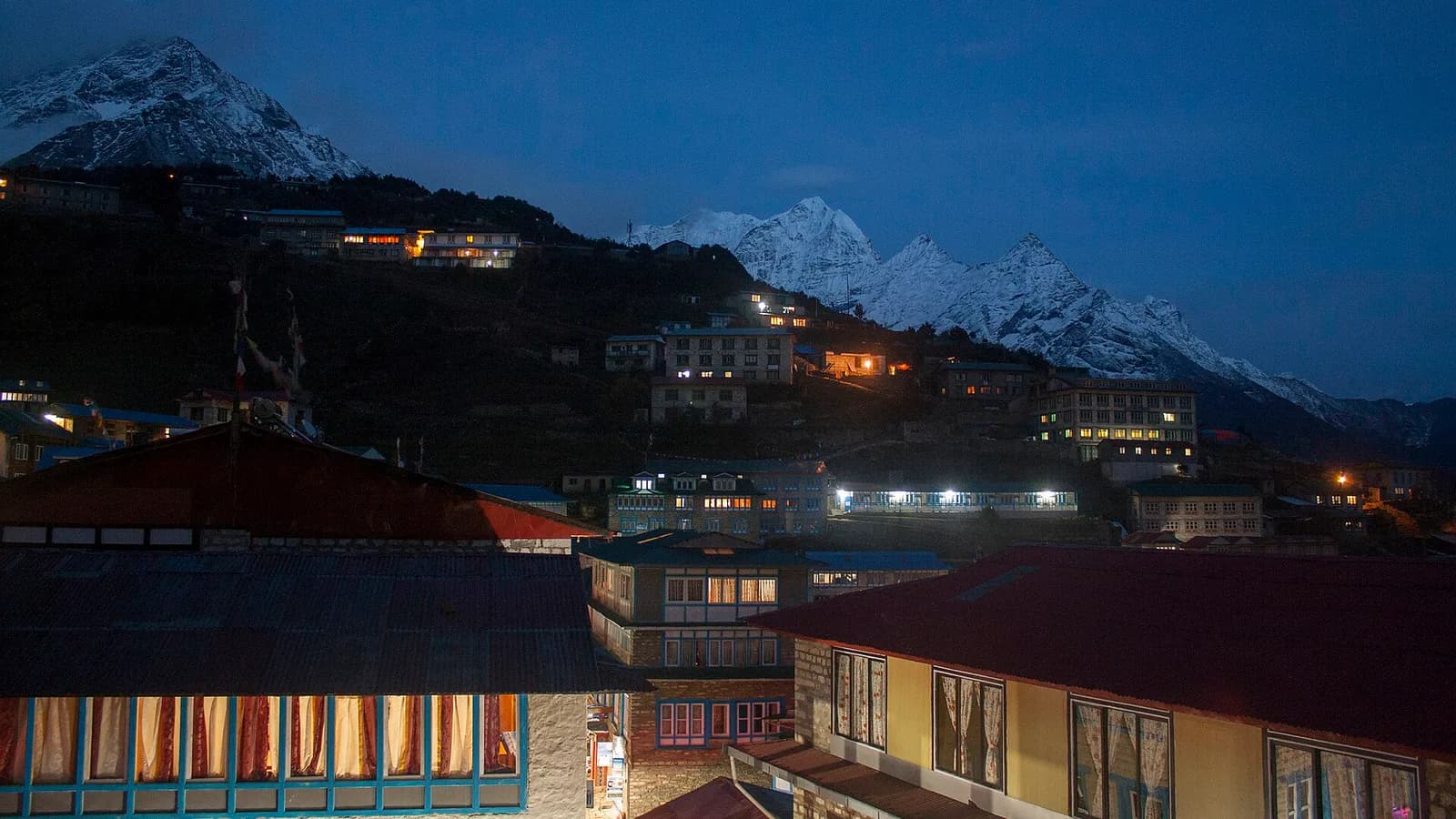
A teahouse on the EBC trail is a family-run lodge offering rooms, meals, and a stove. They evolved from the original Sherpa farmhouses that took in trekkers in the 1970s, and most of the lodges between Lukla and Gorak Shep are still family operations today. Understanding how they work changes the trek — you stop being a paying customer and start being a guest.
Here's the daily rhythm and the practical details.
Rooms: free if you eat there
The standard arrangement: rooms are free or NPR 200–500 if you eat dinner and breakfast at the lodge. They are not free if you walk in, want a room, and plan to eat elsewhere. This is the unspoken contract.
The rooms are basic. Two twin beds with foam mattresses, a small table, sometimes a chair, a window. Sheets are typically not provided — bring your sleeping bag. Toilets and washing facilities are shared, down the hall or sometimes outside.
Higher altitudes (Lobuche, Gorak Shep) have fewer lodges and they fill up in peak season. From Dingboche onwards, don't push past lunchtime hoping for a better lodge later — the next village might be full.
Food: dal bhat is the trail engine
Most lodges have a menu of 30–50 items: dal bhat, fried rice, fried noodles, momos, pizza, pancakes, eggs, soups. Quality varies but the templates are nearly identical lodge to lodge. The reason: a small number of cookbooks and trekking-association recipes have standardised what every lodge serves.
The two practical truths:
-
Dal bhat is the only meal with unlimited refills. Rice, dal, vegetables — all refilled until you wave the cook off. Every other item is a single serving. On a trekking budget, dal bhat is the most calories-per-rupee meal on the menu.
-
Vegetarian is the default and safest option. Meat at altitude has traveled on a porter's back, often unrefrigerated. Lodges above Namche generally don't serve fresh meat at all. The yak steaks on menus above Dingboche are usually frozen and reheated, which is fine but rarely worth the price. Stick to dal bhat, momos, and noodles.
See the teahouse scenario script for the phrase sequence — greeting, ordering, refills, compliments, paying.
Prices climb with altitude
| Item | Lukla (~2,800m) | Namche (~3,440m) | Dingboche (~4,400m) | Gorak Shep (~5,140m) | |---|---|---|---|---| | Dal bhat | 500 NPR | 700 NPR | 900 NPR | 1,200 NPR | | Vegetable momos | 350 NPR | 500 NPR | 700 NPR | 900 NPR | | Fried rice | 400 NPR | 600 NPR | 800 NPR | 1,000 NPR | | Apple pie / pancakes | 300 NPR | 500 NPR | 700 NPR | 800 NPR | | Pot of tea (refillable) | 200 NPR | 300 NPR | 450 NPR | 600 NPR | | 1L bottled water | 100 NPR | 150 NPR | 300 NPR | 500 NPR |
The reason prices climb is genuine: everything above Lukla is carried by porter or pack animal. A bottle of Coke at Gorak Shep represents a 5,140m vertical lift on someone's back. Don't haggle these prices. They're not scams. See the scam-defence guide for the patterns that ARE worth pushing back on.
Hot showers: pay or skip
Hot water is heated by gas, solar, or wood. At higher altitudes, gas is expensive (it's carried up the trail) and showers are rationed.
| Altitude | Hot shower cost | Worth it? | |---|---|---| | Lukla | 200–400 NPR | Yes — last real shower for days | | Namche | 400–500 NPR | Yes — last warm one before the cold zone | | Dingboche | 500–600 NPR | Marginal — fast and not very hot | | Lobuche | Not always available | Skip | | Gorak Shep | n/a | Skip entirely |
Above Dingboche, cold-water dunks at altitude are a real risk factor for AMS (your body diverts blood to your skin trying to warm up, leaving less for acclimatization). If you're not paying for a proper hot shower, baby-wipe sponge baths are the smart compromise.
Charging electronics
Lodges charge for phone/camera/headlamp charging — typically NPR 200–500 per device per hour. Higher altitudes charge more. Some lodges have a single power strip in the common room that they ration; others have outlets in rooms.
The trick: a 20,000mAh power bank lets you charge phone + headlamp for the entire trek from a single charge in Kathmandu. The portable solar panels strapped to backpacks rarely produce useful current — they need direct unbroken sun for hours.
Wifi: optional, slow, sometimes worth it
Most lodges from Lukla to Lobuche have wifi via a system called Everlink. It's slow but functional for WhatsApp messages and brief emails. Cost: NPR 300–800 for a 1-hour voucher.
Don't try to watch Netflix or upload photos. Don't expect it to work for video calls. Do expect it to fail completely during snowstorms.
If you need reliable connectivity, a Nepali SIM card (see the SIM card guide) with Ncell coverage works as far as Namche and patchily beyond. Above Dingboche, you're on satellite-grade nothing.
Common rooms and the social side
Every lodge has a common dining room with a stove (yak dung or wood). This is where the trek's social life happens. Trekkers from different teams gather here in the evening — the stove is genuinely the only warm spot in the lodge after sunset.
The social dynamic above 3,500m is different. People are tired, slightly altitude-affected, and quieter. Don't expect raucous nights. Expect quiet conversations over multiple pots of tea, with most trekkers in bed by 9pm.
Food safety
Two real risks:
- Raw or fresh vegetables that weren't washed in safe water. Stick to cooked vegetables. The salad on the menu is often a risk.
- Reheated meat. As mentioned above, skip meat from Namche onwards.
Dal bhat, momos, fried rice, fried noodles, eggs, pancakes, and pizza are all reliably safe. Most stomach issues on the trail are bottled-water issues (refilled tap water sold as sealed), not lodge food.
Filter or steripen your own water from the lodge tap (NPR 50 fill) — cheaper, safer, no plastic.
What about hot drinks vs paying for tea?
You'll drink an enormous amount of liquid at altitude — 3–5 liters/day. Hot lemon, hot ginger lemon, masala chiya, black tea, hot chocolate, "Sherpa stew" — every lodge serves them.
The cheapest strategy: order a thermos of hot water (NPR 200–400, varies) instead of individual cups. Pour your own with lemon slices or tea bags you brought. Saves 50%+ over individual tea orders and you control the strength.
What to budget per day
A reasonable per-day budget at typical EBC altitudes (Namche through Lobuche):
- Room: 0–500 NPR (free with meals)
- Dal bhat × 2 (lunch + dinner): 1,200–1,800 NPR
- Breakfast (pancakes or eggs): 400–600 NPR
- Thermos of hot water + tea: 300–500 NPR
- Snacks: 200–400 NPR
- Total: ~2,500–3,500 NPR per day (~$18–25)
Add hot showers, wifi, charging, and the occasional dessert and it becomes ~$30–40/day. See the full EBC cost breakdown for the trip-total math.
Pre-trek checklist
- 30k–40k NPR cash from a Kathmandu ATM (lodges don't take cards)
- 20,000mAh power bank
- Sleeping bag rated -10°C comfort (lodges are cold)
- Steripen or filter for water
- The teahouse scenario script loaded into your head
The teahouse system is what makes the EBC trail accessible. Most trekkers leave thinking the mountains were the highlight. A surprising number leave thinking the lodges were.
Related posts
Mountain Lodge Everest: Where You Sleep on the EBC Trail
A mountain lodge on the Everest trail can mean a basic teahouse or a heated luxury suite. Here is the full range, costs, and what to expect.
Read postTeahouse Trekking in Nepal: What a Teahouse Really Is
Teahouse trekking Nepal explained: how mountain lodges work, what you eat, sleep, pay, and the one unwritten rule every trekker should know.
Read postWhat Is a Teahouse? Nepal's Trekking Lodges Explained
What is a teahouse in Nepal? A plain-English guide to the family-run mountain lodges where trekkers eat, sleep, and warm up along the trail.
Read post