Is Nepal a Country? Yes — Here Are the Quick Facts
Is Nepal a country? Yes. Nepal is an independent, sovereign nation in South Asia and a UN member since 1955. Here are the quick facts that prove it.
Nepal is not a region of India or China — it is a sovereign country that was never colonised and joined the UN in 1955.
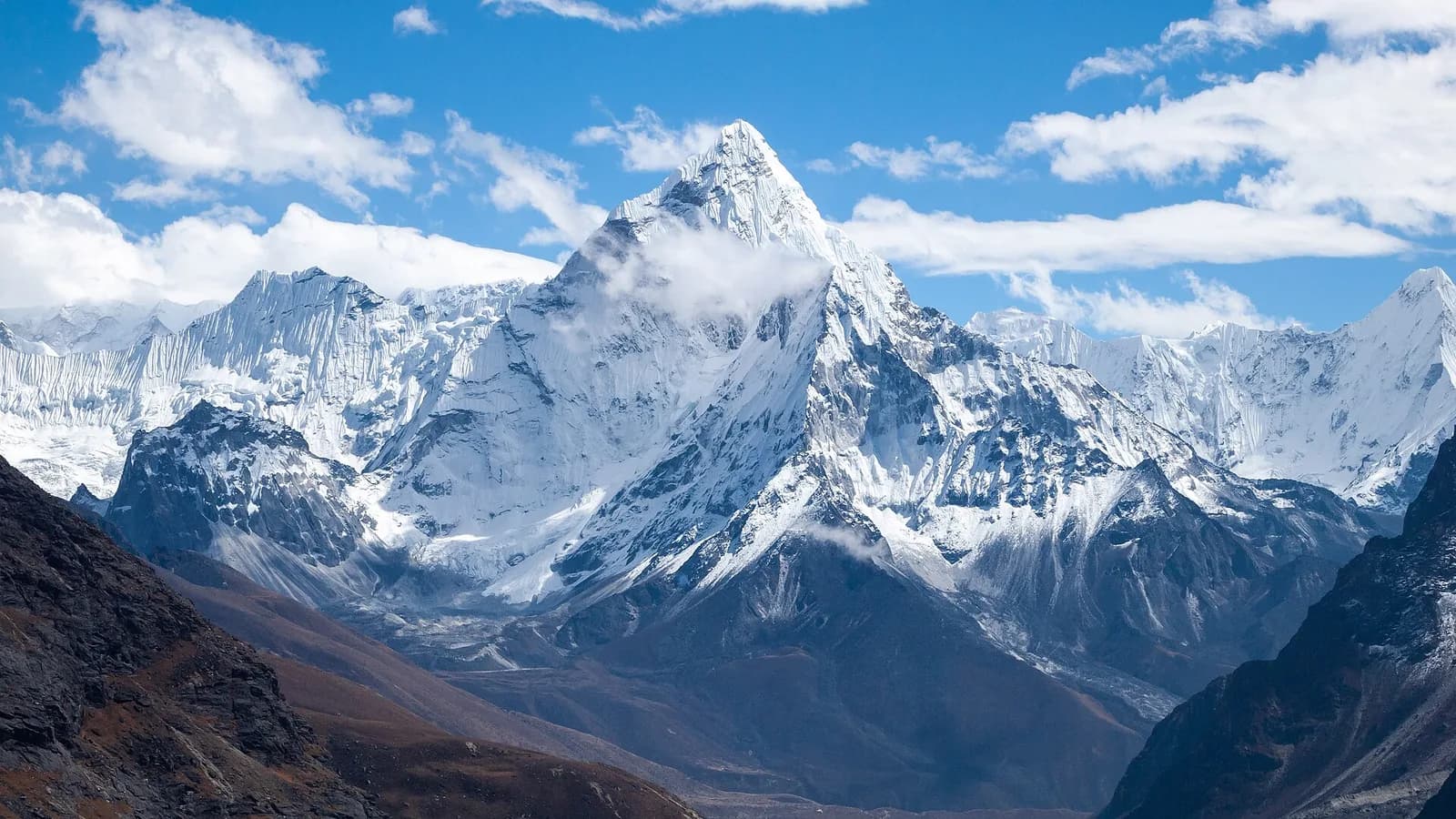
Is Nepal a country? Yes — and the answer is not even close. Nepal is a fully independent, sovereign nation in South Asia, with its own government, flag, currency, language and seat at the United Nations. The confusion usually comes from its open border with India, but Nepal has never been part of India or China, and it was never colonised. This short explainer lays out the quick facts that settle the question for good.
Key takeaways
- Yes, Nepal is a country — officially the Federal Democratic Republic of Nepal.
- It is an independent, sovereign state in South Asia, not part of India or China.
- Nepal has been a United Nations member since 1955.
- It was never colonised, surviving as a buffer between British India and China.
- Nepal became a federal republic in 2008, ending its monarchy.
- Its capital is Kathmandu, and it has a population of around 29–30 million.
Yes — Nepal is an independent country
Let us be direct: Nepal is one of the world's recognised sovereign states. Its full official name is the Federal Democratic Republic of Nepal. It has everything that defines a country — defined borders, a permanent population, a functioning government, and the capacity to enter relations with other states.
Nepal sits in South Asia, along the Himalayas between India and the Tibet Autonomous Region of China. If you want the precise geography, our guide to where Nepal is located maps it out. But location is exactly where the confusion starts, so it is worth addressing head-on.
Why people ask the question
Nobody asks whether France or Japan is a country. So why Nepal? A few reasons:
- The open border with India. Nepalis and Indians can cross freely without visas, and the frontier runs through ordinary towns and fields rather than mountains. That seamlessness makes Nepal feel like part of India to outsiders.
- Cultural overlap. Nepal shares languages, food, religion and festivals with northern India. Hinduism is the majority faith in both, and Nepali looks similar to Hindi on the page.
- Size and visibility. As a smaller country tucked beside two giants, Nepal simply gets less airtime, so its independent status is less obvious to people far away.
None of this changes the legal and political reality. Sharing a border and a culture is not the same as sharing a country — and Nepal crossing into India still means crossing an international frontier. We compare the two directly in Nepal vs India travel.
The quick facts that prove it
Here is the evidence at a glance.
| Fact | Detail | |---|---| | Official name | Federal Democratic Republic of Nepal | | Status | Independent, sovereign country | | Region | South Asia | | Capital | Kathmandu | | Borders | China (north); India (south, east, west) | | UN member since | 1955 | | Government | Federal democratic republic (seven provinces) | | Currency | Nepalese rupee (NPR) | | Population | ~29–30 million (2021 census) | | Area | ~147,516 sq km |
Every one of these is a marker of nationhood. Nepal issues its own currency, the Nepalese rupee; it stamps its own visas (see our visa on arrival guide); and it has a population and territory of its own, detailed in our pages on Nepal's population and Nepal's area and size.
Never colonised — a point of national pride
One fact Nepalis hold dear: Nepal was never colonised. While most of South Asia fell under British rule, Nepal kept its independence throughout the colonial era. It functioned as a buffer state between British India and the Chinese empire in Tibet, maintaining its own monarchy and army.
That unbroken independence is rare in the region and is a genuine source of pride. It also helps explain why Nepali culture feels so distinct despite the heavy overlap with its neighbours — there was no colonial administration here reshaping institutions from the outside.
From kingdom to republic
For most of its modern history Nepal was a kingdom, and for a long time the world's only officially Hindu kingdom. That changed in the 2000s:
- 28 May 2008 — Nepal abolished the monarchy and declared itself a federal democratic republic, ending centuries of royal rule.
- 20 September 2015 — a new constitution came into force, dividing the country into seven provinces and cementing its federal structure.
Today Nepal is governed by an elected parliament and a president as head of state, with a prime minister leading the government. It is a member not just of the UN but of regional groupings like SAARC (the South Asian Association for Regional Cooperation) and BIMSTEC.
The marks of nationhood you can actually see
Beyond the legal status, Nepal carries the everyday symbols that every country has — and a few that are uniquely its own.
- A one-of-a-kind flag. Nepal has the only national flag in the world that is not a rectangle. It is made of two stacked triangular pennants, bearing a moon and a sun. No other country comes close to this design, and it is an instant marker of Nepali identity.
- Its own language and script. Nepali, written in the Devanagari script, is the official language, alongside dozens of other recognised tongues. While Nepali resembles Hindi, the two are distinct, as we explain in Nepali vs Hindi.
- Its own currency. The Nepalese rupee is issued by Nepal Rastra Bank, the country's central bank — separate from the Indian rupee, though the two are linked. Our Nepal currency guide covers how it works.
- Its own time zone. Nepal runs on Nepal Standard Time (UTC+5:45) — one of the few countries on Earth offset by 45 minutes, deliberately set apart from India's time.
- Its own institutions. A national army, police, courts, passport and diplomatic missions abroad all confirm Nepal's standing as a state in its own right.
These are not trivia. A distinct flag, language, currency and time zone are exactly the things that mark one country off from another — and Nepal has its own version of each.
How Nepal differs from India and China in practice
Because the "is Nepal a country" question almost always stems from the India connection, it helps to see how the experience actually differs on the ground.
| Feature | Nepal | India | China (Tibet) | |---|---|---|---| | Government | Federal republic | Federal republic | One-party state | | Currency | Nepalese rupee | Indian rupee | Chinese yuan | | Time zone | UTC+5:45 | UTC+5:30 | UTC+8 | | Border for visitors | Open with India | — | High, restricted |
Travellers feel these differences quickly. The visa rules change at the border, the money changes, even the clock shifts by fifteen minutes when you cross from India. For a fuller side-by-side of the travel experience, see Nepal vs India and, for the northern comparison, Nepal vs Tibet.
A short history of Nepal as a nation
Nepal's independence is not a modern accident — it has deep roots. The country in roughly its present form dates to the mid-18th century, when King Prithvi Narayan Shah of the small hill kingdom of Gorkha unified a patchwork of rival principalities into a single state. That unification campaign, completed around the 1760s and 1770s, created the Nepal we recognise today and is why the country's soldiers were long known abroad as Gurkhas.
From there, the broad arc runs:
- 18th century — unification under the Shah dynasty creates a single kingdom.
- 19th–20th century — Nepal holds its independence through the colonial era as a buffer state, despite a treaty relationship with British India.
- 1955 — Nepal joins the United Nations, formalising its place in the community of nations.
- 2008 — the monarchy is abolished and Nepal becomes a federal democratic republic.
- 2015 — a new constitution establishes seven provinces.
At no point in that story is Nepal a province of another power. It enters the modern world already a country, and it remains one. That continuity is rare in the region and central to how Nepalis see themselves.
A country worth knowing — and visiting
So the question "is Nepal a country?" has a one-word answer: yes. It is an independent, UN-recognised, never-colonised nation with a deep history of its own. The cultural closeness to India is real, but it sits alongside a fiercely held independence, not in place of it.
And it is a country very much worth experiencing in its own right — from the temples of Kathmandu to the high Himalayan trails. If that has sparked your curiosity, our honest take on whether Nepal is worth visiting is a good next stop, along with our roundup of the best places to visit in Nepal.
Sources
Frequently asked questions
- Is Nepal a country?
- Yes. Nepal is a fully independent, sovereign country in South Asia. Its official name is the Federal Democratic Republic of Nepal, and it has been a United Nations member since 1955.
- Is Nepal part of India?
- No. Nepal is a separate country with its own government, currency, flag and constitution. It shares a long open border with India, which is why the two are sometimes confused.
- Is Nepal part of China?
- No. Nepal borders the Tibet Autonomous Region of China to the north but is an independent nation. It has never been ruled by China and governs itself.
- Was Nepal ever colonised?
- No. Nepal was never colonised by a European power. It remained independent through the colonial era, acting as a buffer state between British India and China.
- When did Nepal become a republic?
- Nepal abolished its monarchy and became a federal republic on 28 May 2008, ending centuries of royal rule. Its current constitution was adopted on 20 September 2015.
- What kind of country is Nepal?
- Nepal is a federal democratic republic with a parliamentary system. It is divided into seven provinces, with Kathmandu as its capital and largest city.
- Is Nepal a recognised country?
- Yes. Nepal is recognised worldwide, holds full UN membership, maintains embassies abroad, and is a member of regional bodies such as SAARC and BIMSTEC.
Related posts
The Himalayas: A Traveller's Guide to the Range
The Himalayas explained for travellers — how the range formed, its highest peaks, the rivers it feeds, and the best ways to see it from Nepal.
Read postMount Everest: A Traveller's Guide to the Tallest Peak
Mount Everest explained for travellers - its height, names, first ascent, 2025 permit rules, Sherpa records, and how to see Sagarmatha without climbing it.
Read postHow Big Is Nepal? Nepal's Area and Size Explained
How big is Nepal? Nepal's area is about 147,516 sq km. See size comparisons, dimensions, and how a small country fits the world's tallest mountains.
Read post