Elephant Breeding Centre Chitwan: Visitor Guide
What the elephant breeding centre in Chitwan really is, how to visit Khorsor near Sauraha, opening hours, fees, and the welfare debate explained.
Come for the calves, but leave knowing exactly what you are looking at.
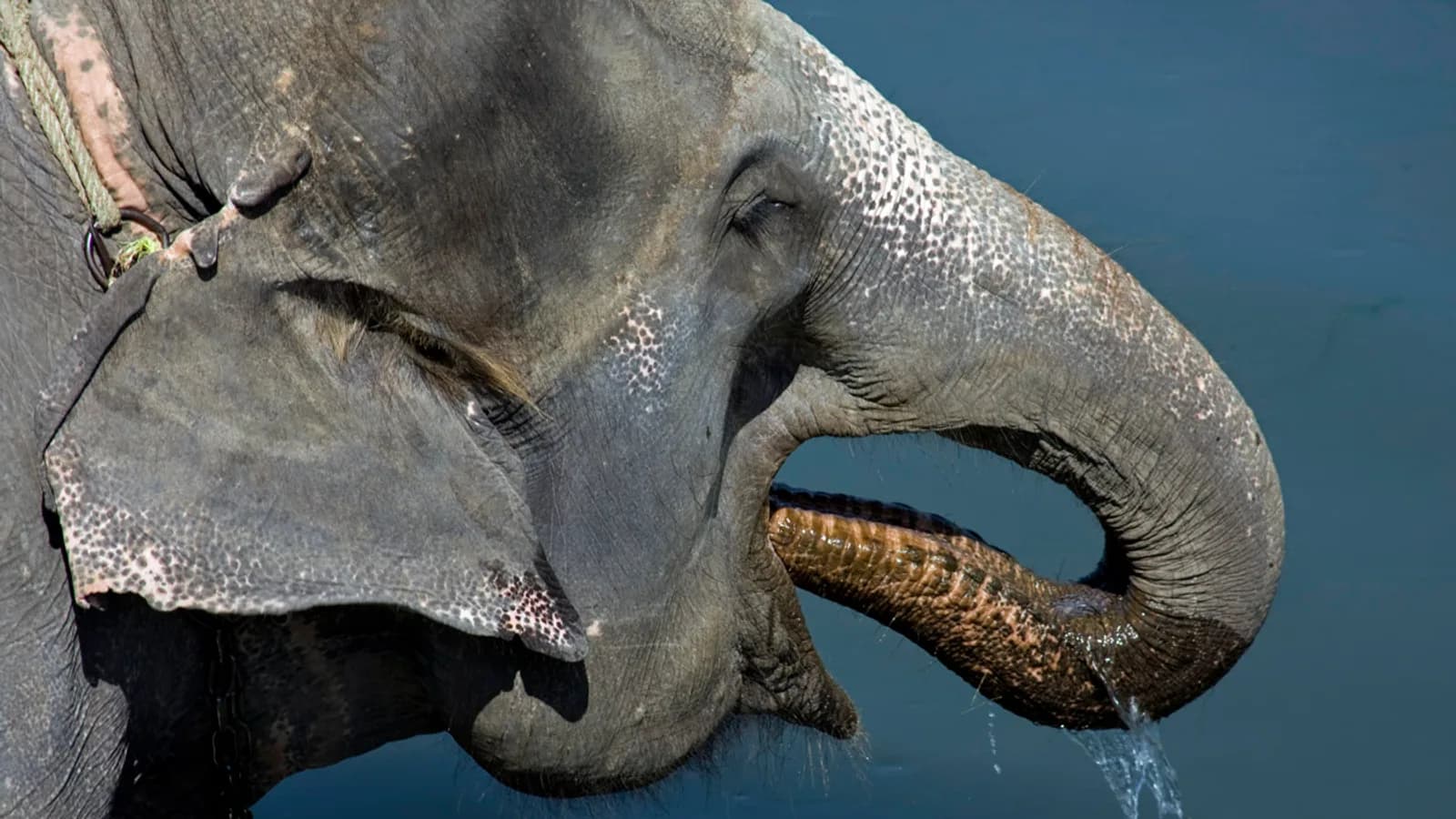
The elephant breeding centre Chitwan travellers ask about is a working government facility at Khorsor, just outside Sauraha on the edge of Chitwan National Park. It is one of the easiest half-day stops in the Terai: you walk or cycle out, watch elephants and their calves around the stables, and learn how the animals fit into Nepal's wildlife story. It is also one of the more debated stops, because what looks like a cute baby-elephant photo opportunity is part of a long-running captive-breeding programme. This guide covers the practical side — where it is, when to go, what it costs — and gives you an honest read on the welfare questions so you can decide for yourself.
This post pairs with our broader Chitwan National Park safari guide and our look at park fees and what you'll realistically see. For the wider ride-or-not debate, see elephant safari in Nepal.
Key takeaways
- The centre is at Khorsor, a short ride west of Sauraha, inside Chitwan National Park, and is reachable on foot, by bike, or by short jeep or rickshaw ride.
- It was established in 1985 and opened to the public in 1989, originally to breed elephants for park patrol, anti-poaching, and conservation research — not as a tourist zoo.
- Entry is widely reported as free, but rules and fees change, so confirm before you go.
- Go early morning (about 07:00–10:00) or late afternoon (about 15:00–17:00); elephants are often in the forest feeding during midday.
- The visit raises genuine animal-welfare questions around chaining and calf training; treat it as observation only and keep your distance.
- It slots neatly into a Chitwan itinerary alongside a jungle safari, canoe trips, and Tharu culture.
What the breeding centre actually is
The facility is usually called the Khorsor Elephant Breeding Centre, and older signage may say "Hattisar" (Nepali for an elephant stable). It was set up in 1985 with a founding herd of elephants brought in from countries including India, Thailand, and Myanmar, with a clear practical goal: to breed and rear elephants that the park needs for patrolling, anti-poaching work, and conservation research. It opened to visitors in 1989.
In other words, this is not primarily a tourist attraction. The elephants born here are reared and, when grown, are typically deployed for official duties inside Chitwan National Park or used in conservation operations. Tourism happens alongside that core purpose, which is part of why the place feels different from a polished safari park.
Who runs it
The centre traces its roots to the King Mahendra Trust for Nature Conservation, the body now known as the National Trust for Nature Conservation (NTNC), working in connection with Chitwan National Park and Nepal's park authorities. The original "KMTNC Hattisar" name still shows up in older references. The takeaway for visitors: this is an official conservation-linked institution, not a private elephant camp.
How many elephants and calves
Reporting over the years describes a steadily growing tally of births. Nepali news coverage has cited figures such as 68 calves born across roughly its first 33 years, with several new calves added in recent years and more births expected in good seasons. The exact number of elephants present on any given day varies, because animals move between the stables and the field, and some are stationed elsewhere in the park. Rather than fixate on a headcount, expect a mix of adults and a handful of younger calves when conditions are right.
Getting there from Sauraha
Sauraha is the main tourist hub for Chitwan, and the breeding centre is one of its closest excursions. The route runs west out of town toward Khorsor.
| Mode | Roughly how it works | | --- | --- | | On foot | A pleasant walk for the reasonably fit; allow time and water in hot months | | Bicycle | Popular and cheap; many Sauraha hotels rent bikes | | Rickshaw / taxi / jeep | Quick and easy, good in heat or with kids; agree the fare first |
Because it is so close, many visitors fold the centre into a larger morning of activities — for example a sunrise canoe trip on the Rapti River, then the breeding centre, then breakfast. If you are arriving in the region first, see our guides on getting to Sauraha from Kathmandu to Chitwan and the local hop from Kathmandu to Sauraha.
Opening hours and the best time to visit
Visitor and operator sources commonly list the centre as open daily, roughly 07:00 to 17:00. The crucial detail is timing within that window. During the heat of the day, many of the elephants are taken into the forest to graze and to carry their own fodder, so the stables can look quiet around midday.
The two recommended windows are:
- Morning, about 07:00–10:00 — generally the best for activity around the stables and for seeing calves with their mothers, and often when feed preparation is visible.
- Late afternoon, about 15:00–17:00 — a good second option as animals return.
Mornings tend to be cooler and better for photos, which is another reason to go early. As with all wildlife, nothing is guaranteed; the routine shifts with the season and the working needs of the park.
What it costs
Multiple visitor and tour-operator pages report that entry to the breeding centre itself is free, with any cost usually bundled into a wider Chitwan tour package rather than charged at a gate. That said, park-area fees, rules, and access can change, and some operators add a guide or transport charge. Treat "free" as the likely case but confirm the current situation with your hotel, guide, or the park office before you set out.
What you'll see on a visit
Inside, you'll find elephants of varying ages around the stable area, often including young calves close to the adult females. Staff prepare large quantities of feed, and you can usually watch how meals are made up and given — a genuinely interesting window into how much these animals eat and how they are cared for day to day. Information boards explain the elephants' biology and habits.
For most people the emotional centre of the visit is the calves: watching a baby elephant lean into its mother, flap its ears, and test its trunk is hard not to enjoy. A typical visit runs 45 minutes to an hour, which is enough to take it in without rushing.
A quick visit checklist
- Go early, carry water, and wear sun protection in warmer months.
- Keep a respectful distance; do not try to touch, feed, or pose hands-on with the animals.
- Skip any offer of riding or bathing — observe only.
- Bring small change in case of a local guide, parking, or transport cost.
- Be patient: the elephants present and their mood vary day to day.
The welfare debate, explained honestly
Here is where an honest guide has to slow down. The breeding centre is real conservation infrastructure, but it has also drawn pointed animal-welfare criticism, and many thoughtful travellers feel uneasy after visiting.
The core concerns raised by welfare commentators include:
- Chaining. Elephants at the centre are often kept tethered for long periods, which critics argue is a poor fit for such intelligent, social, wide-ranging animals.
- Breeding for human use. Because calves are bred to become patrol or tourism elephants, critics describe the model as captivity-first rather than conservation-first, and question forced breeding practices.
- Calf training and separation. The process of separating and training young elephants for future work is, for many observers, the hardest part to watch and the most criticised.
It is worth holding two ideas at once. On one hand, patrol elephants have genuinely helped Chitwan protect rhinos and deter poaching, and Nepal's wider conservation record in the Terai is widely respected. On the other hand, "it supports conservation" does not automatically resolve the welfare questions about how individual animals are kept and trained. Reasonable, well-informed people land in different places on this.
How to visit more responsibly
If you choose to go, you can lower your impact and avoid rewarding the worst practices:
- Observe, never ride or bathe. Major welfare groups advise against riding, bathing, or touching captive elephants anywhere; a look-but-don't-touch visit is the respectful version.
- Keep your distance and avoid encouraging staff to bring animals closer for photos.
- Spend your bigger money on no-touch alternatives — a jeep safari, a guided jungle walk, a canoe trip — where the wildlife stays wild.
- Read more than one viewpoint before forming an opinion, including welfare critiques, not just promotional pages.
If the welfare side gives you pause, you are not stuck for things to do. Wild encounters in the park are the more rewarding experience anyway.
Better wildlife alternatives nearby
The strongest reason to visit Chitwan is the wild animals, not the captive ones. From Sauraha you can choose:
| Activity | Why it's worth it | | --- | --- | | Jeep safari | Covers ground fast; best odds for rhinos and, rarely, a tiger | | Guided jungle walk | Slow, immersive, with a licensed naturalist reading tracks and signs | | Rapti River canoe | Calm water, gharial crocodiles, and superb birdlife at dawn | | Tharu village & culture | Low-impact cultural evenings and ox-cart rides |
Chitwan is the heartland of Nepal's one-horned rhino population, and a jeep or walking safari gives you a real chance of seeing them in the wild. Dig into the options in our jungle safari in Chitwan guide, learn about the one-horned rhino, and if you want the apex-predator angle, see Bengal tigers in Chitwan. Travellers chasing the wildest, quietest experience sometimes head further west to Bardia National Park instead.
Is it worth it?
For curious, gentle-on-the-animals travellers, a short morning visit can be genuinely educational: you learn how Nepal's patrol elephants are raised, you see calves up close, and you come away with a clearer sense of the trade-offs in real-world conservation. For visitors who feel strongly about captive-animal welfare, it may be a stop to skip in favour of wild encounters. Either way, go in informed, keep your distance, never ride or bathe, and let the wild rhinos and birds of Chitwan be the highlight of your trip.
Sources
- Khorsor Elephant Breeding Centre welcomes its new member — Kathmandu Post
- Chitwan Park breeding centre sees increase in elephant population — Kathmandu Post
- 68 Elephant Calves Born in 33 Years at Chitwan's Breeding Center — Pardafas
- CNP to welcome eight elephant calves this year — Makalu Khabar
- Sauraha elephant breeding centre — Elephant Encyclopedia and Database (elephant.se)
- Elephant Breeding Center Chitwan: entry, opening time, history — Vivaan Adventure
- Elephant Breeding Center — Chitwan Tourism
- Ethical Elephant Tourism at Chitwan National Park — A Little Adrift
Frequently asked questions
- Where is the elephant breeding centre in Chitwan?
- It sits at Khorsor, a short ride west of Sauraha on the edge of Chitwan National Park in Nepal's southern Terai. From Sauraha you can reach it on foot, by bicycle, or by jeep, taxi, or rickshaw in well under half an hour.
- How much does it cost to visit the breeding centre?
- Several visitor and operator sources report that entry to the breeding centre itself is free, sometimes with a small charge folded into a wider Chitwan tour. Fees and rules can change, so confirm the current cost with your guide, hotel, or the park office before you go.
- What are the opening hours?
- Sources commonly list the centre as open daily from around 07:00 to 17:00. The best windows are roughly 07:00 to 10:00 in the morning and 15:00 to 17:00 in the late afternoon, because many elephants are taken into the forest to feed during the middle of the day.
- When is the best time to see baby elephants?
- Early morning is usually the strongest bet, when elephants are around the stables before heading out and calves are active near their mothers. Sightings are never guaranteed, since the herd's routine and which animals are present can change day to day.
- Is the elephant breeding centre ethical to visit?
- It is debated. The centre was set up to breed elephants for park patrol and conservation work, but welfare commentators criticise practices such as chaining, forced breeding, and separating and training calves. Many travellers still visit to observe and learn; decide based on your own values and keep your distance from the animals.
- Can I ride or bathe the elephants at the centre?
- Treat the centre as observation only. Animal-welfare groups advise against riding, bathing, or touching captive elephants anywhere, and the most respectful visit is simply watching the herd from a sensible distance rather than seeking hands-on contact.
- How long should I spend at the breeding centre?
- Most visitors spend roughly 45 minutes to an hour, which is enough to watch the elephants, see how feed is prepared, and read the information on site. It pairs well with a morning canoe trip or a Tharu village walk in the same outing.
- What else can I do near the breeding centre in Sauraha?
- Plenty. Sauraha is the main base for Chitwan, with jeep safaris, guided jungle walks, Rapti River canoe trips, birdwatching, sunset viewpoints, and Tharu cultural evenings, so the breeding centre slots neatly into a one or two day stay.
Related posts
Elephant Safari Nepal: The Ethical Truth in 2026
Thinking about an elephant safari in Nepal? Here is what changed, why riding is fading, and the better wildlife options in Chitwan and Bardia.
Read postGharial Crocodile in Nepal: Chitwan's Fish-Eating Croc
See the gharial crocodile in Nepal. Identify this fish-eating river croc, visit the Kasara breeding centre, and learn why it is critically endangered.
Read postBengal Tiger in Chitwan: Tiger Safari Nepal Guide 2026
Chitwan holds 128 of Nepal's 355 Bengal tigers. Honest odds, best season, and how to plan a tiger safari in Nepal — plus why Bardia rivals it.
Read post